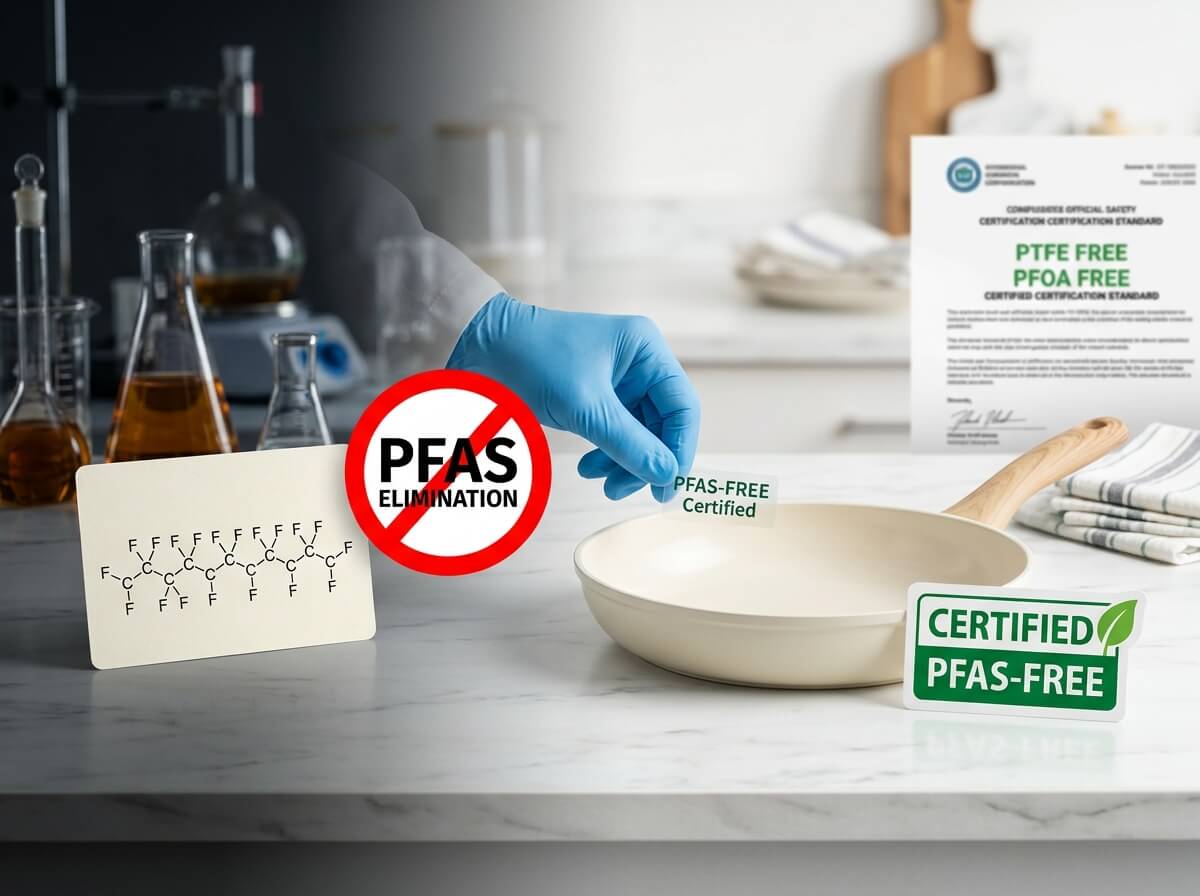
A cookware label that says PFAS-free is making a specific, testable claim: none of the thousands of per- and polyfluoroalkyl substances were intentionally added to that pan’s cooking surface or handle.
It isn’t a synonym for “non-toxic,” and in some states, it isn’t just marketing language, it’s a claim with an actual legal definition and an enforcement history behind it.
That last part is where things get complicated, because several brands that used this exact phrase have ended up in court over it.
What “PFAS” Actually Stands For — and Why It’s a Family, Not One Chemical
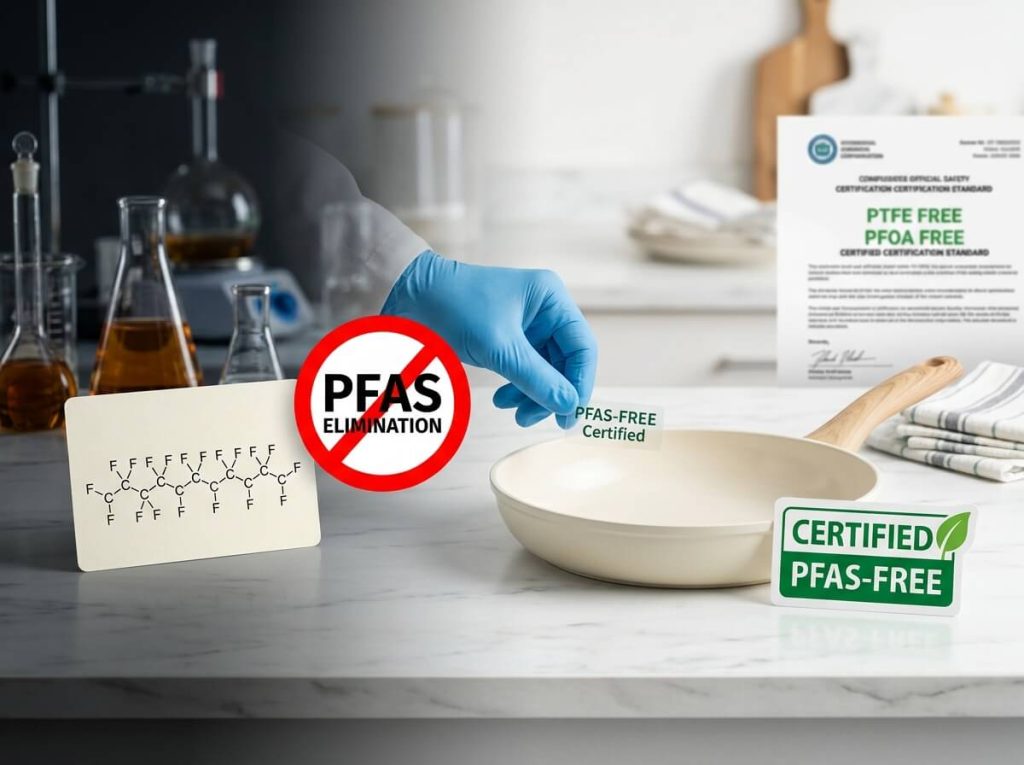
PFAS stands for per- and polyfluoroalkyl substances, a group of thousands of synthetic chemicals built around a carbon-fluorine bond that resists heat, water, and grease.
That bond is also why PFAS chemicals are nicknamed “forever chemicals” — they don’t break down naturally, and they can accumulate in soil, water, and the human body over time.
In cookware, PFAS chemistry is what gives many nonstick coatings their slick, food-release surface.
The problem for shoppers is that PFAS isn’t one ingredient you can check for; it’s a category, and a label can be entirely accurate about excluding one member of that category while saying nothing about the rest.
PFAS vs. PTFE vs. PFOA — What Each Term Actually Covers
These three terms get used almost interchangeably in cookware marketing, but they cover different amounts of ground.
| Term | What it actually means | What it does NOT guarantee |
|---|---|---|
| PFAS | The full chemical family, covering thousands of related compounds, including PFOA, PFOS, GenX, and PTFE | Nothing on its own — it’s the umbrella category, not a specific ingredient |
| PTFE | One specific PFAS compound, best known under the brand name Teflon, is used to build classic nonstick coatings | That the coating is free of other PFAS compounds — a “PTFE-free” pan can still use different fluoropolymer chemistry |
| PFOA | An older PFAS chemical, once used in manufacturing PTFE, has largely been phased out of U.S. production | Anything about PTFE or other PFAS compounds still present in a coating |
Why “PFOA-Free” Doesn’t Mean “PFAS-Free”
“PFOA-free” is the oldest and most common cookware claim, and it’s also the easiest one to misread.
PFOA was phased out of U.S. manufacturing years ago under an EPA-led industry agreement, so a modern pan being PFOA-free is close to a given rather than a distinguishing feature.
What the claim doesn’t address is PTFE, the compound that actually forms most nonstick coatings sold today.
A pan can be entirely accurate in calling itself PFOA-free while still containing PTFE, and PTFE is itself a PFAS chemical.
That’s the real gap between “PFOA-free” and “PFAS-free”: one rules out a single, largely retired chemical, while the other is supposed to rule out an entire chemical family.
What Does “PFAS-Free” Legally Require on a Cookware Label
Across most of the United States, “PFAS‑free” is still a voluntary marketing term without a harmonized legal definition, so companies can base the claim on their own interpretation, such as “no intentionally added PFAS” or “no specific listed PFAS” rather than on a standardized numeric threshold.
At the federal level and in many states, that phrase is governed only by general truth‑in‑advertising rules, not by a specific, enforceable technical standard.
California’s Safer Food Packaging and Cookware Act (AB 1200), signed in 2021 with cookware provisions coming into effect from 2023–2024, changes that dynamic for cookware sold in the state: it defines PFAS for legal purposes, requires manufacturers to disclose the presence of PFAS and other listed chemicals in the cooking surface or handle, and prohibits cookware from being marketed as “PFAS‑free” if any PFAS within the statutory definition are present.
As a result, in California, “PFAS‑free” is no longer just a loose marketing reassurance; it is a claim that regulators can test and enforce against a specific legal framework, while in most other jurisdictions it remains a largely self‑defined label that consumers must interpret cautiously.
California’s AB 1200 Rule: You Can’t Claim “Free” If Even One PFAS Is Present
Under California’s Safer Food Packaging and Cookware Act (AB 1200), manufacturers cannot claim that a product is free of a specific chemical if the product contains another chemical from the same chemical class and that class appears on the state’s Candidate Chemicals list.
Applied to PFAS in cookware, this means that a pan made with PTFE—which is itself a PFAS polymer under AB 1200’s definition cannot lawfully be marketed in California as “PFAS‑free,” even if no other PFAS compound is present in the product.
The state’s Attorney General has reinforced this in an enforcement advisory, warning cookware manufacturers and retailers that PFAS‑free claims are prohibited when PFAS are present and that disclosure obligations and restrictions on misleading claims apply to both product packaging and the information provided on company websites.
In practical terms, it operates as a bright‑line test: if a cookware product contains even one PFAS from the regulated class, a “PFAS‑free” or “free of [that PFAS family]” marketing claim will not withstand legal scrutiny, regardless of how the branding tries to frame it.
AB 1200 isn’t the only California disclosure law that shows up around cookware shopping.
See our guide to California Prop 65 warnings on cookware for how that separate warning-label system works and how it differs from the PFAS-specific rules here.
What Manufacturers Must Disclose Starting in 2024
- Beginning January 1, 2024, cookware manufacturers selling in California must list on the product label any intentionally added chemical from the state’s Candidate Chemical List, which includes PFAS alongside substances like BPA.
- Manufacturers were already required to post the same chemical disclosures on a public website starting January 1, 2023, a full year before the physical label requirement took effect.
- Products can’t be marketed as free of a chemical class unless every chemical in that class is absent from the parts of the product that contact food, including handles and cooking surfaces.
- Trace, unintentional contamination introduced during manufacturing doesn’t trigger the disclosure requirement, since the rule specifically targets chemicals that were added on purpose.
- Noncompliance can be treated as a violation of California’s Unfair Competition Law, which gives the state’s Attorney General grounds to pursue civil penalties.
Why Some “PFAS-Free” Cookware Has Been Sued Over the Claim
Before getting into who’s been sued and why, it helps to already know how to know if your cookware has PFAS in the first place.
Coating type is the fastest signal, and it’s the same signal that comes up in every case below.
Several nonstick cookware brands have faced lawsuits directly over their PFAS-related marketing in the past two years, and the disputes show how loosely the term has been used across the industry.
The Made In and HexClad Greenwashing Cases
- A 2025 class action against Made In Cookware alleges the brand marketed its nonstick pans as “100% non-toxic” and PFOA-free, while the manufacturing process for the PTFE-based coating undermines those claims, according to the suit.
- A separate class action against HexClad, filed in 2024, alleges the company marketed its cookware as free of harmful chemicals while coating the actual cooking surface with PTFE, which is a PFAS compound.
- In February 2026, cookware manufacturer Group SEB filed a first-of-its-kind lawsuit against Caraway, arguing that Caraway’s PFAS-free marketing crossed into false advertising by describing competitors’ PTFE-coated cookware as toxic and dangerous, while Group SEB maintains that its own PTFE coatings are safe at normal cooking temperatures.
- The National Advertising Division separately reviewed Caraway’s marketing claims and found that its comparative statements about traditional nonstick cookware weren’t adequately supported.
- Taken together, these cases show that PFAS-free and non-toxic claims are now being tested in court on both sides of the argument, not only in the court of public opinion.
What Consumer Reports Found When It Tested “PFOA-Free” Pans
Independent testing backs up why regulators and courts are paying this much attention to the wording.
Consumer Reports tested several nonstick pans built around PFAS-related claims, including two ceramic-coated pans described as free of both PTFE and PFOA, and one PTFE-coated pan described only as PFOA-free.
The ceramic-coated pans didn’t contain any of the roughly 96 PFAS compounds Consumer Reports tested for.
The PTFE-coated pan, despite its PFOA-free claim, contained measurable amounts of PFOA along with several other PFAS compounds.
The result was significant enough that Consumer Reports decided to stop displaying “PFOA-free” as a marker of reliability in its own cookware ratings, on the basis that the claim wasn’t a dependable stand-in for PFAS-free performance in PTFE-coated products.
That’s a notable shift. An organization built around independent testing effectively concluded the label couldn’t be trusted at face value, which carries more weight than anything printed on a box.
How to Verify a “PFAS-Free” Claim Before You Buy
Since the label alone isn’t always enough, verifying a PFAS-free claim works best as a short, repeatable process rather than a single check.
- Identify the coating type first — confirm whether the product is ceramic-coated, PTFE-coated, or uncoated, since the coating determines whether a PFAS-free claim is even physically possible.
- Look for “PTFE-free,” specifically, not just “PFOA-free,” since PTFE-free is a narrower and more verifiable claim that rules out the compound most commonly responsible for PFAS content in nonstick coatings.
- Check whether the brand discloses chemical information on its own website, since California’s AB 1200 disclosure requirement has pushed many manufacturers to publish this information even for products sold outside the state.
- Cross-reference the brand against independent testing sources, such as Consumer Reports or the Ecology Center, rather than relying on the product page alone.
- Treat uncoated materials as the most reliable default option, since they don’t depend on a coating claim holding up at all.
Materials That Are PFAS-Free by Construction (No Claim Needed)
| Material | PFAS status | Notes |
|---|---|---|
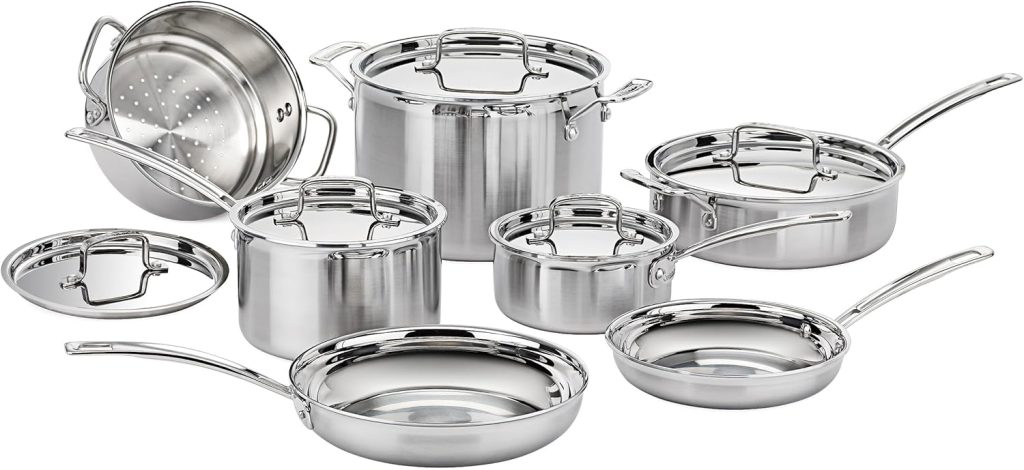
| Stainless steel | PFAS-free by construction | No coating is applied, so there’s no PFAS-related claim to verify. |
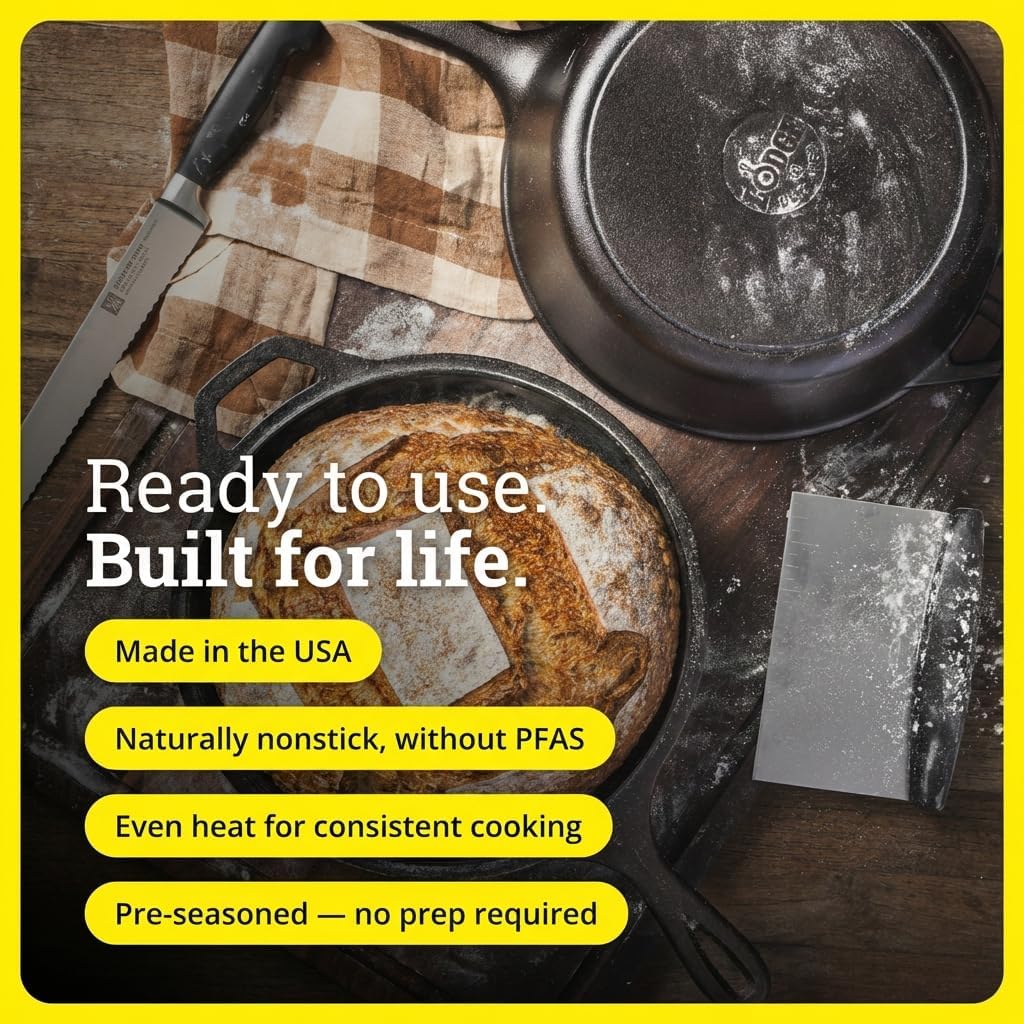
| Cast iron (bare) | PFAS-free by construction | Seasoning is oil-based, not a synthetic coating. |
| Enameled cast iron | PFAS-free by construction | The enamel coating is glass-based, not fluoropolymer-based. |
| Carbon steel | PFAS-free by construction | Like bare cast iron, it relies on seasoning rather than a manufactured coating. |
| Ceramic-coated nonstick | Usually PFAS-free, but confirm with the manufacturer | “Ceramic” describes the coating’s general base material, not a guarantee about every compound used in it. |
For a closer look at how that coating performs and ages over time, see our full breakdown of whether ceramic cookware is safe.
Red Flags That a “PFAS-Free” Label May Not Be Reliable
If you’re already thinking about transitioning away from non-stick cookware entirely, these are the same warning signs worth watching for before buying another nonstick pan.
- The label says “PFOA-free” or “non-toxic” without specifically addressing PTFE, since those are the two claims most often challenged in recent lawsuits.
- The brand doesn’t publish any chemical disclosure information despite selling in California, where AB 1200 has required it since 2023.
- Marketing language describes competing products as “toxic” or “dangerous” without citing independent testing, a pattern the Caraway dispute specifically raised concerns about.
- There’s no way to identify the actual coating material from the product description, only vague marketing terms like “premium nonstick” or “advanced coating.”
- The claim appears only in advertising copy and not on the product label itself, which is a weaker commitment than a disclosed, labeled claim.
If your kitchen already has cookware for a baby or toddler and you want a shortlist built specifically around that use case, our guide to PFAS-free cookware for babies covers the same verification steps applied to that narrower situation.
If none of this settles which pan is actually right for your kitchen, the more useful next step is comparing full product lines rather than parsing individual label claims one at a time.
See our full non-toxic cookware picks for a shortlist built around verified materials and coatings rather than marketing language alone.
FAQ
Is PFAS-free the same as non-toxic?
No, PFAS-free is a narrower, more specific claim than non-toxic. A product can accurately claim to be free of PFAS chemicals while still containing other substances of concern, such as heavy metals in a glaze or additives unrelated to the PFAS family entirely.
Non-toxic is a broad marketing term with no fixed legal definition in most jurisdictions, while PFAS-free, at least in California, is now tied to an actual regulatory standard with an enforcement mechanism behind it.
Treat the two claims as answering different questions: one about a specific chemical family, the other a general reassurance that isn’t independently verifiable on its own.
Does ceramic cookware count as PFAS-free?
Usually, yes, but confirm it with the specific manufacturer rather than assuming it from the material name alone.
Ceramic nonstick coatings are typically built from silica-based compounds rather than fluoropolymers like PTFE, which is why most ceramic-coated pans test PFAS-free in independent testing, including in Consumer Reports’ own results.
That said, “ceramic” describes the coating’s general category rather than a guaranteed formula, so a brand’s specific disclosure or a third-party test result is a more reliable check than the word “ceramic” appearing on the box.
Can a company legally call cookware “PFAS-free” if it contains PTFE?
No, not in California, where AB 1200 explicitly prohibits claiming a product is free of a chemical class if even one member of that class was intentionally added to it.
Since PTFE is itself a PFAS compound, a pan containing PTFE cannot legally be marketed as PFAS-free in that state, regardless of how the coating performs in practice.
Other states don’t yet have an identical statute on the books, but California’s rule has pushed many manufacturers toward more careful national labeling, since maintaining separate marketing language for different states is impractical.
The safer assumption for any nationally sold brand is that its current labeling has already been shaped by California’s stricter standard.
What actually verifies a PFAS-free claim?
The most reliable verification comes from three sources working together: the manufacturer’s own chemical disclosure, required in California since 2023; independent lab testing from an organization like Consumer Reports or the Ecology Center; and the coating material itself, since some materials are PFAS-free by construction and don’t depend on any claim holding up.
A single data point from any one of these sources is weaker than checking two together, particularly since manufacturer disclosures and independent test results can occasionally disagree on the same product line.
Marketing copy alone, without a disclosure or a test result behind it, is the weakest form of verification available and shouldn’t be the deciding factor on its own.