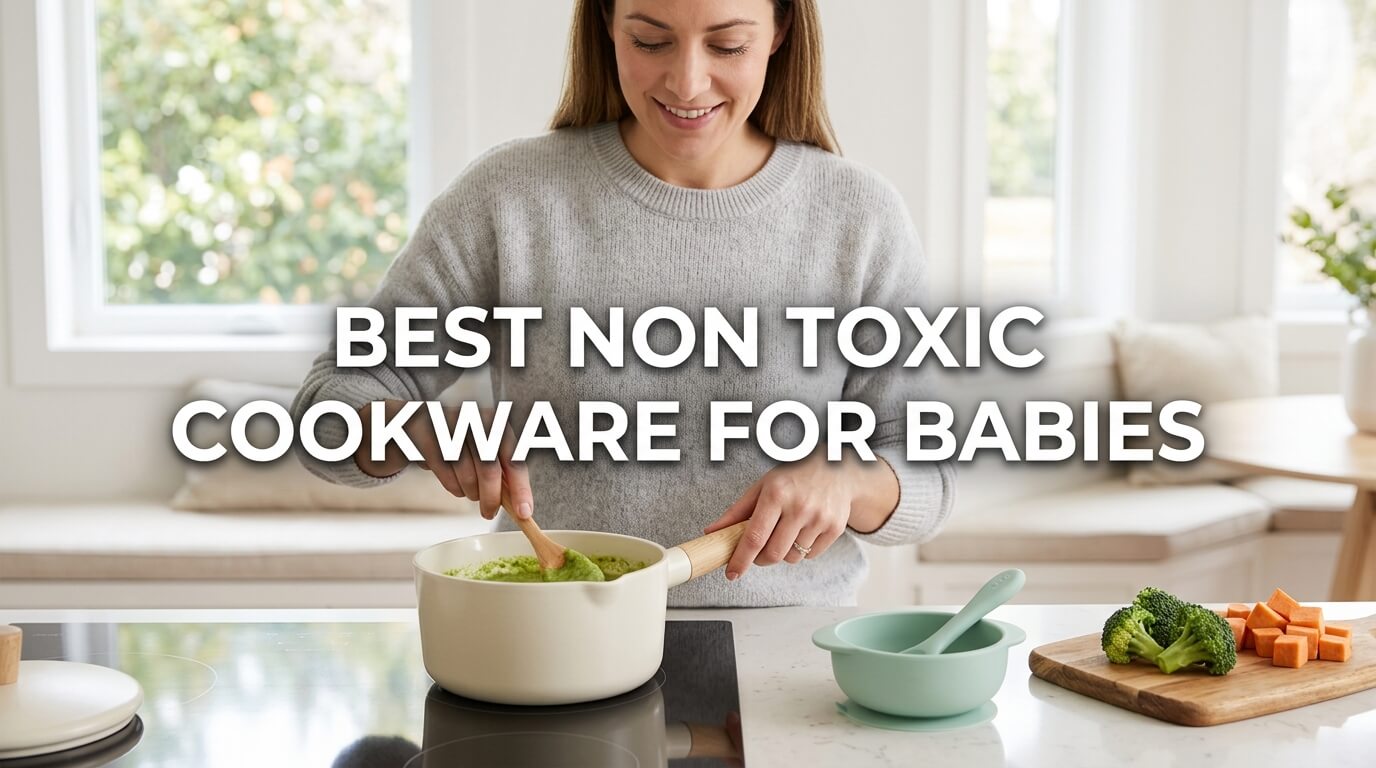
The safest non toxic cookware for babies is solid stainless steel, cast iron, carbon steel, or genuine glass, but which specific grade, size, and brand you choose matters more here than it does for adult cookware, because babies eat a narrow, repetitive diet in small batches.
A pot that’s perfectly fine for an adult’s varied meals can be a worse fit for a baby eating the same acidic puree from the same small pot every day.
This guide covers which materials actually meet that bar, which common “baby food pot” products to avoid, and how to size cookware for real baby food prep.
What Makes Cookware “Non-Toxic” for Baby Food, Specifically?
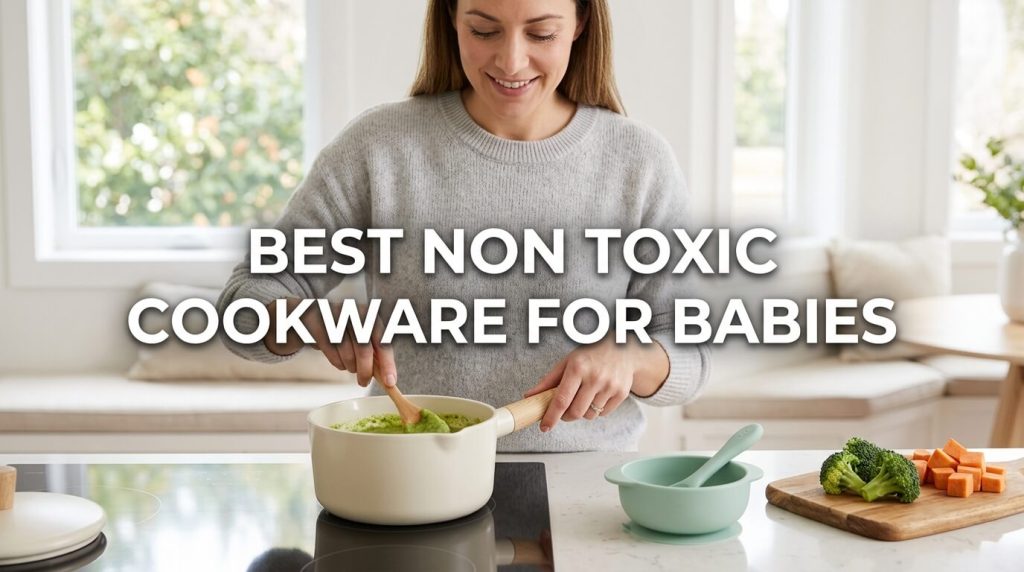
“Non-toxic” for baby food means two things at once: the material itself doesn’t contain PFAS, lead, or cadmium, and it doesn’t leach meaningful amounts of anything else, including metals that are otherwise considered low-risk for adults under the specific conditions baby food is cooked in.
A pan can pass a general adult safety standard and still be a questionable choice for a baby’s daily puree.
Most general cookware buying guides stop at the material category: stainless steel is fine, cast iron is fine, and avoid nonstick.
That advice isn’t wrong, but it’s incomplete for baby food specifically, because it doesn’t account for how baby food is actually cooked in small volumes, repeated daily, often with acidic ingredients, in a pot that rarely gets swapped out for something else.
Those cooking conditions change, which details actually matter, which is why this guide goes a level deeper than “pick stainless steel” into which grade, which glaze, and which country of manufacture make a real difference for a baby’s food.
Why Babies Need a Higher Safety Bar Than Adults
Babies typically eat the same handful of foods, prepared the same way, for weeks at a time.
A batch of tomato-based vegetable puree cooked in one small pot, several days in a row, is a common pattern in early feeding.
That repetition matters because it concentrates exposure to whatever a specific pot leaches, in a way an adult’s more varied diet across multiple pans and cuisines doesn’t.
Acidic purees (tomato, citrus, berries) are also some of the most common early baby foods, and acidity is the exact condition under which metals like nickel and lead leach fastest from cookware.
A baby’s smaller body weight and developing organ systems mean the same absolute exposure also represents a larger relative dose than it would for an adult.
The Materials That Meet That Bar
| Material | Safe for Baby Food by Construction | Notes |
|---|---|---|
| Solid stainless steel | Yes, with grade caveats | Look for 18/0 (nickel-free) for the most sensitive use cases; see grade breakdown below. |
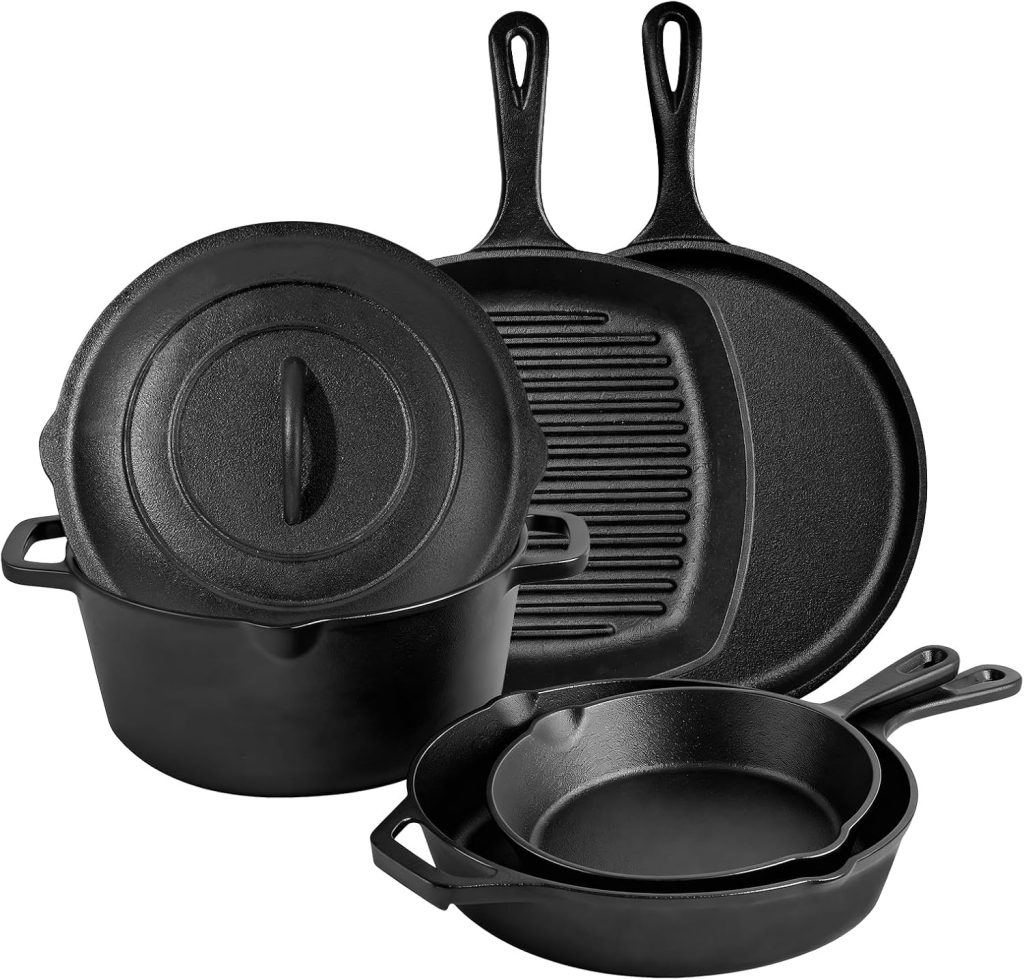
| Cast iron (seasoned) | Yes | Naturally nickel-free; seasoning is polymerized oil, not a chemical coating. |
| Carbon steel | Yes | Similar profile to cast iron, lighter weight. |
| Glass | Yes | Inert surface with nothing to leach under normal cooking conditions. |
| Enameled cast iron | Usually, with sourcing caveats | Interior enamel is glass-based; exterior decorative glazes can contain cadmium pigments. |
| Genuine ceramic (sol-gel) | Usually, with verification | PFAS-free by chemistry, but lead/cadmium in glaze is a separate question — see below. |
Stainless steel and cast iron aren’t the only two options worth comparing before you buy our full ceramic vs cast iron cookware breakdown, which walks through the trade-offs between the two if you’re deciding which to build your baby food routine around.
Is Stainless Steel Safe for Cooking Baby Food?
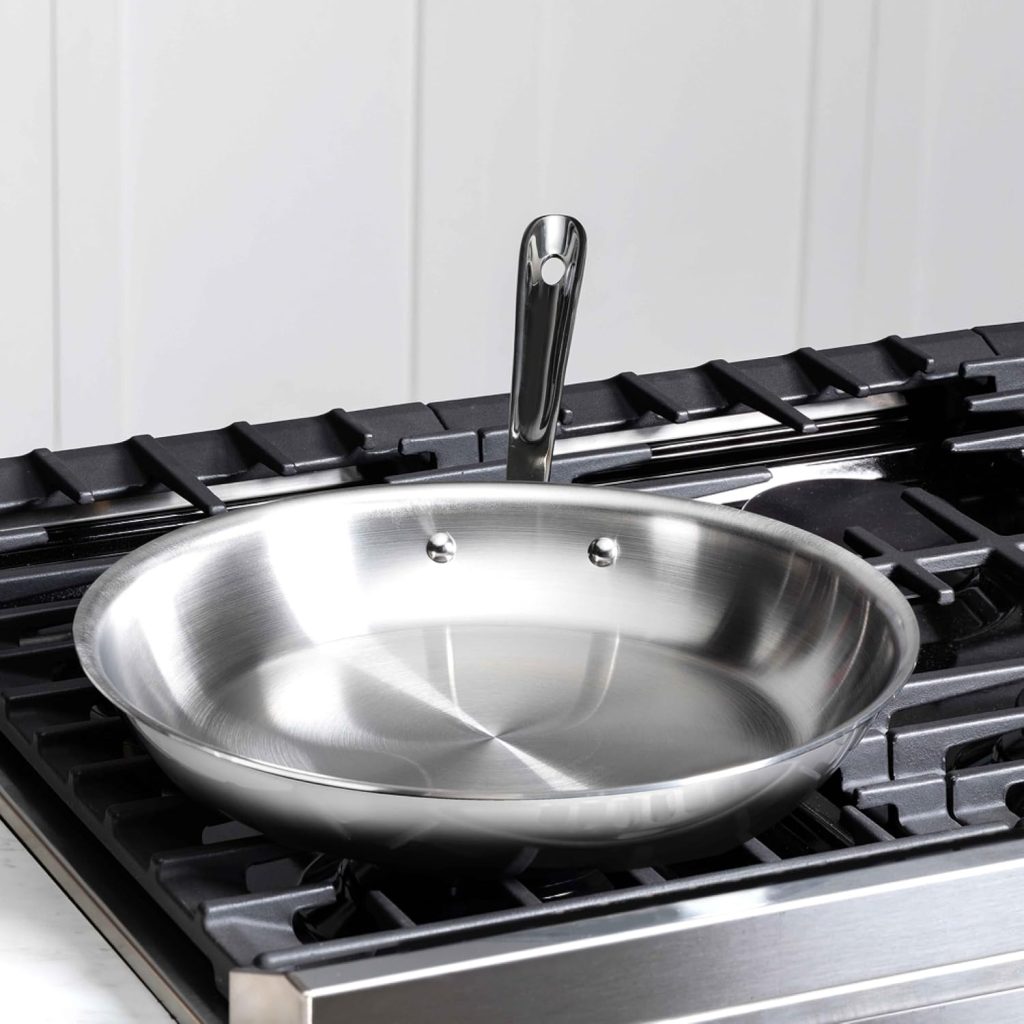
Stainless steel is generally safe for baby food, but not all stainless steel is the same, and the difference comes down to how much nickel is in the specific grade you’re using.
Most cookware-grade stainless steel contains some nickel by design, added to improve corrosion resistance and give the surface its shine, and that nickel can migrate into food under certain cooking conditions.
This is also the material most parents already own in some form, which makes it a practical default rather than a new purchase.
A small stainless steel saucepan can usually double as both a family pot and a baby food pot.
The catch is that the same qualities that make stainless steel durable and shiny, chromium and nickel content, are also what determine how much of it can end up in food, so it’s worth understanding those two grade numbers before assuming any stainless pot in the cabinet is the right one for daily baby food duty.
The Nickel Question — Does It Actually Matter for Baby Food?
Nickel leaching from stainless steel is usually described as a minor concern for adults, and for someone eating a varied diet across many meals and pans, that’s a reasonable conclusion.
The math changes for a baby eating the same acidic puree cooked in the same small pot day after day, because that pattern is exactly the combination of acidic food, repeated contact, and concentrated small-batch volume that maximizes nickel migration.
Research on stainless steel cookware has found nickel leaching increases substantially with longer cook times and higher acidity, and standard 304-grade stainless steel (the most common type sold) contains roughly 8 to 10 percent nickel.
For a baby whose diet is narrower and more repetitive than an adult’s, that steady, concentrated exposure is a more meaningful factor than it would be in general adult cookware buying advice.
What Grade to Look For (18/0 vs. 18/8 vs. 18/10)
| Grade | Nickel Content | Best For |
|---|---|---|
| 18/0 | 0% (nickel-free) | Baby food prep, acidic purees, anyone avoiding nickel entirely |
| 18/8 | ~8% nickel | General cooking; acceptable for occasional baby food use |
| 18/10 | ~10% nickel | General cooking; higher shine and corrosion resistance, more nickel |
The numbers refer to chromium and nickel percentage, respectively, and they’re usually stamped on the base of the pot or listed in the product specifications.
For dedicated baby food pots used daily for purees, 18/0 stainless steel removes the nickel variable entirely, rather than requiring you to track cook times and acidity.
Is Ceramic Cookware Actually Safe for Babies?
Ceramic cookware is often safe for babies, but “ceramic” and “non-toxic” aren’t automatically the same claim, and the two most common concerns — PFAS and lead/cadmium — need to be checked separately.
Our broader guide on whether ceramic cookware is safe covers the material generally; here’s what changes when the cookware is specifically for a baby.
Ceramic is popular for baby food specifically because it’s naturally nonstick without a fluoropolymer coating, which makes it appealing for parents who already want to avoid PFAS in a pan used daily for purees.
That popularity is also why it’s worth being more careful here than with a general kitchen purchase: “ceramic” isn’t a legally standardized term, quality varies enormously between brands, and a coating that’s genuinely PFAS-free can still fail on a completely different safety measure if the underlying clay or glaze wasn’t sourced and fired properly.
The Lead and Cadmium distinction, Most Ceramic Brands Don’t Explain
A ceramic pan being PFAS-free tells you nothing about lead or cadmium, which are a completely separate risk tied to the glaze rather than the coating chemistry.
Lead and cadmium have historically been used in ceramic glazes to create smooth finishes and vivid colors, particularly in decorative red, orange, and yellow pigments, and they can leach into food if the glaze wasn’t fired correctly or if it’s damaged.
This isn’t a hypothetical: a CDC report documented a family of five with elevated blood lead levels traced back to a glazed ceramic pot purchased abroad, with the interior glaze testing at levels far above safety thresholds.
California’s Prop 65 sets very low daily exposure benchmarks for both metals — 0.5 micrograms per day for lead and 4.1 micrograms per day for cadmium — which shows how little margin there is for a poorly made glaze, especially for a baby’s smaller body weight.
Enameled cast iron sits in a similar gray area. The interior food-contact enamel on most major brands is neutral in color and tests well, but exterior decorative glazes in bright colors have, in some cases, been disclosed by manufacturers themselves as containing cadmium in the pigment, even when the food-contact surface is unaffected.
That distinction between interior and exterior glaze matters when a baby is young enough to mouth or handle cookware outside of active cooking, which is one more reason to favor plain interior finishes and documented sourcing over decorative colorways for a dedicated baby food pot.
What to Check Before Trusting a “Non-Toxic” Ceramic Claim
- Look for a brand that publishes actual third-party leach test results, not just a general “non-toxic” or “PFOA-free” label.
- Prioritize leach testing against a recognized standard, such as ASTM C738 or California Prop 65 thresholds, rather than a vague safety claim with no methodology.
- Be cautious with imported, handmade, or decorative pottery, particularly pieces with bright red, orange, or yellow interior glazes.
- Confirm whether published test results cover the interior food-contact surface specifically, since exterior decorative glazes are sometimes tested and disclosed separately.
Cookware to Avoid When Cooking for a Baby
Beyond checking what a material is made of, a few categories of cookware are worth actively avoiding for baby food, regardless of price or marketing, because they carry documented, specific risks rather than theoretical ones.
- Uncoated imported aluminum, brass, or aluminum-alloy pots, especially ones marketed generically as “milk warmers” or “baby food pots,” since this is the exact category currently flagged in an active FDA lead warning.
- Any pan with visibly scratched, flaking, or peeling nonstick coating, since damaged PTFE is the condition most associated with chemical transfer into food.
- Decorative or handmade ceramic with no published leach test results, particularly pieces with bright red, orange, or yellow interior glazing.
- Cookware with no manufacturer information or country-of-origin labeling at all, which makes it impossible to check against known safety warnings before buying.
- Very low-cost novelty “baby food maker” pot sets are sold primarily on general marketplaces, where material quality and sourcing documentation are often thin or absent from the listing.
The FDA’s Active Warning on Imported Aluminum and Brass Cookware
The FDA issued an important safety warning in August 2025 and subsequently expanded it later that year about certain imported cookware that may leach significant levels of lead into food.
The alert covers pots and pans made from aluminum, brass, and aluminum alloys marketed as Hindalium/Hindolium or Indalium/Indolium, based on testing that simulated typical cooking conditions and found lead migration well above safety benchmarks.
The agency emphasizes that there is no safe level of lead exposure and highlights young children, pregnant people, breastfeeding women, and individuals of reproductive age as particularly vulnerable to adverse health effects from this type of exposure.
In its public communications, the FDA advises consumers to inspect their kitchens for any cookware listed in the alert and to throw these items away rather than donate, refurbish, or continue using them, to avoid passing lead risk on to others.
This warning is directly relevant to baby food and milk‑warming practices because the small, lightweight aluminum pots and pans identified in the alert closely resemble low‑cost “baby food” or “milk warming” pots sold on general marketplaces, where the same combination of small size, low price, and uncoated imported aluminum construction can quietly reproduce the lead‑leaching risk FDA is concerned about.
In that context, checking a pot’s actual material (for example, avoiding uncoated imported aluminum or brass from the affected categories) and country of manufacture before buying is a more reliable safeguard than relying on product titles or marketplace listings alone.
Before buying a small aluminum-looking pot marketed for baby food, it’s worth confirming the material listed in the product specifications rather than relying on the photo or title, since “aluminum” and “aluminum alloy” are sometimes buried lower in a listing than the marketing copy suggests.
If a listing doesn’t specify the alloy, doesn’t name a manufacturer, or doesn’t state a country of origin, that absence of information is itself a reason to choose a solid stainless steel or cast iron alternative instead, both of which don’t carry this risk regardless of where they were manufactured.
Scratched or Older Nonstick Pans
- A nonstick pan with any visible flaking or peeling should be retired from baby food duty immediately, since damaged coating is what allows chemicals to transfer into food.
- Older nonstick pans without clear labeling on their coating type are harder to evaluate and are worth replacing with an uncoated material for baby food specifically.
- Even an intact PTFE-based nonstick coating is worth avoiding for daily baby food prep, given how easily small batches concentrate whatever the coating releases under heat.
- If you already own nonstick cookware and want to check its overall condition before deciding whether to keep using it, our guide on how to know if cookware has PFAS walks through the specific signs to look for.
Choosing the Right Pot Size and Type for Baby Food Prep
The best pot for baby food prep is usually smaller than most standard cookware, since early baby food is made in small batches, and a large pot makes it harder to steam or simmer a few ounces of food evenly.
Buying the right material and then cooking in an oversized stockpot undercuts a lot of the benefit, since a few ounces of food spread across a wide 8-quart pot cooks unevenly and is harder to monitor than the same food in a properly sized saucepan.
Pot size also affects how much of the pot’s interior surface actually contacts the food relative to its volume, which is a secondary reason smaller, well-matched cookware is worth prioritizing over repurposing whatever pot happens to already be in the cabinet.
Small-Batch Pots for Purees and Steaming
- A 1- to 2-quart saucepan is typically the right size for steaming a single serving or a small batch of vegetables or fruit for puree.
- A steamer insert that fits inside your existing small pot avoids the need for a separate dedicated appliance.
- Pots with a pour spout make transferring hot, small-volume purees into a blender or food processor easier and safer.
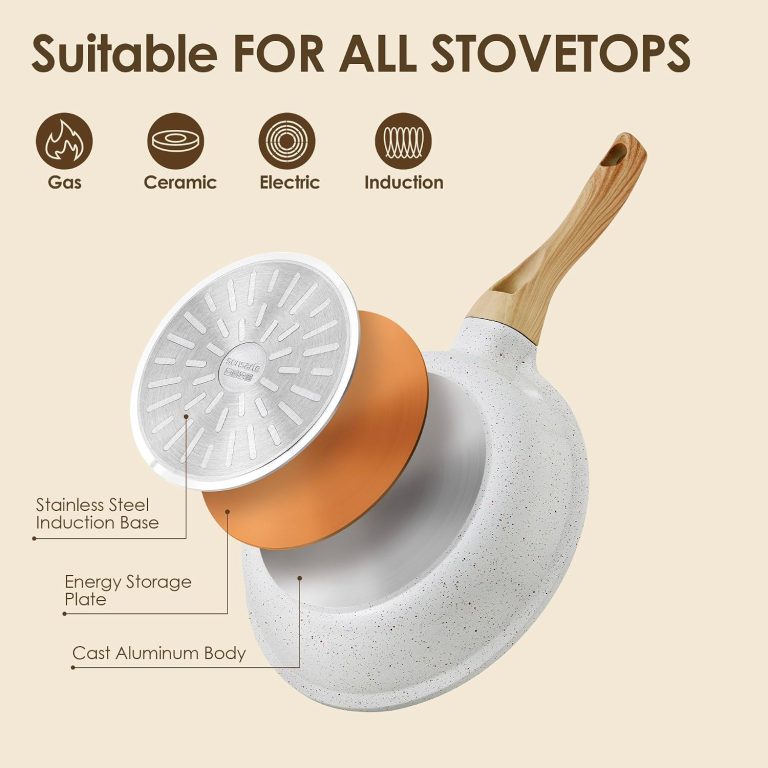
- If your stovetop is induction, confirm the pot is induction-compatible before buying, since not every stainless steel or cast iron pot is. Our guide to non-toxic cookware for induction stoves covers what to check.
Cookware for Baby-Led Weaning vs. Purees
Baby-led weaning, where a baby self-feeds soft whole pieces of food rather than eating purees, generally calls for a slightly larger pot and often a skillet in addition to a saucepan, since foods like steamed vegetable sticks or scrambled eggs need more surface area than a puree batch does.
A small stainless steel or cast iron skillet works well for eggs, soft-cooked vegetable pieces, and other finger foods, while a saucepan remains the better tool for steaming or boiling.
Households doing a mix of purees and baby-led weaning, which is common as a baby transitions between the two approaches, generally end up needing both a small saucepan and a small skillet rather than one all-purpose pot.
That two-piece setup also tends to outlast the baby food stage itself, since the same small saucepan and skillet remain useful for toddler portions and quick single servings well after purees stop being part of the routine.
Once your baby has moved from purees to finger foods, the cookware you use to prepare meals matters just as much as what they eat off of.
Our best non-toxic baby dinnerware guide covers plates, bowls, and utensils built for the same safety standards.
Once you’ve settled on the right materials and sizes for baby food specifically, it’s worth applying the same standard to the rest of your kitchen, since the pots and pans used for the whole family’s meals matter too.
Our guide to the best non-toxic cookware covers vetted options across stainless steel, cast iron, and genuine ceramic construction for everyday cooking.
FAQ
Is stainless steel safe for baby food?
Yes, stainless steel is generally safe for baby food, but the nickel content of the specific grade matters more here than it does for general adult cookware.
Standard 304-grade stainless steel contains roughly 8 to 10 percent nickel, which can leach into food faster under acidic, repeated-contact conditions, exactly the pattern of a baby eating the same puree from the same small pot daily.
For dedicated baby food pots, 18/0 stainless steel removes nickel from the equation entirely and is the more conservative choice for daily, small-batch use.
Is ceramic cookware safe for babies?
Usually, a ceramic pan being labeled PFAS-free doesn’t address a separate risk: lead and cadmium in the glaze.
These metals have historically been used in ceramic glazes, particularly in decorative red, orange, and yellow colors, and can leach into food if the glaze wasn’t fired correctly.
The safest approach is choosing a brand that publishes actual third-party leach test results against a recognized standard like ASTM C738 or California Prop 65 thresholds, rather than trusting a general “non-toxic” label alone.
Can I use aluminum pots for baby food?
Solid, uncoated aluminum cookware, especially imported products, should be avoided for baby food.
The FDA has an active safety warning, first issued in August 2025 and still being updated in 2026, covering imported aluminum, brass, and aluminum-alloy cookware that testing found can leach significant levels of lead into food, with young children and breastfeeding women specifically named as higher-risk groups.
This warning directly overlaps with the small, cheap aluminum pots often marketed on general marketplaces as “baby food pots,” so checking material and origin before buying matters more than trusting the product title.
What’s the best pot size for making baby food?
A 1- to 2-quart saucepan is the best size for most early baby food prep, since batches are small and a larger pot makes it harder to steam or simmer food evenly in small quantities.
A steamer insert that fits inside that saucepan works well for vegetables and fruit without needing a separate dedicated appliance.
As your baby moves toward baby-led weaning and larger finger-food portions, a small skillet becomes a useful addition alongside the saucepan for eggs and soft-cooked pieces.