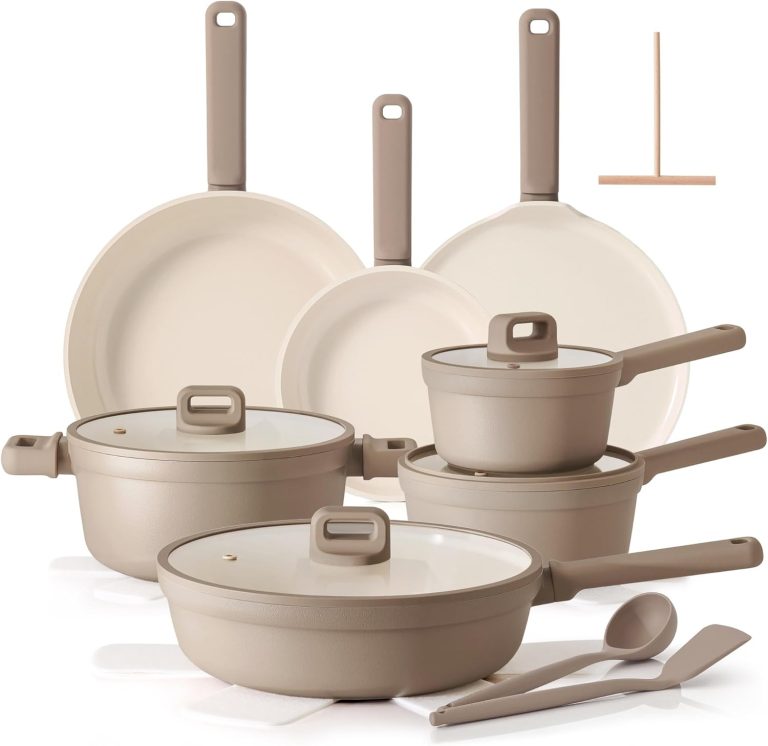
Ceramic-coated aluminum cookware is generally safe for everyday cooking, but the full answer has two separate parts: the sol-gel coating on top and the aluminum base underneath each carry their own risk profile, and “PFAS-free” marketing only addresses one of them.
Understanding both parts is the only way to actually judge whether a specific pan belongs in your kitchen.
What “Ceramic-Coated Aluminum” Actually Means
Here’s the framing most users don’t know: “ceramic cookware” and “aluminum ceramic-coated cookware” are, in the vast majority of retail cases, the same product.
When a brand markets a pan as “ceramic,” it almost always means a metal pan, nearly always aluminum, sometimes stainless steel with a thin, glassy, silica-based coating applied on top.
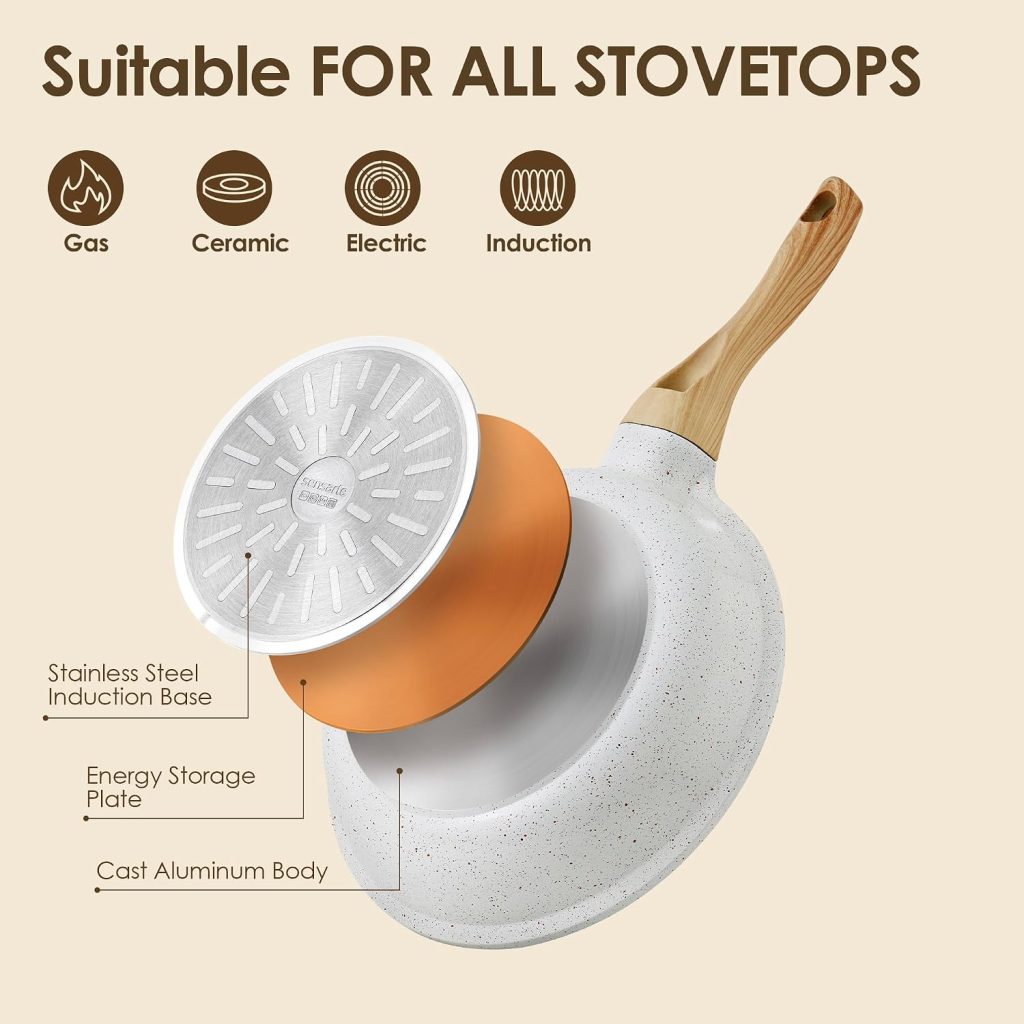
True 100% ceramic cookware, made entirely from fired clay with no metal core, is a much smaller category sold by a handful of specialty brands.
If you’re asking whether your ceramic pan is safe, you’re really asking two separate questions at once: is the coating safe, and is the aluminum underneath it safe?
How the Sol-Gel Coating Process Works
The coating that gives these pans their nonstick slide is applied through a manufacturing method called the sol-gel process.
Manufacturers first prepare the metal base, most commonly aluminum, chosen for its light weight and excellent heat conductivity. From there, the coating is built in stages:
- A liquid “sol” — a mixture of silica, metal oxides, and binding agents — is sprayed or dipped onto the prepared pan.
- The coated pan is cured at high heat, typically between 400°F and 800°F, which is far below the roughly 2,000°F firing temperature used for traditional solid ceramics.
- The heat treatment hardens the liquid coating into a solid, glass-like “gel” layer that bonds to the metal surface.
- The finished surface is inspected and, in higher-end lines, may receive a second or reinforced coating layer for added durability.
This process is why ceramic nonstick pans have a hard, glossy finish that behaves more like glass than like a traditional glazed ceramic dish.
Is Sol-Gel Ceramic Coating Safe?
Sol-gel ceramic coating is a silica-based nonstick layer applied to metal cookware, and on its own it does not contain PFOA or PTFE, the two chemicals most associated with older Teflon-style nonstick concerns.
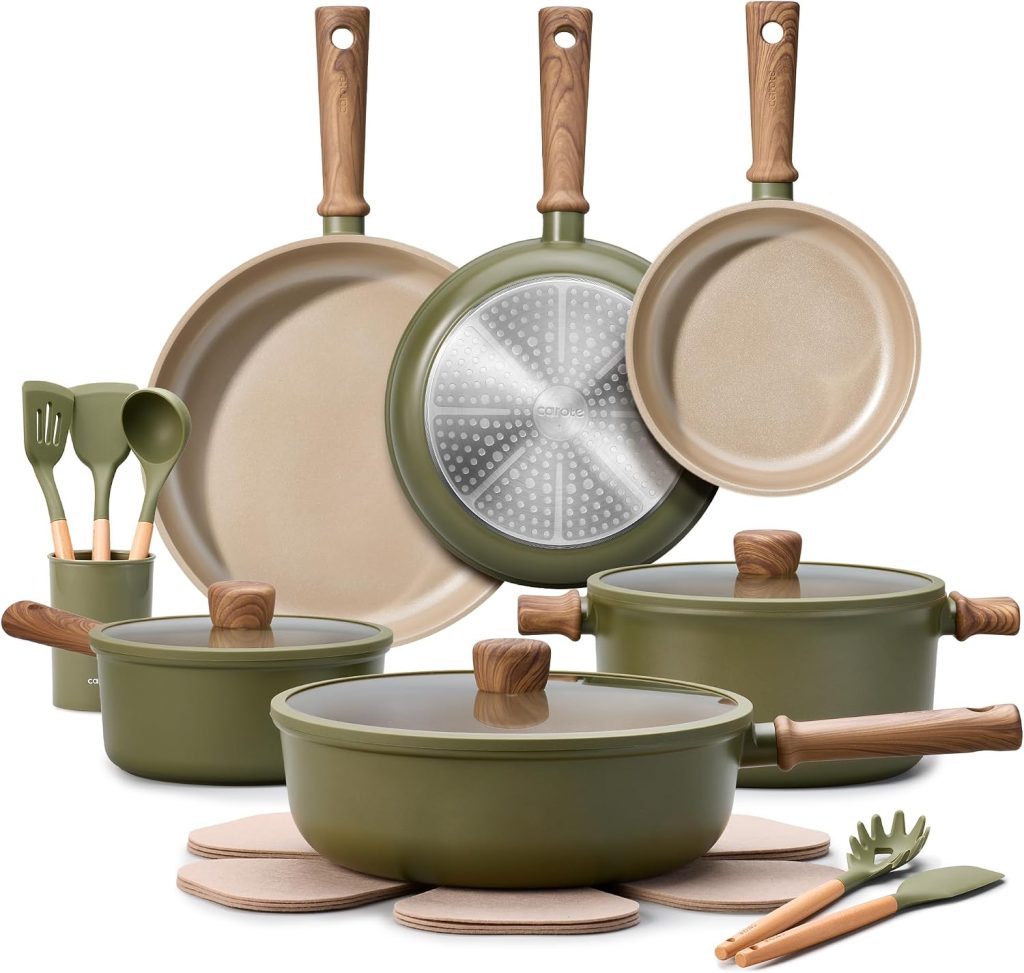
That’s the reassuring part. The more complicated part is that “sol-gel” is not one fixed formula; it’s a manufacturing process, and different brands use different proprietary blends of metal oxides, binders, and additives inside that process, several of which have their own safety questions.
For a full breakdown of what’s actually inside these coatings and how they compare across categories, see our guide to sol-gel ceramic coating safety.
Is “Granite” or “Ceramic Granite” Coated Cookware the Same Thing?
“Granite” or “granite-coated” cookware is a marketing term for the same sol-gel ceramic coating process, typically with mineral flecks or a speckled pigment added to the finish so the surface resembles polished stone.
It is not made from actual granite, and it does not change the underlying safety profile; the pan still has a metal base (usually aluminum) with a silica-based coating on top.
If a listing calls a pan “ceramic,” “granite,” or “ceramic granite,” treat all three as the same category and evaluate them using the same questions: what’s the base metal, what’s in the coating, and how does the brand handle disclosure?
Does Aluminum Leach Into Food Through the Coating?
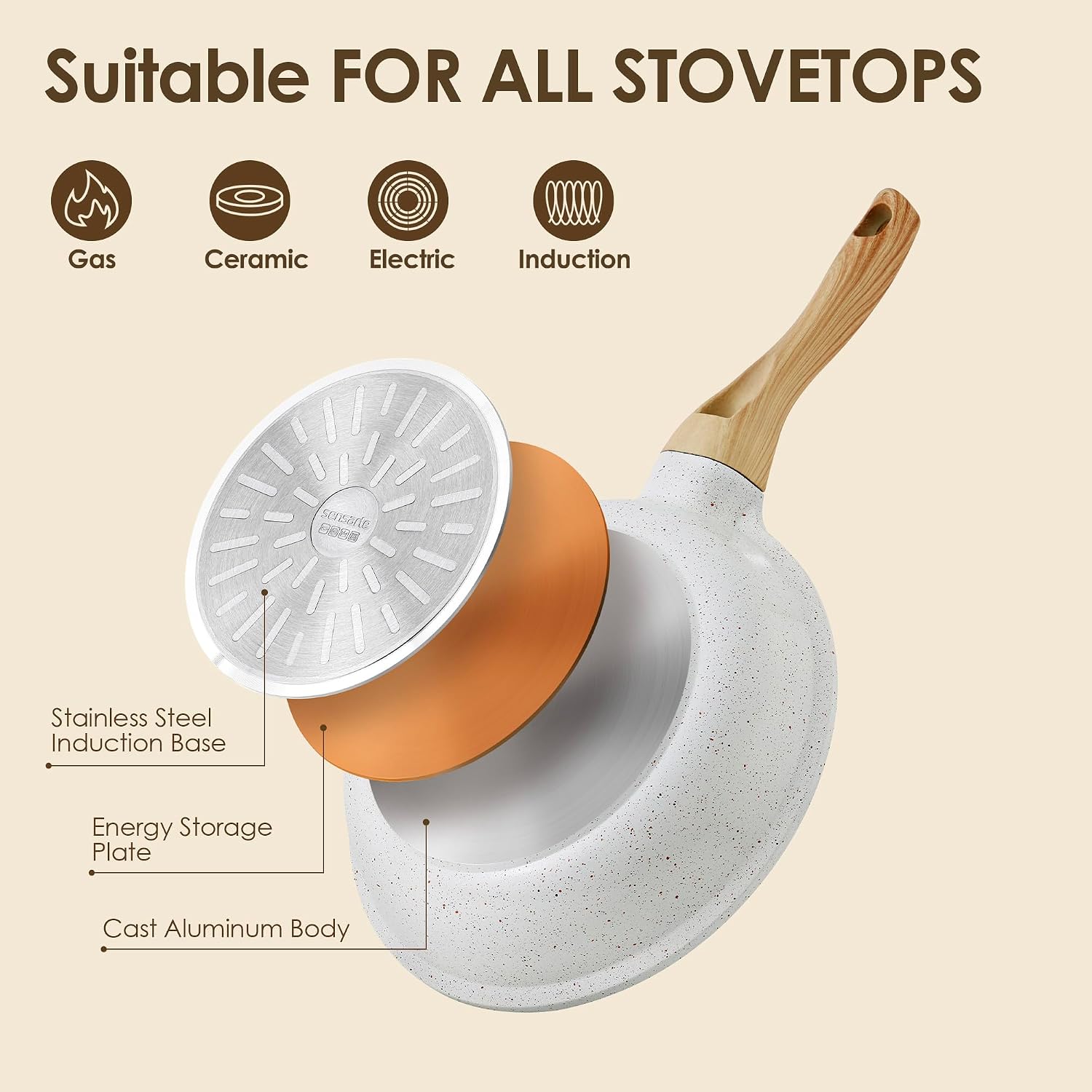
An intact ceramic coating is designed to fully seal the aluminum base, so under normal cooking conditions with an undamaged pan, meaningful aluminum leaching is not the primary concern.
The risk changes once the coating is compromised. A properly applied sol-gel layer acts as a barrier between the food and the metal, but that barrier is only a few microns thick, and it is not self-healing once it’s broken.
What Happens When the Coating Scratches or Chips
Once a ceramic coating develops a visible scratch or chip, the aluminum underneath can come into direct contact with food and cooking liquids for the first time.
Studies on aluminum cookware show that leaching increases with acidic food, cooking time, and exposed or worn aluminum surfaces; therefore, a scratched coated pan usually presents less exposed aluminum than a fully bare aluminum vessel, and would generally be expected to leach less under similar conditions.
That means a lightly scratched ceramic pan is not equivalent to cooking directly in an aluminum pot, but it also means the barrier that was supposed to prevent any metal exposure is no longer doing its job in that spot, and the damage typically only gets worse with continued use.
How Much Aluminum Exposure Is Considered Safe
The U.S. Food and Drug Administration has not set a specific safety limit for aluminum migration from cookware, and mainstream food-safety guidance generally treats trace aluminum exposure from cookware as low-risk compared to aluminum from other dietary sources, such as food additives and some antacids.
Older concerns linking aluminum cookware to Alzheimer’s disease have not been supported by later research, and food-science experts commonly describe aluminum cookware, including anodized and coated versions, as reasonably safe for typical home use.
The more consistent, practical advice across food-safety sources is not to avoid aluminum entirely, but to retire cookware once its protective coating or anodized layer is visibly failing.
Titanium Dioxide Nanoparticles — The Real Safety Question
The most substantive safety question around sol-gel ceramic coatings isn’t PFAS — it’s the potential presence of titanium dioxide (TiO2) nanoparticles inside the coating itself.
Multiple third-party investigations have found TiO2 nanoparticles embedded in ceramic nonstick coatings, and the open question researchers are still working through is how much of that material can migrate into food, and under what conditions.
What the Studies Actually Found
| Source type | What was tested | General finding | Migration trigger |
|---|---|---|---|
| Academic journal (Food Additives & Contaminants, 2017) | Ceramic-coated frying pans | Found TiO2 nanoparticles embedded in a silicone polymer coating matrix | Mechanical damage (scratching) significantly increased release |
| NIST (National Institute of Standards and Technology) | Ceramic coatings under simulated consumer-use conditions | Detected TiO2 and silicon dioxide (SiO2) nanoparticles in food simulants | Washing, scouring, and scratching; highest migration under the most aggressive conditions |
| Consumer-safety testing (reported by the American Ceramic Society) | Several popular ceramic-coated cookware brands, 2020–2021 | Detected elevated titanium levels, consistent with the use of TiO2 nanoparticles in the coating | Not fully isolated to a single trigger; raised broader transparency questions |
| Regulatory body (European Food Safety Authority) | Titanium dioxide as a food-contact and food-additive material | Concluded it could no longer be considered safe as a food additive, citing unresolved genotoxicity concerns | Not migration-specific; applies to TiO2 exposure generally |
None of this means every ceramic-coated pan is releasing dangerous levels of nanoparticles during normal cooking.
It does mean the risk is directional and damage-dependent: an undamaged coating is a far lower concern than one that’s been scratched, scoured, or is visibly wearing thin, which is exactly why care habits and replacement timing (covered later in this guide) matter more with ceramic-coated cookware than with some other cookware types.
Why “PFAS-Free” Doesn’t Mean Risk-Free
Being free of PFAS only rules out one category of concern; it says nothing about titanium dioxide nanoparticles, undisclosed proprietary additives, or heavy metals that a coating could still contain.
Manufacturers are generally not required to publish their exact coating formula, which means “non-toxic” and “PFAS-free” labeling can be accurate while still leaving real questions unanswered about what else is in the mix.
California has started closing part of that gap. Under the state’s cookware disclosure law, AB 1200, manufacturers selling cookware in California must, since January 1, 2024, include an on-product or packaging label reading “This product contains:” followed by any chemical from the state’s designated candidate list that was intentionally added to the food-contact surface or handle, along with a bilingual disclosure statement and a link or QR code to more information.
The law also bars a brand from claiming a product is “PFAS-free” if it contains any chemical from that class, even if it’s technically PFOA-free.
In practical terms, that label is the closest thing a shopper currently has to a verifiable ingredient list for a ceramic-coated pan; if a listing or package doesn’t show one, that’s worth asking about directly.
For a deeper walkthrough of what to look for, see how to check whether your cookware contains PFAS.
What Are the Disadvantages of Ceramic-Coated Cookware?
Ceramic-coated aluminum cookware trades off some real durability and disclosure limitations in exchange for its PFAS-free nonstick surface, and those tradeoffs are worth weighing before you buy a set.
- The nonstick coating typically degrades faster than PTFE-based nonstick, with many pans losing meaningful slickness within one to two years of regular use.
- Coatings can chip or scratch from metal utensils, high heat, abrasive scrubbing, or sudden temperature changes, exposing the aluminum base underneath.
- Brands rarely disclose the full ingredient list of their proprietary coating formula, making it hard to independently verify “non-toxic” claims.
- Once the nonstick surface wears down, food starts sticking, which often leads to more aggressive scraping and scrubbing that accelerates further damage.
- Ceramic-coated pans generally cannot be re-coated or repaired once the surface fails, so a worn pan usually means a full replacement rather than a fix.
- Some lower-cost, imported ceramic-coated cookware has been associated with trace heavy metals such as lead or cadmium, making brand transparency more important than with premium lines.
Is Ceramic-Coated Cookware Actually Non-Stick?
Yes, ceramic-coated cookware is genuinely non-stick when new, and for the first stretch of its life it performs comparably to traditional PTFE nonstick for everyday tasks like eggs, pancakes, and delicate fish.
Where it differs is durability of that performance over time. The slick feel comes from the smooth, glass-like sol-gel surface, and that surface has no self-lubricating properties the way PTFE does, so it relies entirely on staying physically intact.
Once the coating develops even light scratching or micro-wear from dishwasher cycles and metal utensils, the non-stick performance drops off noticeably faster than it does with conventional nonstick, which is one of the most common complaints in long-term ceramic cookware reviews.
How Ceramic-Coated Aluminum Compares to Other Cookware
Ceramic-coated aluminum sits in a middle category: safer on the PFAS question than traditional nonstick, but less durable and less transparent than several uncoated alternatives, which is worth understanding before you assume “ceramic” is automatically the safest option on the shelf.
For a closer look at one of the most common surface-level matchups, see our ceramic vs. cast iron cookware comparison.
Ceramic-Coated Aluminum vs. 100% Ceramic Cookware
| Factor | Ceramic-coated aluminum | 100% ceramic (solid clay) |
|---|---|---|
| Construction | Metal base (usually aluminum) with a thin sol-gel coating | Solid fired clay, no metal core |
| Coating failure risk | Coating can chip, exposing the metal base | No coating to chip; surface is the material itself |
| Heat conductivity | Excellent, fast and even heating | Slower to heat, but holds heat well |
| Nonstick performance | Strong when new, fades with wear | Naturally lower-stick, doesn’t “wear off” the same way |
| PFAS/PTFE content | None in the coating itself | None |
| Ingredient transparency | Often proprietary and undisclosed | Simpler composition, generally easier to verify |
Ceramic-Coated Aluminum vs. Anodized Aluminum
| Factor | Ceramic-coated aluminum | Anodized aluminum |
|---|---|---|
| Surface treatment | Sol-gel coating layered on top of the metal | Aluminum electrochemically hardened into a nonreactive oxide layer |
| Nonstick performance | High when new | Low to moderate unless paired with a separate nonstick layer |
| Durability | Coating can chip or wear within 1–2 years | Anodized layer is generally more scratch- and wear-resistant |
| Metal exposure risk | Rises once coating is damaged | Low, since the treated layer is part of the aluminum itself, not a separate coating |
| Common use case | Everyday nonstick cooking | Stockpots, sauté pans, and cookware meant for heavier daily wear |
Is Ceramic-Coated Cookware Safer Than Bare Aluminum?
Ceramic-coated cookware is safer than uncoated, bare aluminum cookware in one specific way: an intact coating meaningfully reduces direct food contact with the metal, which matters most for acidic or highly alkaline foods that are more prone to reacting with bare aluminum.
The comparison gets less clear-cut once you factor in coating wear, because a heavily scratched ceramic pan starts behaving more like exposed aluminum in the damaged spots, while also potentially introducing separate concerns from the coating material itself, such as titanium dioxide nanoparticles.
In short: a new or well-maintained ceramic-coated pan is the safer choice over bare aluminum, but a worn-out one narrows that gap considerably.
Ceramic-Coated Cookware vs. Traditional Non-Stick Cookware
| Factor | Ceramic-coated (sol-gel) | Traditional non-stick (PTFE/Teflon-style) |
|---|---|---|
| Core chemical | Silica-based coating, no PTFE | Polytetrafluoroethylene (PTFE) |
| PFOA content | None | None in modern PTFE cookware sold in the U.S. |
| Overheating risk | Coating degrades but does not release the fume-related risks associated with overheated PTFE | Can release irritating fumes if severely overheated (well above normal cooking temperatures) |
| Nonstick lifespan | Typically shorter, 1–2 years with regular use | Often longer with proper care, especially in higher-end lines |
| Marketed as | “Ceramic,” “granite,” “non-toxic” | “Non-stick,” sometimes “PFOA-free” |
| Main safety debate | Titanium dioxide nanoparticles and undisclosed additives | Historical PFOA use (now phased out) and high-heat fume exposure |
Are Specific Ceramic-Coated Aluminum Brands Safe? (T-fal and Others)
Brand-level safety claims vary in how well they’re substantiated, so it’s worth knowing what a specific brand actually discloses rather than relying on the word “non-toxic” on the box.
Are T-fal Ceramic Pans Safe?
T-fal’s ceramic cookware is built on an aluminum base, and the brand states on its own consumer-facing pages that its coatings do not contain PFOA, lead, or cadmium, and that independent labs in multiple countries have tested for PFOA absence on a recurring basis since 2003.
T-fal’s broader non-stick line uses PTFE, which regulatory bodies including the FDA, WHO, and EFSA have found safe for food contact when used as intended, and the brand frames its ceramic line as a PFOA-free alternative within that same safety standard.
These are the manufacturer’s own published claims rather than independent third-party lab results Kitchnfam has reviewed directly, so treat them as a starting point for research rather than a final verdict, and apply the same wear-and-disclosure questions covered in this guide to T-fal’s ceramic lines as you would to any other brand.
If you’re weighing T-fal against another popular ceramic-coated option, see our Caraway vs. GreenPan comparison for how two other major brands stack up on the same questions.
How to Check Any Brand’s Safety Claims Yourself
- Look for the AB 1200 “This product contains:” disclosure label on the packaging or product page, since California law requires it for cookware sold there as of 2024.
- Search the brand’s own website for a chemical disclosure or ingredient transparency page, which AB 1200 also requires manufacturers to maintain online.
- Check whether the brand specifies “PFAS-free” (the full chemical class) rather than only “PFOA-free” (one specific compound), since the two claims are not interchangeable.
- Look for any third-party lab testing referenced by name, and confirm whether that testing covered PFAS, heavy metals, or both.
- Note the coating warranty length, if any — shorter warranties can be an indirect signal of how long the manufacturer expects the coating to hold up.
How to Reduce Risk If You Use Ceramic-Coated Aluminum Cookware
Most of the risk with ceramic-coated aluminum cookware is manageable through basic care, since the biggest safety shift happens once the coating is physically compromised rather than during normal use of an intact pan.
Care and Heat Guidelines That Extend Coating Life
- Cook on low to medium heat, since sol-gel coatings are more prone to microcracking under prolonged high heat than PTFE-based nonstick.
- Use silicone, wood, or nylon utensils instead of metal, which is one of the most common causes of visible scratching.
- Hand-wash with a soft sponge and mild dish soap rather than running the pan through repeated dishwasher cycles.
- Let the pan cool before rinsing it in cold water, since rapid temperature changes can stress the coating.
- Avoid cooking sprays where possible, since some can leave a residue that builds up and dulls the nonstick surface over time.
- Store pans with a protective liner or avoid stacking them directly against other metal cookware to prevent surface scuffing.
Signs It’s Time to Replace the Pan
- The nonstick surface has visible scratches, chips, or dull, worn patches where the coating has thinned.
- Food sticks noticeably more than it did when the pan was new, even with oil or butter.
- You can see a different color or texture underneath the coating, which usually means the aluminum base is exposed.
- The coating has developed a rough or flaking texture anywhere on the cooking surface.
- The pan is more than two to three years old and has seen regular high-heat or dishwasher use.
Is Ceramic-Coated Aluminum Safe for Babies and Pregnant Women?
Ceramic-coated aluminum cookware in good condition is not considered a major risk factor for babies or pregnant women, but this is the audience where the margin for coating damage matters most, since higher-risk groups generally benefit from minimizing avoidable exposure to titanium dioxide nanoparticles and aluminum wherever practical.
What Higher-Risk Groups Should Know
Pregnancy and infancy are periods when health guidance generally leans toward reducing unnecessary exposure to substances that are still under active research, even when the evidence isn’t conclusive, and titanium dioxide nanoparticles fall into that category.
No established data is showing that cooking on an intact ceramic-coated pan poses a specific danger to a fetus or infant, but a scratched or heavily worn pan increases both aluminum contact and the potential for coating-material migration at the exact life stage where many parents prefer to minimize that kind of open question.
The most practical approach is not to panic over an existing ceramic-coated pan in good condition, but to be stricter about retiring it the moment it shows wear.
Safer Alternatives for Baby Food Prep
- Uncoated stainless steel, which has no coating to chip and a long track record in food-contact use.
- Cast iron or enameled cast iron, both of which avoid sol-gel coatings entirely.
- Well-maintained anodized aluminum without an added nonstick layer, since the anodized surface is part of the metal rather than a separate coating.
- 100% ceramic (solid clay) cookware from brands that publish third-party compliance testing.
For a full rundown of vetted options in this category, see our guide to the best non-toxic cookware for babies.
If you’re still narrowing down what to actually buy, the safety questions in this guide are only half the picture; coating quality, brand transparency, and construction all vary widely even within the “ceramic-coated aluminum” category, and working through those side by side is the fastest way to land on a pan you won’t second-guess.
For a full, vetted rundown of vetted options across every material type covered here, see our full guide to the best non-toxic cookware.
FAQ
Is ceramic-coated aluminum cookware toxic?
No, ceramic-coated aluminum cookware is not considered toxic under normal use, but it isn’t risk-free either.
The sol-gel coating itself is free of PFOA and PTFE, and an intact coating keeps the aluminum base from contacting food.
The main open questions are titanium dioxide nanoparticles that some coatings contain and the fact that manufacturers rarely disclose their full coating formula.
Risk rises specifically once the coating is scratched, chipped, or visibly worn, which is why replacement timing matters more with this cookware type than with some others.
Is it safe to use a ceramic-coated pan once it’s scratched?
A lightly scratched ceramic-coated pan is not an emergency, but it’s a signal to start planning for replacement rather than continued daily use.
Once the coating is broken, the aluminum base and, in some cases, coating-material nanoparticles can have direct contact with food, and the exposed area typically continues to worsen with ongoing cooking and cleaning.
Occasional use of a lightly scratched pan is unlikely to cause acute harm, but replacing it once scratching becomes visible is the more cautious, evidence-aligned choice, especially for households cooking with it daily.
Is ceramic-coated aluminum better than Teflon nonstick?
Ceramic-coated aluminum is generally the better choice if avoiding PFAS as a chemical class is your top priority, since modern PTFE-based Teflon still falls within that broader chemical family even though PFOA has been phased out.
If your priority is nonstick performance that lasts, well-made modern PTFE nonstick often outperforms ceramic coatings over time, since sol-gel coatings tend to degrade faster with regular use.
Neither option is risk-free, and the better choice depends on whether you’re weighing chemical class first or long-term durability first.