Sol-gel ceramic coating is safe for normal daily cooking as long as the coating remains intact, but the honest answer is more nuanced than most product pages admit.
The coating itself is PFAS-free and doesn’t release the fumes associated with overheated Teflon.
What it can’t offer yet is a long track record of independent, long-term human health research, and what happens once the surface scratches or chips depends heavily on what metal sits underneath it.
This article breaks down what the coating is made of, where the real risk lies, and how to tell whether a specific pan (including IKEA’s popular sol-gel line) is worth trusting.
What Is Sol-Gel Ceramic Coating?
The confusion around ceramic cookware safety usually starts here: “ceramic” cookware coating isn’t fired clay ceramic at all.
It’s a thin, glass-like layer made mostly of silica, applied to a metal pan through a chemical process called sol-gel, and it only resembles traditional ceramic in appearance and texture.
The Sol-Gel Process, Explained Simply
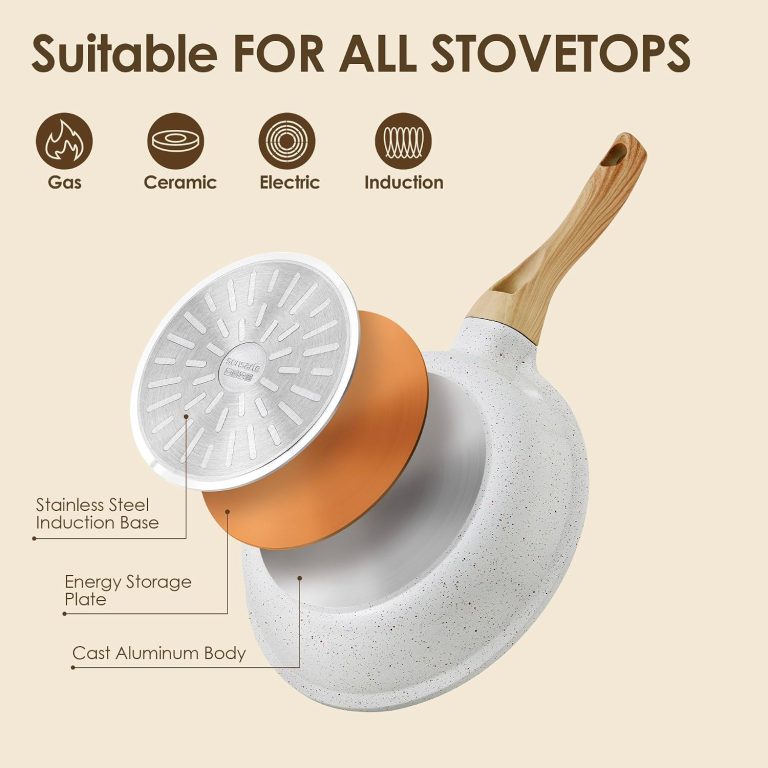
Sol-gel starts as a liquid solution of chemical compounds. Manufacturers apply this liquid to a metal base, most often aluminum, though some brands use stainless steel or cast iron.
The pan then goes through a curing process at high heat, typically between 400 and 800 degrees Fahrenheit, which hardens the liquid into a solid, glassy coating bonded to the metal.
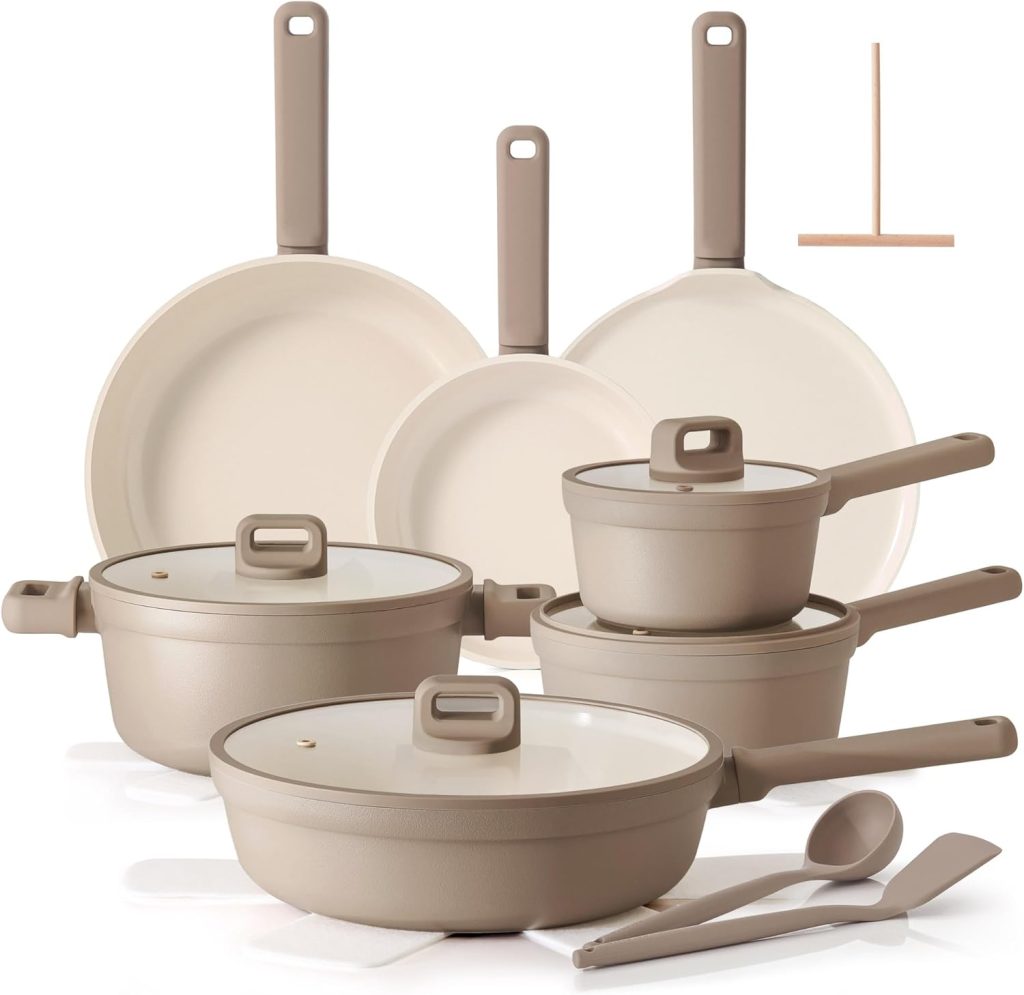
That’s the “sol” (solution) turning into a “gel” (solid) that gives the process its name.
The result is a smooth, non-porous surface with nonstick properties, without the fluoropolymer chemistry that defines Teflon.
What’s Actually Inside the Coating
Silica is the main ingredient, but it’s rarely the only one. Depending on the manufacturer, a sol-gel coating can also include:
- Titanium dioxide, used to add opacity, hardness, or a bright white/light finish.
- Poly-zirconium or poly-aluminum oxides, which help improve durability and heat resistance.
- Siloxanes, silicone-based compounds that assist with the nonstick release properties.
- Small amounts of other metal oxides, which vary by brand and aren’t always disclosed on packaging.
None of these is automatically dangerous at the concentrations used in cookware coatings.
But it means “ceramic coating” is really a category of formulations, not one fixed material, and safety can vary between brands depending on exactly what’s in that formulation.
Is Sol-Gel Ceramic Coating Safe to Cook With?
For everyday cooking with an intact coating, yes, sol-gel ceramic is considered safe by the same regulatory bodies that oversee other food-contact cookware materials in the United States.
It contains no PTFE or PFOA, and it doesn’t require the high-heat warnings that come with traditional nonstick pans.
What the Available Research Actually Shows
The honest gap is that sol-gel ceramic coating hasn’t been on the market nearly as long as PTFE, so there isn’t decades of epidemiological data behind it the way there is for older nonstick chemistry.
What research does exist focuses mostly on individual ingredients rather than the finished coating as a whole.
The American Ceramic Society noted that ceramic-coated cookware is made by a sol-gel process that can include silica, metal oxides, binders, and sometimes organic polymers, and that coating breakdown could release potentially concerning decomposition products; it also highlighted possible issues with metal oxide nanoparticles.
That’s a narrower, more specific concern than the blanket “ceramic is toxic” or “ceramic is 100% safe” claims that show up in a lot of marketing copy and wellness blogs alike.
Is Nano Ceramic Coating Safe for Cooking?
“Nano ceramic” usually just describes a sol-gel coating where the particles, often titanium dioxide, are engineered at a very small scale to create a smoother, harder surface.
The nanoscale is exactly what draws scrutiny: smaller particles can behave differently in the body than the same material in bulk form if they’re ingested or inhaled.
For an intact, undamaged coating, those particles stay locked into the glass-like matrix and aren’t in contact with food in any meaningful way.
The concern becomes relevant only once the coating is scratched or worn down to the point where particles can flake off, which is a separate question covered later in this article.
If you’re shopping specifically for cookware that avoids this question altogether, the best non-toxic cookware for babies guide covers uncoated alternatives that sidestep coating chemistry entirely.
Is Sol-Gel Ceramic the Same Thing as Teflon?
No. Sol-gel ceramic and Teflon are chemically unrelated. Teflon is a fluoropolymer (PTFE), part of the PFAS family of “forever chemicals.”
Sol-gel ceramic coating is silica-based and contains no fluoropolymers or PFAS compounds at all.
The confusion happens because both get marketed under the umbrella term “nonstick,” and both eventually wear down with use.
Sol-Gel Ceramic vs. Teflon (PTFE): Side by Side
| Factor | Sol-Gel Ceramic Coating | Teflon (PTFE) |
|---|---|---|
| Base chemistry | Silica (silicon dioxide), applied via sol-gel process | Fluoropolymer, part of the PFAS chemical family |
| Contains PFAS | No | Yes |
| Temperature at which fumes are released | No known fume release from the coating itself at normal cooking temperatures | PTFE begins releasing fumes above roughly 500°F, which is reachable on a preheated empty pan |
| Typical nonstick lifespan | Around 1 to 2 years with regular use | Often 3 to 5 years with proper care |
| Behavior when scratched | Loses nonstick performance; particle shedding depends on coating quality | Can shed microplastics and release fumes when heated after scratching |
| Regulatory history | No dedicated cookware-specific standard yet in the U.S. | Long-standing FDA review history; PFOA phased out of U.S. manufacturing since 2013 |
Is Ceramic Cookware Safer Than Teflon?
On the specific question of PFAS exposure, yes, ceramic coating is the safer category, since it contains none of the fluorinated compounds tied to PFOA health concerns.
Where the comparison gets less clear-cut is durability and what happens after damage: Teflon has a longer non-stick lifespan and a much longer regulatory track record, while ceramic coatings tend to wear out faster and haven’t been studied for nearly as long.
If your priority is eliminating PFAS, ceramic wins outright. If your priority is a coating that survives years of daily use without needing replacement, PTFE still tends to outperform it, scratches and heat warnings included.
For a deeper look at how to check if cookware contains PFAS beyond just the “ceramic” label on the box, that guide walks through what to check on the packaging itself.
Sol-Gel Ceramic vs. Stainless Steel: Which Is the Safer Choice?
If you want to remove coating chemistry from the equation entirely, uncoated stainless steel (along with ceramic vs. cast iron cookware as another uncoated option) is the more conservative choice, since there’s no coating to degrade in the first place.
Sol-gel ceramic remains the more convenient choice for anyone who cooks eggs, fish, or delicate foods regularly and wants a genuine nonstick surface.
When a Coated Pan Makes Sense vs. When Uncoated Wins
Sol-gel ceramic makes the most sense for high-frequency, low-heat cooking where food release matters, like eggs, pancakes, or delicate fish fillets.
Stainless steel wins for high-heat searing, browning, and situations where you want a pan that will outlast the coating debate entirely, since there’s no surface to wear out.
Neither choice eliminates all trade-offs. Stainless steel requires more oil and more technique to prevent sticking, and it doesn’t forgive an unheated pan the way ceramic does.
Cost and Maintenance Trade-Offs
- Sol-gel ceramic pans are typically cheaper up front but need replacing every one to three years as the coating wears down.
- Stainless steel pans cost more initially but can last decades with basic care and no coating to fail.
- Ceramic requires hand washing, low to medium heat, and wooden or plastic utensils to extend its usable life.
- Stainless steel tolerates metal utensils, high heat, and dishwasher cycles without any coating-related restrictions.
Are Scratched Ceramic Pans Still Safe to Use?
A lightly scratched ceramic pan is generally still safe to cook with, but the level of concern rises with how serious and widespread the damage is.
A few faint marks from a spatula are cosmetic. Visible flaking, chipping, or exposed metal underneath the coating is the point where you should stop using the pan for food.
What Destroys Ceramic Coating (and How Fast)
- Metal utensils are the most common cause of scratching, since they cut directly into the glass-like coating layer.
- High, sustained heat above the coating’s rated threshold accelerates breakdown even without physical contact.
- Abrasive scrubbers and steel wool wear down the surface faster than any single cooking session would.
- Sudden temperature changes, like running a hot pan under cold water, can cause micro-cracking that isn’t visible right away.
- Dishwasher cycles, even on brands that claim to be dishwasher-safe, tend to shorten coating life over repeated washes.
Signs It’s Time to Replace the Pan
- Food sticks consistently even with oil or butter, which signals the nonstick layer has worn through.
- Visible dulling or a rough texture where the surface used to be smooth and glossy.
- Hairline scratches that have widened into visible flaking or chipped patches.
- Any point where the metal base underneath is exposed to direct food contact.
Here’s the practical framework: dulling alone is a performance problem, not a safety one. Hairline scratches are still mostly cosmetic.
Once flaking starts, small coating particles can end up in food, which is a texture and ingestion concern rather than a fume-release one.
Once the base metal is exposed, you’re cooking on that metal directly- aluminum, stainless, or cast iron, which brings its own separate safety profile.
That’s the point to retire the pan rather than push it another few months. See how aluminum ceramic-coated cookware performs under the same conditions.
Is IKEA’s Sol-Gel Ceramic Coating Safe?
IKEA’s sol-gel ceramic pans meet the same safety standard as other reputable sol-gel cookware: no PTFE, no PFAS, and a metal base (typically stainless steel with an aluminum core) that IKEA discloses on its own product pages.
IKEA has stated its cookware line has been PFAS-free since April 2024, when it launched its HEMKOMST, MIDDAGSMAT, and HUSKNUT ranges specifically to phase out PTFE.
What’s Different About the HEMKOMST, MIDDAGSMAT, and HUSKNUT Lines
These three lines share the same sol-gel ceramic coating technology but differ in base construction.
Several IKEA product listings note a stainless steel exterior with an aluminum layer sandwiched in the middle for even heat distribution, which is a more durable construction than a straight aluminum core.
IKEA’s own care instructions recommend wooden or plastic utensils only and warn against preheating an empty pan too quickly on induction, since rapid heating can warp the pan and damage the coating faster than normal use would.
How IKEA’s Coating Compares to Other Sol-Gel Brands
| Brand | Typical base metal | PFAS-free | Notable disclosure |
|---|---|---|---|
| IKEA (HEMKOMST/MIDDAGSMAT/HUSKNUT) | Stainless steel with aluminum core | Yes, since April 2024 | Publishes care instructions and PFAS-free claim directly on product pages |
| Caraway | Aluminum | Yes | Has faced third-party heavy metal testing scrutiny from independent reviewers |
| GreenPan | Aluminum | Yes | Uses its own branded Thermolon coating name for sol-gel technology |
No brand in this comparison publishes independent, third-party lab results for every product line as standard practice, which is worth knowing before assuming any single brand’s marketing claims settle the question.
If you’re weighing specific brands against each other in more depth, the Caraway vs. GreenPan comparison covers how those two specifically stack up on coating durability and disclosed testing.
How to Tell If Ceramic Cookware Is Lead-Free
The most reliable way to confirm a pan is lead-free is to look for an explicit written disclosure from the manufacturer, since visual inspection alone can’t tell you what’s in a coating.
- Check the product page or packaging for an explicit “lead-free” or “heavy metal-free” statement, not just “non-toxic,” which is an unregulated marketing term.
- Look up whether the brand publishes a California Proposition 65 compliance statement, since Prop 65 requires disclosure of specific chemicals including lead above certain thresholds.
- Search for the brand name alongside “XRF testing” or “third-party lab results” to see if any independent reviewer has published results, rather than relying on the brand’s own claims.
- Contact the manufacturer directly and ask for their food-contact material compliance documentation if none of the above is publicly available.
Reading Labels and Manufacturer Disclosures
Terms like “non-toxic,” “eco-friendly,” and “safe for the family” carry no legal definition in U.S. cookware labeling, so they tell you nothing about lead or cadmium content on their own.
A genuine lead-free claim should be specific and verifiable, ideally tied to a named regulatory standard rather than a marketing tagline.
Third-Party Testing You Can Actually Check
Independent reviewers, including LeafScore and Lead Safe Mama, have published XRF (X-ray fluorescence) spectrometry results on specific cookware products in the past, testing for lead, cadmium, and other heavy metals at the surface level.
These results aren’t a substitute for a manufacturer’s own compliance documentation, but they’re a useful cross-check when a brand’s claims aren’t backed by anything public.
Whichever direction you go, the decision usually comes down to how much you’re willing to trade nonstick convenience for long-term certainty.
If sol-gel ceramic fits your cooking habits, IKEA’s PFAS-free disclosure and stainless-aluminum construction put it in line with other reputable brands in this category.
If you’d rather sidestep coating chemistry altogether, our full best non-toxic cookware overall guide ranks the uncoated and coated options we’d actually recommend, with the trade-offs of each spelled out.
FAQ
Is sol-gel ceramic coating safe to use?
Yes, for normal cooking with an intact coating, sol-gel ceramic is considered safe by the same regulatory framework that governs other food-contact cookware in the U.S.
It contains no PTFE, PFOA, or PFAS compounds, and it doesn’t release fumes at typical stovetop cooking temperatures the way overheated Teflon can.
The main open question isn’t the coating’s safety when new; it’s the lack of long-term independent research compared to older nonstick chemistry, and what happens once the surface is damaged.
An intact, well-maintained pan from a brand that discloses its materials is a reasonable, low-risk choice for everyday cooking.
Is sol-gel ceramic the same as Teflon?
No, they’re chemically unrelated materials that both happen to get marketed as “nonstick.”
Teflon is PTFE, a fluoropolymer in the PFAS chemical family, while sol-gel ceramic coating is silica-based and contains no fluorine chemistry at all.
This is why ceramic coatings can legitimately claim to be PFAS-free while Teflon cannot.
The two do share some practical similarities, including a nonstick surface that degrades with metal utensils and high heat, which is likely where the confusion between them originally started.
Are scratched ceramic pans dangerous?
Light, cosmetic scratches from normal utensil use are not considered dangerous, but visible flaking or chipping is a different situation and a sign to stop using the pan.
As scratches deepen, small coating particles can end up mixed into food, and once the coating wears through completely, you’re cooking directly on the base metal underneath, whether that’s aluminum, stainless steel, or cast iron.
A pan with a few faint marks and no visible chipping is still fine for regular use.
One with peeling or exposed metal has crossed from cosmetic wear into an actual safety consideration and should be replaced.
How can I tell if my ceramic cookware is lead-free?
Look for an explicit lead-free or heavy-metal-free statement from the manufacturer rather than relying on vague terms like “non-toxic,” which carry no legal definition in cookware labeling.
Checking whether the brand publishes a California Prop 65 compliance statement is a stronger signal, since that regulation requires disclosure of lead above specific thresholds.
Independent reviewers like LeafScore have published third-party XRF testing on some specific cookware products, which is worth searching for if a brand’s own claims aren’t backed by any public documentation.