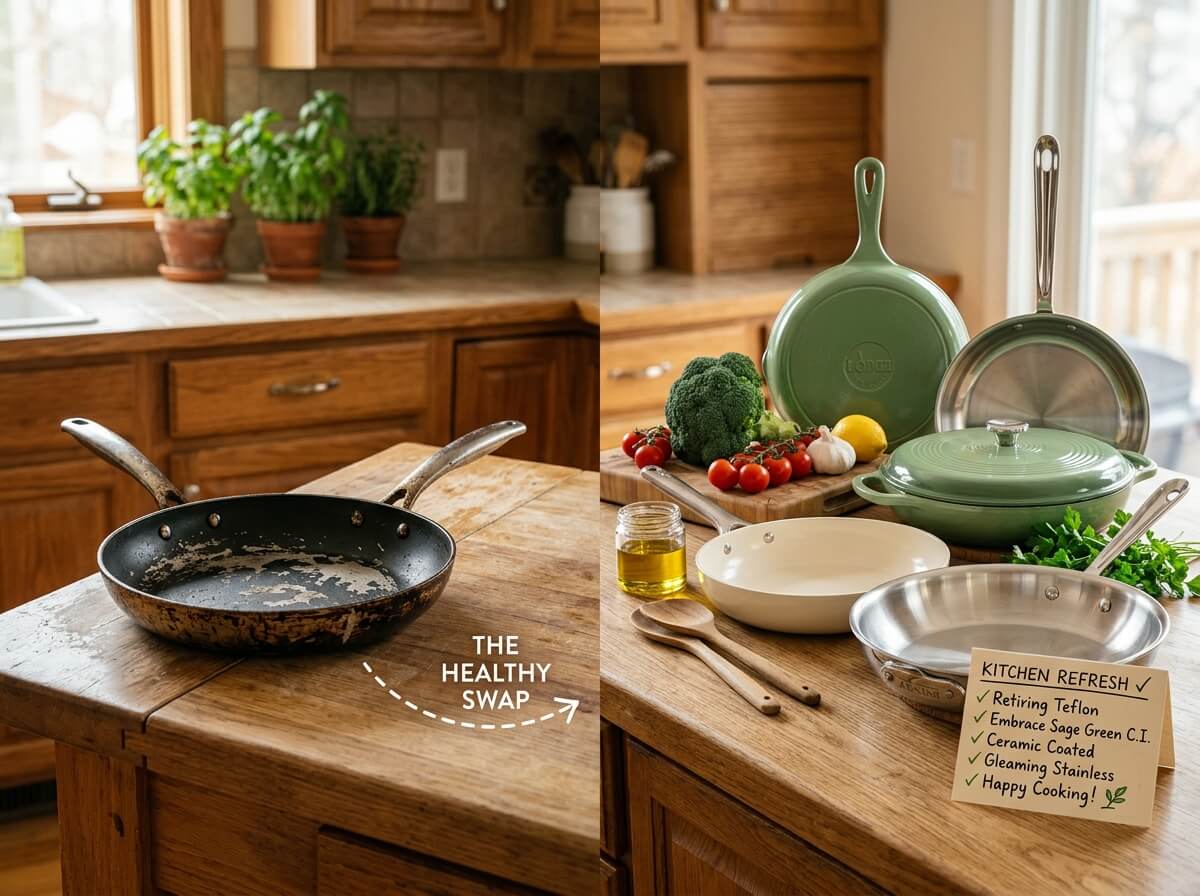
You don’t need to replace every pan in your kitchen this weekend. The safest approach is a staged plan that starts with the pan you use most and the one showing the clearest signs of wear.
Signs It’s Time to Replace Your Non-Stick Pan
A non-stick pan needs to be replaced the moment its coating is visibly compromised, not on a fixed schedule based on age alone.
Visible damage is the signal that matters, because that’s the point at which coating material can flake into food or the pan can no longer form an even, protective barrier during cooking.
Scratches, flaking, and warping
- Any visible scratch means the coating has been physically breached, and small flakes of it can end up mixed into whatever you’re cooking.
- A pan that’s warped no longer sits flat on the burner, which causes uneven cooking and can also mean the coating is under more stress than it was designed for.
- Dark, sticky buildup that won’t scrub off usually means baked-on residue has bonded to a degraded section of the coating rather than sitting cleanly on top of it.
- A rough, fuzzy-feeling patch on the cooking surface is a sign the coating itself has broken down structurally, not just picked up stains.
- Food sticking consistently, even with oil and proper preheating, means the coating has lost its function, regardless of how the pan looks.
How long do non stick pans typically last
| Coating Type | Typical Lifespan | Notes |
|---|---|---|
| PTFE (Teflon) | 3–5 years | Manufactured without PFOA since 2013, per EPA phase-out requirements. |
| Ceramic-coated non-stick | 1–2 years | Coating wears faster than PTFE under regular high-heat use. |
| Multi-layer PTFE | Up to 5 years | Additional coating layers add some scratch resistance. |
| Any coating with visible damage | Replace immediately | Lifespan estimates only apply to intact, undamaged coatings. |
If you’re not sure whether a specific pan’s coating raises any of these concerns in the first place, how to check any pan for PFAS covers what to look for on a product label before you buy a replacement.
Do You Need to Replace Everything at Once?
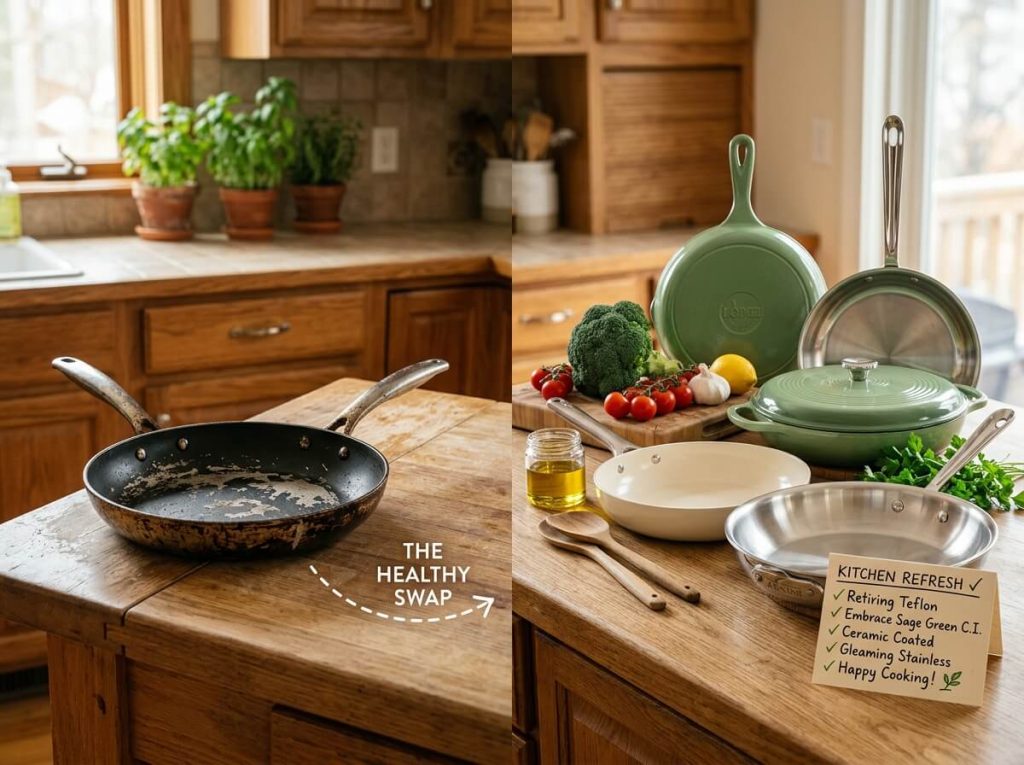
No, replacing your cookware gradually, starting with the piece you use most, is a reasonable and financially sensible way to transition, as long as anything with visible coating damage gets replaced first, regardless of how often you use it.
A replace-by-priority framework, starting with your most-used pan
- Replace any pan with visible scratches, flaking, or warping first, no matter what material it’s made of or how expensive it was.
- Replace your everyday skillet next, since it’s typically the pan used most often for high-heat cooking like searing and sautéing.
- Replace saucepans and stockpots after that, since these usually see less direct high-heat contact and less frequent use than a daily skillet.
- Replace specialty pieces, like a dedicated omelet pan or wok, last, since these are often used less frequently and may not need urgent attention.
- Budget one new piece every few months rather than an entire set at once, which spreads out the cost while still steadily reducing your non-stick footprint.
What’s still safe to use while you transition
- A non-stick pan with an intact, unscratched coating that’s cooking food properly is generally considered fine to keep using for now.
- Cooking on low to medium heat, rather than high heat, extends the safe life of any non-stick coating you’re still using.
- Avoiding metal utensils on pans you haven’t replaced yet prevents the scratching that would force an earlier replacement.
- Keeping any pans you’re phasing out away from the dishwasher preserves its coating for as long as you plan to keep using it.
Choosing What to Switch To
| Material | Non-Stick Performance | Heat Tolerance | Upkeep Required | Typical Cost |
|---|---|---|---|---|
| Stainless steel | Low without technique; improves with practice | Very high | Low | Moderate |
| Cast iron | High once seasoned | Very high | Moderate — needs seasoning | Low |
| Carbon steel | High once seasoned | Very high | Moderate — needs seasoning | Moderate |
| Ceramic-coated | Moderate to high when new | Low to moderate | Low, but coating wears over 1–2 years | Moderate to high |
If you’re weighing cast iron against ceramic-coated cookware specifically, our ceramic vs. cast iron comparison breaks down how the two perform over years of regular use rather than just out of the box.
Stainless steel
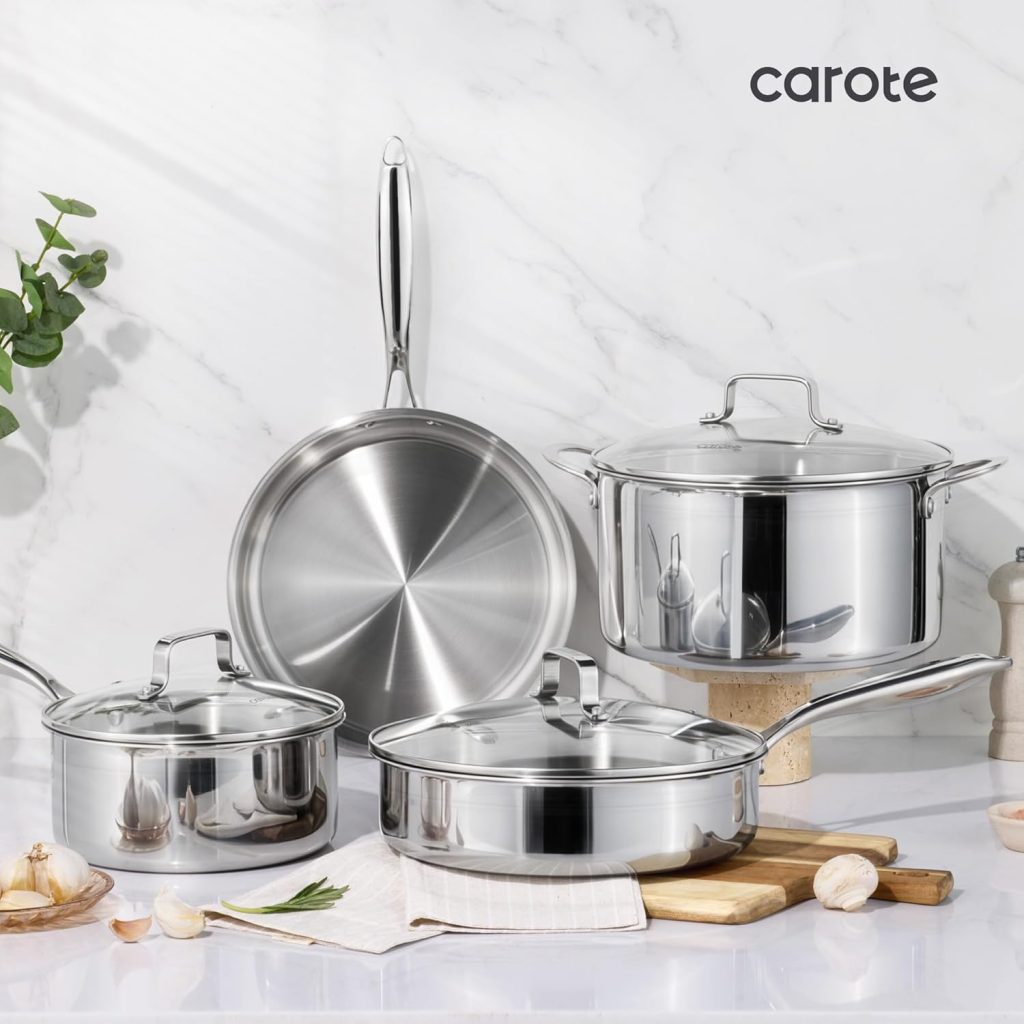
- Stainless steel has no coating to wear out, so it doesn’t have a replacement timeline the way non-stick coatings do.
- It handles high heat and metal utensils without any risk of coating damage, making it one of the more forgiving materials to cook with daily.
- Achieving a good release on stainless steel depends on proper preheating and using enough oil, rather than any built-in slickness.
- It’s typically dishwasher-safe, though hand washing keeps its shine longer.
Cast iron and carbon steel
- Both materials develop a naturally non-stick surface through seasoning, a layer of polymerized oil baked into the metal rather than a manufactured coating.
- Cast iron holds heat exceptionally well, making it well-suited to searing and other high-heat techniques.
- Carbon steel is noticeably lighter than cast iron while offering similar heat retention and searing performance.
- Both require avoiding the dishwasher and drying thoroughly after washing to prevent rust.
Once you’ve picked up a cast iron or carbon steel pan, building that seasoning layer correctly from the start matters — how to season cast iron cookware walks through the process step by step.
Ceramic-coated and 100% ceramic
- Ceramic-coated cookware is free of PTFE and PFOA, making it a common first step for people who still want a slick, easy-release surface during their transition.
- Its non-stick performance is strongest when the pan is new and gradually declines over one to two years of regular use, according to cookware brands’ own published lifespan estimates.
- 100% ceramic cookware, where the material is ceramic all the way through rather than a coating over metal, tends to last longer but doesn’t release food quite as easily as a coated ceramic surface.
- Both types require low to medium heat and non-abrasive cleaning to get the longest usable life out of the coating.
Adjusting Your Cooking Technique
Switching away from non-stick cookware usually means adjusting a couple of habits, since materials like stainless steel and cast iron rely on proper heat and oil rather than a slick coating to keep food from sticking.
The heat-then-oil method
- Preheat the empty pan over medium to medium-high heat for one to two minutes before adding any oil.
- Add a small amount of oil once the pan is hot, and let it heat until it shimmers rather than smokes.
- Add food to the pan and resist the urge to move it right away, since food naturally releases once a proper sear has formed.
- Turn the heat down to medium or low for the remainder of cooking, depending on what you’re making.
- Test for release by gently nudging the food; if it resists, give it another minute before trying again rather than forcing it loose.
What to cook in each material while you transition
| Dish Type | Best Material | Why |
|---|---|---|
| Eggs and delicate fish | Well-seasoned cast iron or carbon steel | Seasoning provides genuine release once established. |
| Searing and browning meat | Stainless steel or cast iron | Both handle high heat well and develop a good fondness for sauces. |
| Soups, stews, and sauces | Stainless steel | No sticking concern, and metal utensils and acidic ingredients are both fine. |
| Pancakes and delicate items while your seasoning builds | Ceramic-coated pan | Provides the most forgiving release while you’re still building technique on other materials. |
Getting used to a new material also means learning how to clean it properly, since the wrong cleaning habits can undo the progress you’re making.
How to clean non-toxic cookware without damaging it covers the specific routine for each material listed here.
What “PFAS-Free” Actually Means When You’re Shopping
“PFAS-free” means a product contains no per- and polyfluoroalkyl substances, a large family of synthetic chemicals that includes PTFE, but the label alone doesn’t tell you everything about how a pan is made or how well it will perform.
Why PFAS-free doesn’t always mean coating-free
A pan can be accurately labeled PFAS-free while still having a manufactured coating, since ceramic-coated cookware is typically PFAS-free but still relies on an applied surface layer rather than being a solid, uncoated material like stainless steel or cast iron.
That distinction matters for care and longevity: a PFAS-free ceramic coating still wears down over time and needs the same gentle handling, no metal utensils, no aerosol cooking spray, no high heat that any coated surface requires, even though it doesn’t carry the same chemical concerns as PTFE.
Reading a label before you buy
- Look specifically for “PFAS-free” rather than only “PFOA-free,” since PFOA is just one chemical within the broader PFAS family, and older labeling sometimes only addressed that single compound.
- Check whether the cookware has any coating at all, since uncoated materials like stainless steel and cast iron don’t need a PFAS claim in the first place.
- Look for a brand’s published testing or sourcing information rather than taking a marketing claim at face value, since third-party verification carries more weight than a label alone.
- Confirm the claim covers the entire piece, including handles and rivets, not just the interior cooking surface.
For a full breakdown of what these labels mean and how to verify them, what PFAS-free actually means covers the terminology in more depth than a single section here can.
Disposing of Your Old Non-Stick Pans Responsibly
Most curbside recycling programs cannot accept PTFE-coated non-stick pans, so responsible disposal usually means donation, a manufacturer take-back program, or a scrap metal recycler rather than the household recycling bin.
Why most curbside recycling won’t take them
Recycling facilities process metal by melting it down, but a PTFE coating has to be removed first, and most facilities don’t have a cost-effective way to do that at scale.
Research from the Ecology Center found that a large majority of tested non-stick cooking pans were coated with PTFE, which means the majority of non-stick cookware people are trying to get rid of falls into this hard-to-process category.
Curbside programs generally reject these pans outright rather than attempting to separate the coating from the underlying metal.
Donation, mail-back, and scrap metal options
- Donate any pans that are still usable, even with minor scratches, to a thrift store, shelter, or local “buy nothing” group rather than throwing them out.
- Look into manufacturer mail-back programs, since some cookware brands will take back old pans, including other brands, and either recycle or responsibly dispose of them.
- Contact a local scrap metal recycler for pans too damaged to donate, since some facilities will accept coated cookware once you explain what it is.
- Remove and dispose of a badly damaged pan in regular household trash only as a last resort, since landfill disposal doesn’t recover any of the material.
Once you’ve settled on your replacement materials and figured out what to do with the old ones, it’s worth seeing the full range of options in one place.
Our full non-toxic cookware picks round up the cookware that fits every material discussed above.
Frequently Asked Questions
What are the healthiest alternatives to non-stick pans?
Stainless steel, cast iron, and carbon steel are generally considered the healthiest alternatives, since none of them rely on a manufactured coating that can wear down over time.
Stainless steel requires no seasoning and handles metal utensils and high heat without concern, while cast iron and carbon steel develop their non-stick surface through seasoning, a layer of polymerized oil rather than a synthetic coating.
Ceramic-coated cookware is also a PFAS-free option, though it still involves an applied coating that wears out faster than an uncoated material.
Is a scratched non-stick pan actually dangerous?
Yes, a scratched non-stick pan should be replaced rather than kept in rotation, because the scratch means the coating has been physically breached, and small flakes can end up in food during cooking.
This is a more immediate concern than simple age, since an intact coating that’s a few years old is generally considered lower risk than a newer pan with visible damage.
If you notice flaking, discoloration that won’t scrub off, or a rough patch on the cooking surface, those are additional signs pointing to the same conclusion.
Can you recycle non-stick cookware?
Generally not through curbside recycling, because most non-stick pans are coated with PTFE, and that coating has to be removed before the underlying metal can be processed, which most recycling facilities aren’t equipped to do.
Instead, usable pans are best donated to a thrift store or local reuse group, while damaged pans are better handled through a manufacturer’s mail-back program or a scrap metal recycler that specifically accepts coated cookware.
Checking with your local waste management authority is also worth doing, since a small number of municipal programs do accept these pans.
Do I need to replace all my pots and pans at once?
No, replacing cookware gradually is a reasonable approach as long as you prioritize correctly: any pan with visible scratches, flaking, or warping should be replaced first, regardless of cost, followed by your most-used everyday skillet, then saucepans and stockpots, then specialty pieces used less often.
This staged approach spreads out the cost of switching materials while still steadily reducing how much coated non-stick cookware remains in your kitchen.
In the meantime, an intact, undamaged non-stick pan cooked on low to medium heat with non-metal utensils is generally fine to keep using.