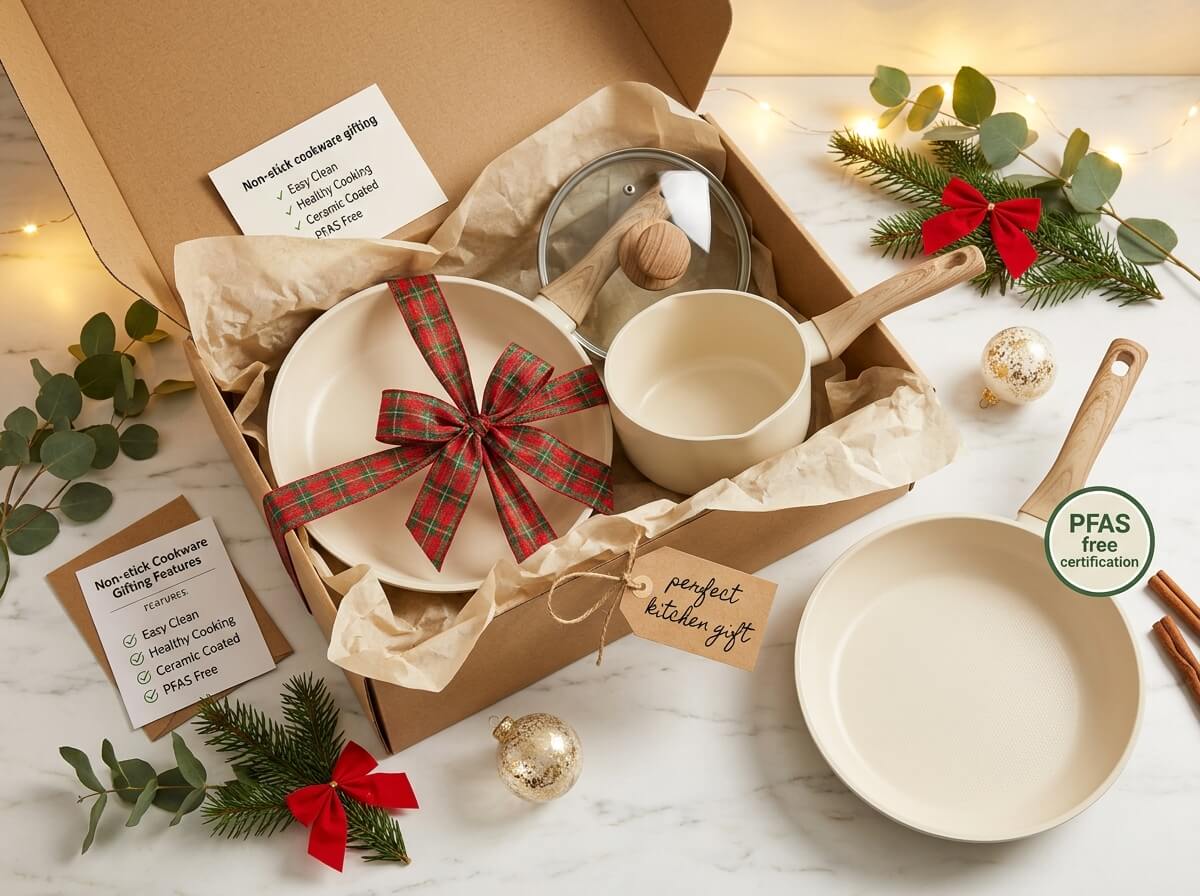
The best non-toxic cookware gift isn’t the biggest set or the trendiest color; it’s the piece that fits how the recipient actually cooks, what stovetop they own, and what they already have in their cabinets.
Non-toxic cookware makes an especially good gift because it solves a problem people rarely buy for themselves: replacing worn-out nonstick pans before the coating starts to degrade.
But because you’re buying on someone else’s behalf, the decision comes with a few extra questions a personal purchase never raises, starting with whether to buy a full set at all.
Should You Gift a Full Set or a Single Statement Piece?
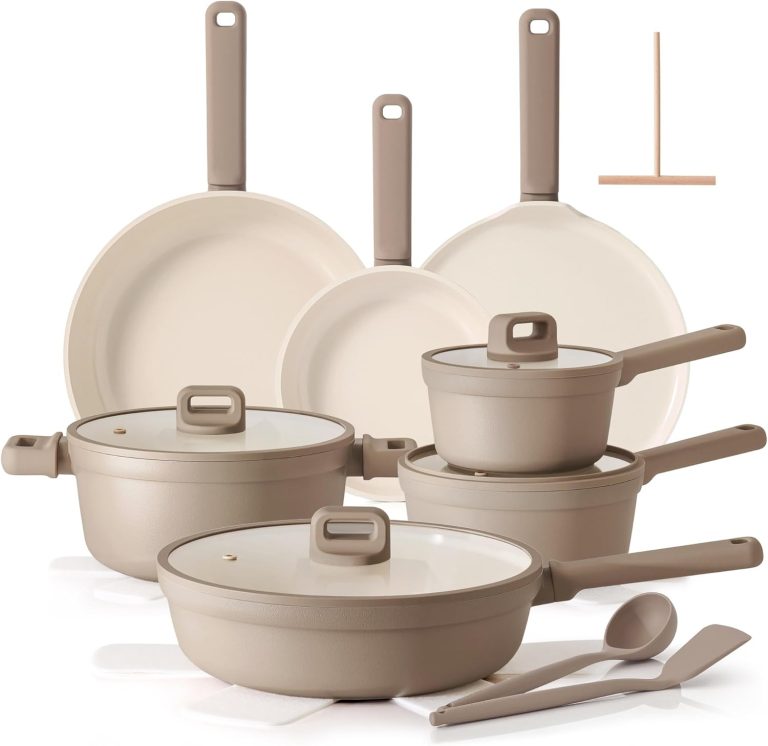
A full cookware set makes the stronger gift when the recipient is starting a kitchen from scratch, and a single statement piece makes the stronger gift when they already own cookware and just need one thing done well.
Sets look generous and photograph well for registries, but they also carry more risk: if the recipient already owns three saucepans, a seven-piece set duplicates most of what they have.
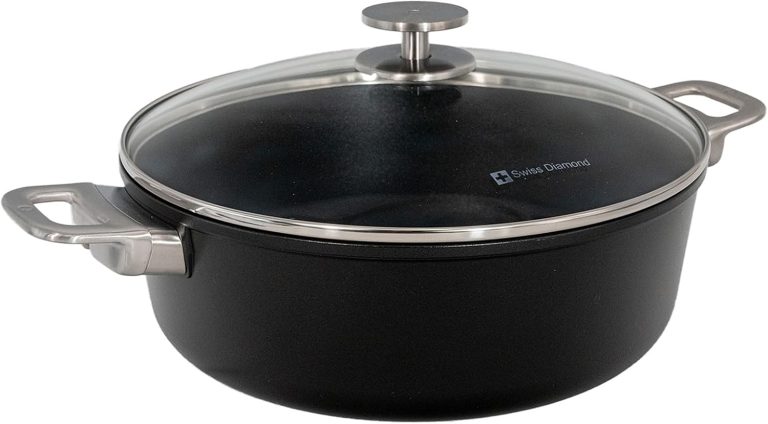
A single well-chosen piece — a Dutch oven, a large skillet — avoids that overlap entirely and often reads as more thoughtful, since it signals you considered what they’d actually use rather than defaulting to the biggest box available.
When a set makes the stronger gift
- The recipient is moving into their first apartment or setting up a kitchen for the first time, since sets cover the full range of everyday cooking needs in one purchase.
- The gift is tied to a wedding or engagement, where cookware sets are a standard, expected registry category that couples plan around.
- You know the recipient’s existing cookware is old or mismatched across multiple pieces, making a full replacement more useful than a single addition.
- The budget comfortably covers a mid-range or higher set, since a cheap full set often means thinner gauge metal and shorter-lived coatings than a single higher-quality piece at the same price.
When one exceptional piece is the safer choice
- The recipient already has a working set of pots and pans and would end up storing duplicates rather than using them.
- You don’t know their exact cooking habits well enough to guess at piece counts, but you know they’d use one great skillet or Dutch oven regardless.
- The budget is tighter, since one well-made piece from a reputable non-toxic brand outperforms a discount full set at a comparable price.
- The occasion is more personal than practical — a milestone birthday or a “thinking of you” gift — where a single beautiful piece carries more weight than a boxed set.
Matching the Gift to the Occasion
The right non-toxic cookware gift changes depending on the occasion, since weddings, housewarmings, and holidays each come with different expectations around piece count, price, and formality.
| Occasion | Typical Gift Format | Price Range | Best Fit |
|---|---|---|---|
| Wedding/registry | Full set or Dutch oven | $150–$400 | New households merging or starting kitchens together |
| Housewarming | Single piece or small 2–3 piece set | $50–$150 | Someone with an existing kitchen adding to it |
| Holiday / Christmas | Single piece or small set | $40–$200 | Wide range, from casual cooks to serious home chefs |
| Mother’s/Father’s Day | Single statement piece | $60–$180 | A more personal, individually chosen gift |
Wedding and registry gifts
Wedding gifts are the one occasion where a full non-toxic cookware set is almost always the right call, since registries are built around new households that need to cover basic cooking needs from zero.
“The Knot’s guest-study coverage suggests that nearly half of wedding guests give a gift that is not on the couple’s registry, so it is worth checking the registry first before buying cookware.”
If the couple hasn’t registered for cookware specifically, a set from a well-documented non-toxic brand is a safe, well-regarded choice that reads as both practical and considered.
Housewarming gifts
Housewarming gifts call for something smaller and more targeted than a full set, since the recipient typically already has a functioning kitchen and is adding to it rather than starting over.
A single versatile piece — a large sauté pan or a mid-size saucepan — fits the housewarming budget range better than a full set and avoids the risk of duplicating cookware they’ve already unpacked.
Holiday and Mother’s/Father’s Day gifts
Holiday and Mother’s or Father’s Day gifts benefit from leaning personal rather than practical, since these occasions reward a gift that feels individually chosen rather than a default “everyone needs pots and pans” purchase.
A single well-made piece in a color or finish you know the recipient will like tends to land better on these occasions than a generic set, particularly for recipients who already cook regularly and have strong preferences about what they use.
Matching the Gift to the Recipient
Beyond the occasion, the recipient’s own cooking habits should shape the gift more than any other factor, since a beginner and an experienced cook need very different things from the same non-toxic cookware category.
- A beginner cook benefits most from forgiving, easy-to-clean materials like ceramic-coated nonstick, since it reduces the learning curve around sticking and burning.
- An experienced cook who already owns cookware benefits more from a single upgrade piece in a material they don’t already have, such as enameled cast iron or carbon steel.
- Someone in a small kitchen or apartment benefits from compact, stackable pieces rather than a bulky full set that won’t fit their storage.
- A recipient who’s difficult to shop for is often better served by one universally useful piece, like a versatile sauté pan, than a themed or trend-driven set.
Buying for a beginner cook
A beginner cook is best served by ceramic-coated non-toxic cookware, since it’s the most forgiving material for someone still learning heat control and pan maintenance.
Ceramic coatings require less oil and release food more easily than stainless steel, which reduces the most common frustration new cooks run into.
If you’re buying for someone expecting a baby rather than starting to cook, our guide to non-toxic cookware for babies covers feeding-specific pieces that fall outside a standard cookware gift.
Buying for someone who already cooks often
Yes, non-toxic cookware can be an excellent gift for someone who already cooks a lot, but it works best as a targeted upgrade rather than a full replacement set.
Experienced cooks tend to have strong opinions about what they already own and use, so the strongest gift in this case is a single piece that fills a real gap — an enameled Dutch oven if they don’t have one, or a carbon steel pan if their current set is entirely nonstick.
Buying a full set for someone who already cooks often risks giving them redundant cookware they won’t use over what they’ve already broken in.
Checking Compatibility Before You Buy
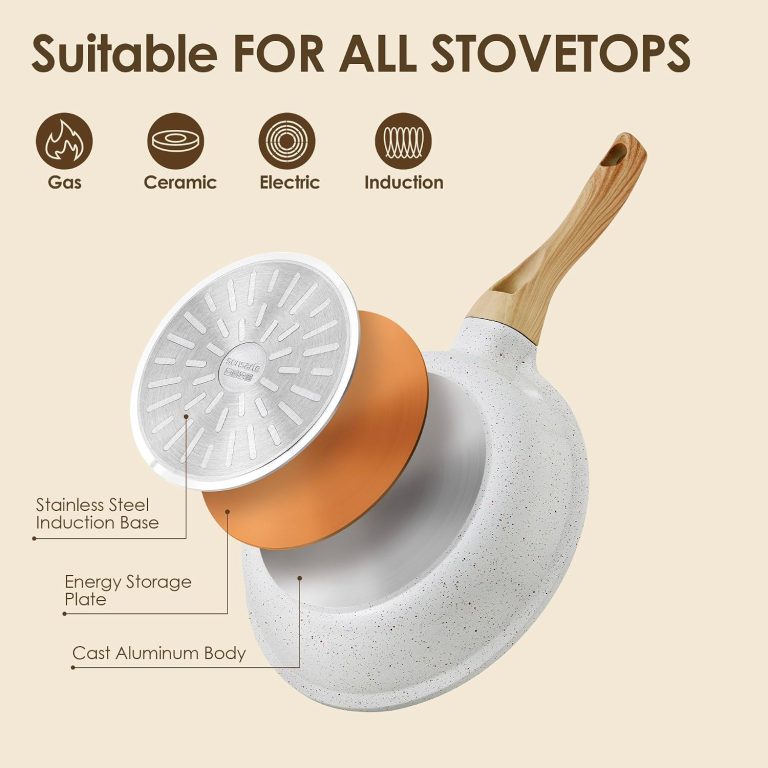
Before buying non-toxic cookware as a gift, check induction compatibility before buying if you know or suspect the recipient cooks on an induction stovetop, since not every non-toxic material or brand collection works on induction.
- Find out what stovetop the recipient has, either directly or through someone close to them, since induction, gas, and standard electric all have different compatibility requirements.
- If they have induction, confirm the specific product line is induction-rated rather than assuming the brand’s entire catalog qualifies.
- If you can’t confirm their stovetop type, choose materials that work across all stovetop types, such as stainless steel, cast iron, or ceramic-coated cookware built with a magnetic base.
- Avoid gifting pure ceramic pieces, like Xtrema, to a recipient with an unconfirmed stovetop, since pure ceramic never works on induction regardless of brand.
Budget Tiers for Non-Toxic Cookware Gifts
| Budget Tier | Price Range | What You Get | Best For |
|---|---|---|---|
| Entry | $40–$80 | Single ceramic-coated pan or small 2-piece set | Housewarming, casual holiday gifts |
| Mid-range | $80–$200 | Single premium piece or a compact 4–5 piece set | Most occasions, most recipients |
| Premium | $200–$400 | Full brand-name set or enameled cast iron piece | Weddings, milestone occasions |
| Luxury | $400+ | Full designer set or investment cast iron collection | Significant milestones, closest relationships |
Entry-tier gifts in the $40 to $80 range typically cover a single well-made ceramic-coated pan or a small set, which suits casual occasions like housewarming visits where a large investment would feel out of place.
Mid-range gifts between $80 and $200 cover most gifting situations well, offering either one premium piece from a reputable brand or a compact set sized for smaller households.
Premium and luxury tiers make the most sense for weddings and major milestones, where a full recognizable-brand set or an enameled cast iron piece signals a level of investment appropriate to the occasion.
For a full breakdown of materials and pricing beyond gifting specifically, see our complete non-toxic cookware guide.
Best Non Toxic Cookware Brands for Gifting
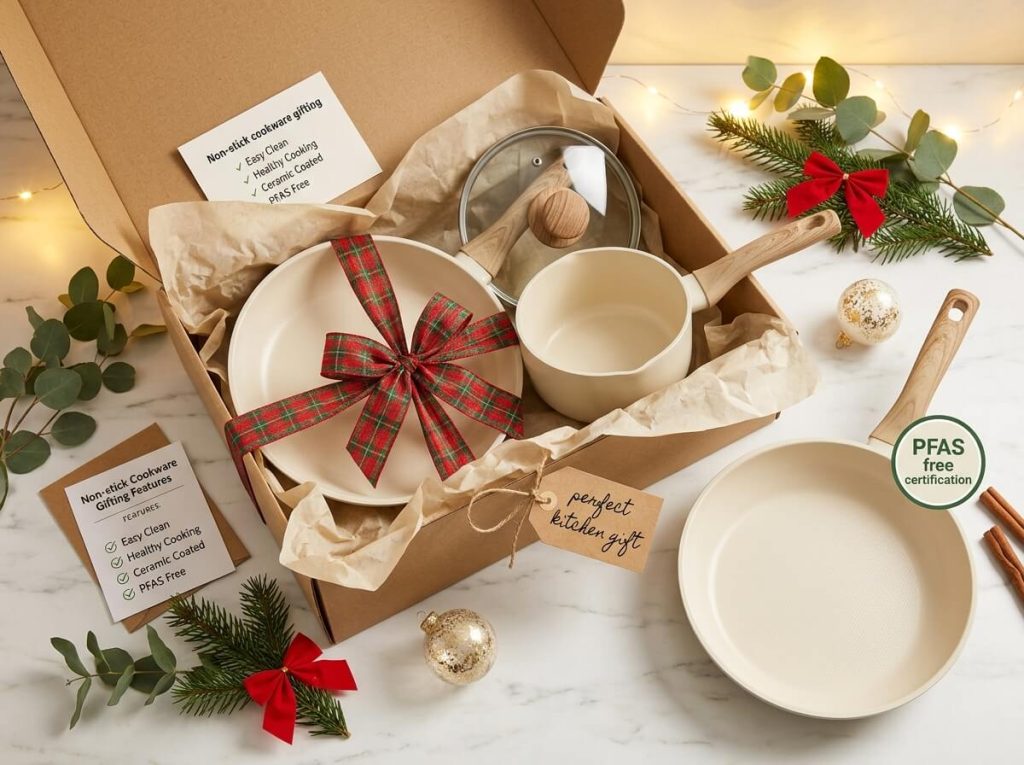
| Brand | Typical Gift Format | Price Tier | Gifting Strength |
|---|---|---|---|
| Caraway | Full set or single piece | Premium | Wide color selection, documented PFAS/PTFE-free testing, works across all stovetops |
| Our Place | Single piece (Always Pan) or small set | Mid-range | Strong for small kitchens; consolidates multiple pan functions into one piece |
| Le Creuset | Single enameled cast iron piece | Luxury | Long-standing reputation for durability; often treated as an heirloom gift |
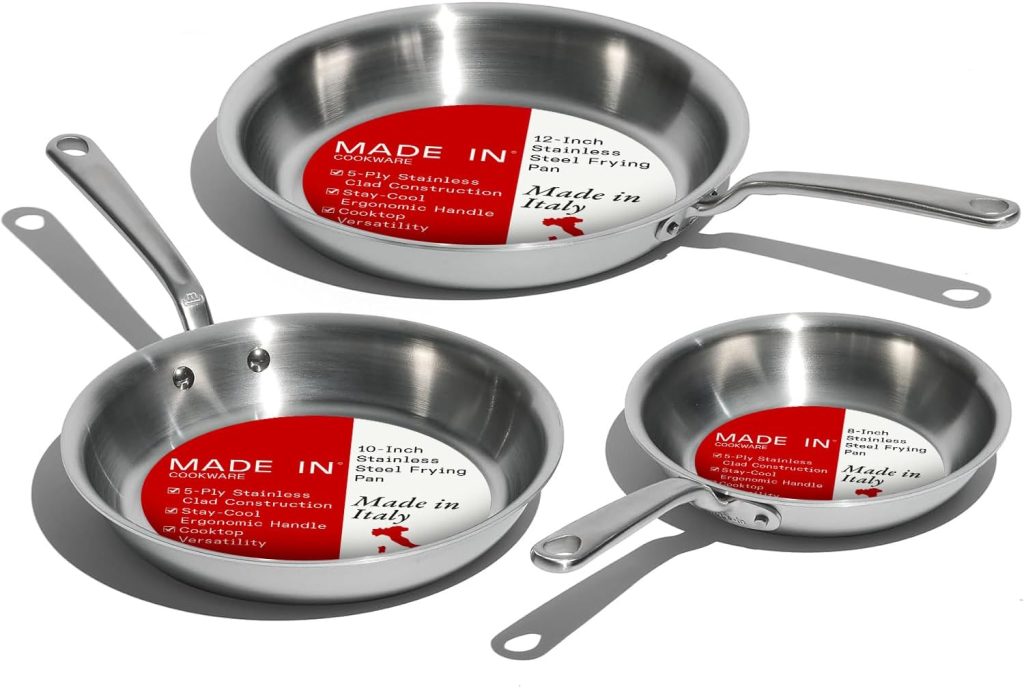
| Made In | Single piece, stainless or carbon steel | Mid-range to Premium | No synthetic coating at all, appealing to recipients wary of any coated nonstick |
Caraway
Caraway is one of the most consistently recommended non-toxic cookware brands for gifting, largely because its ceramic-coated pieces are explicitly free of PTFE, PFOA, PFAS, lead, and cadmium, and the brand publishes third-party testing to back that claim rather than relying on the label alone.
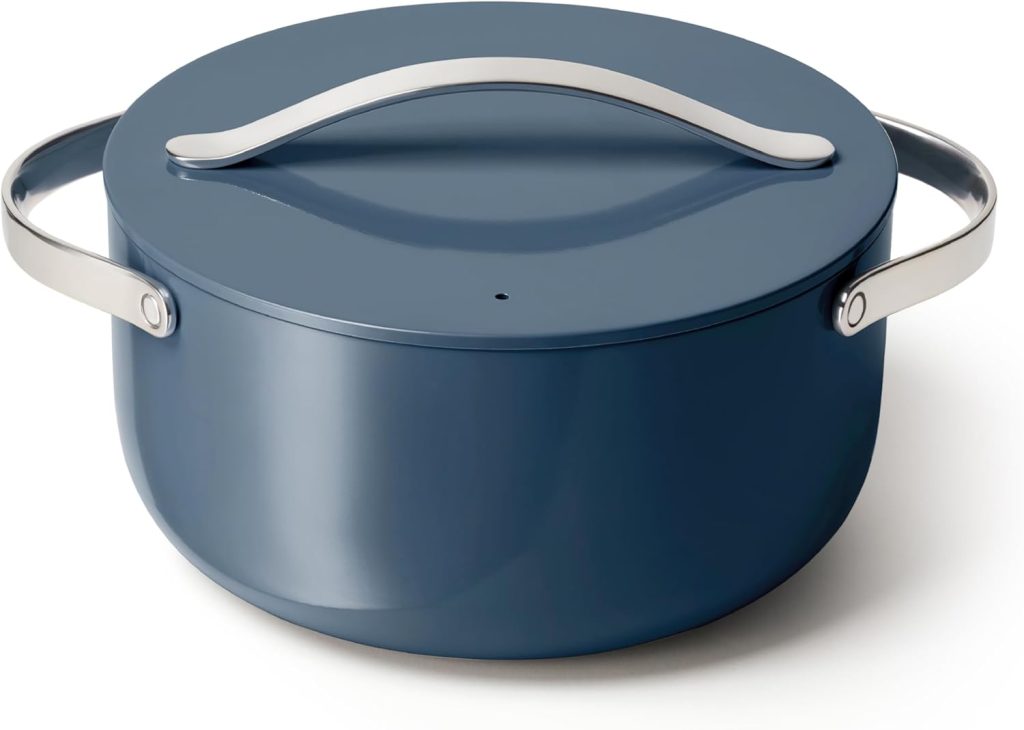
The wide color selection also makes it easier to personalize a gift to the recipient’s kitchen, and the sets are compatible across gas, electric, and induction stovetops, which removes the compatibility guesswork covered earlier.
For a closer look at how Caraway compares to its closest ceramic competitor, see our full Caraway vs. GreenPan comparison.
Our Place
The Our Place Always Pan is a strong gift for recipients with smaller kitchens, since it’s designed to replace up to eight separate pieces of cookware with one multi-function pan, which matters more for gifting than for a personal purchase because it reduces the risk of buying something that duplicates what the recipient already owns.
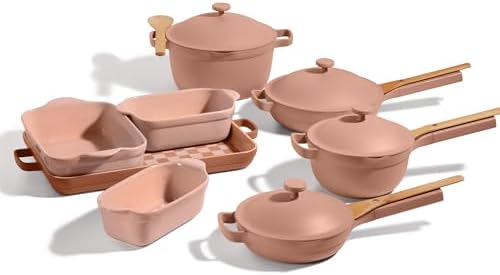
It’s a lower-risk single-piece gift for someone you’re not deeply familiar with in the kitchen, since its popularity means most recipients will recognize and already want one.
Le Creuset and enameled cast iron
Le Creuset holds a reputation as a near-heirloom gift specifically because enameled cast iron, when cared for, lasts for decades rather than years, which justifies its higher price point for milestone occasions like weddings.
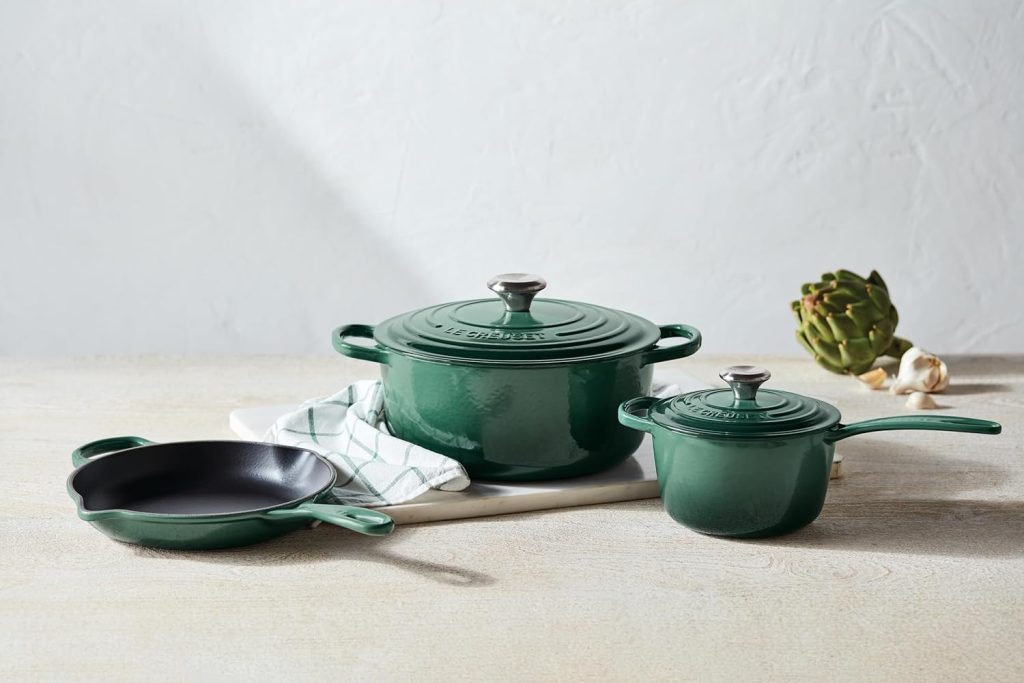
Enameled cast iron combines the naturally non-toxic properties of bare cast iron with a glass-based enamel surface that doesn’t require seasoning, making it more approachable as a gift for a recipient who might not maintain a traditional cast iron pan.
For readers deciding between this route and a ceramic-coated set, our guide to ceramic vs. cast iron cookware breaks down the tradeoffs in more depth.
How to Verify Safety Claims Before You Gift
Before trusting a “non-toxic” label on a gift, check how to know if cookware has PFAS, since the phrase “non-toxic” on its own carries no legal or testing requirement and can be applied to a product with no documentation behind it.
- Look for brands that name the specific chemicals they exclude, such as PTFE, PFOA, PFAS, lead, and cadmium, rather than using “non-toxic” as a standalone claim.
- Check whether the brand publishes or references third-party lab testing results, rather than only stating the claim on their own packaging or website copy.
- Confirm any certification claims, such as GREENGUARD Gold, are current and tied to the specific product line you’re buying rather than the brand generally.
- Remember that as the gift-giver, you won’t be present to monitor coating wear over time, which makes verifying the claim before purchase more important than it would be for cookware you’re buying and using yourself.
If you’re deciding between two strong options and still can’t settle on the right gift, a single well-documented piece from a brand that publishes its safety testing is very rarely the wrong call, regardless of the recipient’s experience level or stovetop.
FAQ
Is Caraway a good wedding gift?
Yes, Caraway is a well-regarded wedding gift, particularly for couples who haven’t already registered for cookware or want to add to what’s on their list.
Its sets cover the core pieces most new households need: a frying pan, saucepan, sauté pan, and Dutch oven, and the ceramic coating is documented as free of PTFE, PFOA, PFAS, lead, and cadmium, which matters for a gift you’re giving on someone else’s behalf.
It’s also compatible across gas, electric, and induction stovetops, so it works regardless of what the couple’s new kitchen is equipped with.
What’s the best non-toxic cookware gift under $100?
A single ceramic-coated skillet or a compact two-to-three-piece set from a reputable non-toxic brand is the best option under $100, since a full set at this price point often means thinner gauge metal and a shorter-lived coating.
This budget works well for housewarming gifts and casual holiday occasions, where a large investment would feel disproportionate to the relationship or event.
Prioritizing one well-made piece over a larger set at this price tends to produce a gift the recipient actually uses long-term, rather than one that ends up in a cabinet unused.
Should I check a wedding registry before buying cookware off-list?
Yes, checking the registry first is worth doing even when you’re set on giving cookware, since many couples list a specific brand, color, or piece count they’ve already chosen for their kitchen.
Buying off-registry risks duplicating a set the couple is already receiving from someone else, which is a common outcome given that roughly half of wedding guests give a gift not on the registry.
If the couple hasn’t listed cookware at all, a set from a well-documented non-toxic brand is a safe off-registry choice that’s unlikely to clash with what they’ve already planned for.
What size cookware set makes the best gift?
A four-to-five-piece set covering a frying pan, a saucepan, a sauté pan, and a Dutch oven makes the best gift size for most occasions, since it covers the core cooking methods a household needs without overwhelming their storage.
Larger sets in the ten-piece-plus range make sense mainly for weddings and first-apartment gifts, where the recipient is building a kitchen from nothing and will use the full range over time.
For recipients who already have a working kitchen, a smaller set or single piece is generally the better fit, since anything larger risks sitting unused behind what they already own.