Corelle wins on weight, chip resistance, and lead safety for most everyday households.
Pfaltzgraff wins on formal-table looks and heft, but its safety record is less consistent than its marketing suggests, and a few patterns have tested positive for lead in independent lab checks.
The right pick depends less on the brand name and more on which trade-off matters to your household: lighter and simpler, or heavier and more traditional.
Both companies have been making dinnerware for decades, which is exactly why this comparison keeps coming up.
Corelle and Pfaltzgraff show up in the same secondhand shops, the same wedding registries from the 1990s, and the same “what should I replace my chipped dishes with” threads.
The two brands solve the same problem, everyday tableware that survives a family kitchen, with almost opposite materials. That’s worth understanding before you buy either one.
What Corelle and Pfaltzgraff Are Made Of
The two brands don’t compete on the same material at all, which explains most of the differences below.
Corelle’s Vitrelle Glass
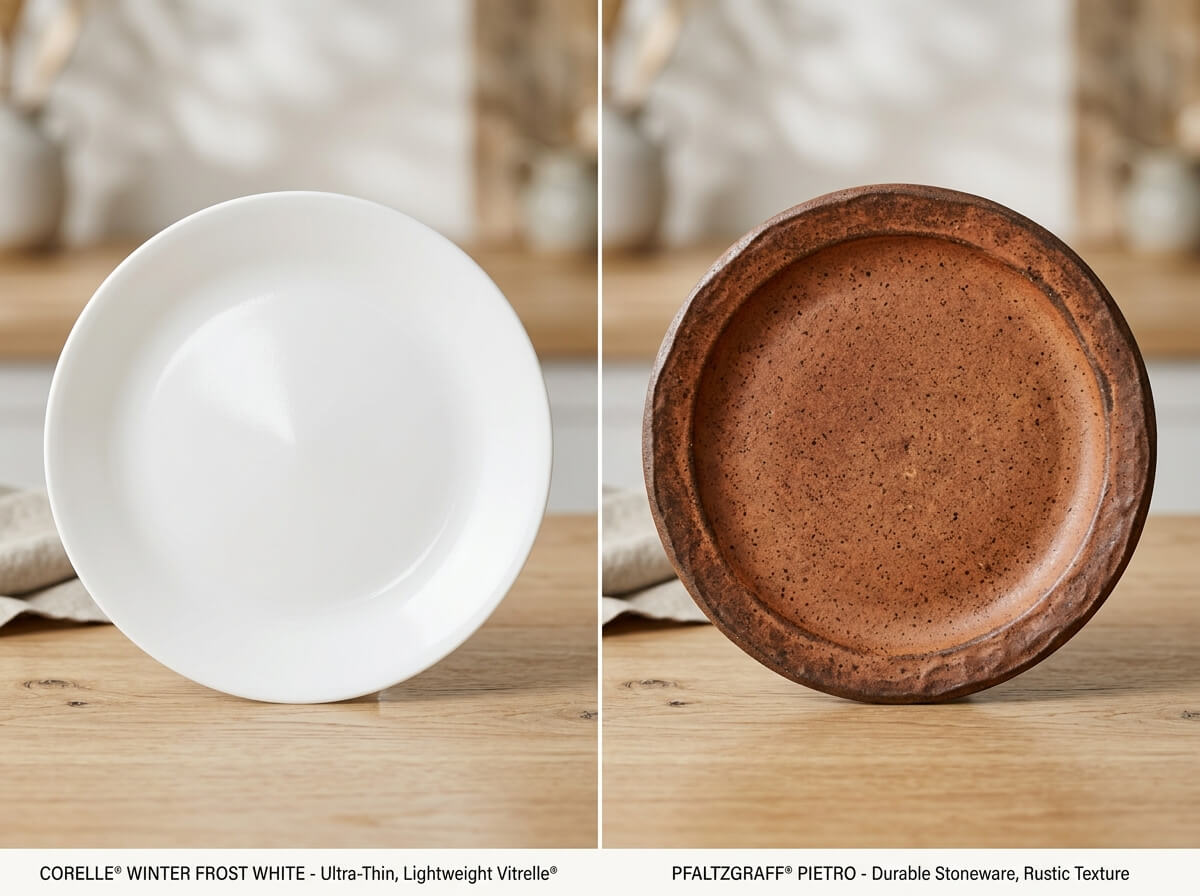
Corelle plates are made from Vitrelle, a laminated glass Corning developed in 1970 by fusing three thin layers of glass under heat.
That lamination is why a Corelle plate weighs a fraction of a stoneware plate the same size but still resists cracking when dropped.
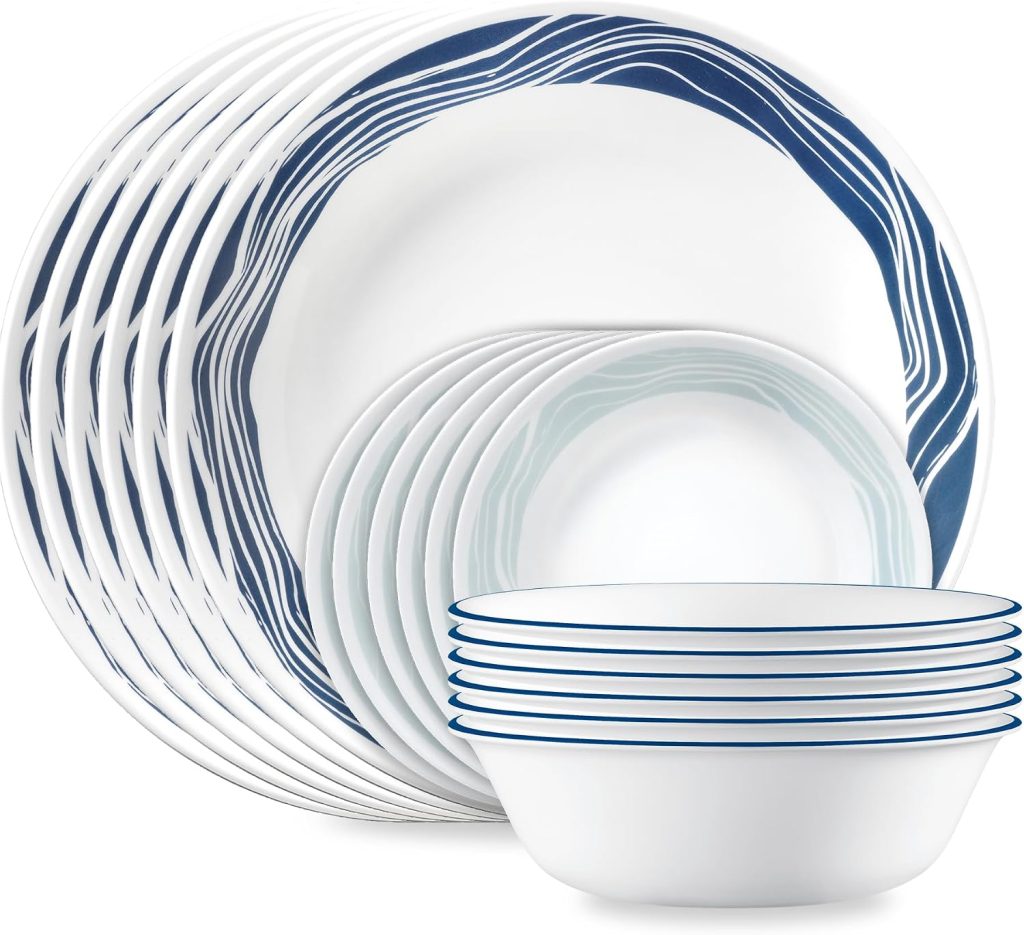
The surface is non-porous, so it doesn’t absorb oils, odors, or stains the way a glazed ceramic can over years of use.
There’s no separate glaze layer painted onto Corelle glassware the way there is on ceramic dinnerware.
The color or pattern is either printed on the underside of the piece or baked into a decal layer sealed beneath the top glass ply, so it doesn’t sit exposed on the eating surface the way a ceramic glaze does.
That construction is also why a Corelle plate can survive a drop onto tile that would shatter an ordinary drinking glass.
The three bonded layers spread the impact instead of letting a crack travel straight through.
Pfaltzgraff’s Stoneware and Porcelain
Pfaltzgraff has made dinnerware since 1811, and its current lines are mostly stoneware, with some porcelain patterns.
Stoneware is fired at a high temperature that makes it dense and heavy, and a colored or patterned glaze sits on top of the clay body. That glaze is where the lead question below actually lives.
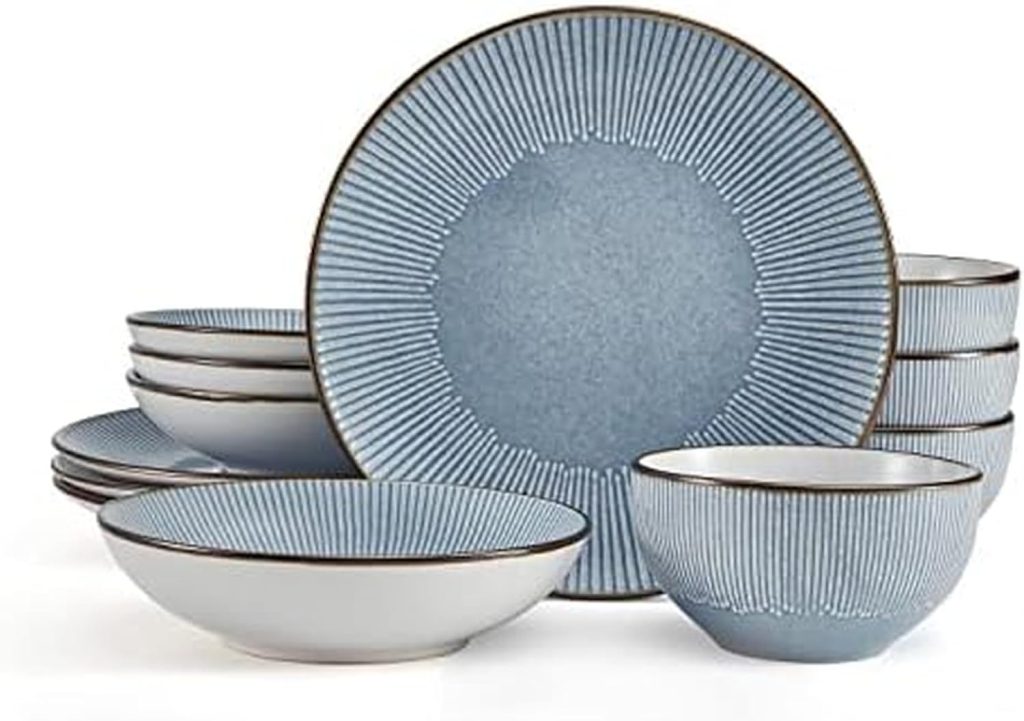
Porcelain, used in some of Pfaltzgraff’s more formal patterns, is fired at an even higher temperature and comes out thinner and lighter than stoneware, though still heavier than glass.
Both materials are porous at the clay level before glazing seals the surface, which is why a chip that exposes raw clay underneath the glaze is worth retiring a piece over rather than continuing to use it for food.
For more on how different clay and glass bodies compare across brands, see lead-free dinnerware materials.
Is Corelle or Pfaltzgraff Lead-Free?
Is Corelle dinnerware lead-free is the more settled question.
Corelle’s glass body has no glaze layer to leach anything into food, and the brand carries FDA and California Prop 65 compliance.
Pfaltzgraff is a harder case: the company says its current products meet federal lead standards, but independent testing on specific patterns tells a messier story than that statement implies.
What “Lead-Free” Actually Means on a Label
A brand calling its dinnerware “lead-free” almost always means no lead was intentionally added during manufacturing.
It does not mean a lab has confirmed zero detectable lead in every glaze batch.
Raw pigments, especially reds, oranges, and yellows, can carry trace lead even when a formula wasn’t designed to include it.
That gap between “we didn’t add it” and “none is present” is where most of the confusion around ceramic dinnerware comes from, and it applies to Pfaltzgraff as much as to any other glazed brand.
Independent Lead Testing Results for Both Brands
Lead Safe Mama, a consumer advocate who runs XRF (X-ray fluorescence) tests on household items and publishes the raw results, has tested several Pfaltzgraff pieces over the years.
“The CPSC (Consumer Product Safety Commission) treats 90 ppm as the lead limit for paint and similar surface coatings on children’s products, while 100 ppm is the lead-content limit for accessible components in children’s products.”
| Item tested | Approximate age | Lead result (XRF) |
|---|---|---|
| Pfaltzgraff Pistoulet pattern dish | c. 2002 | 336 ppm |
| Pfaltzgraff Winterberry pattern | Vintage | Reported far above US safety standards by the tester |
| Pfaltzgraff Christmas Holly dish | Made in USA | 17,400 ppm |
| Corelle Vitrelle glass (no glaze layer) | Current production | No comparable glaze-lead pathway, per FDA/Prop 65 compliance |
The Pistoulet result matters because it wasn’t an antique. A 2002 pattern testing at 336 ppm shows that “modern” and “safe” aren’t automatically the same thing for a glazed ceramic brand, even one that meets FDA guidelines on paper.
Vintage vs Modern Patterns: Why Age Matters
Older Pfaltzgraff pieces carry more risk than current-catalog patterns, since lead pigments were more common in ceramics manufacturing before the 1990s and Pfaltzgraff itself was recalled in 2008 over lead and cadmium concerns in some products.
But age is a rough guide, not a guarantee. A pattern from 2002, or one bought secondhand with no clear manufacture date, can’t be assumed safe just because it isn’t technically antique.
If you’re buying for a household with young kids, that uncertainty is worth reading up on directly at lead-free dinnerware for kids and toddlers.
Corelle vs Pfaltzgraff Durability
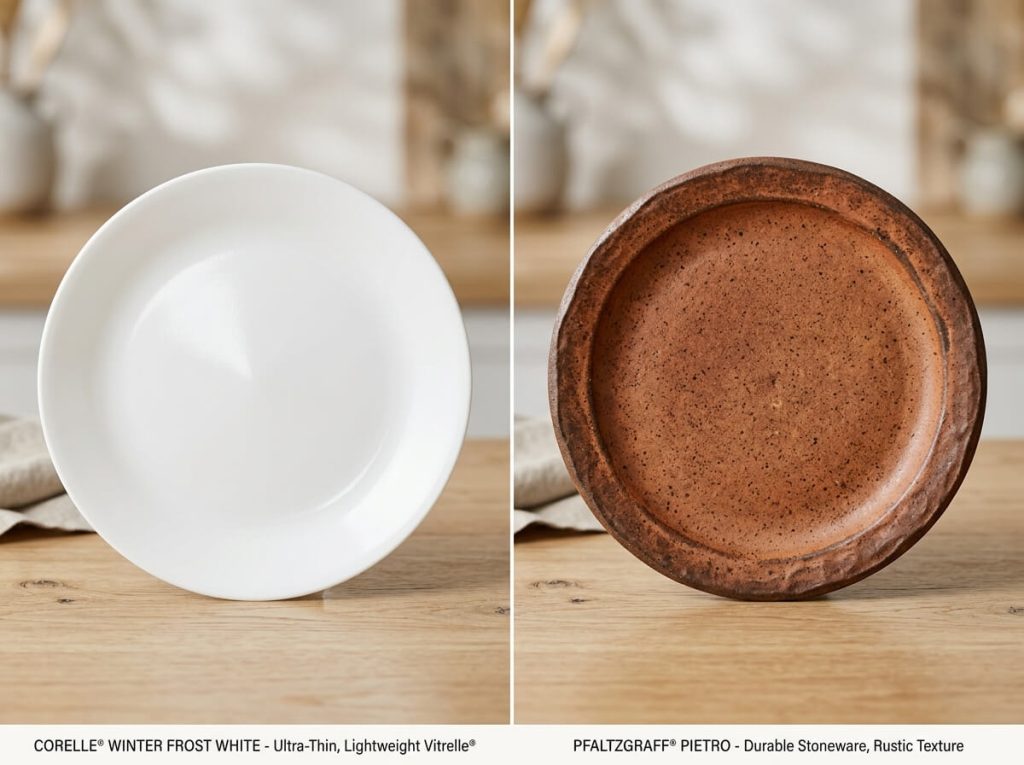
Corelle and Pfaltzgraff are both marketed as durable, but they fail in different ways.
Chip and Crack Resistance Compared
| Factor | Corelle | Pfaltzgraff |
|---|---|---|
| Material | Three-layer Vitrelle glass | Stoneware/porcelain |
| Weight | Very light | Noticeably heavier |
| Chip resistance | High, rarely chips under normal drops | Moderate, chips more easily at edges over years |
| Crack risk from thermal shock | Low | Higher if moved from cold to hot quickly |
| Typical lifespan with daily use | 15 to 20+ years reported by long-term owners | 10 to 15 years before visible wear |
How Each Holds Up to Daily Family Use
- Corelle’s glass surface doesn’t stain from tomato sauce, turmeric, or red wine the way a porous glaze can after repeated washes.
- Pfaltzgraff’s stoneware holds heat longer after coming out of the oven, which some cooks prefer for serving but others find inconvenient for cleanup.
- Corelle plates stack in about half the cabinet space of an equivalent stoneware set, since each piece is thinner.
- Pfaltzgraff edges are more prone to small chips after years of stacking and unstacking, especially on patterns with raised trim.
Weight, Handling, and Microwave Heat
If you’ve ever pulled a plate out of the microwave and nearly dropped it, there’s a good chance it was stoneware.
Why Pfaltzgraff Gets Hot, and Corelle Doesn’t
Stoneware absorbs microwave energy into the clay body itself, so the plate heats up alongside the food.
Corelle’s thin glass layers absorb very little of that energy, which is why owners consistently report Corelle staying cool to the touch even after a full reheating cycle, while Pfaltzgraff can come out too hot to hold bare-handed.
This isn’t a defect specific to Pfaltzgraff; it’s a property of dense ceramic bodies in general, and most stoneware and porcelain brands behave the same way.
The difference only shows up as a complaint because people expect a plate to stay at room temperature while the food on it heats.
If your household reheats leftovers daily, that gap between “the food is hot” and “the plate is also now too hot to grab” is a real quality-of-life factor, not just a minor inconvenience.
Stacking and Storage Space Compared
- A 12-piece Corelle set typically takes up roughly half the vertical cabinet space of a comparable Pfaltzgraff stoneware set.
- Corelle’s lighter weight makes it easier for kids or older adults to set the table without strain.
- Pfaltzgraff’s added weight gives it a sturdier feel on the table, which some buyers specifically want for formal settings.
Price and Where Each Is Made
Cost Per Place Setting Comparison
| Set type | Typical price range (service for 4) | Notes |
|---|---|---|
| Corelle glass, everyday pattern | $30 to $45 | Frequently the lowest-cost option in this comparison |
| Pfaltzgraff stoneware, casual pattern | $55 to $80 | Mid-range pricing for daily use lines |
| Pfaltzgraff formal/porcelain pattern | $100 to $140+ | Priced closer to specialty dinnerware brands |
Manufacturing Origin: USA vs Imported Lines
Corelle has a long US manufacturing history through Corning and its successor companies, though some current patterns and accessory pieces are produced overseas, so it’s worth checking the box or product listing rather than assuming.
Pfaltzgraff has a similar mixed picture: its 200-year US heritage doesn’t mean every current pattern is made domestically, and some of the pieces flagged in independent lead testing were marked “Made in China.”
Readers who specifically want a domestic-manufacturing guarantee should compare options at non-toxic dinnerware made in the USA.
Which One Should You Buy?
Neither brand is the right answer for every household, so the more useful question is which trade-offs fit yours.
Choose Corelle If…
- You want the lightest, most chip-resistant option for a household with kids.
- You’d rather not think about glaze composition or pattern-specific lead testing at all.
- You need dishes that stack compactly in a small kitchen.
- Budget is a real factor, and you want reliable everyday dinnerware without paying a premium.
Choose Pfaltzgraff If…
- You’re furnishing a formal table and want the visual weight and texture of stoneware.
- You’re buying a current-catalog pattern rather than a vintage or secondhand piece, and you’ve confirmed it’s not one flagged in independent testing.
- Heat retention for serving is a feature you actually want, not a drawback.
- You’re comfortable double-checking specific patterns rather than trusting the brand name alone. For a comparison of two other stoneware-leaning brands with their own safety track records, see FiestaWare vs Le Creuset dinnerware.
If safety data across more than two brands is what you’re really after, the fuller rundown lives at best non-toxic lead-free dinnerware, which walks through testing sources brand by brand rather than just this one matchup.
FAQ
Is Corelle better than Pfaltzgraff for everyday use?
For most households, yes. Corelle is lighter, resists chipping better, stays cool in the microwave, and doesn’t carry the glaze-composition question that comes with any ceramic brand.
Pfaltzgraff can still be a good everyday choice if you stick to current, non-flagged patterns, but Corelle requires less second-guessing for daily rotation.
For another stoneware brand for daily use, see our dinnerware comparison brand on: Fiestaware vs Corelle dinnerware.
Does Pfaltzgraff dinnerware contain lead?
Some tested pieces do. Pfaltzgraff states its products meet FDA lead standards, and that’s true for most current stock, but independent XRF testing has found specific patterns, including a 2002-era design, with lead levels well above the 90 ppm threshold considered unsafe for children’s items.
The company was also recalled in 2008 over lead and cadmium concerns.
Is vintage Pfaltzgraff safe to use?
Treat vintage and undated secondhand Pfaltzgraff with more caution than current-catalog pieces.
Lead pigments were more common in ceramics manufacturing before the 1990s, and several older patterns have tested at levels the CPSC would flag as unsafe for kids.
If you own or inherit vintage pieces, using them for decoration rather than daily food contact is the lower-risk choice.
Which lasts longer, Corelle or Pfaltzgraff?
Corelle typically lasts longer under daily use because its glass body resists chipping and staining better than a glazed stoneware surface.
Owners commonly report 15 to 20 years of regular use from a Corelle set.
Pfaltzgraff tends to show edge chips and glaze wear within 10 to 15 years of heavy daily rotation, though it can last much longer if reserved for occasional or formal use.