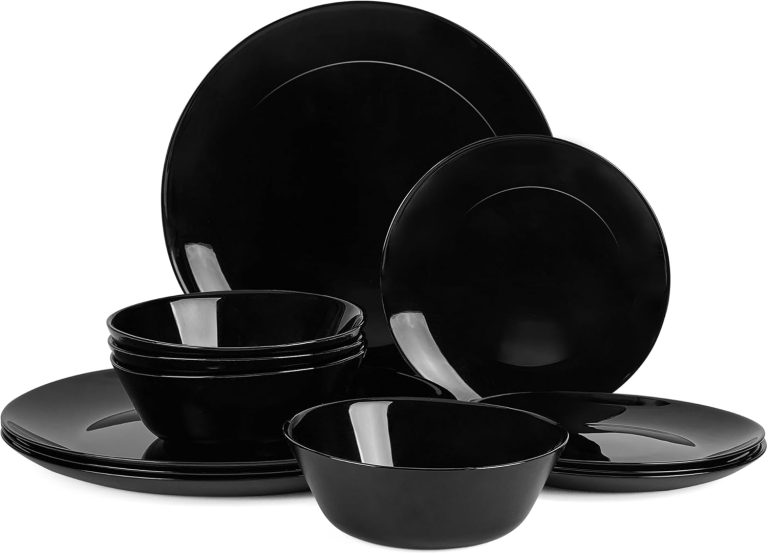
Ceramic and melamine fail in different ways, so there isn’t one “safer” answer.
Melamine’s risk shows up when it meets heat and acid; ceramic’s risk shows up when the glaze wasn’t made right.
Once you know which failure mode you’re actually worried about, the choice gets a lot easier.
What Ceramic and Melamine Dishes Are Actually Made Of
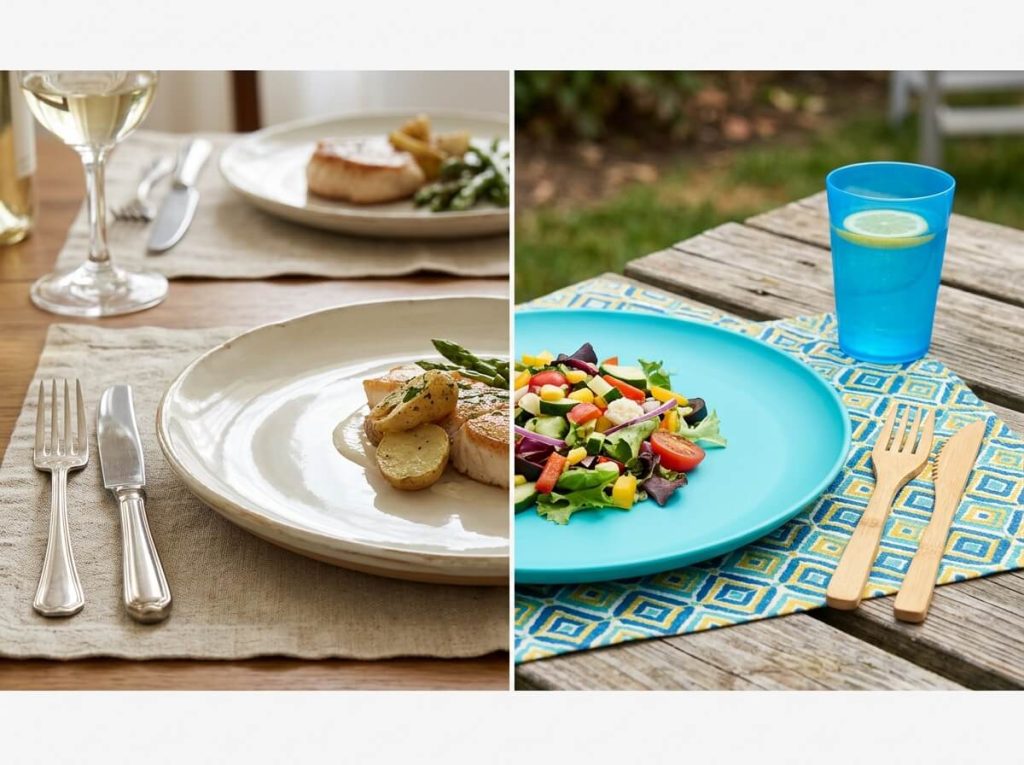
Ceramic dishes are fired clay. Melamine dishes are plastic.
That basic fact explains almost every other difference on this page, from how each one handles a hot bowl of soup to what happens when you scrub it for the thousandth time.
Ceramic: Fired Clay and Glaze
Ceramic dinnerware starts as clay, shaped and then fired in a kiln at high heat.
Once the clay hardens, most pieces get a glaze coating, a thin layer of glass that’s fused onto the surface in a second firing.
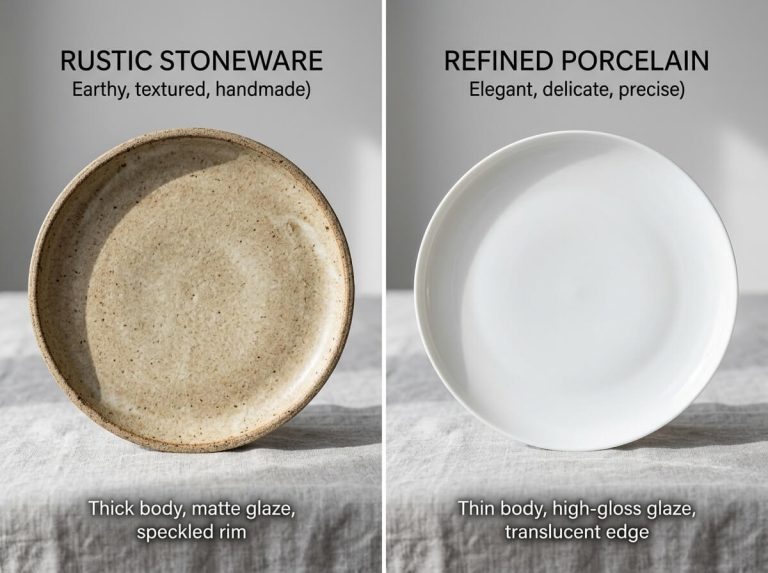
The glaze is what makes the plate smooth, waterproof, and food-safe. Porcelain and stoneware are both types of ceramic; the difference comes down to the clay used and the firing temperature, with porcelain fired hotter and ending up denser and more chip-resistant.
Melamine: Melamine-Formaldehyde Resin, Not BPA Plastic
Melamine dinnerware is made from melamine resin, a hard plastic formed by combining melamine and formaldehyde under heat and pressure.
That’s worth spelling out because a lot of dinnerware guides lump melamine in with generic “toxic plastic” and let readers assume BPA is the concern. It isn’t.
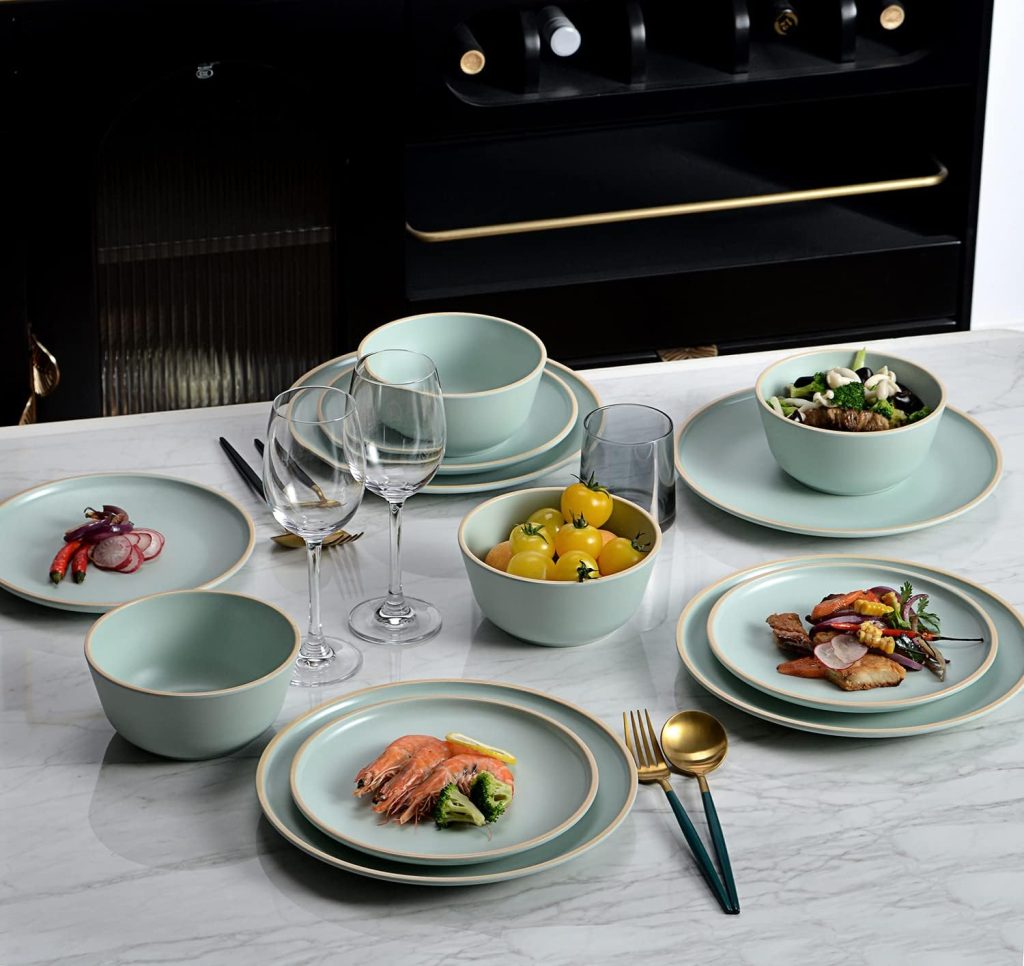
Melamine dishware doesn’t contain BPA at all. The compounds actually worth knowing about are melamine itself and formaldehyde, both of which can be left over in small amounts from the manufacturing process and can migrate out under the right (or wrong) conditions.
That distinction matters if you’re specifically shopping for BPA-free dinnerware, because melamine already clears that bar. It just clears a different one, which the next two sections cover.
Heat Safety: Microwave, Oven, and Hot Food
Ceramic handles heat the way melamine can’t. That’s the short version, and it’s the reason most kitchens end up using ceramic for anything that goes near a stove, oven, or microwave.
| Feature | Ceramic | Melamine |
|---|---|---|
| Microwave | Safe, unless the piece has metallic trim | Not safe, even if labeled “microwave-safe” for reheating cold food |
| Oven | Safe up to standard baking temperatures | Not oven-safe at any temperature |
| Dishwasher | Safe, top or bottom rack | Safe on normal, light, or eco cycles; avoid the heated dry setting |
| Hot food straight from the stove | Fine, including oven-to-table serving | Fine for holding hot food briefly; not for cooking or extended heat exposure |
Why Melamine Can’t Go in the Microwave
Melamine absorbs heat instead of letting it pass through the food, so a microwaved plate can end up hotter than the food sitting on it, and the resin itself starts to break down under sustained heat.
The FDA specifically advises against microwaving melamine tableware for this reason. It’s not about convenience; it’s about what happens to the plastic at temperature, which the next section gets into with actual numbers.
Why Ceramic Handles Heat Without Leaching
A properly fired and glazed ceramic plate is chemically stable at normal cooking and serving temperatures.
The glaze is essentially glass, fused onto the clay, and it doesn’t react with heat the way a plastic resin does.
That’s why you can pull a casserole dish straight from the oven and set it on the table without a second thought, something no melamine piece is built to do.
Chemical Safety: What Each Material Can Release Into Food
Melamine’s chemical risk depends on heat and acidity. Ceramic’s chemical risk depends on how the glaze was made.
Neither is automatically dangerous, but the conditions that matter are different enough that it’s worth putting real numbers next to each one instead of a vague “be careful.”
| Feature | Melamine | Ceramic |
|---|---|---|
| What can migrate | Melamine monomer, formaldehyde | Lead, cadmium (only from certain glazes) |
| Regulatory threshold | FDA tolerable daily intake: 0.063 mg/kg body weight | California Prop 65 lead limit: 0.5 micrograms/day |
| What triggers migration | Heat above roughly 160°F combined with acidic food | Poor-quality or worn glaze, especially on brightly colored or vintage pieces |
| Everyday risk level | Low under normal use; rises sharply with microwaving or prolonged hot, acidic contact | Low for modern, Prop 65-compliant pieces; higher for vintage, imported, or unbranded pottery |
Melamine and Formaldehyde Migration Limits (FDA Data)
FDA testing on commercially available melamine tableware found measurable migration in only 3 of 19 tested plates and cups, and that migration only showed up with acidic food held at 160°F for two hours, well beyond how most people actually use these dishes.
Under those exaggerated conditions, the amount detected still landed roughly 250 times below the level the FDA considers a health concern.
Where the numbers change is heat: a cold vinaigrette on a melamine plate is a non-event, but hot tomato soup ladled into a melamine bowl is the scenario where migration actually climbs, which is exactly why the microwave rule above exists.
Lead and Cadmium Risk in Ceramic Glazes
Lead shows up in ceramic glazes because it was used to make colors brighter and glazes smoother, and some manufacturers still use it, particularly in vintage pieces made before the 1970s, unbranded imported pottery, and dishes with brightly colored interior glazes in red, orange, or yellow.
California’s Prop 65 sets a daily lead exposure limit of 0.5 micrograms before a warning label is legally required, a threshold stricter than the federal FDA standard.
Plain white, modern dinnerware from a Prop 65-compliant brand carries very little risk.
The exposure risk climbs with decorative glazes, chipped or worn surfaces, and pieces with no documented sourcing, which is worth checking your dinnerware brand for lead-free status before you assume a set is safe just because it’s ceramic.
Durability: Which One Actually Survives Daily Use
Melamine wins on breakage. Ceramic wins on how long it stays genuinely useful. Which one “survives daily use” better depends on what kind of damage you’re trying to avoid.
- Melamine resists drops and impacts well enough that it rarely cracks or shatters, which is the main reason it shows up in kids’ sets, patio dinnerware, and camping gear.
- Melamine does scratch and dull with heavy use, especially from metal utensils and abrasive scrubbers, and a scratched surface is more prone to staining and odor retention over time.
- Ceramic chips and cracks under a hard enough impact, and a dropped plate is more likely to break outright than a dropped melamine one.
- A well-made ceramic piece, especially porcelain, keeps its glaze and surface quality for decades with normal care, while melamine tends to degrade faster under repeated heat and heavy dishwasher use.
Melamine’s Break Resistance vs. Its Wear Pattern
The strengthened resin in melamine tableware is genuinely hard to shatter, which is why restaurants and families with young kids lean on it.
The tradeoff shows up over time rather than on day one: scratches from utensils and hard sponges accumulate, and a heavily worn melamine surface can shed microplastic particles as the top layer breaks down.
That’s a slower, less visible form of wear than a cracked plate, but it’s worth knowing if you’re replacing melamine dishes on a “looks fine to me” schedule rather than checking the surface itself.
Ceramic’s Chip Risk vs. Long-Term Lifespan
Ceramic’s weak point is the exact moment of impact. Drop it on tile, and it’s probably done.
Short of that, though, a properly fired ceramic plate with an intact glaze holds up for years of regular washing and use without the surface degrading the way plastic does.
That’s the tradeoff: melamine survives the drop, ceramic survives the decade.
Best Use Case for Each Material
Neither material is universally better. The right one depends on what you’re actually doing with it, so work through these in order:
- Are kids or frequent drops involved? If yes, melamine’s break resistance is the practical answer, especially for daily-use kids’ plates and bowls.
- Will the dishes travel outdoors, camp, or sit on a patio? Melamine’s weight and shatter resistance make more sense for anything leaving the kitchen.
- Do you regularly reheat leftovers or serve hot, acidic food like tomato sauce? Ceramic is the better fit here, since it sidesteps the heat-and-acid conditions where melamine migration actually rises.
- Do you want dishes that last decades with minimal replacement? Choose ceramic; a well-made glaze outlasts melamine’s wear cycle by a wide margin.
When Melamine Makes Sense: Kids, Outdoor, Camping
If daily breakage is your real concern, melamine solves it. It’s lighter to carry, easier for small hands to manage, and shrugs off the kind of drops that would end a ceramic plate’s life on the spot.
For families specifically shopping with kids in mind, it’s worth pairing that decision with toxin-free dinnerware options built for kids and toddlers, since the “kid-safe” label on a set doesn’t automatically confirm what’s actually in the material.
When Ceramic Makes Sense: Everyday Indoor Dining, Reheating
If your dishes regularly go from stove to table, hold hot soup, or get reheated in the microwave, ceramic is the more sensible default.
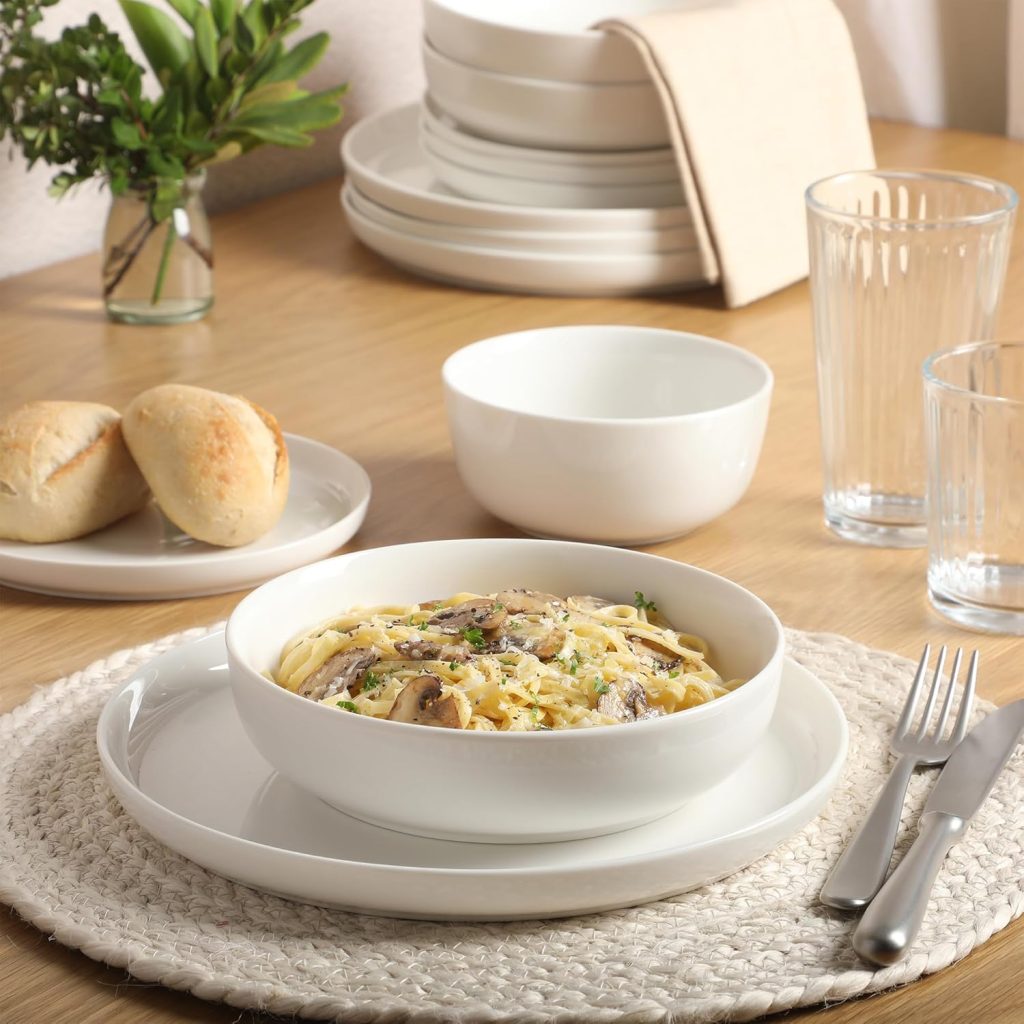
It handles that heat without the conditions that raise melamine’s migration risk, and it looks the part for everyday family meals or a dinner party without needing a separate “good” set.
For a shortlist of verified options, toxin-free ceramic dinnerware picks are the place to start rather than guessing from a product photo.
How to Choose a Genuinely Non-Toxic Set of Either Material
The material itself isn’t the whole story. A cheap, unverified set in either category can carry more risk than a well-made one in the “riskier” category, so the label matters as much as the material.
- Confirm the melamine set is labeled food-grade and meets FDA or equivalent standards, since inferior imports can skip this entirely.
- Avoid melamine sold as “bamboo” or “eco” dinnerware, since it’s usually still melamine-formaldehyde resin with bamboo powder mixed in as filler, and that filler can make heat-related leaching worse, not better.
- Retire any melamine piece once it’s visibly scratched, cracked, or discolored rather than waiting for it to fail outright.
- Look for plain white or lightly glazed ceramic over brightly colored or hand-painted pieces, since decorative glazes carry more of the historical lead risk.
- Confirm the ceramic brand documents Prop 65 compliance or an explicit “lead-free” claim rather than assuming any modern-looking set is automatically safe.
- Skip vintage, thrifted, or souvenir ceramic pieces for regular food use, since older and unbranded pottery is where most of the documented lead cases show up.
What to Check on a Melamine Label
Look for explicit food-grade certification, confirmation that it’s BPA-free (which, as covered above, melamine already is by nature), and any manufacturer statement about melamine content limits.
If a listing doesn’t mention any of that, treat it as an unknown rather than assuming safety.
What to Check on a Ceramic Label
Look for a stated Prop 65 compliance claim, “lead-free” or “cadmium-free” language, and ideally a mention of third-party testing.
A smooth, evenly applied glaze over the entire food-contact surface is also a better sign than a heavily decorated pattern layered on top of the glaze.
Getting this part right is really the whole ballgame, and it’s worth starting from a vetted list rather than a search results page.
Our guide to the best non-toxic plates and bowls sets rounds up options in both materials that have already cleared these checks, so you’re not doing the label-reading from scratch.
And if glass is also on your shortlist, our glass vs ceramic dinnerware comparison covers how that third material stacks up against both of these.
FAQ
Is melamine dinnerware safe to eat off of?
Yes, for normal room-temperature and cold food use. FDA testing found that only a handful of tested melamine plates and cups released measurable amounts of melamine, and only under exaggerated conditions: acidic food held at 160°F for two hours.
Even then, the amount detected was roughly 250 times below the FDA’s health concern threshold. The caveat is heat.
Melamine shouldn’t go in the microwave or be held hot, acidic food for extended periods, since that’s the specific combination that raises migration.
Is ceramic or melamine better for everyday use?
Ceramic is better if your everyday use includes reheating food, serving hot soups or sauces, or going from oven to table, since it handles heat without the chemical migration concern melamine has under those conditions.
Melamine is better if everyday use means kids, frequent drops, or outdoor meals, since its break resistance outweighs the heat limitation in that context.
The right pick depends on which everyday scenario is actually yours.
Can melamine dishes go in the dishwasher?
Yes, but only on normal, light, or eco cycles, not the heated dry setting.
The heated dry phase can push dishwasher interior temperatures to 170 to 180°F or higher, which is well into the range where melamine resin can start to degrade with repeated exposure.
Hand-washing with a non-abrasive sponge extends the life of the surface further, since dishwasher heat and abrasive scrubbing are the two biggest contributors to the scratching and wear that shorten melamine’s lifespan.
How can you tell if ceramic dishes contain lead?
You generally can’t tell by looking, which is why documentation matters more than appearance.
The strongest signs of risk are age (pre-1970s pieces), unbranded or imported pottery with no stated compliance, and brightly colored or hand-decorated glazes, especially in red, orange, or yellow.
A corroded, dusty, or chalky residue on the glaze after washing is also a warning sign.
The reliable way to confirm safety is a manufacturer’s stated Prop 65 compliance or lead-free certification, not a visual inspection.
Once you’ve matched the material to how you actually cook and serve food, the label-reading in the section above is the part that actually determines whether a specific set is safe, regardless of which material you land on.