Non-toxic cookware costs more for three separate reasons that rarely get named individually: the materials and coatings genuinely cost more to engineer and manufacture, independent safety testing is a real expense many brands absorb per product line, and a meaningful share of the price on direct-to-consumer brands covers design and marketing rather than the pan itself.
Only the first two have anything to do with safety. Whether the premium is worth it depends on which of these three you’re actually paying for.
What You’re Actually Paying For in Non-Toxic Cookware
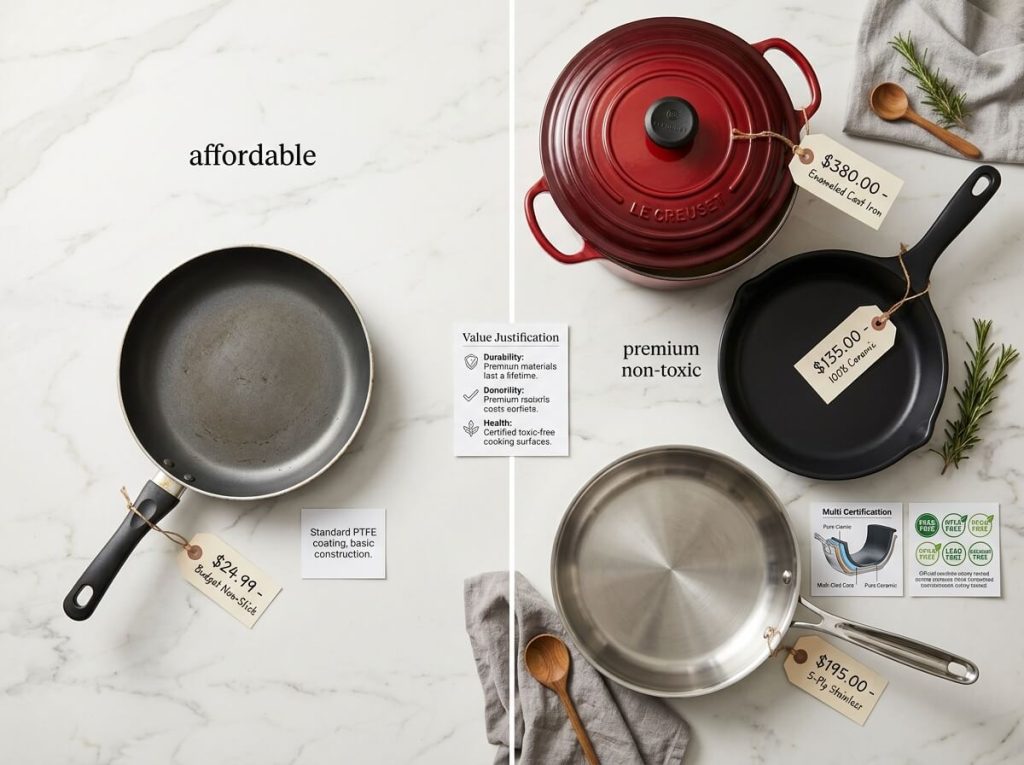
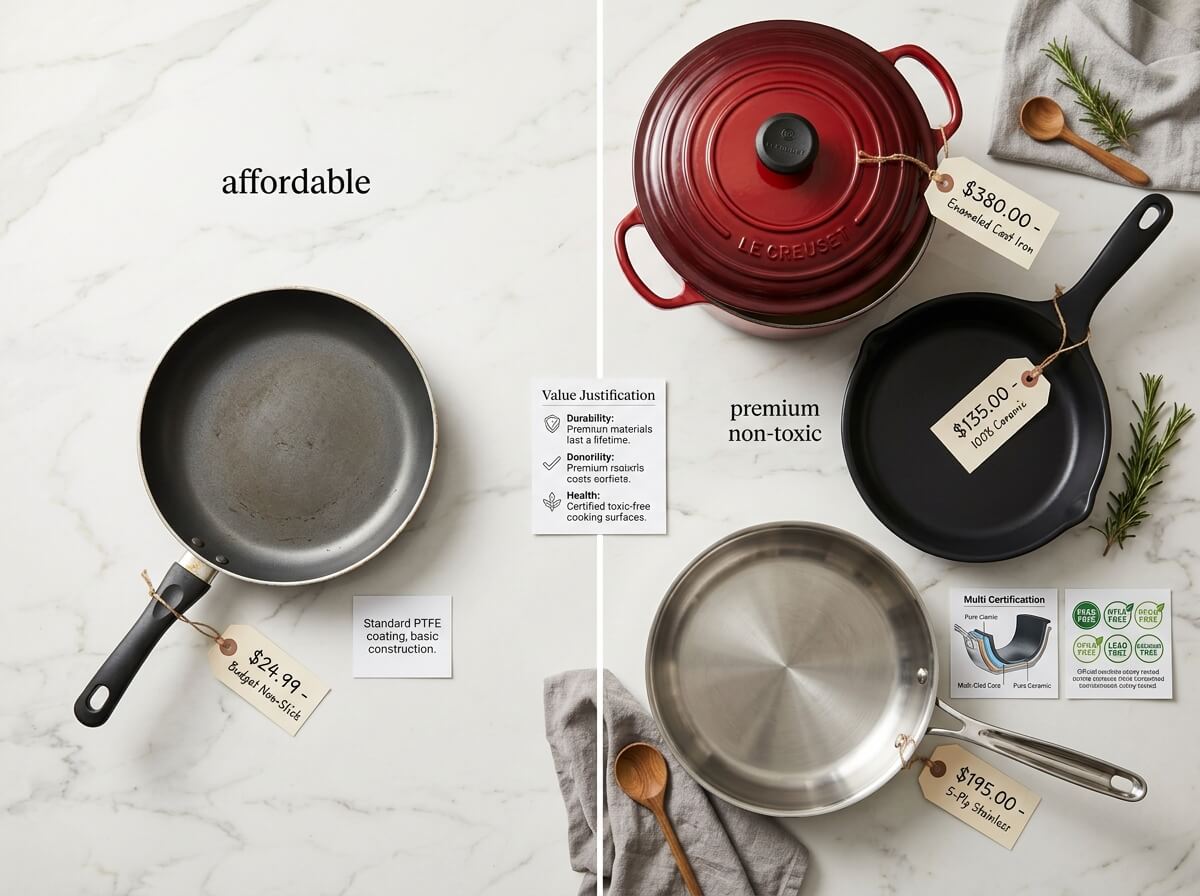
The price difference between a $20 conventional nonstick pan and a $100-plus non-toxic one comes down to construction and coating, not marketing alone, though marketing plays a role too.
Two specific manufacturing choices drive most of that gap before a brand ever sets its retail markup.
Multi-Layer Construction Costs More Than a Single Stamped Pan
| Construction type | What it involves | Typical cost impact |
|---|---|---|
| Single-layer stamped aluminum | One sheet of aluminum stamped into shape, coated once | Lowest cost to manufacture |
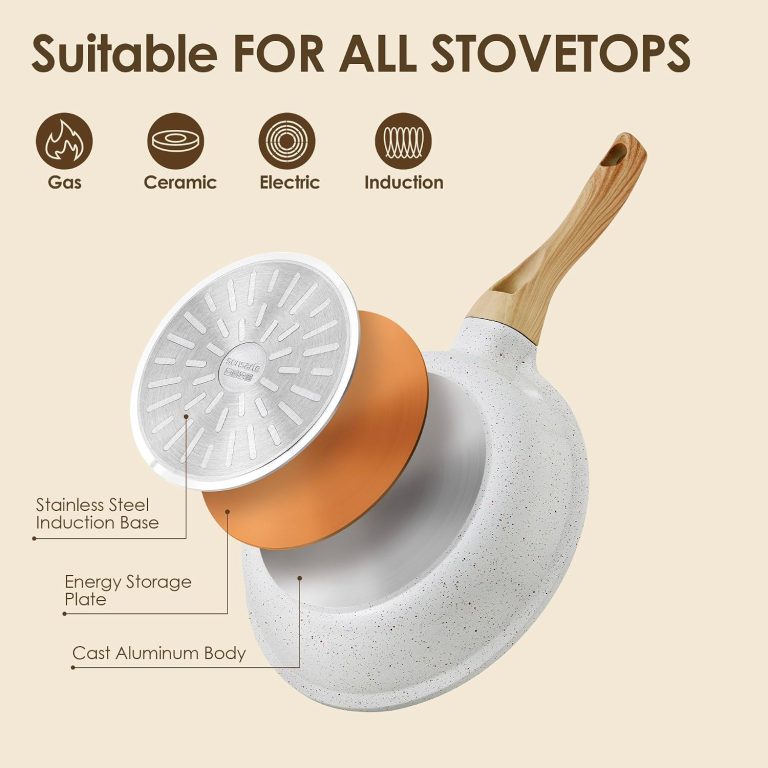
| Aluminum-core with steel exterior | Aluminum core bonded to a stainless steel or cast-aluminum shell for even heat distribution | Meaningfully higher cost due to the bonding process and materials |
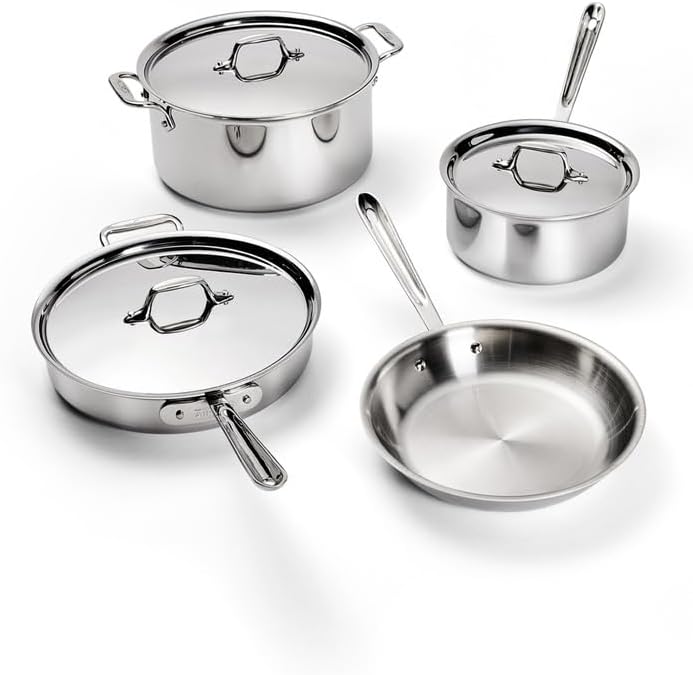
| Fully clad multi-ply stainless steel | Multiple layers of stainless steel and aluminum or copper bonded through the entire pan, not just the base | Highest cost, reflected in premium brands like All-Clad and Made In |
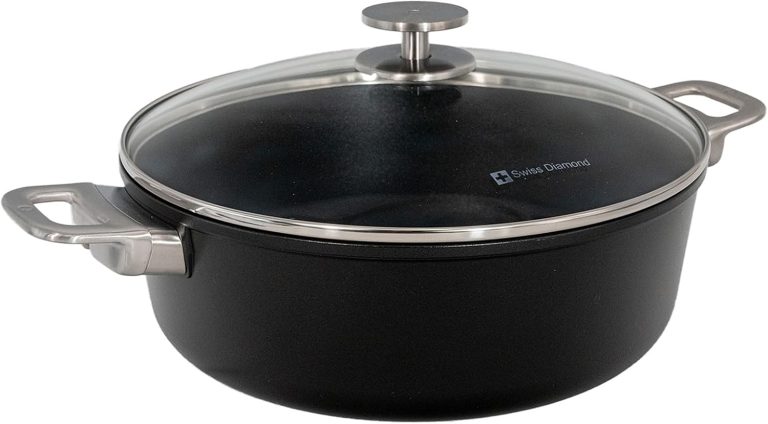
Brands that build their non-toxic cookware around an aluminum core with a steel or cast-aluminum exterior are paying for more even heat distribution and structural durability than a single stamped layer provides, and that construction shows up directly in the retail price.
Ceramic and Specialty Coatings Cost More to Formulate Than Standard PTFE
Ceramic-based nonstick coatings are a newer coating technology than traditional PTFE, and that novelty carries a cost.
Formulating a mineral-based coating that releases food well, resists scratching, and holds up under repeated heating cycles requires research and development that decades-old PTFE formulas have already had time to optimize at scale.
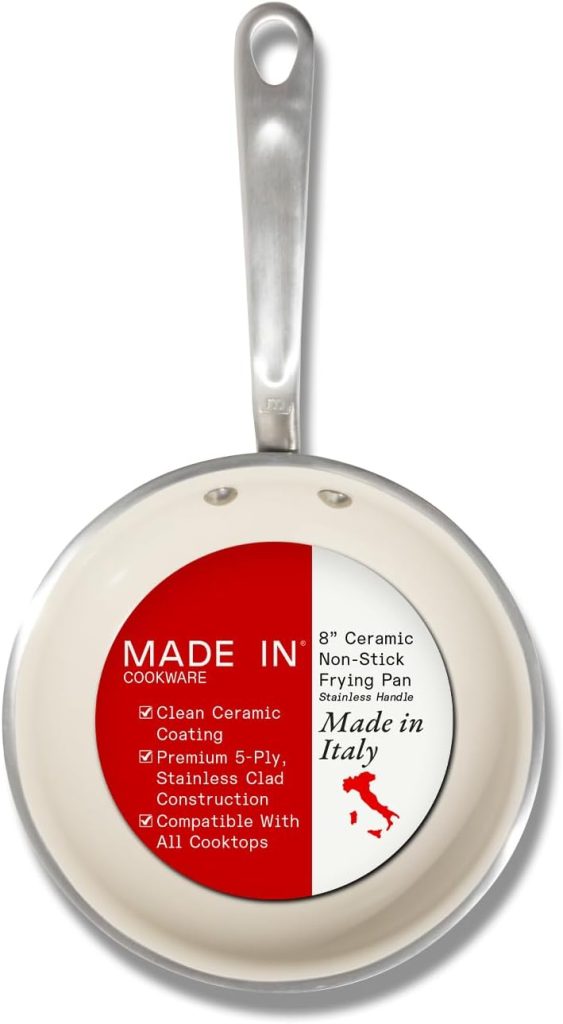
Ceramic coatings also tend to have a shorter functional lifespan than well-maintained PTFE, which means the R&D investment has to be recovered over fewer years of use per pan sold.
Coating type also affects how a pan should be cared for and how long its non-stick surface lasts, which is worth understanding before you buy.
See our guide to whether ceramic cookware is safe for a closer look at how that coating performs over time.
The Real Cost of Third-Party Safety Testing
A third-party safety test is an independent laboratory analysis confirming a product doesn’t contain measurable amounts of specific chemicals, such as PFAS compounds or heavy metals like lead and cadmium.
Unlike a certification a brand can claim for free, running this testing costs real money, and that cost has to come from somewhere in the retail price.
Before getting into what that testing actually verifies, it’s worth understanding how to know if your pots and pans have PFAS in the first place, since that’s exactly what these lab panels are designed to catch.
What a PFAS and Heavy Metal Test Panel Actually Costs
| Testing tier | Typical cost per sample | What it covers |
|---|---|---|
| Uncertified lab, screening-level | Roughly $75 | Basic detection, often used for a first-pass internal check |
| Certified lab, standard panel | Roughly $300–$600 | Accredited testing for common PFAS compounds and heavy metals |
| Certified lab, full targeted panel (LC-MS/MS) | Roughly $400–$700 | Broader compound coverage, higher analytical precision, and more complex matrices |
A brand that tests every product line through a certified lab, and does so on an ongoing basis rather than once, is carrying a recurring cost that a brand skipping independent testing simply doesn’t have.
Why Not Every Brand Publishes Its Test Results
Publishing full, itemized third-party test results is still the exception rather than the rule across the cookware category, and the reason usually comes down to cost and liability rather than confidence in the product.
Running a complete panel across an entire product line, then making the raw results public, means absorbing the testing cost on every SKU and accepting scrutiny if a future batch or supplier change produces a different result.
Some brands prefer to make a general “PFAS-free” or “non-toxic” claim without the underlying data, which keeps costs down but gives shoppers less to verify.
For a closer look at what that claim should actually mean before you trust it, see our breakdown of what PFAS-free actually means.
How Much of the Price Is Brand, Design, and Marketing
Beyond materials and testing, a real portion of what you pay for non-toxic cookware covers the brand experience rather than the pan’s performance or safety, and that portion is the largest among direct-to-consumer startups built around a specific aesthetic.
What DTC Brands Spend On Beyond the Pan Itself
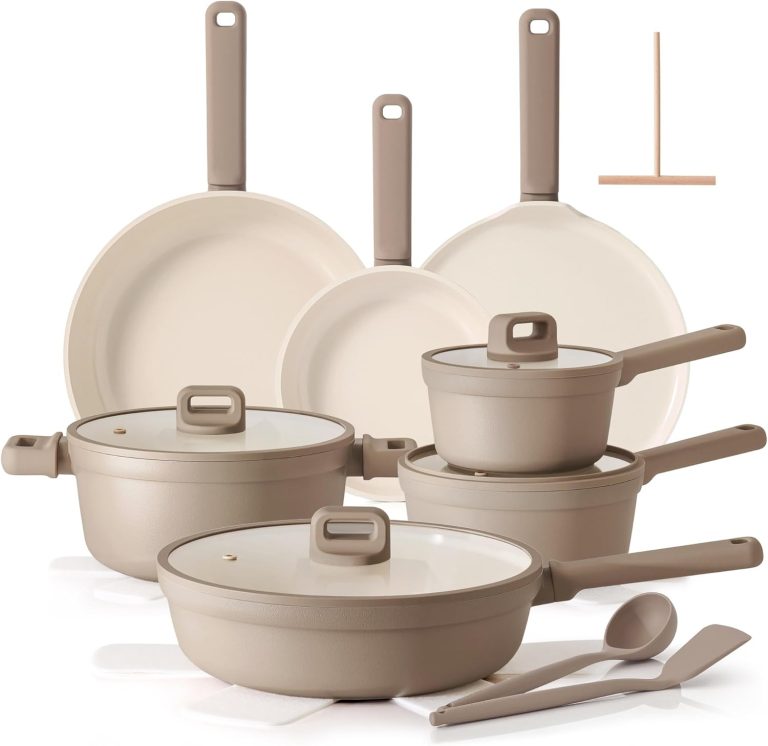
The competition between design-forward startups like Caraway vs. GreenPan illustrates this clearly, since both brands use similar ceramic-coated aluminum construction but differ substantially in price and presentation.
- Coordinated color palettes and curated product photography, which require ongoing design and marketing investment separate from the cookware’s function.
- Custom storage systems, such as canvas organizers or matching lid racks, which add real material and tooling cost without changing how the pan cooks.
- Direct-to-consumer customer acquisition costs, including paid advertising and influencer partnerships, are baked into the retail price rather than absorbed by a wholesale distributor.
- Premium packaging is designed for unboxing and gifting, which costs more to produce and ship than standard retail packaging.
- Brand-building expenses tied to venture-backed growth targets, which push some startups to price for margin and marketing spend rather than production cost alone.
Why This Part of the Price Doesn’t Reflect Safety
More expensive cookware is not automatically safer cookware, and conflating the two is one of the more common assumptions this category encourages.
Design, packaging, and marketing spend can make a product feel more premium and trustworthy without changing what’s actually in the coating or how it was tested.
A lower-priced pan from a less design-focused brand can use the identical ceramic formulation and pass the same independent lab panel as a much pricier competitor.
The variables that actually determine safety, coating composition, and verified test results are largely separate from the variables that determine how a brand is styled and marketed.
Do Cheaper Non-Toxic Pans Actually Perform Worse?
Not necessarily, and this is where independent testing data becomes more useful than price assumptions.
Whether a cheaper pan performs worse depends on the specific product rather than its price tier alone, and the data on this point runs against the common assumption.
What Consumer Reports Found When It Tested Budget Nonstick Sets
Consumer Reports’ cookware testing shows that price and performance do not reliably travel together.
In its lab evaluations, the organization has tested nonstick cookware sets and individual pans across metrics such as nonstick durability, food release, heating evenness, and overall usability, and has repeatedly found that some lower‑priced products perform on par with, or even better than, much more expensive competitors.
This includes budget‑friendly nonstick pans around the $20 range and mid‑priced sets roughly in the $100–$200 bracket that earn “Best Buy” recommendations or top scores, even when tested alongside premium sets costing several hundred dollars, all under the same performance criteria.
Ceramic‑coated, PTFE‑free pans from mainstream and budget brands are included in these evaluations, allowing direct performance comparisons between lower‑cost PFAS‑free options and high‑end nonstick or stainless sets.
At the top of the range, Consumer Reports has rated very expensive sets (around $600 and up) with excellent performance, but has not found that price alone guarantees superiority over all cheaper rivals on core measures like even heating and coating longevity.
Taken together, this testing record supports a simple but important conclusion for buyers: how much a pan costs is not a reliable stand‑in for how well it will cook or how long its surface will remain truly nonstick, so performance data and independent testing matter far more than price tags when choosing cookware.
Where It’s Worth Paying More, and Where It Isn’t
Splitting the price into its parts gives you a way to decide where your money is actually buying something you need.
- Pay more for construction if you want even heating and long-term durability, since multi-layer or clad construction genuinely improves cooking performance and typically outlasts single-layer stamped pans.
- Pay more for verified, published testing if independent confirmation matters to you, since that data is a real cost a brand has chosen to absorb rather than a marketing flourish.
- Treat design, packaging, and brand aesthetic as optional spending, since none of it changes the coating’s safety profile or how the pan cooks.
- Compare specific test results across brands rather than assuming a higher price implies better-verified safety, since a lower-priced product can carry the same certified testing as a pricier one.
- If your priority is a genuinely non-toxic option on a tighter budget, look specifically at budget non-toxic cookware options that skip the design premium while still using verified PFAS-free materials.
None of this tells you which specific set fits your kitchen best, since that still depends on your cooking habits and budget. For a full breakdown across price points and materials, see our full non-toxic cookware options.
FAQ
Is non-toxic cookware worth the extra cost?
Yes, for the portion of the price tied to construction and verified testing, but not necessarily for the portion tied to brand and design.
Multi-layer construction and independently tested coatings are genuine, measurable improvements over a basic stamped pan with an untested coating, and that part of the premium reflects real engineering and lab costs.
The design, packaging, and marketing portion of the price, which can be substantial on direct-to-consumer brands, doesn’t change how safe or how well-performing the pan actually is.
Whether the full price is worth it depends on how much you value the aesthetic and brand experience on top of the underlying material and testing quality.
Does more expensive cookware mean it’s safer?
No, and treating price as a safety indicator skips over what actually determines safety in cookware.
A product’s safety comes down to its specific coating formulation and whether that formulation has been independently tested for PFAS and heavy metals, not how much the brand spends on design or marketing.
A lower-priced pan using the same ceramic coating and passing the same certified lab panel as a premium competitor is equally verified, even if it costs a fraction as much.
The more reliable signal is a published, itemized test result, not the price tag sitting next to it.
Why is Caraway cookware more expensive than GreenPan?
The difference comes down mostly to design investment and brand positioning rather than a fundamental difference in coating safety, since both brands use ceramic-coated aluminum construction.
Caraway has built its pricing around a curated aesthetic, coordinated color options, and a proprietary storage system, all of which add cost without changing the coating chemistry underneath.
GreenPan, which pioneered ceramic nonstick coating technology, has historically competed at a somewhat lower price point while using comparable underlying materials.
Comparing the two directly on construction and published test results, rather than on branding alone, gives a clearer picture of what each price actually reflects.
Can budget cookware actually be PFAS-free?
Yes, and Consumer Reports’ own testing supports this directly, having found budget nonstick sets priced at $100 or less performing comparably to premium options while using ceramic, PTFE-free coatings.
PFAS-free construction is a manufacturing choice about which coating material is used, not a feature that requires a premium price point to achieve.
What varies more by price tier is construction quality, coating longevity, and whether the specific product has published independent test results, rather than whether PFAS-free coatings are available at all.
Checking for a specific brand’s test results is a more reliable way to confirm PFAS-free status than assuming a higher price guarantees it.