No. Most ceramic dishes made and sold in the United States today contain no lead at all, and the pieces that do rarely leach enough to matter under normal use.
The real question isn’t whether a dish is ceramic. It’s what the glaze is made of, how old the piece is, where it was made, and how you use it.
No, Not All Ceramic Dishes Have Lead — Here’s Where It Actually Comes From
Ceramic dishes are not uniformly risky, and the difference comes down to two separate parts of the dish: the clay body underneath and the glaze on top.
Lead exposure is almost always a glaze problem, not a clay problem.
The Clay Body Almost Never Contains Lead
The clay that forms the actual structure of a plate or bowl, whether it’s stoneware, earthenware, or porcelain, is dug from natural mineral deposits and doesn’t naturally contain lead in any meaningful amount.
Fire clay in a kiln, and it hardens into ceramic without any added lead compound. If a dish has lead in it, that lead was added on purpose, and it was added to the glaze, not the clay.
The Glaze Is Where the Risk Lives
Glaze is the glass-like coating fired onto the surface of a dish to seal it and give it color.
For centuries, potters used lead oxide as a flux, an ingredient that lowers the melting point of the glaze so it can be fired at a lower, cheaper temperature.
Lead also made colors, especially reds, oranges, and yellows, brighter and more durable.
Manufacturers who follow current U.S. regulations don’t use lead in their glazes anymore.
Manufacturers who cut corners, operate outside U.S. oversight, or are still using decades-old formulas sometimes do.
Health agencies including the CDC don’t treat any blood lead level as fully safe; they use a reference value of 3.5 micrograms per deciliter to flag children and pregnant women for follow-up monitoring.
Does the Type of Ceramic Change the Risk?
The dish’s material affects how likely the glaze was formulated with lead in the first place, and how well that glaze seals once fired.
See our Non-toxic Dinnerware Materials Guide for a deeper breakdown of each material.
Porcelain and Bone China (Lowest Risk)
Porcelain and bone china are fired at very high temperatures, often above 2,200°F, which fuses the glaze and clay body into a dense, non-porous surface.
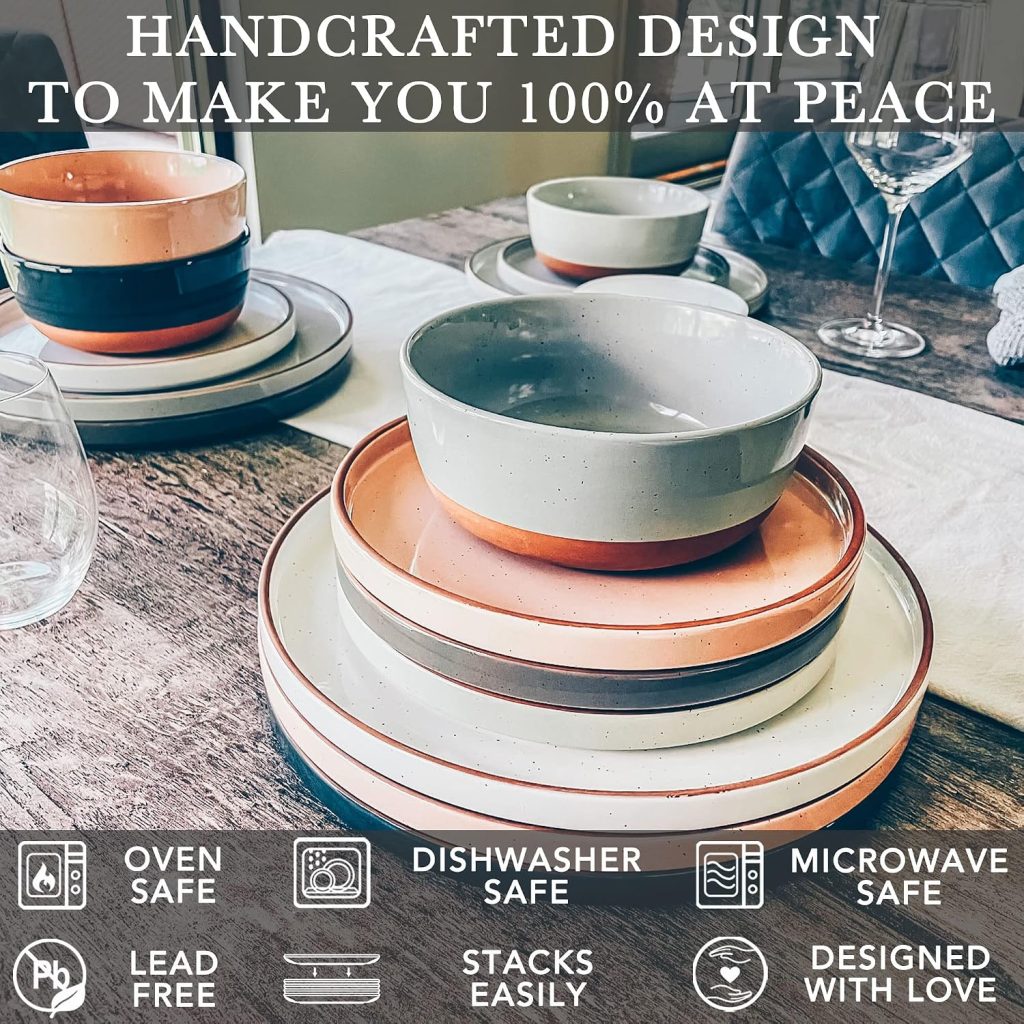
That high-fire process is also why reputable porcelain manufacturers rarely need lead as a flux: the clay itself vitrifies at temperatures where lead-free glazes work fine.
This is generally the safest ceramic category for everyday use, provided it comes from a manufacturer that follows U.S. or equivalent regulations.
Stoneware and Earthenware (Higher Risk)
Stoneware and earthenware fire at lower temperatures than porcelain, and that’s exactly why lead historically got used in their glazes.
It let potters hit a smooth, sealed finish without the expense of a hotter kiln. Reputable modern stoneware brands use lead-free glazes formulated to work at those lower temperatures, so a stoneware mug from a major retailer isn’t automatically riskier than a porcelain one.
Older, handmade, or imported earthenware, especially unglazed or roughly glazed terra cotta, is where lead risk concentrates.
Material Risk at a Glance
| Material | Typical firing temperature | Why it matters | Lead risk (modern, reputable brands) |
|---|---|---|---|
| Porcelain/bone china | 2,200°F to 2,650°F | Vitrifies fully; glaze bonds tightly to a non-porous body | Low |
| Stoneware | 2,150°F to 2,300°F | Dense and durable, but glaze quality varies more by manufacturer | Low to moderate |
| Earthenware/terra cotta | 1,800°F to 2,100°F | Porous body that depends entirely on the glaze to seal it | Moderate to high, especially if imported or handmade |
| Glass (for comparison) | Not fired the same way | No glaze at all in most cookware glass | Very low, except leaded crystal |
Which Ceramic Dishes Are Most Likely to Have Lead?
Certain categories of ceramic dishware carry more lead risk than others meaningfully, and they share a few traits: age, origin, and how much regulatory oversight they went through before reaching a shelf.
Imported and Traditional Pottery
- Traditional glazed terra cotta from parts of Latin America, including Mexican bean pots, is a well-documented source of lead exposure when the piece isn’t specifically labeled lead-free.
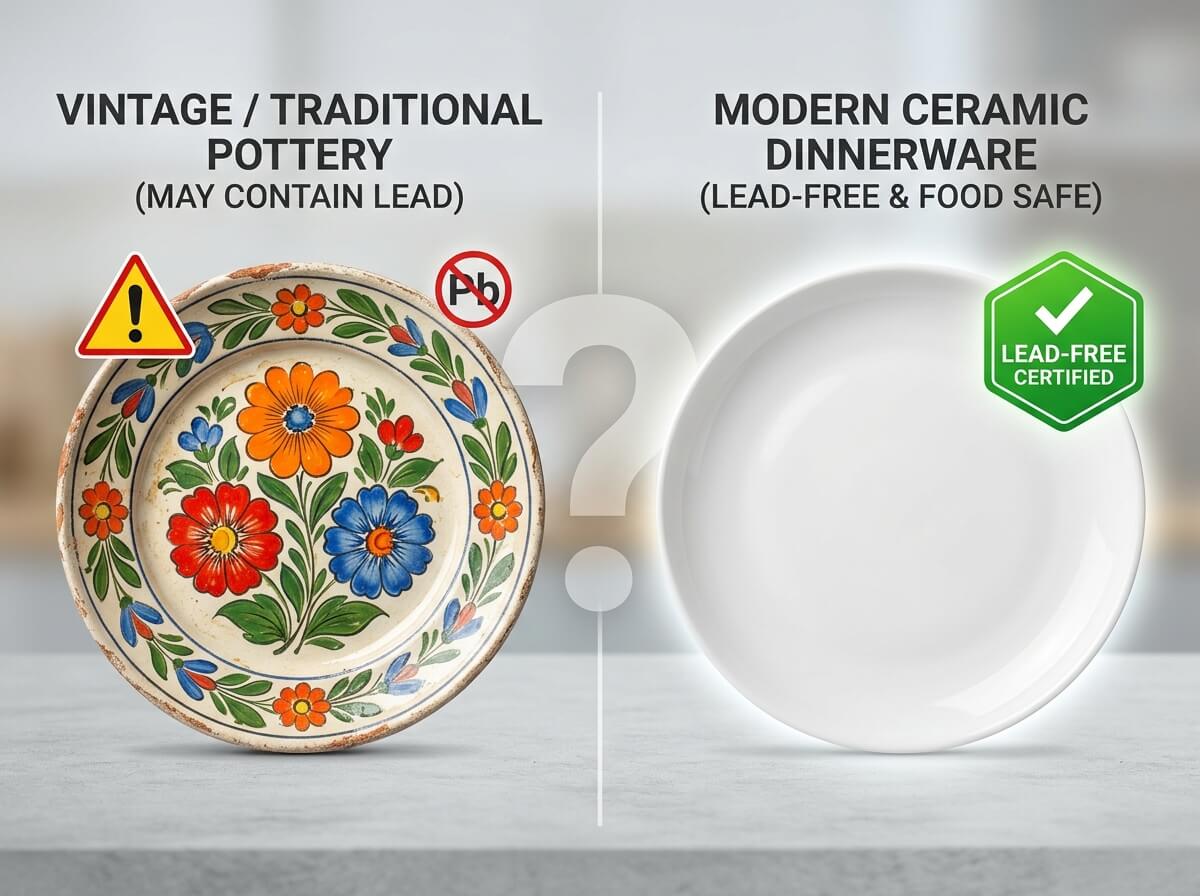
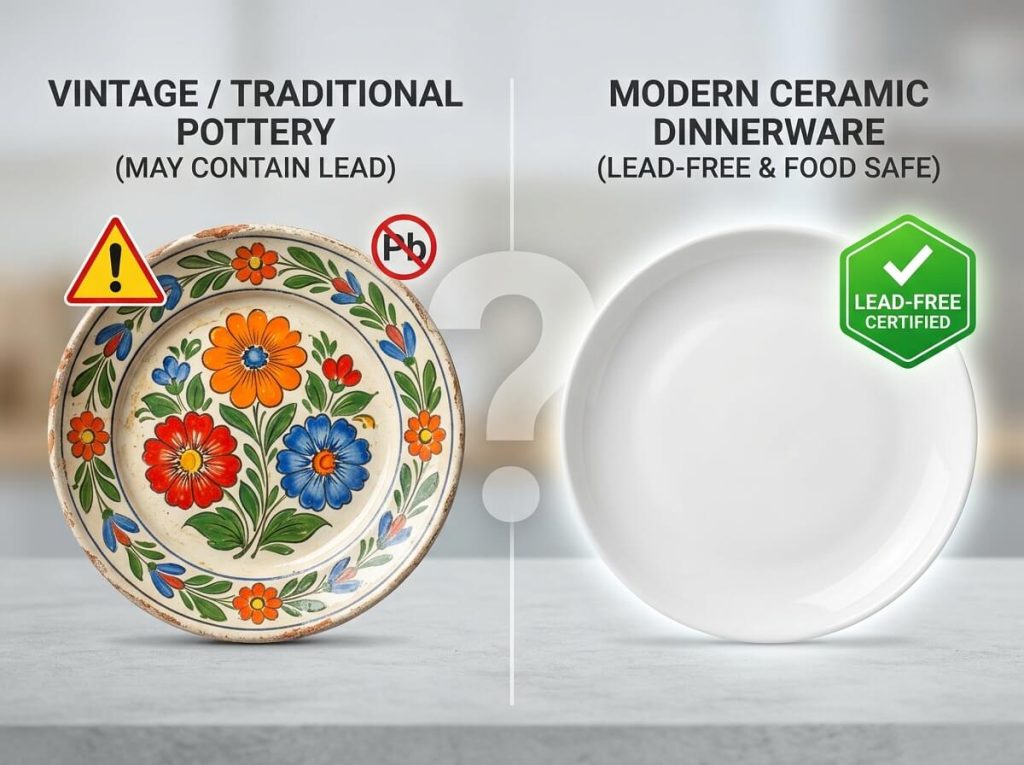
- Highly decorated traditional dishware from some Asian, North African, and Eastern European producers has also tested positive for lead, especially on brightly colored food-contact surfaces.
- The FDA has reported that some pottery labeled “lead-free” by manufacturers outside the U.S. still tested at or above its action levels for extractable lead, so a label alone isn’t proof.
- Dishware sold at small import shops or informal markets typically hasn’t gone through the same testing that major U.S. retailers require of their suppliers.
Vintage, Antique, and Handmade Pieces
- Dishware made before 1971, when the FDA first began regulating lead in ceramic tableware, was made with no lead restrictions at all.
- Handmade or small-batch pottery, whether from a craft fair or a family member’s kiln, is only lead-free if the maker specifically used a lead-free glaze, and most owners have no way to confirm that after the fact.
- Vintage Fiestaware made before 1986 contains lead in its glaze; Fiestaware made from 1986 onward does not.
- Decorated vintage Pyrex, particularly the colorful patterned pieces collectors seek out, can contain lead, while current Pyrex is lead- and cadmium-free soda-lime glass.
Warning Signs on the Dish Itself
- A chalky, grey, or dusty residue on the glazed surface, especially after acidic food contact, is a visible sign of significant lead leaching and means the piece should be pulled from food use immediately.
- Bright, saturated reds, oranges, and yellows on the food-contact surface historically correlated with lead-based pigments, though this is a clue, not a guarantee either way.
- Chips, cracks, or a worn, dull glaze expose the layer underneath and can increase how much lead leaches out, even on a piece that was fine when new.
- The absence of any of these signs doesn’t confirm a dish is safe. You cannot reliably tell whether a dish contains lead just by looking at it.
Do Popular Dinnerware Brands Like Corelle or Fiestaware Have Lead?
If you’re trying to check a specific brand instead of a general category, our guide on the lead-free status of your favourite dinnerware brand covers more names in detail.
Here’s what the two most commonly asked-about brands look like.
Corelle
Corelle dinnerware made before the mid-2000s used lead in some of its glazes and decorative patterns.
Corelle has said its own testing of these older pieces found they don’t leach lead under normal conditions, but that finding depends on the glaze being intact. If you own vintage Corelle with any chips, cracks, or worn decoration, treat it as a piece to retire from food use rather than risk it.
For the full pattern-by-pattern rundown, see our full Corelle lead breakdown.
Fiestaware and Vintage Pyrex
Fiestaware has been lead-free since 1986, and current production carries no lead risk.
Vintage Fiestaware from before that year does contain lead in its glaze, and health agencies recommend against eating off it.
The same split applies to Pyrex: modern Pyrex is lead- and cadmium-free soda-lime glass, while decorated vintage Pyrex from the mid-20th century, the kind sought after by collectors for its colors and patterns, can contain lead in its printed designs.
What Increases Lead Exposure From Ceramic Dishes You Already Own
Whether a lead-containing dish actually poses a risk depends heavily on how it’s used, not just whether lead is present in the glaze.
Acidic Foods and Long Storage Times
- Acidic foods and drinks, including citrus fruit, tomato-based sauces, salad dressing, coffee, tea, sodas, and alcohol, pull lead out of a glaze far faster than neutral foods like rice or milk.
- The longer food sits in contact with a lead-containing glaze, the more lead has time to leach into it, which is why storing leftovers in an old ceramic bowl is riskier than a quick meal served and cleared.
- Reheating acidic food in the same dish it was stored in compounds both factors at once.
Heat, the Microwave, and the Dishwasher
- Heating food in a lead-containing dish speeds up the leaching process compared to serving cold food in the same piece.
- Washing a lead-containing dish in the dishwasher can dull and damage the glazed surface over repeated cycles, which then increases how much lead leaches out the next time it’s used, and it can transfer residue to other dishes in the same load.
- Hand-washing gently and avoiding prolonged soaking reduces wear on a glaze that might already be compromised.
None of these factors act alone in the real world. A dish rarely causes a problem because of just one issue.
The dishes behind documented lead poisoning cases tend to stack several risk factors at once: an older, imported, brightly decorated bowl used to store an acidic sauce, then reheated in the microwave, checks nearly every box at the same time.
A newer stoneware mug from a regulated U.S. brand, used for water, checks almost none of them. When you’re deciding whether to worry about a specific piece in your cabinet, run through the full list rather than fixating on any single factor.
Families with young children or anyone who is pregnant or breastfeeding should be more cautious with borderline pieces; see safe dinnerware for kids and toddlers for material picks aimed at that higher-risk group.
How to Find Out If Your Ceramic Dishes Have Lead
There are two real options if you want an answer for a specific dish: a home test kit for a quick read, or a lab test for a definitive one.
At-Home Lead Test Kits (and Their Limits)
- Home lead test kits use a swab or solution that changes color when it reacts with surface lead, and they’re inexpensive and available at most hardware stores.
- A positive result is a reliable reason to stop using a dish for food, since the test wouldn’t have reacted without detecting lead on the surface.
- A negative result does not guarantee safety. These kits only detect lead on the surface and can miss lead that’s present deeper in the glaze layer.
- Test kits also can’t tell you how much lead is present, only whether they detected any at the point tested.
Lab Testing for a Definitive Answer
A laboratory test is the only way to get a precise reading of how much lead a dish actually leaches, and it’s the method that matches how the FDA itself evaluates ceramicware.
Labs simulate food contact using an acidic solution and measure how much lead transfers out, then compare that figure against the FDA’s action levels, which vary by category.
Mugs and small hollowware are held to a stricter limit than large serving pieces like platters.
Lab testing costs more than a home kit and can sometimes damage or discolor the piece being tested, which is worth knowing before you send in a sentimental item.
What to Do If Your Dishes Might Contain Lead
Why “Curing” Methods Don’t Work
Boiling a dish in water, soaking it in vinegar or lemon juice, washing it with bleach, or rubbing it with garlic and salt will not remove lead from a glaze, no matter how many times the process gets repeated.
These traditional “curing” methods are widely believed to neutralize lead, but public health testing has consistently found no reduction in leachable lead after any of them.
If a dish is confirmed or strongly suspected to contain lead, no at-home treatment changes that.
Safe Alternatives — Decorate, Don’t Use for Food
- Set the piece aside for display only, such as on a shelf or wall, where it won’t come into contact with food or drink.
- Keep it out of reach of children, since young kids are more vulnerable to lead exposure and more likely to put objects in their mouths.
- Replace it in your everyday rotation with a piece from a material and brand you’ve confirmed is lead-free.
- If the piece has sentimental value you don’t want to lose, photograph it in use for the memory, then retire it from the table permanently.
For material and brand picks to replace anything you retire, see our guide to lead-free ceramic dinnerware.
If you’ve gone through your cabinet and found a few pieces worth replacing, the next step is picking something you won’t have to think twice about.
Our roundup of lead-free everyday dinnerware covers the sets worth buying for daily use, based on material, how transparent the manufacturer is about its glaze, and price.
FAQ
Is all ceramic dinnerware unsafe to use?
No. Most ceramic dinnerware sold today by major U.S. retailers is made without lead and is safe for everyday use.
The dishes worth worrying about are a specific subset: pieces made before 1971, imported traditional pottery without documented lead-free certification, handmade pieces of unknown origin, and anything with visible glaze damage.
If your dishes are recent purchases from a regulated retailer and show no chips or wear, the odds of a meaningful lead problem are low.
How can I tell if my grandmother’s dishes have lead?
You can’t tell for certain just by looking, since color, age, and origin are clues rather than proof.
Start by checking the maker’s mark or pattern name against the manufacturer’s own lead disclosures, if the brand is known.
If the piece predates 1971, is imported, or is handmade with no documentation, treat it as decorative rather than food-safe until you either get a lab test done or confirm its history with the maker or manufacturer directly.
Does the FDA regulate lead in dishes sold in the US?
Yes. The FDA has regulated leachable lead in ceramic tableware since 1971 and has tightened those limits several times since, most recently in the early 1990s.
Current action levels vary by category, with mugs and small hollowware held to a stricter limit than large serving pieces like platters.
These are enforcement thresholds the FDA uses to flag noncompliant products, not a guarantee that every regulated dish contains zero lead whatsoever.
Is ceramic cookware the same lead risk as ceramic dishes?
Not quite, and it’s worth separating the two. Recent FDA lead warnings that made headlines in late 2025 targeted specific imported metal cookware, aluminum, brass, and aluminum alloys sold under names like Hindalium and Indalium, sold in ethnic markets across several states.
That alert concerns metal pots and pans, not glazed ceramic dinnerware, and the two categories carry different risk profiles and different regulatory histories.
A ceramic plate’s lead risk comes from its glaze; that cookware’s risk comes from the metal alloy itself.
Every dish in your cabinet doesn’t need a lab test. Start with the pieces that check the most boxes above: age, origin, damage, and acidic use- and go from there.