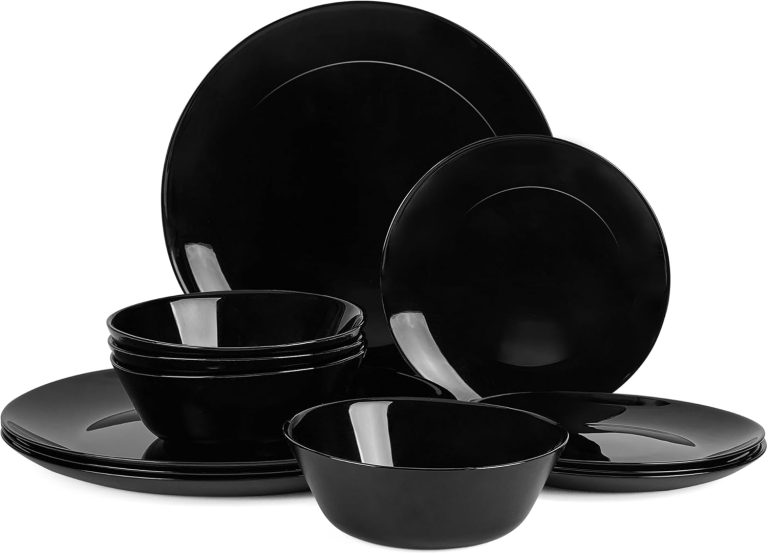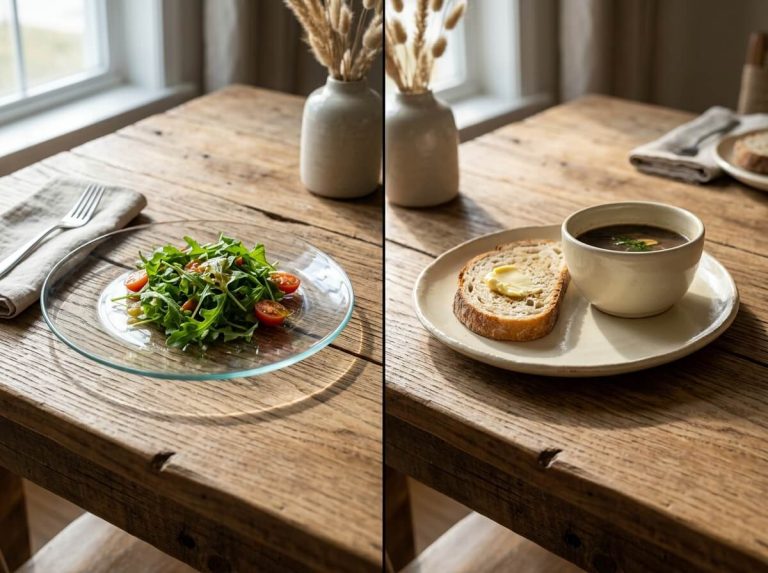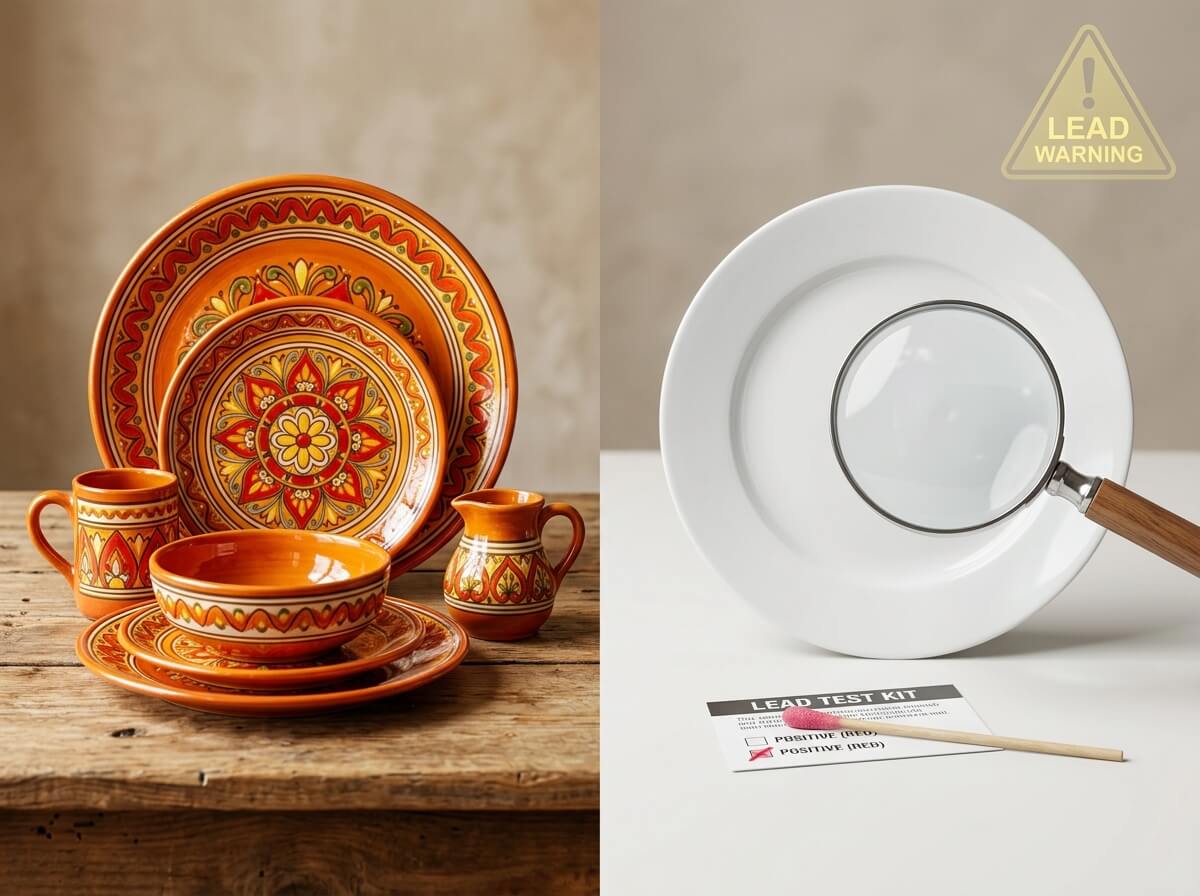
Some glazed dishes do contain lead, and some don’t, and the difference usually comes down to age, origin, and how the piece was fired rather than anything you can spot at a glance.
Lead has been used in ceramic glazes for centuries because it makes the surface smooth, glossy, and durable.
Modern manufacturing has largely moved away from it, but plenty of dishes in American kitchens right now, including some that look perfectly ordinary, were made before that shift or outside the countries that enforce it strictly.
Knowing which situations actually raise your risk matters a lot more than trying to eyeball a plate and guess.
DO GLAZED DISHES CONTAIN LEAD?
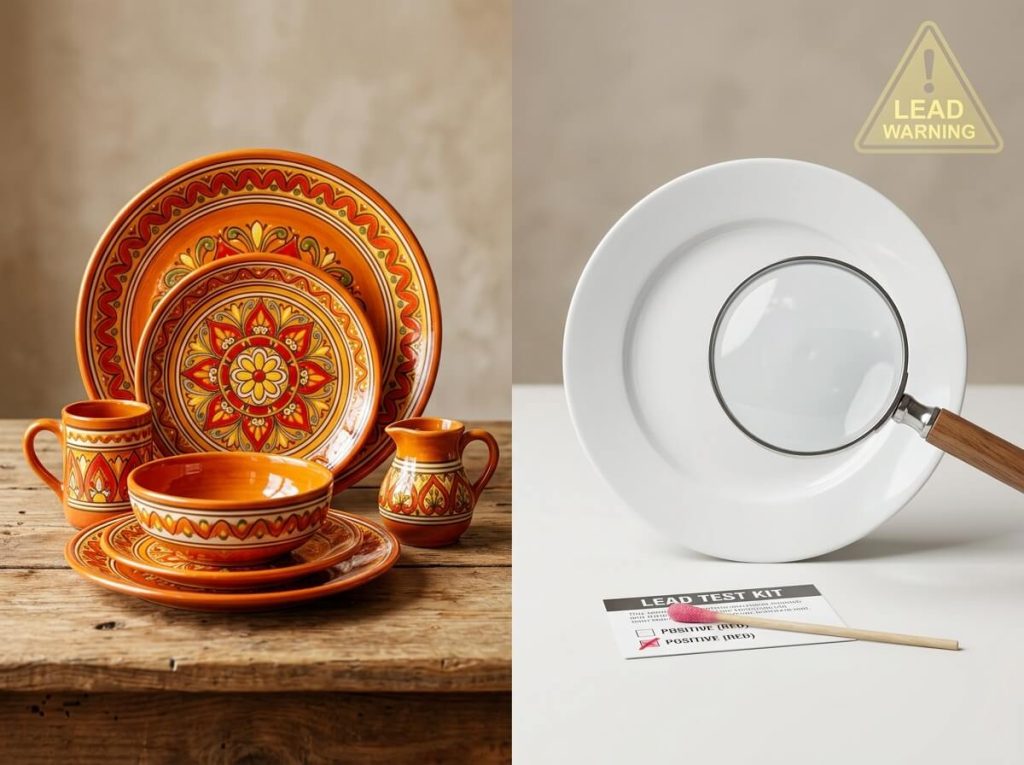
Yes, some glazed dishes contain lead. Here’s why it was used below:
What Lead Does in a Glaze
Glaze is a thin, glass-like coating fused onto ceramic in a kiln.
Lead compounds work well in that coating because they lower the melting point of the glaze mixture and help it flow evenly over the clay, sealing the porous surface underneath.
Lead also intensifies certain colors, particularly reds, oranges, and yellows, and helps the finished piece hold that color over years of use.
None of that makes lead dangerous by itself. The danger shows up when the lead isn’t properly locked into the glaze and can migrate out into whatever you’re eating or drinking.
When Lead Becomes a Problem: Firing Temperature
Firing temperature is the real dividing line. High-fired ceramics, generally anything baked above roughly 1,200°C, undergo a process where the clay and glaze fuse into a dense, glass-like layer that traps lead compounds inside it.
Low-fired pieces, often earthenware or traditional pottery baked at lower heat for a shorter time, don’t always reach that level of fusion.
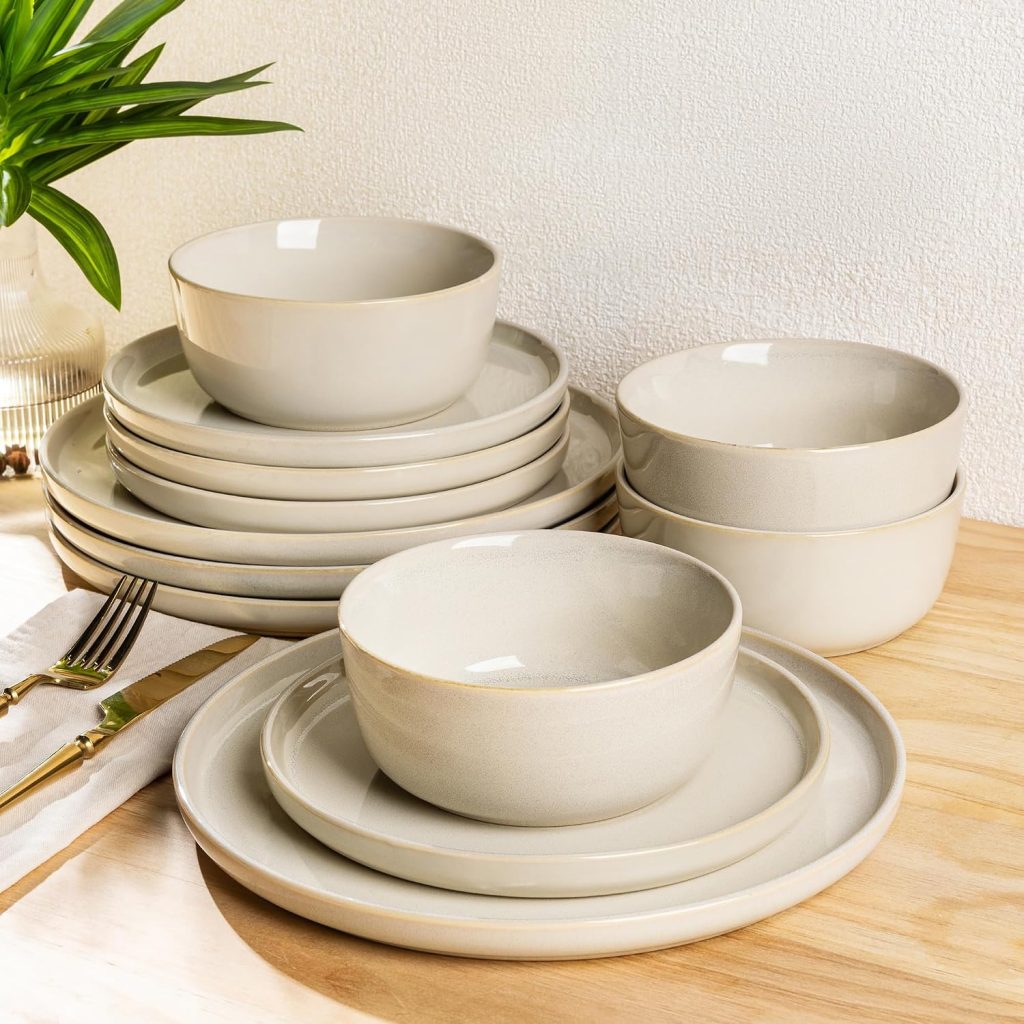
When that happens, lead in the glaze can stay loose enough to leach into food, especially acidic food, instead of staying bound in the ceramic.
An FDA consumer safety officer put it plainly in comments to the press: lead-glazed stoneware is safe when it’s properly manufactured and bound into the glaze, and the problem is pottery fired at inadequate or uncontrolled temperatures.
How Much Lead Is Actually Allowed in Dishes? (FDA Limits Explained)
FDA Leachable-Lead Limits by Dish Type
The FDA doesn’t require dishes to contain zero lead.
It regulates how much lead is allowed to leach out of a glazed surface into food, measured through a standardized test: soaking the piece in a 4% acetic acid solution, which mimics acidic food, for 24 hours, then measuring the lead in that solution.
| Dish Type | Maximum Leachable Lead |
|---|---|
| Flatware (plates, bowls) | 3.0 mg per liter |
| Cups, mugs, and pitchers | 0.5 mg per liter |
Dishes that exceed these limits can’t legally be sold in the United States.
That’s a meaningful protection, but it’s worth being clear about what it actually covers: leachable lead under lab conditions, not total lead content in the piece.
California Prop 65 and the Warning Label You Might See
California’s Proposition 65 requires businesses to post a warning when a product exposes buyers to significant amounts of certain chemicals, including lead.
Tableware that exceeds the Prop 65 threshold can still legally be sold in California, but only with a written warning, often the small yellow triangle label you may have noticed on imported dinnerware or specialty cookware.
Dishes that fall below both the FDA and Prop 65 thresholds don’t require that label at all, so the absence of a warning on a dish sold outside California tells you less than you’d think.
Which Dishes Are Most Likely to Contain Unsafe Lead Levels?
Some categories of dishware carry real, well-documented risk, and it has almost nothing to do with how a piece looks on your table.
Vintage and Antique Dishes (Pre-1971)
The FDA didn’t begin regulating leachable lead in ceramics and tableware until 1971.
Anything made before that date, including pieces passed down in families or bought at estate sales, flea markets, and antique shops, was produced with no federal limit on how much lead the glaze could contain.
A dusty or chalky gray residue on the glaze after washing is one of the clearer warning signs that a piece is leaching lead and shouldn’t be used for food or drink.
Imported and Handmade or Artisan Pottery
Traditional glazed terra cotta pottery from parts of Latin America, such as Mexican bean pots, and some highly decorated traditional dishes from parts of Asia, carry a documented history of high lead content, particularly when the glaze wasn’t fired at a controlled, sufficient temperature.
Handmade or small-batch pottery from unverified makers, whether produced in the U.S. or imported, falls into a similar category unless you know the maker uses a lead-free glaze.
This isn’t a knock on handmade ceramics generally. Plenty of contemporary studio potters in the U.S. use lead-free glazes as standard practice.
The issue is that you can’t assume it, and unlike a mass-market brand, there’s often no label or paperwork to check.
Damaged, Worn, or Chalky Glaze
- A glaze that looks cracked, pitted, or crazed (fine spiderweb cracks) has lost the seal that keeps lead locked in, if the glaze contains any to begin with.
- Brushstroke decoration you can feel with your fingertip, sitting on top of the glaze rather than sealed underneath it, is more likely to leach than decoration applied below the glaze layer.
- A gray or chalky residue on a towel after washing a piece is a sign the glaze surface is actively breaking down.
- Any piece with a manufacturer’s warning label marking it as decorative only should never be used for food or drink, regardless of how it looks.
For a closer look at which raw materials and finishes carry the lowest risk across dinnerware in general, our guide to materials least likely to leach lead breaks it down by category.
Does the Color of the Glaze Tell You Anything? (The White-Dish Myth)
Color is a weak signal at best, and treating a plain white plate as automatically safe is one of the more common mistakes people make.
Why Bright Reds, Oranges, and Yellows Get Blamed
Vibrant reds, oranges, and yellows have historically been achieved using lead compounds, since lead intensifies and stabilizes those pigments in a way that was hard to replicate otherwise.
That history is real, and it’s why old vintage pieces with bold, saturated colors deserve extra scrutiny.
But that history describes a correlation from decades of manufacturing practice, not a rule you can rely on for any given piece sitting in your cabinet today.
Why White Glaze Isn’t a Guarantee
White glaze is not inherently lead-free, and the assumption that it is turns out to be one of the more persistent myths in this space.
Independent testing using XRF (X-ray fluorescence) instruments has found real, sometimes substantial, lead levels in plain white ceramic pieces with no colored decoration at all.
“In one documented case, a white ceramic plate made in Portugal and sold by a major U.S. home goods retailer tested at 363 ppm lead by XRF, a standard lead-screening method used in professional testing.”
Lead can end up in a glaze through the fluxing agent that helps the glaze melt and bond, which has nothing to do with pigment, and it can also be introduced through firing temperature and kiln conditions that have no visible effect on color at all.
If you’re deciding whether a specific brand’s dinnerware is worth trusting, it’s worth checking directly.
We’ve looked at whether Corelle dinnerware specifically is lead-free as one example of how this plays out with a widely owned brand.
The Loophole Most Parents Don’t Know About
There’s a gap in how lead is regulated in the U.S. that has nothing to do with glaze quality and everything to do with what legal category a product falls into.
Why Dishes Aren’t Regulated Like Toys
The Consumer Product Safety Improvement Act sets a 100 ppm total lead limit for children’s products, measured in accessible components.
This applies broadly to children’s products, and the CPSC says some categories have specific exceptions or different treatment, including off-highway vehicles, certain bicycle-related metal components, used children’s products, ordinary books, and some electronic components.
Children’s dinnerware and dishes are not categorically exempt, and a toddler’s plate or bowl may still be subject to the lead limits depending on how it is marketed, intended, and regulated.
That means a child’s food-use plate may be subject to FDA leachable-lead limits for dinnerware, and if it is a children’s product, it may also have to meet CPSIA total-lead requirements for accessible components.
What This Means for Kids’ Everyday Plates and Bowls
The practical takeaway isn’t to panic. It’s to apply more scrutiny to kids’ dishware than the law requires, precisely because the law doesn’t require much.
A plate a child eats off of daily deserves the same level of caution as a toy, even though it isn’t held to the toy standard.
Buying from brands that publish real lead-testing results, and being especially cautious with imported, vintage, or handmade pieces for kids’ everyday use, closes a gap that regulation currently leaves open.
If you’re shopping specifically with kids in mind, our roundup of non-toxic dinnerware made for kids covers brands that test and disclose their results.
How to Check Whether Your Glazed Dishes Have Lead
Before buying new dinnerware, it’s worth learning how to check whether your dinnerware brand is lead-free directly from the manufacturer, since that information isn’t always obvious from the packaging or product listing.
At-Home Lead Test Swabs: What They Can and Can’t Tell You
At-home swab kits, such as 3M’s LeadCheck swabs (one of a small number recognized by the EPA for accuracy), work by changing color when they react with leachable lead on a surface.
They’re useful, but they answer a narrower question than most people assume.
A swab test tells you whether lead is leaching from the specific spot you tested, not how much lead is present and not whether lead exists elsewhere in the glaze that hasn’t started leaching yet.
It’s also not the same test the FDA uses to certify a product’s safety, which involves a full 24-hour acid soak rather than a quick surface swab.
A negative result is reassuring but not a guarantee. Testing multiple spots, especially on any colored or decorated area, gives a more complete picture than a single swab.
Lab Testing and XRF: When It’s Worth It
For a more precise answer, particularly on a piece you suspect might be valuable, sentimental, or used regularly by a child, a lab test or XRF analysis is the more reliable option.
XRF instruments measure lead by reading how the material’s electrons respond to X-rays, which produces an actual concentration in parts per million rather than a simple yes or no.
This isn’t something Kitchnfam offers or performs; it’s a service available through independent testing labs and some public health departments, and it’s the method used in most of the documented lead-in-dishware findings referenced throughout this article.
What to Do If You Think Your Dishes Contain Lead
- Stop using the piece for food or drink immediately, even if you’ve used it before without any issue.
- Don’t run it through the dishwasher. Dishwasher detergent can damage a compromised glaze surface, increasing how much lead leaches the next time the piece is used, and it risks cross-contaminating other dishes in the same load.
- Avoid storing acidic foods or drinks in the piece, including citrus, tomato sauce, vinegar-based dressings, coffee, or soft drinks, since acidity speeds up leaching.
- Test it with an at-home swab kit for a quick first check, then follow up with lab or XRF testing if the piece is one you’d like to keep using or if children use it regularly.
- Retire the piece to decorative use only, or replace it, if testing confirms leachable lead above what you’re comfortable with.
Once you’ve ruled out your existing dishes, the safest next step is choosing dinnerware where the manufacturer’s lead status isn’t a guessing game.
Our guide to fully lead-free ceramic dinnerware options covers brands built around that standard from the start, and our full guide to the best non-toxic dinnerware brands is the place to start if you’re replacing a full set rather than a single piece.
FAQ
Do all glazed dishes contain lead?
No, most glazed dishes made and sold in the U.S. today don’t contain unsafe levels of lead, because FDA regulations since 1971 limit how much leachable lead a piece can legally contain.
The dishes that still carry real risk are a specific subset: pieces made before 1971, imported or handmade dishes from makers who don’t test for lead, and any dish with visibly damaged or chalky glaze.
A dish being glazed doesn’t automatically mean it contains lead; it just means the glaze was part of the manufacturing process, which is true of almost all ceramic dinnerware.
Is it safe to eat off lead-glazed dishes occasionally?
This depends on how much lead the glaze actually leaches and how it’s fired, not on how often you use the piece.
A properly fired, modern glaze that happens to contain trace lead bound tightly into the glass surface poses minimal risk even with regular use, since the FDA’s leachable-lead standard is designed around that scenario.
A poorly fired or damaged piece, on the other hand, can leach meaningful amounts of lead even from occasional use, particularly with acidic food.
If you’re unsure which category a piece falls into, testing it or setting it aside for decorative use is the more cautious choice.
Are white glazed dishes lead-free?
No, white glaze is not automatically lead-free, despite that being a common assumption.
Lead in a glaze comes from the fluxing agent that helps the glaze melt and bond to the clay, a function that has nothing to do with color or pigment.
Independent XRF testing has documented real lead content in plain white ceramic dinnerware, including mass-market pieces with no decorative color at all.
Glaze color is not a reliable way to judge whether a dish is safe.
Can lead from glazed dishes get into food without visible damage?
Yes, an intact, undamaged glaze can still leach lead if it wasn’t fired properly in the first place.
Lead leaching depends on how tightly the lead is bound into the glass structure of the glaze during firing, not on whether the surface looks worn or cracked to the naked eye.
A piece can look flawless and still leach lead above FDA limits if the kiln didn’t reach the temperature or duration needed to fully fuse the glaze.
That’s part of why visual inspection alone, while useful for spotting damaged pieces, can’t confirm that an intact-looking dish is safe.