Buying lead-free dinnerware is only half the job. A plate that tested lead-free at the factory can still turn into a leaching risk years later if the glaze gets scratched, chipped, or worn thin from bad care.
This guide covers the washing, storage, and inspection habits that keep your dishes safe for as long as you own them, well past the day you unbox them.
How to Wash Lead-Free Dinnerware Without Damaging the Glaze
How you wash a plate matters almost as much as what it’s made of. Even a piece built from lead-free dinnerware materials can develop a compromised surface if it’s cleaned the wrong way for years on end, and a compromised glaze is exactly what turns a “safe” dish into a genuine leaching risk.
Hand-Washing vs. Dishwasher: Which Is Actually Safer
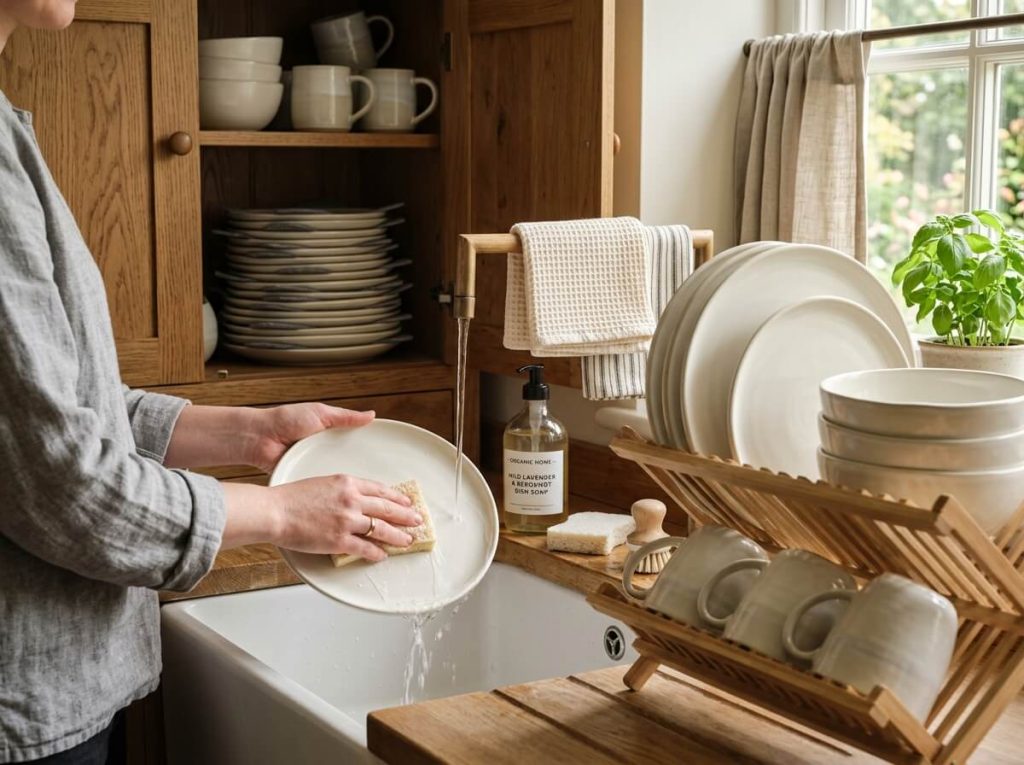
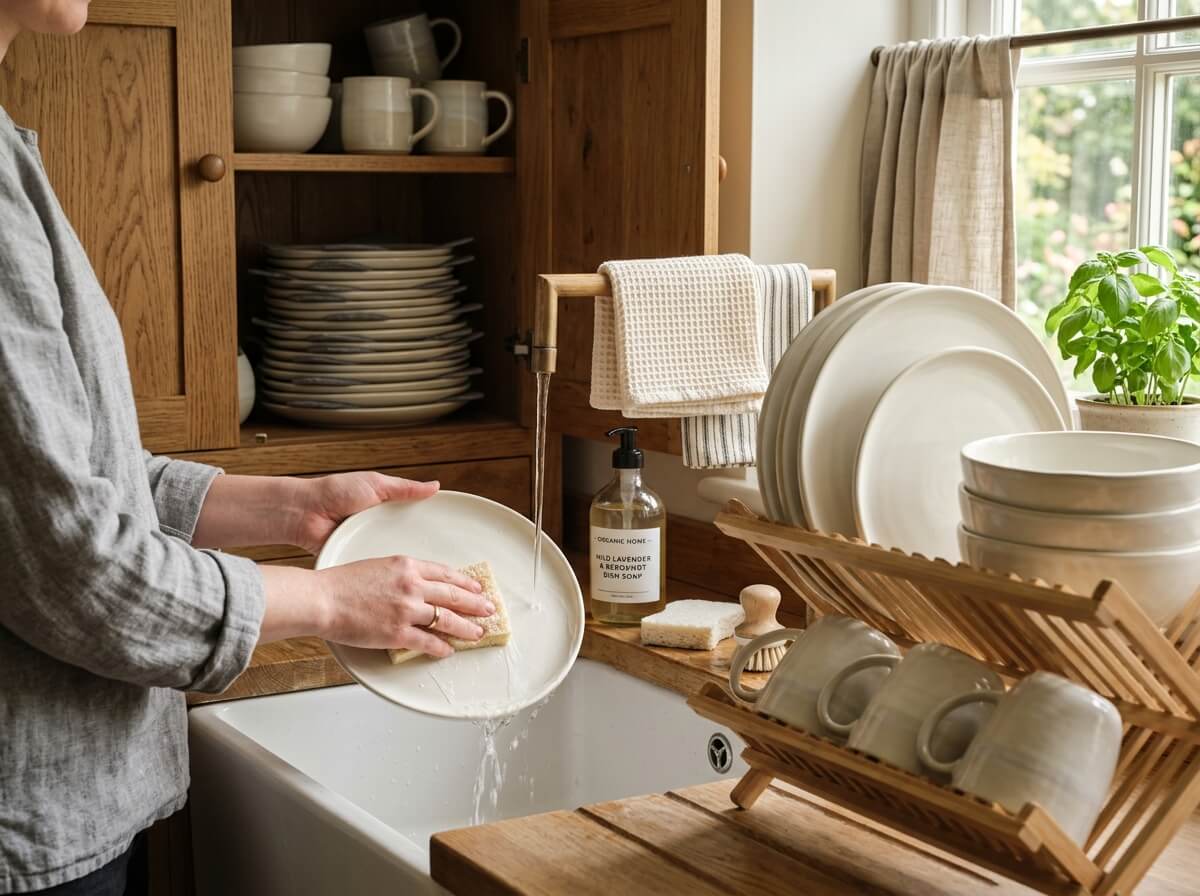
Most modern lead-free stoneware and porcelain is dishwasher-safe, but hand washing is still gentler on the glaze over the long run.
The dishwasher’s combination of hot water, detergent, and rapid temperature swings puts more wear on a glazed surface than a warm sink and a soft cloth ever will.
That wear doesn’t happen in one cycle. It builds up over hundreds of washes, gradually dulling the glaze and making it more porous.
If a piece is labeled dishwasher-safe, using the dishwasher occasionally is fine.
But for anything hand-painted, delicate, or older than a few years, hand washing is the better default, and it’s the only option for vintage or heirloom pieces you’re not fully sure about.
Soaps and Sponges to Avoid
- Skip steel wool and abrasive scouring pads, since they scratch protective glazes and open up pathways for chemicals to migrate out of the surface.
- Avoid bleach-based cleaners on ceramic dinnerware, because harsh chemicals can break down the glaze faster than plain dish soap.
- Don’t use gritty powdered cleansers on glazed surfaces, even for tough stains, since the abrasive particles work the same way sandpaper does.
- Stick to a soft sponge or dishcloth with a mild, unscented dish soap for everyday cleaning.
Removing Stains Without Scratching the Finish
- Soak the stained dish in warm water with a small amount of dish soap for 10 to 15 minutes before scrubbing anything.
- Wipe the stain with a soft sponge, applying gentle pressure rather than force.
- For stubborn marks like tea rings or tomato sauce residue, make a paste of baking soda and water and let it sit on the stain for a few minutes.
- Rinse thoroughly and dry with a soft towel rather than letting the piece air-dry with residue still on it.
- If a stain won’t lift after this, leave it. Trying to force it out with an abrasive pad does more damage to the glaze than the stain itself does.
Signs Your Dinnerware’s Glaze Is Compromised
A glaze doesn’t have to be visibly cracked to be a problem, but certain damage is a clear signal to stop using a piece for food.
The three most common failure types are chips, cracks, and crazing, and they don’t all carry the same urgency.
Chips and Cracks: When to Stop Using a Piece
A chip exposes the raw ceramic body underneath the glaze, which means whatever protective barrier existed between your food and the material is now gone in that spot.
A crack does something similar along a line, creating a pathway for moisture, food acids, and bacteria to work their way into the body of the dish.
Neither of these gets better with time. Once a piece is chipped or cracked, retire it from food use rather than hoping it holds up.
| Damage type | What it looks like | Recommended action |
|---|---|---|
| Chip | Missing material, exposed raw ceramic underneath the glaze | Retire from food use immediately |
| Crack | A visible line running through the glaze, sometimes into the body | Retire from food use immediately |
| Crazing | A fine network of hairline cracks across the surface, often only visible at an angle in bright light | Hand wash only going forward; watch closely and retire if it worsens or the piece is used for acidic foods |
A dish with a chip on the rim can sometimes still be used for display or dry storage. It shouldn’t be used for eating or serving food again.
If you’ve owned Corelle or a similar brand for a long time, it’s worth checking Corelle’s lead-free status, since older production runs and newer ones aren’t made to the same standard.
What Crazing (Fine Surface Cracks) Actually Means
Crazing is a network of very fine, hairline cracks that spread across a glazed surface, usually caused by the glaze and the clay body expanding or contracting at different rates over repeated heating and cooling.
It’s different from a single crack or chip. Crazing is often barely visible unless you tilt the dish under a bright light.
On its own, light crazing in a modern, well-fired piece isn’t usually treated as an emergency, but it is a sign that the glaze’s protective seal is starting to break down, and it tends to get worse with continued dishwasher use, oven use, or contact with acidic foods.
Once a piece shows noticeable crazing, switch it to hand washing only and keep it away from tomato sauce, citrus, and vinegar-based dishes.
At-Home Lead Test Kits: What They Can and Can’t Tell You
Swab-style lead test kits, the kind sold at hardware stores, can be a useful first screen, but they only detect lead sitting on the surface of a piece.
They can’t measure how much lead is actually leaching into food over time, and they can’t see through an intact glaze to detect lead trapped underneath it.
That means a negative result on a home kit tells you the surface looks clean right now. It doesn’t guarantee the piece will still test clean after another year of dishwasher cycles and daily wear.
If you’re testing a dish for the first time, that’s a reasonable use of a kit. If you’re testing a dish you already use daily because you’ve noticed new wear, chipping, or dulling, treat a home kit as a screening tool rather than a final verdict, and consider retiring the piece if you have any doubt.
If you’re trying to confirm whether a specific brand or pattern is lead-free in the first place, it’s faster to check if your dinnerware brand is lead-free than to rely on a swab test alone.
Everyday Use: Reducing Leaching Risk Over Time
Acidic and Hot Foods: Serve, Don’t Store
- Serve tomato sauce, citrus dishes, and vinegar-based salads on ceramic plates without concern, since brief contact during a meal isn’t the issue.
- Avoid storing acidic leftovers directly in ceramic containers for hours or overnight, since extended contact gives any trace metals in the glaze more time to migrate into the food.
- Move leftovers to a glass or stainless steel container instead of leaving them on a ceramic plate covered in plastic wrap.
- Be more cautious with older or hand-painted pieces around acidic foods, since decorative glazes are more likely to have inconsistent firing.
Microwave- and Dishwasher-Safe Labels Aren’t Lead-Free Guarantees
A “microwave-safe” or “dishwasher-safe” label tells you the glaze and clay body can handle heat and repeated washing without cracking.
It says nothing about whether the piece is free of lead or cadmium. These are two separate claims that happen to appear on the same product.
A dinnerware set can be dishwasher-safe and still contain lead in an old or poorly regulated glaze, and conversely, a lead-free piece might not be rated for the microwave at all if it has metallic trim.
Check for both claims separately before assuming one implies the other.
Storing Lead-Free Dinnerware to Prevent Chips
Stacking and Separators
- Use felt or foam plate separators between stacked pieces to prevent glaze-on-glaze contact that leads to scratches and chips over time.
- Store your heaviest pieces on the bottom of a stack and lighter ones on top, rather than the reverse.
- Avoid stacking more than six or seven plates at once, since taller stacks are more likely to tip or slide when you pull one out.
- Keep mugs and cups on hooks or a separate shelf rather than nested inside one another, which is a common cause of chipped rims.
Humidity and Cabinet Placement
Store dinnerware in a dry cabinet rather than a damp one near a sink or dishwasher, since consistent moisture exposure can slowly affect certain glazes, especially on older or lower-fired pieces.
Give dishes a few minutes to air dry completely before stacking them away.
Putting a still-damp plate under a stack of others traps moisture against the glaze, and over months of repeated storage, that habit does more to degrade a piece than any single wash cycle.
Special Care for Kids’ Lead-Free Dinnerware
Kids’ dinnerware carries the same care rules as the rest of your set, but with a shorter margin for error.
Children are more vulnerable to lead exposure than adults, and their dishes take more physical abuse: dropped on tile floors, banged on high chair trays, scraped with metal spoons.
That means the inspection habits that are optional for the rest of your cabinet are closer to mandatory here.
Inspecting Kids’ Plates and Bowls More Often
Check kids’ dishes for chips and cracks weekly rather than occasionally, since a toddler’s bowl sees more daily wear than an adult’s dinner plate.
Run a fingertip along the rim and base of each piece. Rough spots or small nicks you can feel but not always see are often the first sign of a coming chip.
If a piece has any exposed raw material at all, take it out of rotation immediately rather than waiting to see if it gets worse.
Materials That Hold Up Best to Daily Toddler Use
- Stainless steel resists chipping entirely and can handle being dropped repeatedly without developing the kind of surface damage that ceramic does.
- Tempered glass, sold under names like Duralex, is roughly twice as break-resistant as standard glass and doesn’t have a glaze to wear down in the first place.
- Solid, undecorated stoneware without metallic trim or bright colored glazes tends to hold up better than heavily decorated patterns, which are more likely to use decorative finishes on the food-contact surface.
- Avoid dinnerware with painted characters or designs on the inside eating surface, since interior decoration sits in direct, repeated contact with food.
If you’re building out a full kids’ set from scratch, our guide to lead-free dinnerware for kids and toddlers breaks down specific brands and sizes by age.
Good care habits only matter if you started with dinnerware that was actually lead-free to begin with.
If you’re not sure your current set clears that bar, or you’re ready to replace pieces you’ve had to retire, our full roundup of best non-toxic lead-free dinnerware covers tested picks across ceramic, glass, and stainless steel.
Frequently Asked Questions
Is it safe to put lead-free dinnerware in the dishwasher?
For most modern stoneware and porcelain labeled dishwasher-safe, yes, occasional dishwasher use is fine.
The bigger concern is long-term wear rather than any single cycle.
Hand washing is still gentler on the glaze over years of use, especially for hand-painted or delicate pieces, so it’s worth reserving the dishwasher for everyday basics and hand washing anything decorative, older, or already showing signs of wear.
How often should I replace ceramic dinnerware?
There’s no fixed timeline. Replace a piece the moment it develops a chip or crack, since neither of those improves with continued use.
For pieces without visible damage, plan to reassess every few years, checking for crazing, dulling, or rough spots along the rim.
A well-made, properly cared-for lead-free piece can easily last a decade or more without needing replacement.
Does a chip mean my dinnerware is no longer safe to use?
For food use, yes, retire the piece once it’s chipped.
A chip exposes the raw ceramic body beneath the glaze, removing the protective barrier that was keeping food away from the material underneath.
This applies even to dinnerware that tested lead-free when new, since the chip changes what’s actually in contact with your food.
A chipped plate can still be repurposed for non-food use, like a catch-all dish or a planter base, just not for eating.