Opalware is opacified glass. Ceramic is fired clay. That single fact explains almost every difference between them, from weight and heat retention to how each one handles a lead safety question.
Both materials show up constantly in “non-toxic dinnerware” searches, and both get compared on looks long before anyone checks what they’re actually made of.
This guide starts with composition, works through the practical differences that matter for daily use, and ends with the safety question most articles skip entirely.
What Is Opalware, Exactly? (Opalware Meaning)
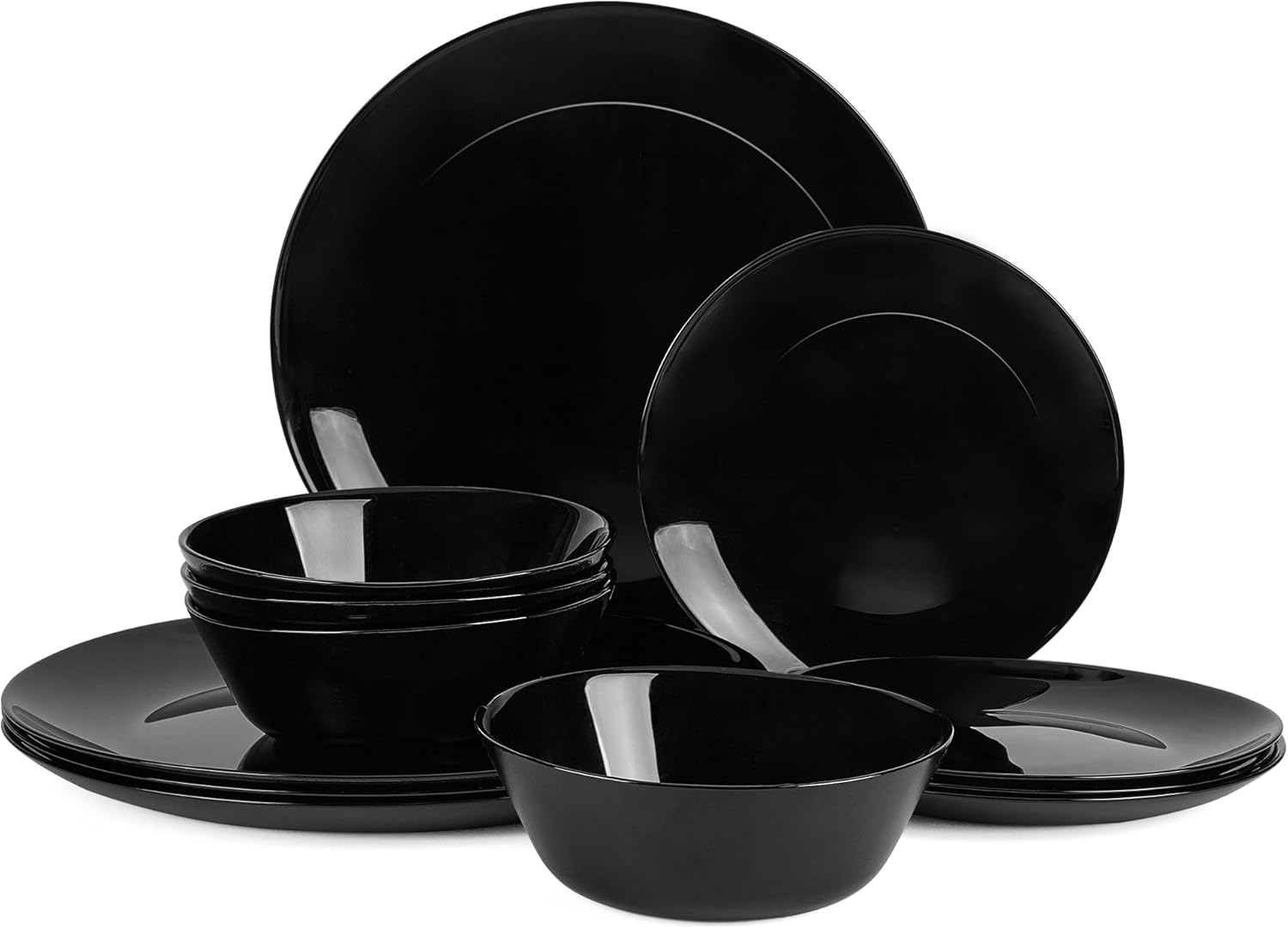
Opalware is a type of glass dinnerware, not a ceramic and not a glass-ceramic hybrid.
The name refers to opal glass, ordinary soda-lime glass that has been treated during manufacturing so it turns opaque and milky white instead of staying clear.
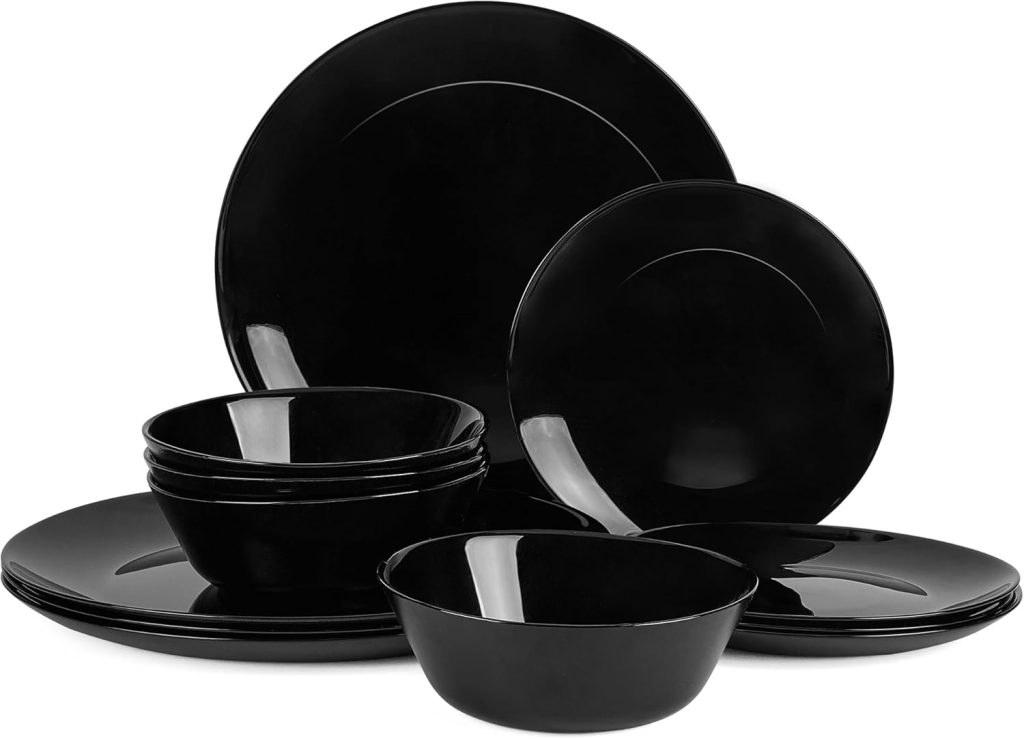
Every opalware plate, bowl, or mug you’ve ever used started as molten glass, not clay.
How Opalware Is Made
Manufacturers add small amounts of opacifying agents, typically fluoride or phosphate compounds, into the glass while it’s molten.
Those compounds don’t sit on the surface. They fuse into the glass matrix during melting, then the glass goes through a controlled heating and rapid-cooling cycle (often called recrystallization or tempering) that restructures it at a molecular level.
That process is what gives opalware its two defining traits: the uniform milky-white color, and mechanical strength that manufacturers commonly describe as roughly three times higher than standard untempered tableware glass.
Nothing is glazed on top afterward. The color and the strength both come from what happens to the glass itself.
Is Opalware Plastic or Glass?
Opalware is glass, full stop, not plastic and not a plastic-glass blend.
The confusion usually comes from how it feels in the hand: opalware is lighter and thinner than most ceramic or stoneware, and that lightness can read as “plasticky” to someone used to heavier dishware.
But there’s no polymer content involved anywhere in the manufacturing process.
It’s tempered, opacified glass from start to finish, which is also why it survives dishwasher cycles and hot food without the warping or scratching you’d expect from an actual plastic dish.
Common Misconception: Is Opalware a Type of Ceramic?
No, opalware is not ceramic, porcelain, or a mixture of the two, even though several widely shared articles describe it that way.
Ceramic and porcelain are made from clay that’s shaped, dried, and fired in a kiln. Opalware never touches clay. It’s melted glass that’s chemically opacified and tempered.
The two materials can look similar on a table; both come in a matte or satin white finish, but they behave completely differently under heat, impact, and wear because they start from different raw materials entirely.
This distinction matters beyond semantics: ceramic’s lead-safety concerns center on glaze applied to a clay body, a step that simply doesn’t exist in opalware production.
What Is Ceramic Dinnerware Made Of?
Ceramic dinnerware is made from clay that’s shaped, dried, then fired in a kiln at high temperatures, typically finished with a glaze layer for color, shine, and a non-porous, food-safe surface.
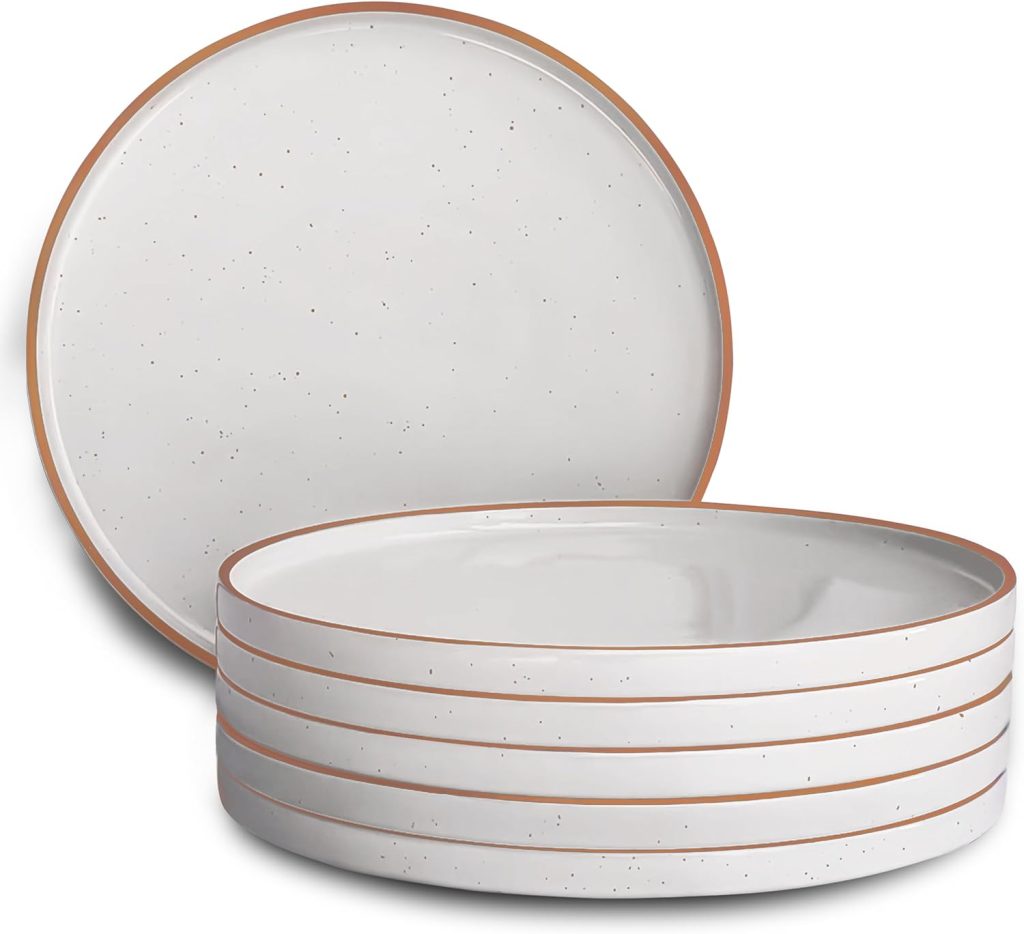
The general term “ceramic” covers a range of clay-based products, including earthenware, stoneware, and porcelain, each fired at different temperatures and with different density outcomes.
The Firing and Glazing Process
Clay dinnerware is shaped, then bisque-fired once to harden it, then coated with a liquid glaze and fired a second time so the glaze melts into a glass-like coating fused to the surface.
That second firing is what makes a piece watertight and stain-resistant.
Without full glaze coverage, unglazed ceramic stays porous and can absorb liquids, stain, and eventually harbor bacteria in the pores, which is why checking that a piece is glazed on every surface, including the underside, actually matters for everyday use.
Why Glaze Is the Part That Matters for Safety
Glaze, not the clay body itself, is where lead risk in ceramic dinnerware comes from.
Older or lower-quality glaze formulas have historically used lead compounds to achieve bright colors, a smooth glassy finish, or lower firing temperatures, and lead from those glazes can leach into food, particularly acidic or hot food.
This is a manufacturing and formulation issue, not something inherent to “ceramic” as a category.
High-quality, properly fired glazes formulated without lead compounds pose a different risk profile than a decorative import with an unverified glaze source.
For a closer look at which glaze formulations and brands hold up, see how to find lead-free ceramic dinnerware.
Opalware vs Ceramic: Side-by-Side Comparison
Opalware and ceramic solve the same problem: a durable surface to eat off of, using completely different materials, and that difference shows up in almost every practical category.
Durability and Chip Resistance
| Factor | Opalware | Ceramic |
|---|---|---|
| Base material | Tempered, opacified glass | Fired clay, glazed |
| Chip resistance | High, thermal tempering resists impact | Moderate, edges and rims chip first |
| Break pattern | Resists cracking under normal drops | Can crack or shatter on hard impact |
| Everyday wear | Holds up well to daily stacking and handling | More prone to chipped rims over years of use |
Is Opalware Breakable?
Yes, opalware can still break; it’s just more break-resistant than standard glass or most ceramic under normal household conditions.
The tempering process makes it far harder to chip or shatter from an ordinary drop or bump than untreated glass, and manufacturers commonly cite roughly three times the mechanical resistance of standard tableware.
That’s not the same as unbreakable. A hard enough impact, a sharp edge-first fall, or repeated thermal shock over years can still crack or chip a piece. Think of opalware as durable-for-glass, not indestructible.
Weight and Handling
| Factor | Opalware | Ceramic |
|---|---|---|
| Typical weight | Light | Heavier, denser feel |
| Stacking | Easy, compact storage | Bulkier, takes more cabinet space |
| Handling for kids/elderly | Easier due to lighter weight | Can feel unwieldy in larger pieces |
Heat Retention at the Table
| Factor | Opalware | Ceramic |
|---|---|---|
| Heat retention | Lower, food cools faster | Higher, keeps food warm longer |
| Best for | Quick everyday meals | Serving food that should stay hot longer |
Microwave, Oven, and Dishwasher Use
| Factor | Opalware | Ceramic |
|---|---|---|
| Microwave-safe | Yes, in most cases (check manufacturer label) | Yes, in most cases (check for metallic trim) |
| Oven-safe | Varies by product, confirm before use | Varies by product, confirm before use |
| Dishwasher-safe | Yes, typically | Yes, typically |
| Sudden temperature changes | Handles better due to tempering | More prone to thermal shock cracking |
Price Range
| Factor | Opalware | Ceramic |
|---|---|---|
| Typical price point | Budget to mid-range | Wide range, budget stoneware to premium porcelain |
| Value for everyday use | Strong, durable at a lower price | Depends heavily on brand and glaze quality |
Opalware vs Glass Dinnerware: Full Comparison
Opalware is a specific type of treated glass, and comparing it to plain glass dinnerware shows exactly what that treatment buys you.
| Factor | Opalware | Standard Glass Dinnerware |
|---|---|---|
| Composition | Soda-lime glass with fused opacifiers, tempered | Untreated or lightly tempered clear glass |
| Appearance | Opaque, milky white | Transparent or lightly tinted |
| Break resistance | High, resists chipping and shattering | Lower, more prone to shattering into sharp pieces |
| Thermal shock resistance | Strong, built for hot-to-cold transitions | Weak, prone to cracking under sudden temperature change |
| Weight | Light | Varies, often similarly light but more fragile |
| Typical use case | Daily dinnerware, microwave reheating | Serving bowls, drinkware, display pieces |
| Price | Budget to mid-range | Budget to mid-range |
Opalware vs Porcelain: Full Comparison
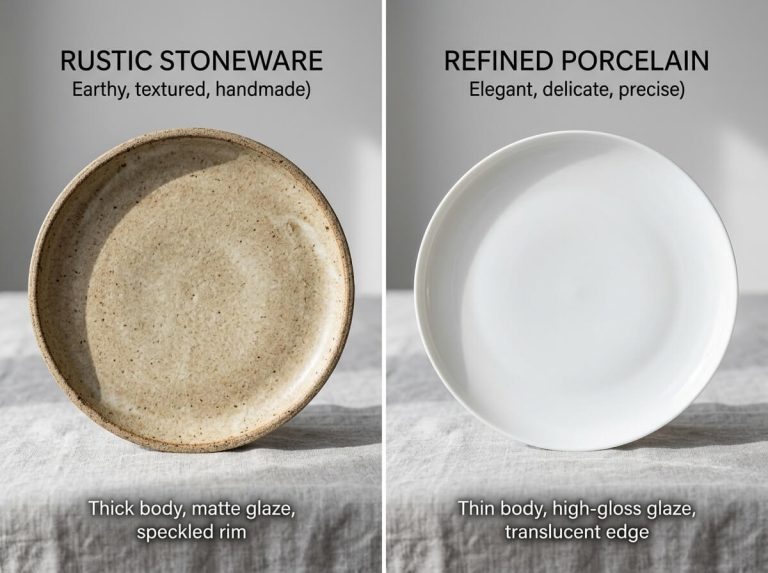
Porcelain is fired clay refined to a dense, often translucent finish, while opalware is glass engineered to mimic that same clean white look. They land in similar price territory but perform differently in daily use.
| Factor | Opalware | Porcelain |
|---|---|---|
| Composition | Tempered, opacified glass | Kaolin clay fired at very high temperatures (roughly 2,200 to 2,600°F) |
| Weight | Light | Denser, moderately heavier |
| Heat retention | Lower | Higher, stays warm longer at the table |
| Chip resistance | High against impact overall | Strong at the body, but thin rims can still chip |
| Aesthetic | Uniform milky white, casual | Refined, often slightly translucent, more formal |
| Best for | Everyday, high-use households | Formal dining, occasional entertaining |
| Price | Budget to mid-range | Mid-range to premium |
Opalware vs Corelle: Full Comparison
Corelle isn’t opal glass. It’s built from Vitrelle, a laminated glass made of three bonded layers, which is a different glass technology from the single-composition tempered glass used in opalware.
| Factor | Opalware | Corelle |
|---|---|---|
| Glass technology | Single-layer tempered, opacified glass | Vitrelle, three laminated glass layers |
| Weight | Light | Extremely light, thinner profile |
| Chip resistance | High | High, laminated structure resists chipping well |
| Country of origin (typical) | Often imported, varies by brand | Primarily manufactured in the USA |
| Pattern/style variety | Wide range of colors and prints | Extensive pattern catalog, decades of designs |
| Price | Generally lower | Comparable to slightly higher depending on pattern and set |
Corelle’s closest counterpart from the opal glass side is actually a French brand, not a generic category.
If you’re weighing glass dinnerware brands side by side, our Arcopal vs Corelle dinnerware comparison breaks down how that specific matchup plays out.
What Are the Disadvantages of Opalware?
Opalware isn’t a flawless material, and a few tradeoffs are worth knowing before you buy a full set.
- Opalware isn’t fully unbreakable. A sharp-edge impact or years of repeated thermal cycling can still crack or chip a piece, even though it resists ordinary drops far better than plain glass.
- It doesn’t retain heat as well as ceramic or stoneware, so food served on opalware cools down faster, which matters if you like a long, slow dinner.
- Thin rims can pick up faint scratches and cutlery marks over years of stacking and dishwasher cycles, even though the surface resists chipping.
- Some users describe the light weight as feeling less substantial or “plasticky” compared to the heft of stoneware or porcelain, a perception issue rather than a durability one.
- The uniform milky-white finish reads as practical rather than decorative to buyers who want a more textured, handcrafted look at the table.
Which One Is Actually Safer: Opalware or Ceramic?
Neither material is automatically the safer choice. Safety depends on manufacturing standards and glaze quality, not simply on which broad category a piece falls into.
Where Lead Risk Comes From in Dinnerware
Lead risk in dinnerware traces back to glaze formulation and decoration, not to “ceramic” or “glass” as categories in themselves.
Because opalware has no glaze layer (its color comes from opacifiers fused into the glass body), it sidesteps the specific mechanism that has historically caused lead contamination in some ceramic products.
That doesn’t make every opalware set automatically safer than every ceramic set. It means the risk factors are different: for ceramic, glaze source and firing standards matter most; for opalware, overall manufacturing quality and country-of-origin standards still matter, even without a glaze step.
Health authorities are clear that there’s no established safe threshold for lead exposure, and regulators have acted on this before: in August 2025, the FDA flagged a batch of imported cookware and dinnerware products, sold in ethnic markets across several states, for lead leaching that exceeded acceptable levels.
That kind of action tends to target specific imported products with unverified manufacturing standards, not entire material categories.
For a full rundown of which brands meet current lead-free standards, see our full guide to the best non-toxic, lead-free dinnerware materials.
What to Check Before You Trust Either Material
Buying decisions come down to brand transparency and documentation, not the material name on the product listing.
- Look for a brand that discloses its glaze source (for ceramic) or manufacturing standard (for opalware) rather than relying on vague claims like “eco-friendly” or “natural.”
- Check whether the brand publishes or references third-party lab testing results, rather than only stating “lead-free” without backing.
- Note the country of manufacture and whether that market has documented enforcement of lead limits in dinnerware, since enforcement standards vary widely.
- Avoid brightly colored, hand-painted, or vintage-style pieces from unverified sources, since decorative glazes and paints carry more historical lead risk than plain white finishes.
- Confirm compliance with US standards like FDA action levels and California’s Prop 65 disclosure requirements if you’re shopping in the US market.
Which Should You Choose for Kids or Daily Family Use?
The right choice depends on how your household actually uses dinnerware day to day, not on a universal “best material” answer.
If you’re specifically shopping for children, our guide to lead-free dinnerware for kids and toddlers goes deeper into age-specific material recommendations.
For Everyday, High-Breakage Households
Opalware tends to fit busy, high-breakage households better, since its lightweight and impact resistance hold up well against the daily wear of stacking, quick handling, and the occasional drop.
Families with young kids or anyone juggling dishes one-handed will generally find opalware easier to manage without sacrificing much durability, and it’s typically the more budget-friendly option for replacing a full set.
For Formal or Occasional Use
Ceramic, and particularly porcelain, makes more sense for formal dining or occasional entertaining, where heat retention, a more refined look, and heavier presence at the table matter more than everyday impact resistance.
These pieces see less frequent handling, so the tradeoff of moderate chip resistance for a warmer, more substantial feel works in the room’s favor rather than against it.
If you’re specifically deciding between two ceramic-adjacent options for that kind of use, opalware vs bone china covers how bone china’s translucency and higher price point stack up against opalware’s practicality.
Households that want a durable everyday set for daily meals should lean toward opalware.
Those furnishing a dining room for guests, holidays, or long-term formal use should lean toward ceramic or porcelain.
If you’re still narrowing down a specific brand, our non-toxic dinnerware buying guide breaks down current options by material and price point so you can compare sets side by side rather than guessing from a single listing.
Frequently Asked Questions
Is opalware better than ceramic for daily use?
For daily, high-handling use, opalware is generally the more practical choice because it’s lighter, more resistant to chipping from everyday drops and stacking, and typically less expensive to replace as a full set.
Ceramic still wins on heat retention and can feel more substantial at the table, which matters more for occasional or formal use than for a Tuesday-night dinner.
The right pick depends on how often the dishes get handled and how much weight you want on hand versus how long you need food to stay warm.
Is opalware the same as porcelain?
No, opalware and porcelain are made from entirely different raw materials: opalware is tempered, opacified glass, while porcelain is clay fired at very high temperatures until it becomes dense and often slightly translucent.
They can look similar in a plain white finish, but porcelain is heavier, retains heat better, and generally sits at a higher price point, while opalware is lighter and more budget-friendly for everyday use.
The confusion mostly comes from marketing language that groups both under a generic “white dinnerware” description.
Can ceramic dinnerware be toxic?
Ceramic dinnerware can pose a lead or cadmium risk, but that risk comes specifically from glaze formulation and firing quality, not from clay itself.
Older, imported, or vintage-style glazes have historically used lead compounds for color and shine, and the FDA has flagged specific imported products for excessive lead leaching as recently as August 2025.
Reputable brands that disclose glaze sourcing and meet current lead-limit standards pose a very different risk profile than an unverified decorative import, so checking the brand’s documentation matters more than avoiding “ceramic” as a category.
Is opalware safe for kids?
Opalware is generally considered a solid option for kids’ dinnerware because it’s lightweight, resists chipping from drops, and skips the glaze layer that’s historically been the source of lead concerns in some ceramic products.
That said, “opalware” alone isn’t a safety guarantee. Manufacturing standards still vary by brand and country of origin, so checking for documented lead-free compliance and third-party testing matters just as much as it would with any other material before it goes into daily rotation for a child’s plate or bowl.