Fiestaware and Le Creuset are not really competing on the same shelf.
Fiestaware is an American-made, everyday ceramic line built for daily use at a moderate price, while Le Creuset’s dinnerware is a smaller, pricier offshoot of a brand best known for cast iron cookware.
If you’re choosing between them, the decision usually comes down to three things: how each brand’s lead and cadmium safety actually holds up by color and year, what you’re paying per place setting, and whether you want dishes for daily rotation or occasional use.
Fiestaware vs Le Creuset at a Glance
| Features | Fiestaware | Le Creuset (Stoneware) |
|---|---|---|
| Material | Vitrified china | Enameled stoneware |
| Country of manufacture | Newell, West Virginia, USA | Primarily China (cast iron is made in France) |
| Lead/cadmium status | Lead-free since 1986; older pieces vary | Compliant with California Prop 65; some colors have tested higher in independent checks |
| Typical price per place setting | $25 to $40 | $50 to $90 |
| Best for | Daily use, families, mix-and-match collectors | Occasional or special-occasion use, gifting |
| Chip resistance | High; 5-year warranty against chipping | Moderate; reported chipping over time |
| Oven/microwave/dishwasher safe | Yes | Yes |
Fiestaware wins on price and everyday durability. Le Creuset wins on prestige and pairs well with its own cast iron line, but its dinnerware doesn’t carry the same reputation its Dutch ovens do.
Is Fiestaware Lead and Cadmium Free?
Modern Fiestaware, meaning anything made from 1986 onward, is lead-free under FDA standards.
The catch is that “modern” only covers post-1986 production. If you’re buying secondhand, at an estate sale, or inheriting a set, the manufacturing date matters more than the brand name.
Modern vs Vintage Fiestaware Safety (Pre-86 vs Post-86)
Homer Laughlin, the company behind Fiestaware, switched its glazing process in 1986 to remove added lead compounds deliberately.
Fiesta made between 1936 and 1943, and again between 1936 and 1972 under some color lines, used lead-based glazes that can leach at unsafe levels, especially the dark red glaze that also contained uranium oxide.
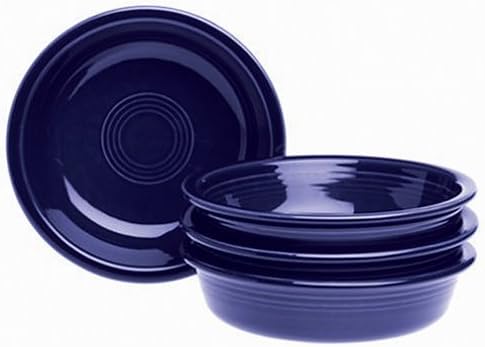
That “Radioactive Red” Fiesta is a known collector’s item, and it’s genuinely not something to eat off daily.
Anything with a post-1986 backstamp, or purchased new from Fiesta’s own retailers, doesn’t carry that risk.
The company states its current glazes meet FDA food-contact standards, and it discloses that trace lead can still show up because it’s present in nearly all natural ceramic raw materials, just not added on purpose.
What Independent Lead Testing Has Found
- Independent XRF testing of a newer white Fiestaware plate (produced around 2016) found roughly 33 parts per million (ppm) of lead, well under the 90 ppm threshold used as the safety benchmark for children’s items.
- Consumer safety advocate Tamara Rubin, who runs the Lead Safe Mama testing project, has documented that current Fiestaware glazes contain small, encapsulated amounts of cadmium used for coloring, and has publicly asked the company to stop describing its dishes as “lead-free” given the trace amounts present.
- The FDA permits food-contact ceramics to carry up to 0.25 to 0.5 ppm of leachable cadmium, and Fiesta says its glazes fall within that range.
- No independent testing reviewed for this comparison found modern (post-1986) Fiestaware exceeding recognized safety thresholds. The concerns that do surface are almost always tied to vintage pieces or the specific “Radioactive Red” glaze.
Is Le Creuset Stoneware Lead and Cadmium Free?
Le Creuset states that its production complies with California’s Proposition 65, the strictest US limit on lead and cadmium in consumer goods, and the company says lead is not used in its recipes.
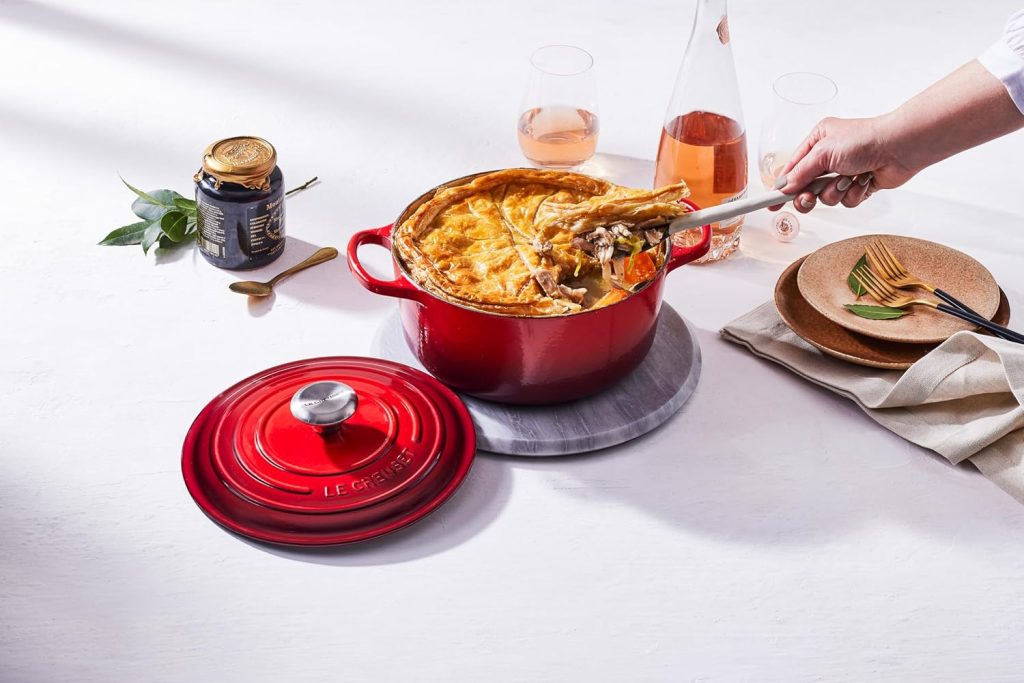
That claim is generally accurate for the enameled cast iron line.
For the stoneware dinnerware, the picture is less consistent: independent testers using XRF analyzers have reported detectable, and in some cases high, levels of lead and cadmium on Le Creuset stoneware, particularly in bold exterior colors.
Cast Iron vs Stoneware: Different Safety Profiles
Enameled cast iron is Le Creuset’s flagship product line, made in Fresnoy-le-Grand, France, and hand-inspected through roughly 30 quality checks before it ships.
Enameled stoneware, which includes the dinner plates, bowls, and casserole dishes that compete directly with Fiestaware, is a separate product made largely in China.
Independent lead-safety researcher Shannon of Natural Baby Mama tested her own Le Creuset stoneware with a Niton XL3T XRF analyzer and reported high lead and cadmium readings on both the interior and exterior of the pieces she owned.
That’s a meaningfully different result from what testers have generally found on Le Creuset’s French-made cast iron in lighter colors.
Treating “Le Creuset” as one uniform product with one safety profile misses this split, and it’s the single biggest gap in most comparisons of these two brands.
Which Le Creuset Colors Test Safest
- Le Creuset has told individual customers, though without a public, current source confirming it, that its Dune and Palm colors are formulated without lead or cadmium.
- Independent tester Shannon confirmed low readings on Dune and Palm pieces, finding only trace cadmium on the exterior and no detectable lead.
- Bolder, saturated colors such as red, orange (Flame), and yellow have shown higher cadmium readings in independent tests, since cadmium compounds are what produce those specific bright pigments.
- Newer neutral tones, including grays and beiges, have generally tested better than the brand’s older bright reds and yellows, according to independent testers who have compared multiple pieces over time.
- None of this testing was performed or verified by Kitchnfam. If lead and cadmium content is a deciding factor for you, treat these findings as a starting point for your own research, not a final verdict.
Price Comparison: Fiestaware vs Le Creuset
Fiestaware is built to be affordable enough to use every day without worrying about damage.
Le Creuset dinnerware is priced closer to its cast iron sibling than to competing everyday brands, which is part of why so many buyers assume it must also be the safer, higher-quality option, even though price and lead content aren’t related.
Cost Per Place Setting
| Item | Fiestaware | Le Creuset Stoneware |
|---|---|---|
| Dinner plate | $20 to $24 | $30 to $40 |
| Cereal/soup bowl | $15 to $18 | $25 to $30 |
| Full 4-piece place setting | roughly $60 to $80 | roughly $110 to $150 |
| Full set for a family of four | a few hundred dollars | often $500 or more |
Why Le Creuset Costs More
Le Creuset’s pricing reflects brand positioning built around its cast iron cookware, not the stoneware itself.
The company markets its products as long-term investments meant to be passed down, and the packaging, retail presence, and marketing all mirror that of the Dutch ovens the brand is famous for.
Fiestaware, by contrast, is priced as a workhorse product meant for frequent replacement of individual pieces rather than one large upfront purchase, which is part of why collectors often buy it a few pieces at a time over years instead of as a full boxed set.
Durability: Does Fiestaware Chip More Than Le Creuset?
Fiestaware generally holds up better to daily wear than Le Creuset stoneware, largely because of the difference in materials described below.
Fiesta comes with a manufacturer’s 5-year warranty against chipping under normal household use, something Le Creuset does not offer on its stoneware line.
Vitrified China vs Enameled Stoneware
Fiestaware is made from vitrified china, a ceramic body fired at high temperatures until it becomes glass-hard and non-porous all the way through, not just on the surface.
That’s what gives Fiesta its characteristic weight and resistance to chipping. Le Creuset’s dinnerware is enameled stoneware, a coarser clay body coated with a glass-like enamel glaze.
The stoneware itself is more porous than vitrified china, so the enamel coating is doing more of the protective work, and once that coating chips or cracks, the underlying stoneware is more exposed than vitrified china would be in the same spot.
For a full breakdown of how these materials compare more broadly, see our guide to how different dinnerware materials affect lead risk.
Everyday Use vs Special-Occasion Use
- Fiestaware is the more practical choice for households that put dishes through a dishwasher and microwave multiple times a day, since its vitrified body resists both thermal shock and daily handling.
- Le Creuset stoneware is often reserved for special occasions or lighter rotation, both because of its price and because some owners report chipping on the enamel edges over a few years of regular use.
- Families with young kids who tend to drop or bang dishes together may find Fiestaware’s chip warranty more reassuring than Le Creuset’s higher-end but less forgiving finish.
- If style and matching your existing Le Creuset cookware matter more than daily durability, the stoneware still functions well for a table that isn’t in heavy weekly rotation.
Where Each Brand Is Made
Fiestaware’s West Virginia Manufacturing
Every piece of Fiestaware is made at Homer Laughlin’s factory in Newell, West Virginia, and has been since the line launched in 1936.
That single-location, US-based production is part of what lets the company speak confidently about its glaze formulation and quality control, since it isn’t coordinating standards across multiple factories or countries.
Le Creuset’s Split Manufacturing (France vs China)
Le Creuset’s enameled cast iron cookware is made in Fresnoy-le-Grand, France, where the company has manufactured since 1925.
Its enameled stoneware, including most of the dinnerware pieces that compete with Fiestaware, is made in China.
Le Creuset says all of its products, regardless of where they’re manufactured, go through the same quality control process and meet the same regulatory standards.
Independent test results on stoneware pieces have been more mixed than results on the French-made cast iron, which is worth knowing if you’re assuming “Le Creuset” means the same manufacturing standard across every product it sells.
If you’re also trying to decide between stoneware and porcelain more generally, not just between these two brands, our guide to stoneware vs porcelain dinnerware breaks down how the two materials compare on safety, weight, and everyday care.
Whichever brand you land on, checking the specific color and production year before you buy secondhand will tell you more about lead and cadmium risk than the brand name alone.
Frequently Asked Questions
Which is better, Fiestaware or Le Creuset, for daily use?
Fiestaware is the better choice for daily use.
Its vitrified china body resists chipping better than Le Creuset’s enameled stoneware; it comes with a 5-year chip warranty, and it costs roughly half as much per place setting.
Le Creuset’s dinnerware is priced and marketed more as an occasional or special-use product, and several owners have reported chipping along the enamel edges after a few years of regular rotation.
If you’re setting a table that goes through the dishwasher and microwave daily, Fiestaware’s durability and lower replacement cost make it the more practical pick.
Can you mix and match Fiestaware and Le Creuset on the same table?
Yes, and plenty of collectors do exactly this. Fiestaware’s solid, saturated colors pair well with Le Creuset’s more muted stoneware tones, especially neutrals like Dune or Palm, without clashing visually.
The main consideration isn’t style but care: Fiestaware can handle daily dishwasher and microwave cycles better than Le Creuset stoneware, so many people use Fiesta for everyday plates and bowls while keeping Le Creuset pieces for serving dishes or special occasions where they’ll see lighter use.
Is Fiestaware or Le Creuset safer for kids?
Modern Fiestaware, made from 1986 onward, is generally the safer everyday option for kids, since independent testing has consistently found it under recognized lead safety thresholds.
Le Creuset stoneware’s safety varies more by color, with independent testers reporting higher lead and cadmium readings on bold reds and yellows compared to neutral tones like Dune and Palm.
If a set will be used daily by children, sticking with new, post-1986 Fiestaware or a documented lead- and cadmium-free Le Creuset color is the more cautious approach.
See our guide to lead-free dinnerware for kids and toddlers for material-specific recommendations.
What’s the most affordable lead-free alternative to Le Creuset?
Fiestaware is the most direct affordable alternative, running roughly 40 to 50 percent less per place setting than Le Creuset stoneware while carrying documented lead-free status for anything made since 1986.
If you want more options beyond Fiestaware specifically, our full list of the best non-toxic lead-free dinnerware covers additional brands at a range of price points, including several dinnerware brands made entirely in the US.