Porcelain and stoneware are both safe choices for dinnerware, and neither category is inherently safer than the other.
When people compare stoneware vs porcelain dinnerware, they’re usually asking two different questions at once: which one holds up better day to day, and which one won’t leach anything into their food.
The first question comes down to vitrification and weight. The second comes down to the glaze, not the clay body underneath it.
Stoneware tends to win on chip resistance and heat retention. Porcelain tends to win on refinement and stain resistance because it’s fully vitrified every time it’s fired.
Whichever you pick, the lead and cadmium risk that actually worries most shoppers has almost nothing to do with which of these two categories you choose.
What’s the Difference Between Stoneware and Porcelain?
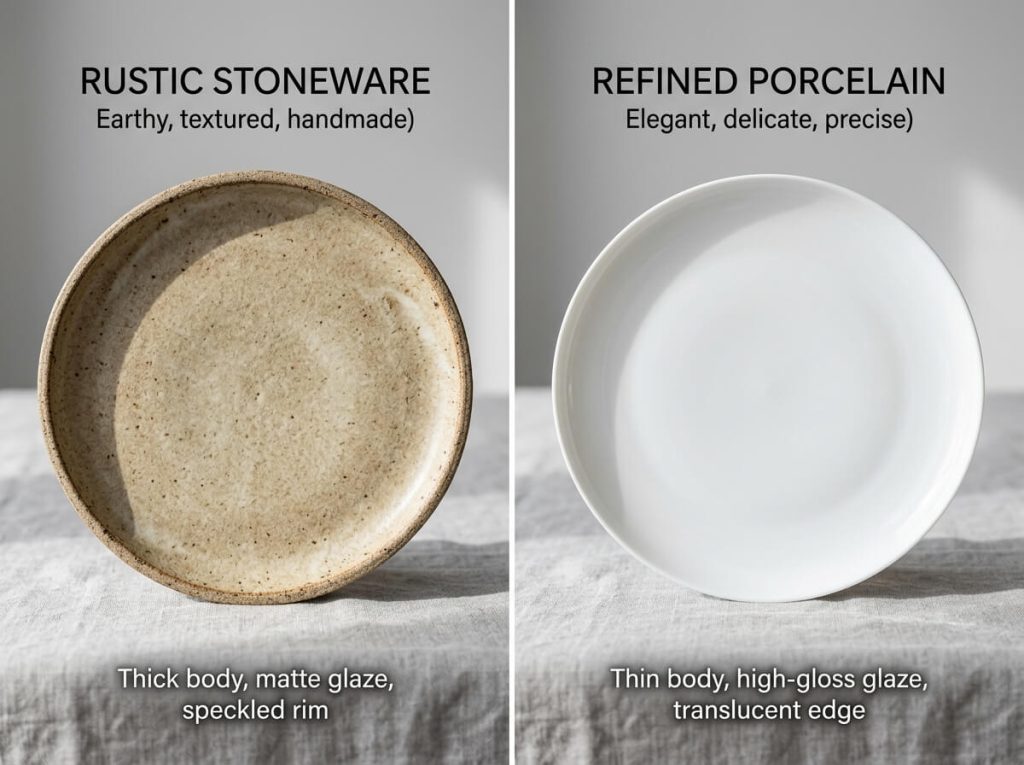
Stoneware and porcelain are both ceramics, but they come from different clay and end up with different densities once fired.
If you want the full breakdown of lead-free dinnerware materials across every category Kitchnfam covers, not just these two, that guide is the place to start.
Stoneware is made from a coarser, more mineral-rich clay body fired at roughly 2,100 to 2,300°F.
Porcelain is made primarily from kaolin, a fine white clay, fired at higher temperatures, often above 2,400°F, in a process that lasts long enough to vitrify the clay into a dense, glass-like material fully.
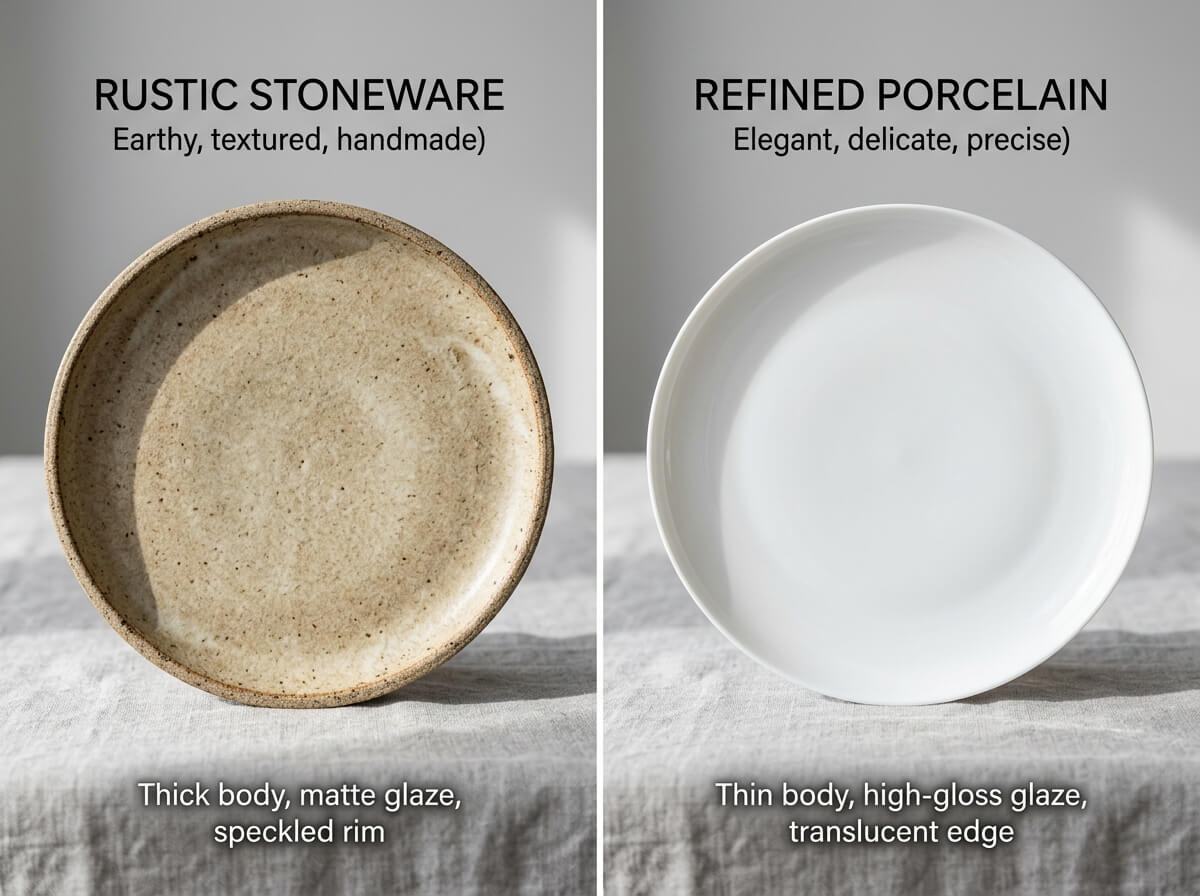
That temperature and clay difference is why porcelain feels lighter and looks more translucent, while stoneware feels heavier and keeps a slightly coarser texture even under glaze.
What Stoneware Is Made Of
Stoneware clay is a secondary clay, meaning it has traveled and picked up iron, carbon, and other minerals along the way rather than staying close to its original deposit.
Those minerals give stoneware its gray, brown, or speckled base color before glazing. Manufacturers add coarse additives to control shrinkage and texture during firing.
Depending on the firing schedule, stoneware can be fully vitrified or only partially vitrified, and that difference matters more for durability and moisture resistance than most product listings admit.
What Porcelain Is Made Of (Kaolin Clay)
Porcelain is made mostly from kaolin, a fine, low-iron clay found closer to its original mineral deposit, combined with feldspar and quartz to help it vitrify at high heat.
This combination gives porcelain its bright white or slightly gray-white base and its translucency when held up to light.
Because kaolin has fewer impurities than stoneware clay, porcelain fires into a denser, more uniform body, and it’s always fully vitrified rather than sometimes vitrified like stoneware.
Stoneware vs Porcelain: Durability and Chip Resistance
Stoneware generally resists chipping and thermal shock better than porcelain, even though porcelain is technically the harder material.
That sounds contradictory until you separate hardness from toughness. Porcelain’s dense, glassy structure resists scratches and stains extremely well, but that same density makes it more brittle on impact, so a hard drop is more likely to crack or shatter a porcelain plate than a stoneware one.
Stoneware’s thicker, less uniform body absorbs shock better, which is part of why restaurants and busy households lean toward it for daily rotation.
| Factor | Stoneware | Porcelain |
|---|---|---|
| Firing temperature | ~2,100 to 2,300°F | ~2,400°F and above |
| Vitrification | Partial to full, depends on manufacturer | Always fully vitrified |
| Weight | Heavier, thicker | Lighter, thinner |
| Impact resistance | Higher, absorbs shock well | Lower, more prone to cracking on drop |
| Scratch and stain resistance | Good, depends on glaze | Excellent, due to full vitrification |
| Typical look | Earthy, matte or textured | Bright white, glossy or smooth |
Why Vitrification Level Determines Strength
Vitrification is the process where clay particles fuse into a glass-like matrix during firing, and it’s the single biggest factor in how strong and water-resistant a ceramic piece turns out.
Fully vitrified pieces absorb close to zero water, which makes them harder, denser, and more resistant to bacterial buildup on the surface.
Porcelain hits full vitrification every time because of its clay composition and firing temperature.
Stoneware can be fully vitrified too, but budget stoneware fired at lower temperatures or for shorter cycles may only reach partial vitrification, leaving it more porous and softer than a well-made piece from either category.
Which One Chips or Cracks More Often
Porcelain chips and cracks more often under sudden impact, while stoneware chips more often from edge wear over years of use.
Drop a plate on a tile floor, and porcelain is the one more likely to shatter outright, because it has less give.
Compare years of daily stacking, scraping, and dishwasher cycles instead, and stoneware’s glaze is the part that eventually shows wear, usually as small chips along the rim rather than a full break.
Neither material is fragile by modern manufacturing standards, but the failure mode is different enough that it should factor into what you buy for a house with kids or a busy kitchen.
Is Stoneware or Porcelain Safer? Lead, Cadmium, and Glaze Quality
Neither stoneware nor porcelain is inherently safer when it comes to lead and cadmium.
The material category tells you almost nothing about leaching risk.
What determines that is whether the glaze was formulated and fired to be lead-free and cadmium-free, and whether the piece was fired hot enough and long enough to lock that glaze into a stable, glass-like layer.
A cheap stoneware mug and a cheap porcelain plate can carry the same risk if both were finished with a poorly regulated glaze, and a well-made piece in either category can be fully safe.
The FDA sets action levels for lead and cadmium extraction from ceramic ware, and California’s Proposition 65 requires a warning label on products that exceed its own, stricter thresholds.
Both regulations apply to stoneware and porcelain equally; neither material is exempt by name.
Why the Material Category Isn’t What Determines Safety
The confusion happens because people conflate weight and rusticity with safety, assuming a heavier, more handmade-looking stoneware piece must be more “natural” and therefore safer, or that a bright white porcelain piece must be more processed and therefore riskier.
Neither assumption holds up. Lead and cadmium in dinnerware come almost entirely from the glaze, specifically from older formulations that used lead compounds to make colors more vivid and glazes easier to apply at lower temperatures.
That practice shows up across both stoneware and porcelain, and it shows up far more in vintage and imported pieces than in current production from brands that publish their glaze standards.
Age and origin matter more here than most buying guides admit.
Older Fiestaware, produced before the 1970s, is a well-documented example: testing over the years has found some vintage pieces, especially those with red and orange glazes, carrying lead levels far above what any modern brand would be allowed to ship.
That has nothing to do with whether the piece counts as stoneware or a stoneware-adjacent earthenware.
It has to do with when and how it was made. A stoneware plate manufactured last year under current FDA and Prop 65 limits is a safer bet than either a vintage porcelain heirloom or a vintage stoneware piece with an unverified glaze history, regardless of which category either one falls into.
How to Check Any Piece for Lead-Free Glazing
- Look for an explicit “lead-free” or “cadmium-free” claim on the packaging or the brand’s product page, not just a general “food safe” label.
- Check whether the piece carries an FDA compliance statement or meets California Proposition 65 limits, since both regulations require action at specific extraction thresholds.
- Inspect the glaze for crazing, the fine spiderweb of cracks that can develop over years of use and expose the clay body underneath.
- Avoid pieces with unusually bright, saturated colors from unverified or vintage sources, since older bright glazes are the most common source of documented lead contamination.
- Use an at-home lead test swab on any piece you’re unsure about, especially secondhand or imported dinnerware without documentation.
For a closer look at specific labels, lead-free ceramic dinnerware options covers verified picks across both stoneware and porcelain.
If you already own a set and want a fast gut check, you can also check whether your dinnerware brand is lead-free before running any of the steps above.
Everyday Use: Microwave, Oven, and Dishwasher Safety
Most modern stoneware and porcelain are microwave safe and dishwasher safe, but oven safety depends more on the specific product line than on the material category.
Manufacturers vitrify both materials at temperatures far higher than any home oven reaches, so heat alone isn’t usually the problem.
Thermal shock is. Moving a piece from the freezer straight into a hot oven, or setting a hot dish onto a cold countertop, can crack either material regardless of how well it was fired.
| Use | Stoneware | Porcelain |
|---|---|---|
| Microwave | Safe for most pieces; check for metallic trim | Safe for most pieces, check for metallic trim |
| Dishwasher | Safe, gentle cycles preserve glaze longest | Safe, gentle cycles preserve glaze longest |
| Oven | Usually safe, avoid sudden temperature swings | Varies by product, check manufacturer’s rated limit |
| Freezer to oven | Avoid direct transfer | Avoid direct transfer |
Stoneware Care and Temperature Limits
- Let stoneware come to room temperature before moving it from the fridge into a hot oven, since sudden temperature swings are the most common cause of cracking.
- Hand wash pieces with hand-painted or reactive glazes to protect the finish, even though most stoneware tolerates the dishwasher fine.
- Check the base for a manufacturer’s oven-safe rating before broiling, since some decorative stoneware is rated for warming only, not high heat.
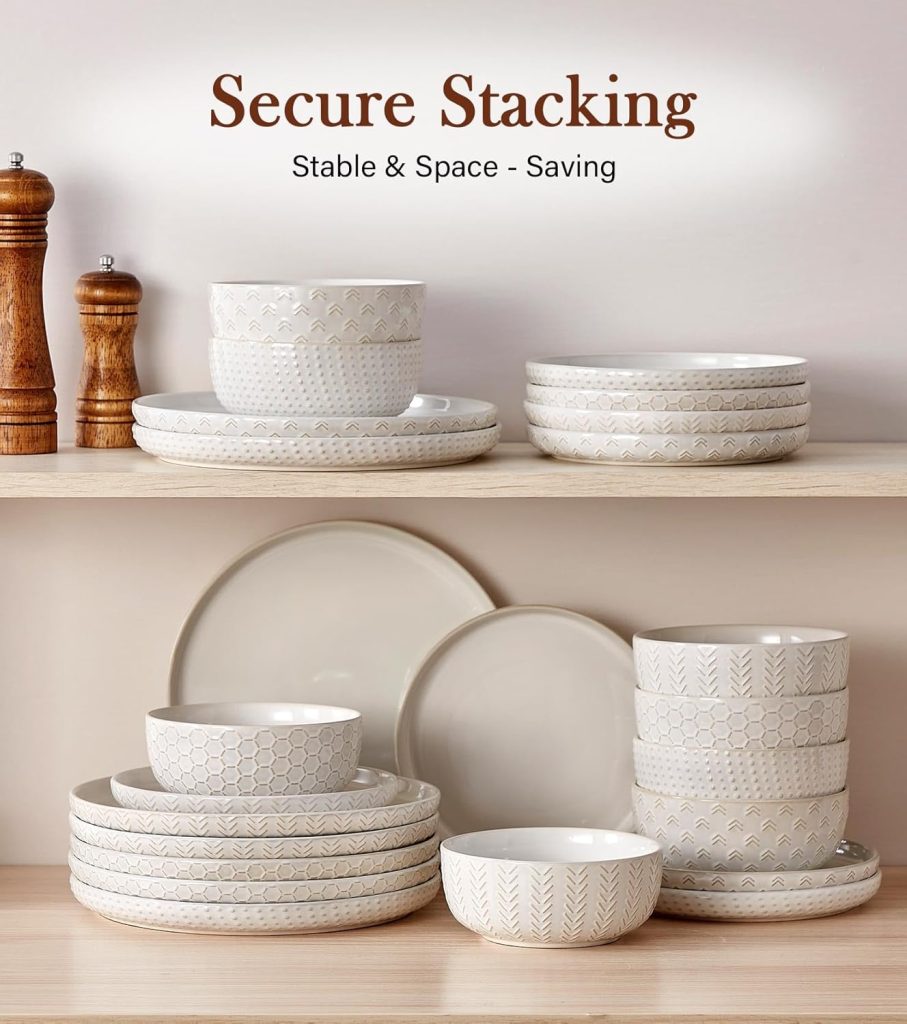
- Store stacked stoneware with a protective liner between pieces to prevent the rough, unglazed base from scratching the glaze on the plate beneath it.
Porcelain Care and Temperature Limits
- Check for metallic trim or hand-painted gold and silver detailing before microwaving, since metal accents can spark and damage both the piece and the appliance.
- Avoid abrasive sponges on porcelain, since its glossy surface scratches more visibly than stoneware’s matte or textured finish.
- Preheat the oven fully before placing porcelain inside rather than heating the dish along with a cold oven, which reduces thermal shock.
- Rinse porcelain soon after serving acidic or strongly pigmented foods like tomato sauce or turmeric-heavy curries to prevent staining on the glossy surface.
Weight, Price, and Everyday Practicality
Stoneware costs less on average and porcelain costs more, largely because porcelain requires more precise clay, higher firing temperatures, and tighter quality control to avoid warping.
Weight follows a similar pattern. A stoneware dinner plate commonly weighs close to twice what a comparable porcelain plate weighs, which matters for anyone with limited cabinet space, aging shelving, or a preference for lighter dishes at the table.
| Factor | Stoneware | Porcelain |
|---|---|---|
| Typical price range | Budget to mid-range | Mid-range to premium |
| Weight per plate | Heavier | Lighter |
| Best for | Daily rotation, families, casual meals | Formal dining, gifting, smaller households |
| Storage needs | Sturdier shelving recommended | Standard shelving is fine |
Which Is Better for Daily Family Meals
Stoneware is generally the better choice for daily family meals because its weight and chip resistance hold up better against kids, stacking, and frequent dishwasher cycles.
A stoneware plate that gets dropped on a hard floor is more likely to survive with a chip than shatter outright, and the earthy, matte finish tends to hide small scuffs better than porcelain’s glossy surface.
For families specifically prioritizing lead-free glazing alongside durability, our safe dinnerware picks for kids and toddlers narrow the field to sets vetted for both.
Which Is Better for Formal Dining or Restaurant Use
Porcelain is generally the better choice for formal dining because its lighter weight, brighter finish, and thinner rim read as more refined on a set table.
Restaurants that serve plated meals in front of guests often choose porcelain for the same reason hotels do: it photographs well, stacks cleanly, and holds up to commercial dishwashing as long as the glaze meets industry standards.
For a related brand-specific question, see whether Corelle dinnerware is lead-free, since Corelle uses a different glass-ceramic process that comes up often in the same comparison shoppers run for stoneware and porcelain.
Choosing between stoneware and porcelain still leaves the bigger question unanswered: which specific sets are actually verified lead-free and cadmium-free, regardless of which material you land on.
Rather than testing brands one by one, our vetted non-toxic dinnerware picks already narrow the field to stoneware and porcelain options that meet FDA and Prop 65 standards, so you can shop by material preference without giving up on safety.
FAQ
Is stoneware or porcelain more durable?
Stoneware is generally more durable for everyday impact, while porcelain is more durable against scratching and staining, so the answer depends on what kind of wear concerns you most.
Stoneware’s thicker, less uniform body absorbs shock better, which means it tends to survive a drop on a hard floor with a chip rather than a full break.
Porcelain’s dense, fully vitrified structure resists scratches and stains more effectively, but that same density makes it more prone to cracking on impact.
For households with kids or heavy daily rotation, stoneware usually holds up better over time.
Is stoneware or porcelain safer for food?
Neither stoneware nor porcelain is inherently safer, because lead and cadmium risk comes from the glaze rather than the clay body underneath it.
A well-made piece in either category, finished with a certified lead-free and cadmium-free glaze and fired at the right temperature, is safe for daily food contact under FDA and California Prop 65 standards.
The real risk factor is age and sourcing rather than material category, since older and unverified imported pieces are far more likely to carry lead residue than current production from brands that publish their glaze standards.
Check for a lead-free claim before assuming either material is automatically safe.
Can both stoneware and porcelain go in the microwave?
Yes, most modern stoneware and porcelain pieces are microwave safe, as long as the piece has no metallic trim or hand-painted metallic detailing.
Both materials are fired at temperatures far higher than a microwave reaches, so the ceramic body itself isn’t the concern.
Metal accents like gold or silver rims can spark and damage the appliance, which is the main reason a piece might not be microwave safe despite the base material being fine.
Always check the manufacturer’s markings on the underside of the piece before microwaving anything without a clear label.
Why is porcelain more expensive than stoneware?
Porcelain costs more than stoneware mainly because it requires finer, more consistent kaolin clay and higher, more tightly controlled firing temperatures to avoid warping during production.
That level of precision raises manufacturing costs and reduces the margin for error compared to stoneware, which tolerates more variation in clay composition and firing schedule.
Porcelain’s lighter weight and glossier finish also position it as a premium product in most retail lines, which affects pricing beyond raw production cost alone.
Stoneware’s lower cost reflects both simpler manufacturing requirements and its positioning as an everyday, casual material.