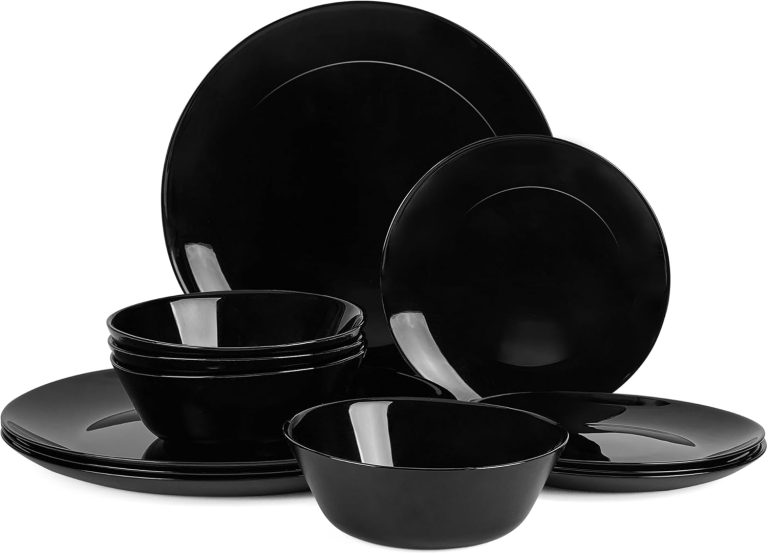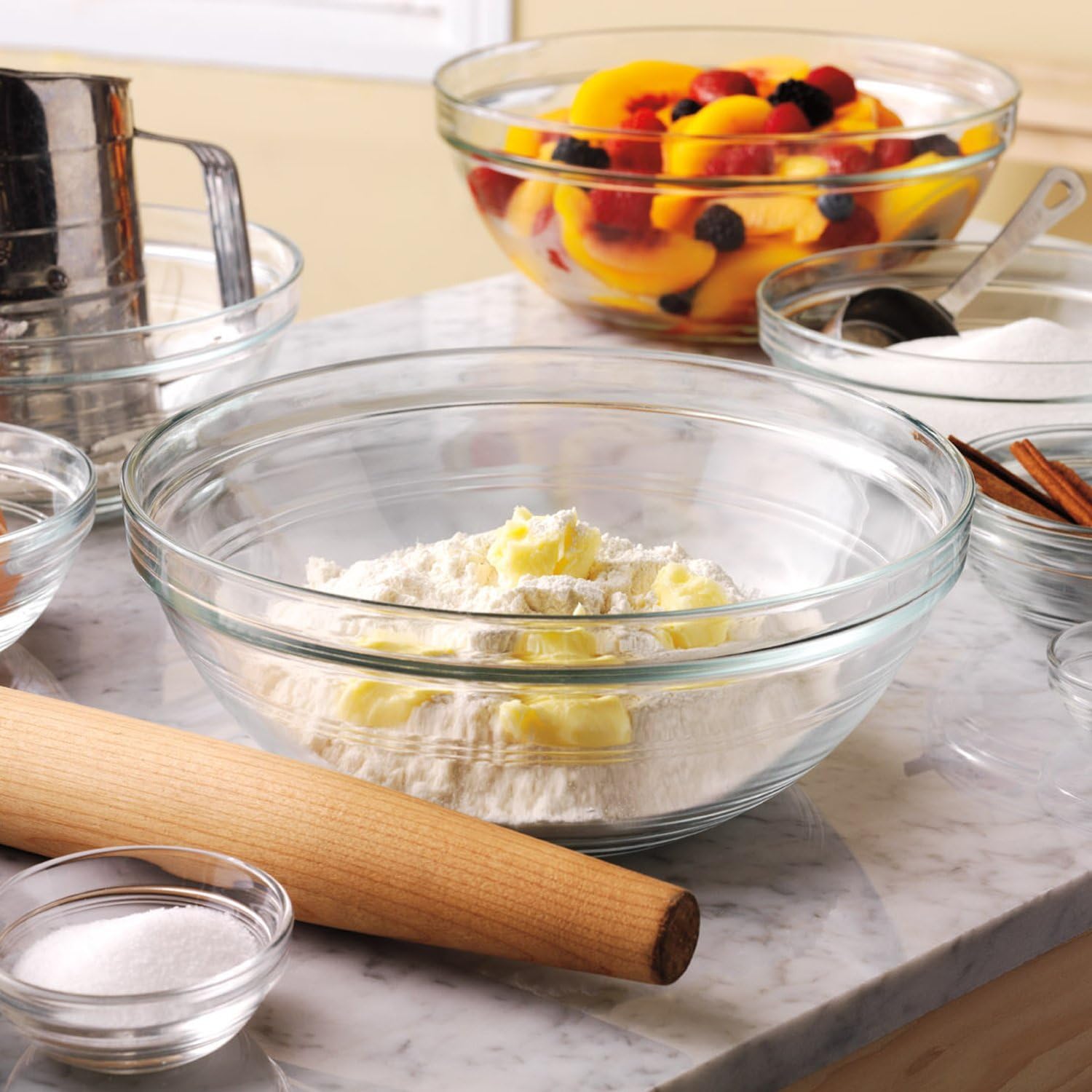
Corelle wins if you need a full set of dinner plates for daily family use. Duralex wins if you mainly want drinking glasses and bowls built to survive a busy kitchen.
Both brands market themselves as lead-free tempered glass, and that claim holds up differently depending on which specific piece you’re looking at.
What Is Duralex?
Duralex is a French glassware company founded in 1945 in La Chapelle-Saint-Mesmin, near Orléans.
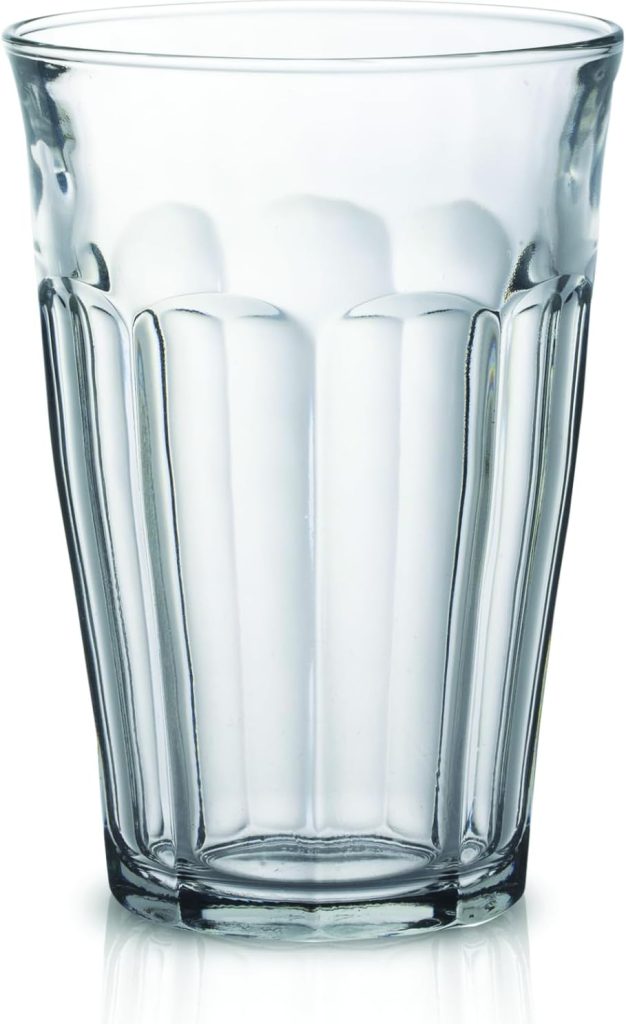
It’s best known for the Picardie tumbler, a ribbed drinking glass that’s shown up in French homes and school cafeterias for generations.
Duralex glass is fully tempered soda-lime glass, made from sand, soda ash, and limestone, then heated to roughly 650°C before rapid cooling locks in the strength that makes it break-resistant.
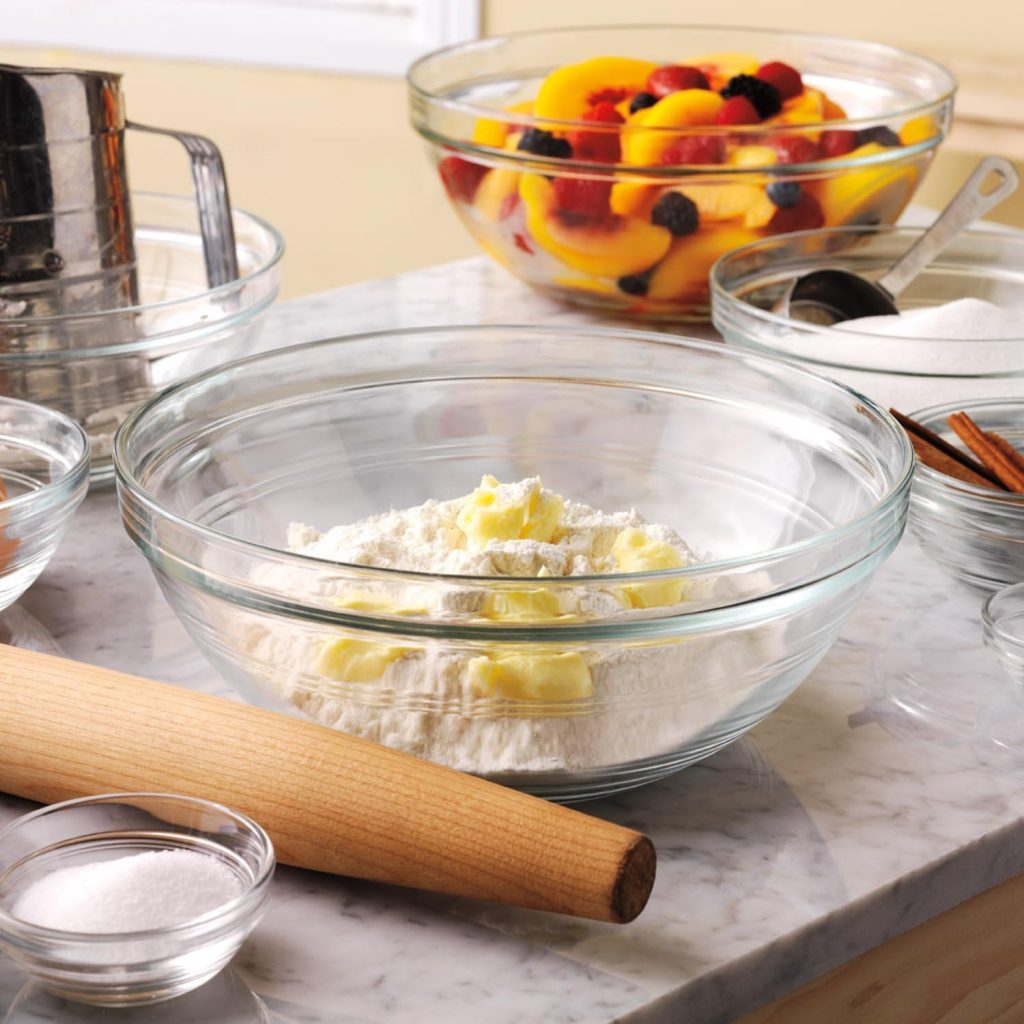
The brand’s catalog leans heavily toward tumblers, bowls, and food storage containers. Full dinner plate sets exist but make up a smaller slice of the lineup than they do for a brand built specifically around dinnerware.
What Is Corelle?
Corelle is an American dinnerware brand introduced in 1970 by Corning Glass Works and now produced under Corelle Brands.
Its plates are made from Vitrelle, a laminated glass with three thermally bonded layers rather than a single tempered piece.
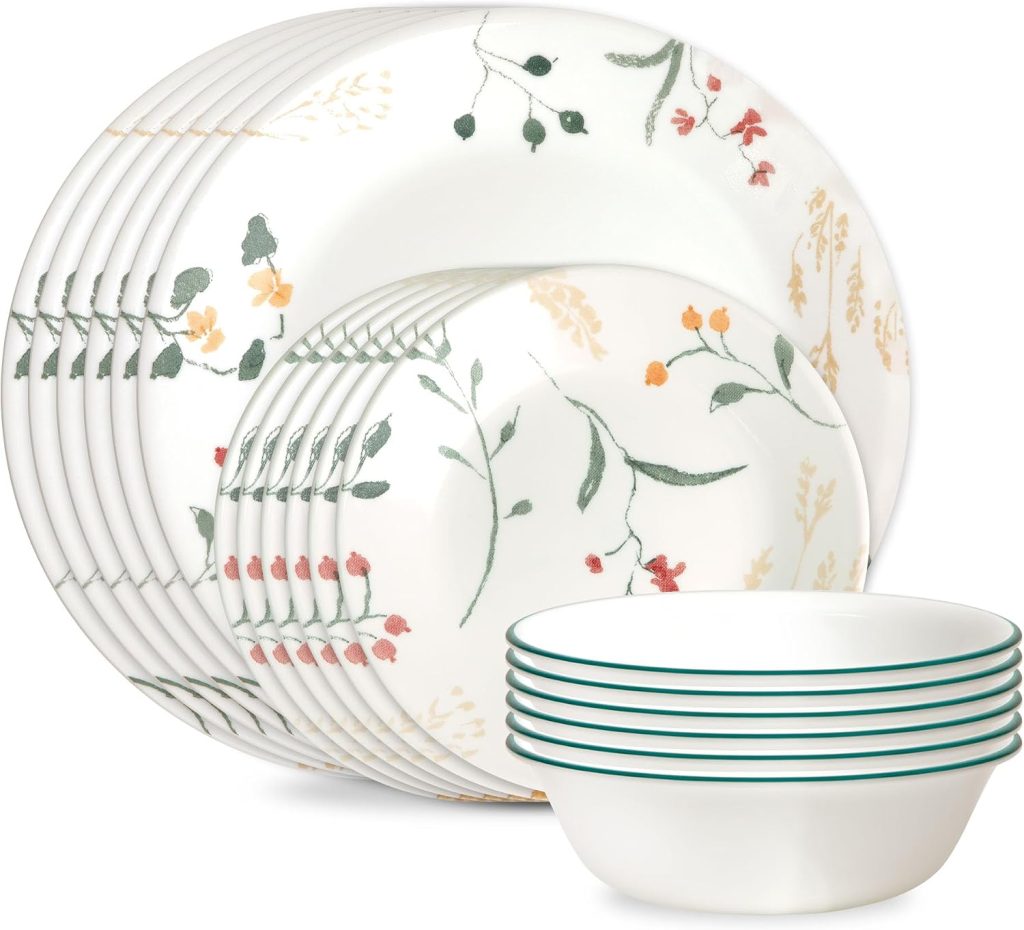
That layered construction is why Corelle plates run so much thinner and lighter than most other dishware, glass or ceramic.
Corelle’s plate and bowl lines are made from Vitrelle. Corelle mugs are a different story: many are made from stoneware or porcelain instead, which matters once we get to the lead question below.
Duralex vs Corelle: Key Differences at a Glance
Both brands rely on tempered or laminated glass for strength, but they built their businesses around different product categories, and that shapes almost every other difference between them.
Material & Glass Technology
| Feature | Duralex | Corelle |
|---|---|---|
| Base material | Fully tempered soda-lime glass (single layer) | Vitrelle glass (three bonded layers) |
| Country of origin | France | United States |
| Year founded | 1945 | 1970 |
| Tempering process | Heated to ~650°C, then rapidly cooled | Laminated during manufacturing, not tempered the same way |
| Non-porous | Yes | Yes |
Want a wider view of how these material choices stack up against ceramic, stoneware, and porcelain?
Our guide to how different lead-free dinnerware materials compare walks through the full field beyond just these two brands.
Weight, Shape & Product Range
| Feature | Duralex | Corelle |
|---|---|---|
| Primary product focus | Tumblers, bowls, food storage | Full plate and bowl sets |
| Full dinner plate sets | Limited selection | Extensive selection |
| Relative weight | Heavier per piece | Very light |
| Pattern/color variety | Mostly clear glass, some tinted lines | Over 2,000 patterns released since launch |
Here’s the mismatch most comparisons skip past: Duralex isn’t really trying to be a full dinnerware replacement for Corelle.
If you’re hoping to swap your Corelle set for Duralex piece for piece, you’ll likely need to fill in gaps with a second brand for dinner plates specifically, since Duralex’s strength has always been drinkware and bowls rather than a full place-setting catalog.
Price Comparison
- Duralex tumblers typically run in the mid-range for tempered glassware, with sets of six costing around $18 to $25.
- Corelle dinner plates cost roughly $4 to $6 per piece when bought as part of a set, with mugs and specialty pieces priced separately.
- Duralex’s smaller dinnerware selection means full place settings, when available, often cost more per piece than Corelle’s mass-produced plate lines.
- Both brands sell pieces individually, so a single broken item doesn’t require replacing an entire set.
Are Duralex and Corelle lead-free?
Both brands are marketed as lead-free, and the base glass in each case supports that claim, but “the base glass” is a more specific statement than “the whole product line.”
For the full picture across brands beyond these two, our full guide to the best non-toxic, lead-free dinnerware covers the wider category.
Duralex Lead & Cadmium Safety
Duralex states plainly that its tempered glass contains no lead, cadmium, or BPA, and the company attributes this to its glass formula rather than any lead-reduction treatment applied afterward.
Independent lead-safety testing, including XRF testing published by lead-poisoning researcher Tamara Rubin, has found Duralex products free of lead, cadmium, arsenic, and mercury, including brightly colored pieces where added pigment sometimes raises safety concerns in other glassware brands.
Because Duralex uses soda-lime glass without lead oxide additives and doesn’t apply painted decorative coatings to most of its clear glass line, the safety profile stays consistent across the catalog in a way that’s simpler to verify than brands that mix glass with painted or glazed decoration.
Corelle Lead Safety: Glass vs. Mugs
Modern Corelle plates made from Vitrelle glass test as lead-free, but that doesn’t extend automatically to every Corelle product on the shelf, and our full breakdown of whether Corelle dinnerware is lead-free covers this in more depth.
Independent XRF testing has drawn a clear line between two categories. Plain modern white Corelle plates have repeatedly tested free of lead.
Vintage decorated Corelle patterns are a separate matter: a vintage Corelle Butterfly Gold plate tested by Tamara Rubin’s Lead Safe Mama returned a reading of 18,700 parts per million of lead on the decorative pattern itself, well above the level considered safe for food contact.
Corelle mugs raise a third, distinct issue, since many aren’t made from Vitrelle glass at all.
Some tested Corelle mugs made from stoneware or porcelain have shown lead readings ranging from trace amounts around 24 ppm up to over 100,000 ppm on specific vintage pieces, depending on the glaze and production year.
The practical takeaway: plain, modern Corelle dinner plates carry the lowest risk.
Decorated vintage Corelle patterns and Corelle-branded mugs deserve more scrutiny, and checking the specific pattern and production year matters more than trusting a blanket “Corelle is safe” or “Corelle is risky” statement either way.
Durability & Everyday Use
Both brands are built to outlast standard ceramic or stoneware, but they get there through different engineering.
Break & Chip Resistance
- Duralex glass is rated at roughly 2.5 times more resistant to breakage and chipping than standard, non-tempered glass.
- Corelle’s laminated Vitrelle structure is specifically engineered for chip resistance and tends to edge out Duralex on long-term chip resistance for plates and bowls.
- When Duralex glass does break under a strong enough impact, it’s designed to shatter into small, non-cutting pieces rather than sharp shards, which is a genuine safety advantage over untempered glass.
- Corelle backs its dinnerware with a three-year limited warranty against manufacturing defects; Duralex’s standard warranty coverage is narrower and varies by retailer.
Thermal Shock Resistance
Duralex is built to handle sudden temperature swings, withstanding thermal shock across a range from about -20°C to 300°C depending on the collection, with some reinforced lines rated even higher.
Corelle also resists thermal shock well, tolerating sudden moves from the refrigerator to a warm table without cracking, though it isn’t rated as standard oven-safe dinnerware at high temperatures.
Duralex’s OVENCHEF line is specifically reinforced for oven use, which gives it an edge if you want glass bakeware in addition to tableware, something Corelle’s standard plate lines aren’t designed for.
IS DURALEX MICROWAVE SAFE?
Yes, Duralex tempered glassware products are microwave safe; this applies across their core ranges including Picardie glasses, Lys and Gigogne bowls, and storage containers.
However, most Duralex products (aside from the OvenChef range) are not recommended for conventional oven use, so it’s worth checking the specific product line before exposing it to direct oven heat.”
Duralex vs Corelle: Which Is Better?
Corelle is the stronger pick if you need full place settings for daily family meals.
Duralex is the stronger pick if drinking glasses, bowls, and oven-safe glass storage are what you’re actually shopping for.
Best for Long-Term Reliability & Availability
Corelle currently has the more stable footing as a business, and that matters more than it might seem for a durable-goods purchase you expect to use for years.
Duralex, meanwhile, was placed into judicial reorganization on June 1, 2026, its fourth receivership in roughly two decades, following an earlier employee buyout in 2024 that turned the company into a worker-owned cooperative after its previous owner’s insolvency.
The Commercial Court of Orléans approved a sale process on July 2, 2026, with bids due by August 6 and a court hearing scheduled for September 17, 2026; French industrial group Carlesimo has confirmed it submitted a bid.
None of this affects glassware you already own, and existing warranties remain in force during the proceedings.
It does mean that anyone buying Duralex today should treat long-term replacement-part availability and brand continuity as more uncertain than they’d be with Corelle, whose parent company hasn’t disclosed comparable financial distress.
If long-term brand stability and easy pattern replacement matter to your decision, non-toxic dinnerware made in the USA is worth a look as a category alongside this comparison.
Best for Kids & Everyday Family Use
Corelle is generally the better fit for households with kids, thanks to its lighter weight and strong chip resistance under the kind of daily handling young children bring to the table.
If lead-free kids’ dinnerware specifically is the priority, lead-free dinnerware picks for kids and toddlers cover options beyond just these two brands.
Duralex still holds up well for family use, particularly for drinking glasses that get dropped often, but its heavier weight makes it a secondary choice behind Corelle for full place settings used by young kids.
How Duralex and Corelle Compare to Other Brands
Duralex and Corelle aren’t the only lead-free glass dinnerware options worth checking before you buy, and two other brands come up constantly in the same searches.
Duralex vs Corelle vs Arcopal
Arcopal is a French opal glass brand, similar in spirit to Duralex in that both come from French tempered-glass manufacturing traditions, but Arcopal’s milky white opaque look and vintage floral patterns put it in more direct competition with Corelle’s plate catalog than Duralex is.
Where Duralex leans toward clear glass tumblers and bowls, Arcopal competes with Corelle specifically on dinner plates and place settings.
For the full breakdown of that specific matchup, including lead safety on vintage Arcopal pieces, our full Arcopal vs Corelle dinnerware comparison covers it in detail.
Is Duralex Better Than Libbey or Luminarc?
Duralex, Libbey, and Luminarc all produce tempered glassware, but they split along similar lines to the Duralex-Corelle comparison above.
Libbey is an American glassware brand offering clear tempered glass plates and bowls with a more modern, minimalist look than Duralex’s classic ribbed Picardie style, and it’s manufactured domestically rather than in France.
Luminarc, like Arcopal, is part of Arc International and produces both clear and colored tempered glass with a wider design range than Duralex typically offers.
None of the three clearly beats the others across the board.
The choice comes down to whether you want Duralex’s French manufacturing heritage and drinkware focus, Libbey’s domestic production, or Luminarc’s broader pattern variety.
Bottom Line: Which Should You Buy?
Buy Corelle if you’re building or replacing a full set of everyday dinner plates and want a brand with stable, disclosed manufacturing and a clear, no-questions multi-year warranty.
Buy Duralex if you specifically want French-made tempered glass tumblers, bowls, or oven-safe glass storage, and you’re comfortable with somewhat more uncertainty around the brand’s ownership situation over the next several months.
| Category | Duralex | Corelle |
|---|---|---|
| Full dinner plate sets | Limited | Strong |
| Drinking glasses & tumblers | Strong | Not a core product |
| Oven-safe glass pieces | Yes, on reinforced lines | Not standard |
| Base material lead status | Lead-free | Lead-free |
| Decorative/vintage pattern risk | Low, mostly clear glass | Higher on pre-2000s decorated patterns |
| Mug material | Glass | Often stoneware or porcelain, not Vitrelle |
| Company stability (as of mid-2026) | In court-supervised sale process | No disclosed financial distress |
| Warranty | Narrower, varies by retailer | Three-year limited warranty |
None of the safety or company-status information above came from testing Kitchnfam performed itself.
It’s drawn from published lead-safety testing, brand documentation, and business news reporting, so if a specific pattern, production year, or the outcome of Duralex’s sale process matters to your decision, check the sources directly rather than relying on any single article, including this one.
FAQ
Is Duralex the same as Corelle?
No, they’re separate companies using different glass technology.
Duralex is a French brand founded in 1945 that makes fully tempered soda-lime glass, best known for tumblers and bowls, while Corelle is an American brand founded in 1970 that makes laminated Vitrelle glass plates and bowls.
Both are marketed as lead-free and chip-resistant, which leads to frequent comparisons, but the manufacturing process, country of origin, and even the core product focus (drinkware versus full place settings) differ substantially.
Is Duralex still in business?
Yes, as of mid-2026, but it’s going through a court-supervised sale process.
Duralex entered judicial reorganization on June 1, 2026, its fourth receivership in about 20 years, and the Commercial Court of Orléans approved a sale process with bids due by August 6, 2026, and a hearing scheduled for September 17, 2026.
Existing products and warranties are unaffected during this period, but the company’s longer-term ownership and continuity remain unresolved until the court process concludes.
Are Corelle mugs safe to drink from?
Modern glass Corelle plates test as lead-free, but many Corelle mugs are made from stoneware or porcelain instead of Vitrelle glass, and that distinction matters for safety.
Independent XRF testing has found some Corelle mugs, particularly vintage ones, with lead readings ranging from low, generally considered safe levels up to significantly elevated amounts on certain decorated or older pieces.
If you’re concerned about a specific mug, checking its pattern name, approximate production year, and material (glass versus stoneware or porcelain) will tell you more than assuming all Corelle products share one safety profile.
Which is more durable, Duralex or Corelle?
Duralex edges ahead on impact resistance and thermal shock range, since its fully tempered glass is rated about 2.5 times stronger than standard glass and handles wider temperature swings.
Corelle tends to win on long-term chip resistance for plates and bowls specifically, thanks to its three-layer Vitrelle lamination, and it backs that with a three-year warranty against manufacturing defects.
Which brand holds up better in practice depends partly on what you’re using it for: Duralex for glasses and oven-safe storage, Corelle for daily dinner plates that get stacked and handled constantly.