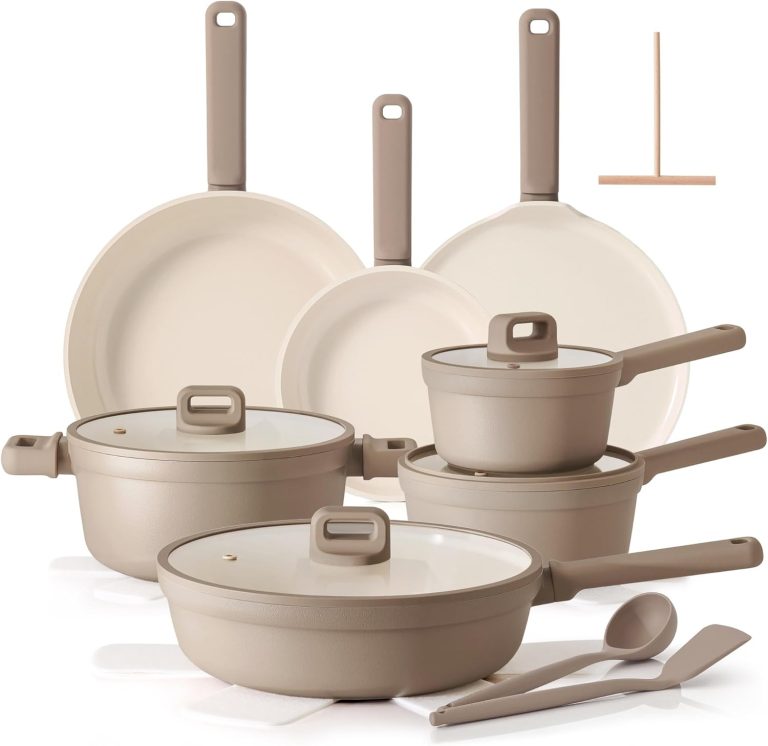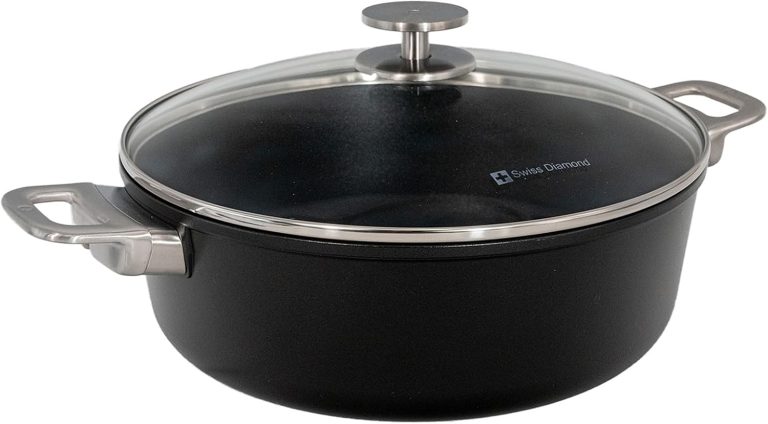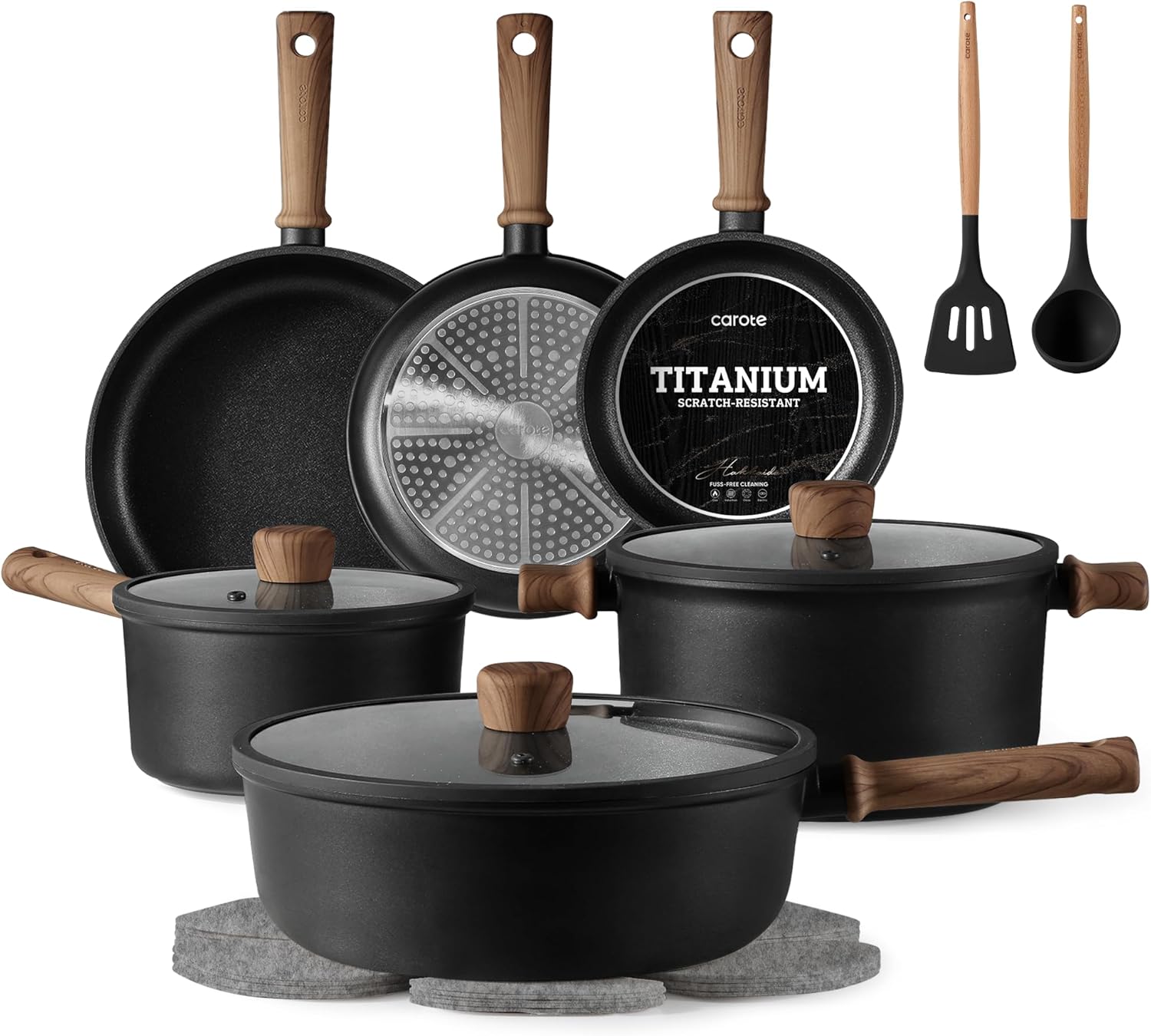
Pure titanium cookware is non-toxic. Most “titanium” cookware on the market isn’t pure titanium.
That gap between the marketing word and the actual material is where almost every safety question about this cookware category starts, and it’s the piece most best healthy cookware guides skip over on their way to a quick yes-or-no verdict.
What “Titanium Cookware” Actually Means
The phrase covers three genuinely different products, and only one of them is titanium in the sense most shoppers assume.
Solid titanium cookware has a food-contact surface made entirely of titanium metal.
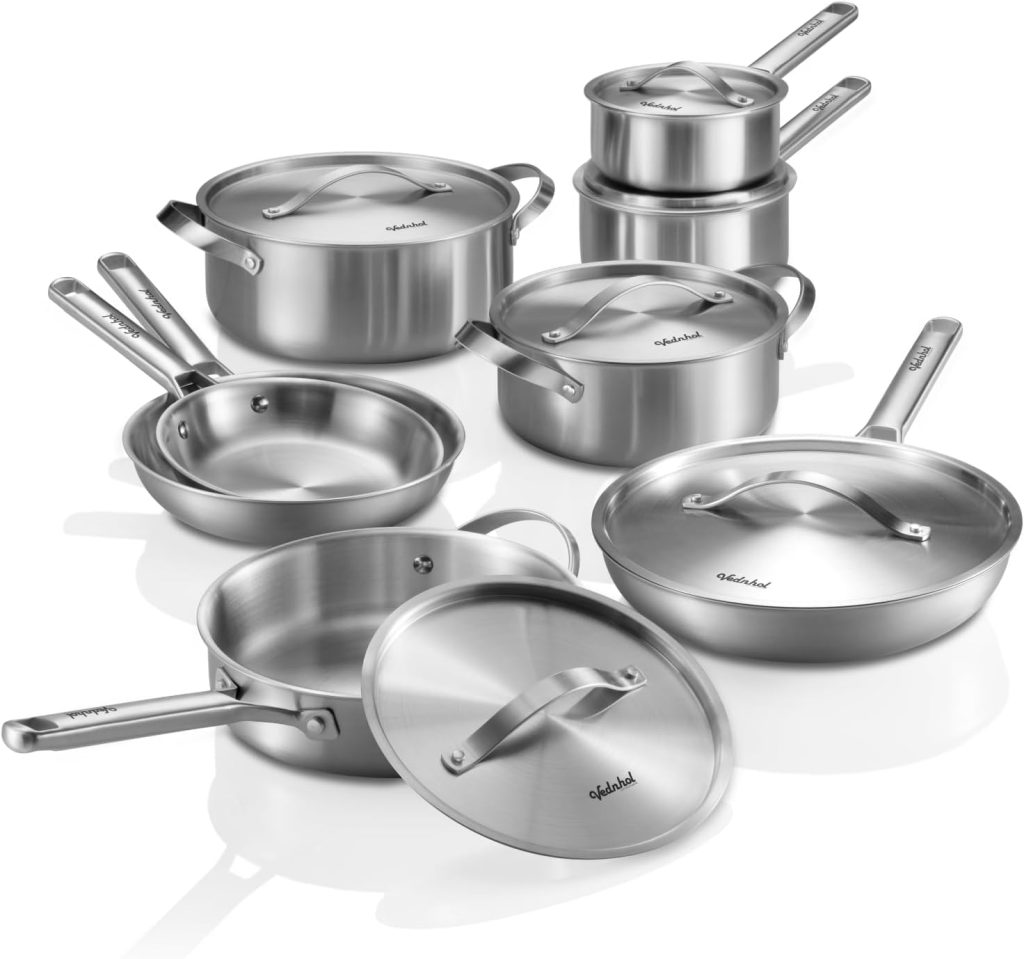
Clad or bonded titanium cookware uses titanium as a layer fused to a stainless steel body, sometimes marketed under names like “molecular titanium.”
Titanium-coated or titanium-infused cookware is usually aluminum or stainless steel with a thin nonstick layer that contains titanium particles mixed into the coating chemistry, not a titanium surface at all.
Pure (Solid) Titanium vs. Titanium-Coated Pans
Pure titanium cookware means the entire cooking surface, not just the label, is titanium metal, usually Grade 1 or Grade 2 commercially pure titanium.
There’s no separate coating layer. The metal itself is what touches your food, and it stays that way for the life of the pan.
Titanium-coated cookware is a different product wearing the same name. The base is typically cast aluminum or stainless steel, and a thin nonstick layer, often infused with titanium dioxide or titanium particles, is sprayed or bonded on top for grip and durability.
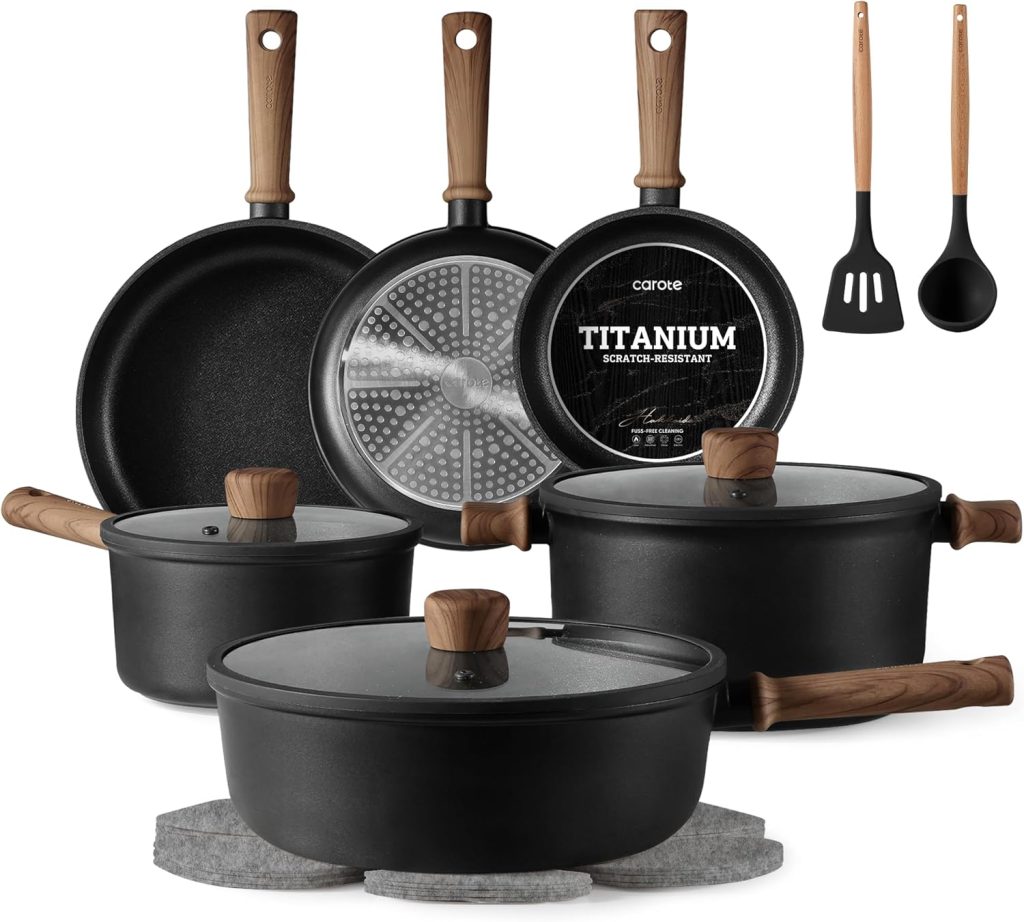
The word “titanium” on these products describes an additive in the coating, not the material touching your eggs.
Whether that coating is PFAS-free depends entirely on what else is in it, and the box rarely says.
Is Titanium Cookware Food-Safe?
Yes, when the food-contact surface is titanium metal itself.
Titanium is one of the materials the FDA reviews as a food-contact substance, and it has a long track record in medical devices that sit inside the human body for years without triggering a reaction.
That track record is a big part of why pure titanium pans are treated as safe: a metal tolerated well enough for surgical implants isn’t going to react with a pan of tomato sauce.
The food-safety picture changes for titanium-coated products, where the relevant question isn’t titanium’s safety but the safety of whatever coating chemistry the titanium was added to.
Is Titanium Safe to Cook With?
Titanium is safe to cook with because it’s chemically stable at kitchen temperatures and doesn’t react with acidic or salty food the way some other metals can.
This isn’t a discovery. It’s the same property that made titanium the standard choice for joint replacements and dental implants decades ago.
Why Titanium Is Considered Biocompatible and Non-Reactive
Titanium forms a thin, stable oxide layer on its surface almost instantly on exposure to air, and that layer is what makes the metal underneath so inert.
“Research on titanium biocompatibility, including Marin and colleagues’ 2023 review, shows that titanium is used in long-term implants because its passive oxide film provides high corrosion resistance and a biocompatible surface chemistry, while its overall performance also depends on mechanical strength and tissue compatibility.”
A pan made from that metal isn’t being asked to do anything more demanding than a hip replacement already handles.
Does Titanium Leach Into Food?
Barely, and less than almost anything else you could cook with.
“A study in J Food Sci Technol found that titanium cookware provided the best retention of micronutrients among the cookware types tested, and it also used less water during cooking, which helped preserve nutrients better than aluminum and several other materials.”
“Separate leaching research by Sianturi and colleagues in 2020 found titanium release at about 0.0087 ppm (often rounded to 0.009 ppm), making it one of the lowest-released elements in that study, though not the very lowest overall.”
Cooking acidic foods like tomato sauce or lemon-based dishes in a pure titanium pan doesn’t meaningfully change that picture, which is one reason titanium keeps coming up as an alternative for people trying to reduce metal exposure from cookware generally.
Is Titanium Cookware PFAS-Free?
Pure titanium cookware is PFAS-free by definition, because there’s no coating for PFAS to hide in. Titanium-coated cookware is a separate question, and the answer depends on the specific product.
Why Pure Titanium Contains No PTFE or PFAS
PFAS (per- and polyfluoroalkyl substances) is a family of synthetic chemicals, and PTFE, the compound behind classic Teflon-style nonstick coatings, is one member of that family.
Both terms describe chemical coatings applied to a cooking surface. Pure titanium cookware has no coating of any kind, so there’s no PTFE and no PFAS to discuss.
The surface is a single metallic element from the start. That’s a structural fact about the material, not a claim that depends on any one manufacturer’s process or testing.
Where Titanium-Labeled Coatings Can Still Contain PFAS
- A pan can be marketed as “titanium” while the food-contact surface is actually a nonstick coating with titanium particles mixed in for scratch resistance, and that coating may or may not contain PFAS depending on the formula.
- Reputable cookware brands using ceramic-style, PTFE-free nonstick layers generally disclose this clearly, but budget cookware sets sold under generic names don’t always make the distinction obvious.
- If a product description doesn’t specify whether the titanium is the cooking surface itself or an additive in a separate coating, that’s a sign to look further before assuming it’s PFAS-free.
- Overheating any coated nonstick pan, titanium-branded or not, can release fumes if the coating does contain PTFE, so checking the base material matters more than the word on the box.
Titanium vs. Other Non-Toxic Materials
Titanium isn’t the only material marketed as a healthier alternative to traditional nonstick, and it doesn’t win on every dimension.
It wins specifically on having no coating at all, which changes how it ages compared to ceramic or stainless steel.
Titanium vs. Ceramic-Coated Cookware
| Factor | Pure Titanium | Ceramic-Coated |
|---|---|---|
| Surface type | Solid metal, no coating | Sol-gel ceramic layer over aluminum or stainless base |
| PFAS status | Zero, by material physics | Typically PFAS-free from reputable brands, but depends on the manufacturer |
| Lifespan of nonstick performance | Doesn’t degrade because there’s nothing to wear off | Nonstick performance commonly fades within one to two years of regular use |
| What happens as it ages | Surface may show cosmetic scratches but stays chemically the same | Coating can chip or thin, raising questions about what’s left on the surface |
| Metal utensil safe | Yes | Usually not recommended long-term |
Ceramic coatings replace a harmful coating with a safer one; pure titanium removes the coating question entirely.
Both approaches are reasonable responses to PFAS concerns, but they age very differently in a real kitchen.
If you’re deciding between the two, our comparison of ceramic and cast iron cookware covers how ceramic performs against another popular non-coated option.
Titanium vs. Stainless Steel
| Factor | Pure Titanium | Stainless Steel |
|---|---|---|
| Coating | None | None (uncoated by design) |
| Weight | Notably lighter | Heavier, especially in fully-clad construction |
| Reactivity | Very low, minimal metal transfer | Can release small amounts of nickel, reduced in titanium-stabilized alloys |
| Cooking technique | Similar to stainless, benefits from preheating with oil | Requires the same preheating and oil technique to prevent sticking |
| Common price point | Generally higher | Wide range, from budget to premium |
Some stainless steel cookware is itself titanium-stabilized (often labeled Ti 316), which is a third variation worth knowing about.
Studies on titanium-stabilized stainless steel have found negligible metal leaching even with acidic foods, often below detectable limits, which puts it closer to pure titanium’s performance than to standard stainless.
How to Identify Genuine Pure Titanium Cookware
Reading past the marketing name takes a bit of label detective work, but the checks are the same every time.
Label Language and Grade Markings to Look For
- Look for a specific grade designation, such as Grade 1 or Grade 2 commercially pure titanium, rather than just the word “titanium” with no grade attached.
- Check whether the product description says the pan is “made from” titanium versus “featuring a titanium coating” or “titanium-infused nonstick,” since these phrases describe different products.
- Look for stated purity, commonly listed as 99.5% or higher for commercially pure titanium used in cookware.
- Note whether the description mentions a separate nonstick coating layer at all. If it does, the titanium is likely an additive, not the cooking surface.
- Check the product weight against comparable pure titanium items. Pure titanium cookware tends to be noticeably lighter than aluminum or stainless steel pieces of the same size.
Questions to Ask a Manufacturer Before Buying
- Is the food-contact surface solid titanium metal, or is titanium used as an additive in a separate nonstick coating?
- What is the specific titanium grade or alloy used in the cooking surface?
- Has the coating, if there is one, been independently tested or disclosed as PFAS-free, and by whom?
- Is the titanium a bonded layer over another metal (clad construction), and if so, how thick is that layer at the cooking surface?
- What temperature range is the pan rated for, and does that rating apply to a coating or to the bare metal?
Choosing Titanium Cookware for Your Kitchen Setup
Beyond the safety question, titanium cookware needs to actually fit how and where you cook, which is where stovetop compatibility and kitchen size start to matter.
Induction and Stovetop Compatibility
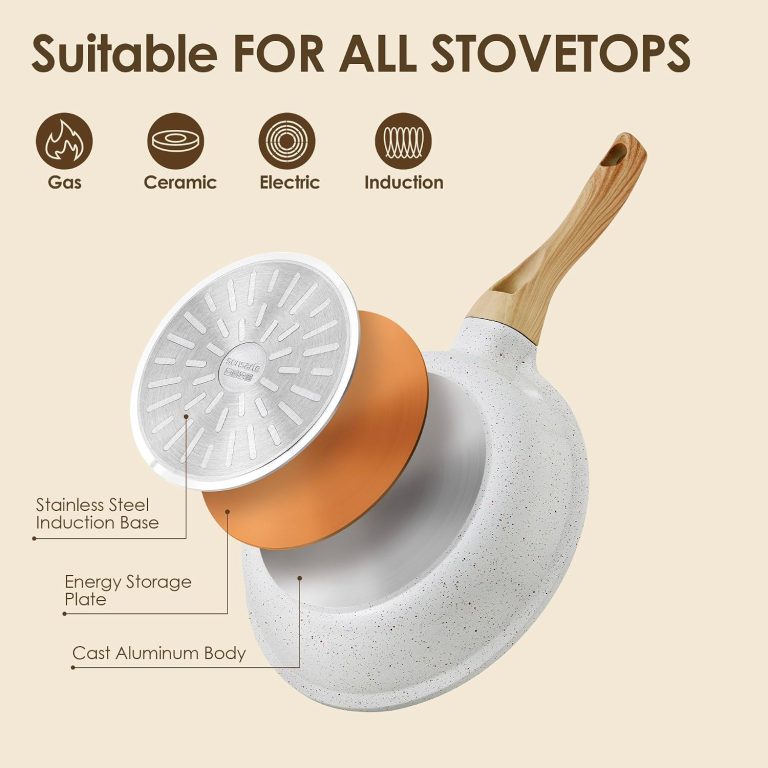
Titanium cookware works across gas, electric, ceramic glass, and induction cooktops, but induction compatibility depends on the base construction, not the titanium itself.
Titanium is not naturally magnetic, so induction-compatible titanium cookware needs a magnetic stainless steel base bonded underneath the cooking surface.
If a listing doesn’t explicitly say induction-compatible, check for a magnetic base before assuming it will work on an induction range, since not every titanium or titanium-clad pan includes one.
Titanium Sets With Detachable Handles for Small Kitchens, RVs, and Camping
- Detachable-handle titanium cookware sets are widely sold for their space-saving stacking, which matters most in small kitchens, RVs, and campers where cabinet space is limited.
- These sets let the same pan body go from stovetop to oven to fridge storage without a permanently attached handle taking up room.
- Because the handle attaches and detaches at a joint near the pan’s rim, that joint is worth checking for a sealed, rivet-free design, since gaps around a handle mount can trap food or wear unevenly over time.
- If you’re considering frying pans with detachable handles, confirm the cooking surface material the same way you would for any titanium pan, since the detachable-handle feature and the titanium-versus-titanium-coated question are separate decisions.
Is Titanium Cookware Safe for Babies and Sensitive Households?
Titanium cookware is a reasonable choice for preparing baby food, largely for the same reasons it’s a reasonable choice for anyone trying to limit unnecessary metal or chemical exposure from cooking surfaces.
Why Low-Reactivity Materials Matter for Baby Food Prep
Infants and young children eat smaller portions relative to their body weight, which means any contaminant in food carries more relative exposure per meal than it would for an adult.
Materials that resist leaching metals or chemical residues into food, which is exactly what pure titanium is known for, reduce one variable in an already careful feeding routine.
This isn’t a claim that other cookware is dangerous for babies; it’s a reason some parents specifically look for low-reactivity materials when stocking a kitchen for infant meal prep.
Our guide to the best non-toxic cookware for babies covers this in more depth across several material types, not just titanium.
What to Check Before Using Titanium Cookware for Infant Meals
- Confirm the cooking surface is pure titanium and not a titanium-infused nonstick coating, since the safety reasoning above applies specifically to the uncoated metal.
- Check that the pan size is appropriate for small-batch cooking, since many titanium sets are designed around family-sized portions rather than the small quantities typical of early baby food prep.
- Avoid pans with a separate nonstick coating if your priority is avoiding coating breakdown over time, since even PFAS-free coatings can degrade with repeated small-batch steaming or pureeing.
- Follow the same care instructions as any titanium cookware: avoid abrasive scouring pads on decorative or anodized finishes, even though the base metal itself tolerates metal utensils well.
If you’re building out a full non-toxic kitchen rather than a single pan, it’s worth working from our complete guide to the best non-toxic cookware, which walks through how titanium fits alongside ceramic, cast iron, and stainless steel depending on your budget and cooking habits.
Frequently Asked Questions
Is titanium cookware bad for you?
No, pure titanium cookware is not bad for you. Titanium is chemically stable, resists corrosion, and shows minimal metal transfer into food even with acidic ingredients like tomatoes or citrus.
It’s the same material used in surgical implants and dental devices because the human body tolerates it without reaction.
The caveat is that not everything sold as “titanium cookware” has a titanium cooking surface; some products use the word to describe an additive in a separate nonstick coating, and that coating’s safety depends on its own formula rather than on titanium’s properties.
Can titanium cookware go in the dishwasher?
Yes, most pure titanium cookware is dishwasher safe, and its resistance to corrosion and scratching means it holds up well to repeated dishwasher cycles compared to coated nonstick pans.
Titanium-coated cookware is a different story, since the coating layer, not the base metal, determines dishwasher safety, and harsh detergents can wear down some nonstick surfaces faster over time.
Always check the specific manufacturer’s care instructions, since construction varies even among products marketed under the same “titanium” label.
Is titanium cookware better than ceramic?
Titanium is more durable long-term because it has no coating to wear down, while ceramic-coated cookware typically loses its nonstick performance within one to two years of regular use.
Ceramic coatings are usually PFAS-free from reputable manufacturers and perform well when new, offering strong initial nonstick release and a wider range of colors and finishes.
Whether titanium is “better” depends on what you’re optimizing for: titanium wins on longevity and metal-utensil durability, while ceramic often wins on upfront nonstick performance and price.
Neither is inherently unsafe when sourced from a manufacturer that discloses its materials clearly.
Is titanium safe for people with metal allergies?
Titanium is one of the least allergenic metals used in cookware or medical devices, which is part of why it’s the standard choice for implants placed directly inside the body.
People with documented nickel allergies, one of the more common metal sensitivities, often tolerate titanium well specifically because it doesn’t contain nickel the way some stainless steel alloys can.
That said, anyone with a diagnosed metal allergy should confirm the specific alloy used in a given pan with the manufacturer rather than relying on the word “titanium” alone, since clad or coated products can include other metals at the cooking surface.