A Prop 65 warning label doesn’t automatically mean a dish is dangerous, and the absence of one doesn’t mean it’s safe.
Both of those assumptions are wrong often enough that relying on either one will steer you toward the wrong dishes.
Here’s how to actually read a label, spot the physical clues that matter, and know when a dish deserves more scrutiny than a glance can give it.
Why “lead-free” and “lead-safe” aren’t the same claim
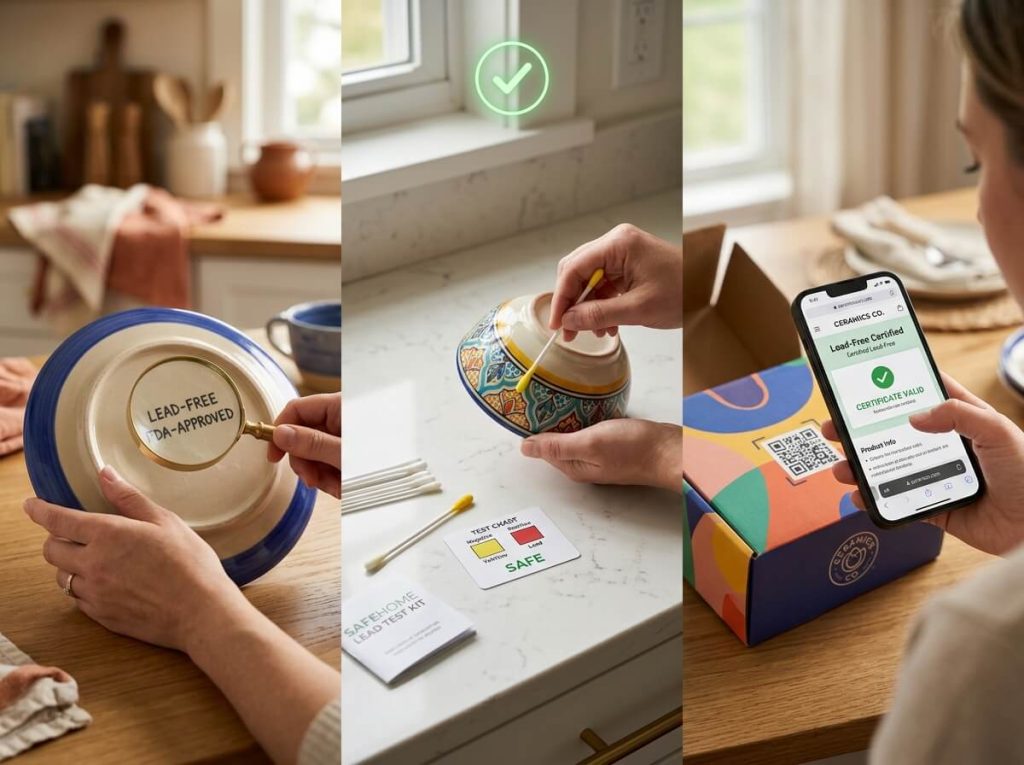
These two terms get used as if they mean the same thing, and they don’t. One describes a dish that still contains some lead, just below a legal limit.
The other describes a dish that was made without adding lead at any point.
What “lead-free” actually means
Lead-free, used precisely, refers to a laboratory result at or near 0.0 parts per million, meaning no lead was introduced during manufacturing, from the clay sourcing through the glaze and firing.
This is a stricter standard than most people assume “lead-free” implies, because it’s describing the manufacturing process itself, not just the finished product’s leaching behavior under a test.
A dish can only earn this label if the maker has controlled every input, not just the final glaze.
What “lead-safe” actually means
Lead-safe describes something different: a dish that may still contain measurable lead, but leaches less than the regulatory limit when tested.
“FDA’s ceramicware guidance allows up to 3.0 micrograms per milliliter of leachable lead for flat tableware and 0.5 micrograms per milliliter for cups, mugs, and pitchers; an item can meet those leachability limits without being lead-free in the absolute sense.”
Neither label is inherently better for every situation.
What matters is knowing which claim you’re actually looking at before you decide how much trust to put in it.
What a Prop 65 warning label does and doesn’t tell you
California’s Proposition 65 requires a warning label on products sold in the state that contain a listed chemical, including lead, above a disclosure threshold that’s set far lower than the level considered dangerous.
That threshold, not the presence or absence of the label itself, is the thing that actually determines whether you see a warning.
Why a missing warning isn’t proof of safety
A dish without a Prop 65 warning hasn’t necessarily been tested and cleared.
The warning requirement only applies to products actually sold in California, so a dish manufactured and sold exclusively through retailers outside the state can leach lead well above what would trigger a warning and simply never carry one.
If you’re buying from a retailer or marketplace that doesn’t specifically sell into California, the absence of a label tells you almost nothing about the dish’s actual lead content.
Why some lead-free-labeled products still carry the warning
A product can be marketed as “lead-free” under an industry standard like NSF/ANSI 372, which permits up to 0.25% lead by weighted average, and still trigger a Prop 65 warning, because Prop 65’s disclosure threshold sits far below that industry allowance.
This isn’t a contradiction or a sign the manufacturer is hiding something. It’s two different standards measuring two different things: one setting a practical ceiling for what counts as “lead-free” in commercial use, the other requiring disclosure at nearly any detectable trace.
Seeing a warning on a product that otherwise looks well-documented and reputable isn’t automatically a red flag.
It’s worth understanding what threshold triggered it before assuming the worst.
Visual red flags that suggest a dish may contain lead
You can’t confirm lead content by looking at a dish, but certain physical traits show up disproportionately often in pieces that later test positive, and they’re worth checking before you decide a dish is fine to use daily.
Decoration and glaze clues
- Run a finger over any painted or patterned area. If you can feel raised brushstrokes or texture above the glaze rather than underneath it, the decoration sits on top of the glaze, where lead-based pigments are more likely to leach directly into food.
- Look closely for crazing or crackling, the fine web of surface lines that develop as a glaze ages, since a compromised glaze surface is more likely to expose whatever pigments lie beneath it.
- Check whether the glaze looks unusually thick, glossy, or glass-like in a way that feels inconsistent with the rest of the piece, which can indicate an older or lower-quality glaze formulation.
- Note any area where the glaze feels rough, pitted, or worn thin, since these are the spots where a food-safe coating has broken down over time.
Color clues
- Treat bright reds, oranges, and yellows as the highest-risk color group, since these pigments have historically relied on lead or cadmium compounds to achieve their intensity.
- Give more benefit of the doubt to plain white, blue-and-white, or otherwise undecorated pieces, since decoration itself (not the base glaze) is the most common source of lead in ceramic dinnerware.
- Be more cautious with heavily saturated, almost glowing colors than with muted or pastel tones, since achieving that level of saturation historically required stronger pigments.
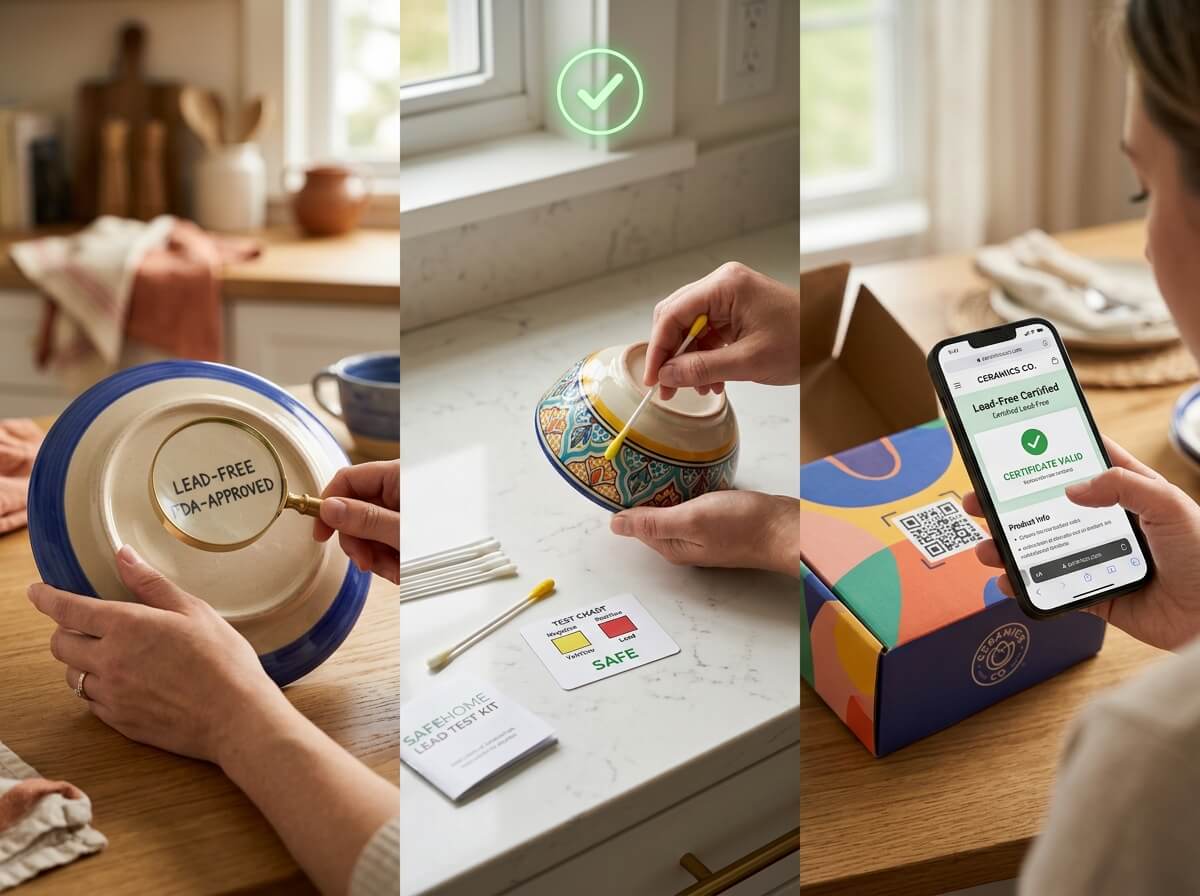
- If you want to test your dishware for lead at home after spotting one or more of these signs, a home swab kit or lab test is the next real step, since visual inspection alone can only flag risk, not confirm or rule it out.
Does the material change the risk?
Material matters, but not all ceramic dishes actually contain lead the way a lot of blanket warnings imply. Risk varies significantly depending on firing temperature, glaze type, and what the piece is actually made from.
| Material | Baseline lead risk | What drives the risk |
|---|---|---|
| High-fired ceramic (stoneware, porcelain) | Low to moderate | Firing temperature stabilizes the glaze; risk concentrates in decoration |
| Low-fired ceramic (terra cotta, earthenware) | Higher | Lower firing temperatures are less effective at binding lead into the glaze |
| Bone china | Low | Made from bone ash, feldspathic material, and kaolin rather than a lead-fluxed glaze |
| Plain glass | Very low | Inert base material with no glaze required |
| Lead crystal | High if used daily | Lead is mixed directly into the glass itself, not just a surface coating |
| Stainless steel | Very low | Inert base metal; risk limited to decorative coatings or handles |
Ceramic and porcelain
High-fired ceramics, including stoneware and porcelain, are generally lower risk because the higher kiln temperatures more effectively bind lead into the glaze structure rather than leaving it loosely available to leach.
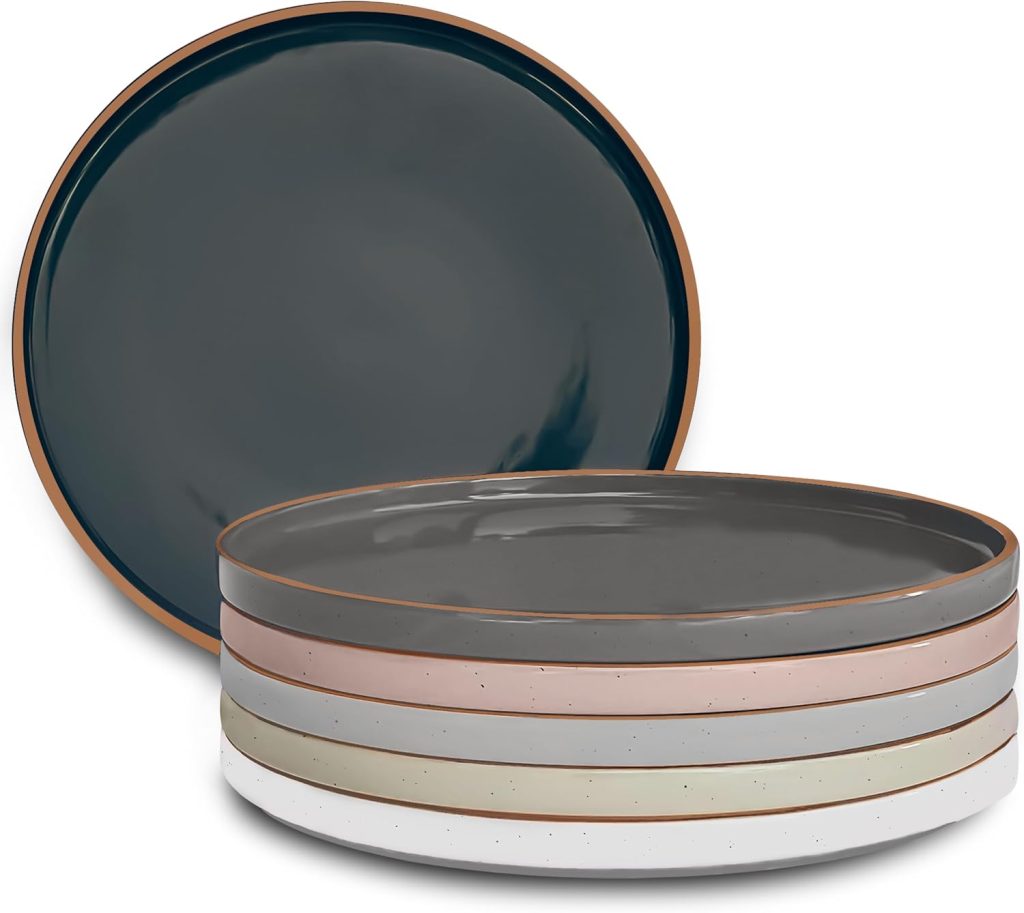
Low-fired ceramics, including terra cotta and traditional earthenware, are more likely to carry risk precisely because the lower firing temperature doesn’t achieve that same stability.
This is part of why traditional pottery made at lower, less-controlled temperatures shows up so often in lead advisories, independent of how old or new the piece actually is.
Bone china, glass, and metal
Bone china is made from a different base material than most other ceramics, built from bone ash, feldspathic material, and kaolin rather than a lead-dependent glaze chemistry, which gives it a comparatively low baseline risk.
Plain glass and stainless steel carry very low risk by default, since neither requires a glaze to function, though lead crystal is a notable exception: some lead crystal contains as much as 24% lead mixed directly into the glass, which is a meaningfully different situation from a lead-based surface glaze.
For a full breakdown of which materials perform best across daily use, our full breakdown of lead-free dinnerware materials covers this in more depth than a single comparison table can.
Does age or origin change the risk?
Yes, both matter, but neither one is a guarantee in either direction. An old dish isn’t automatically dangerous, and a new one isn’t automatically safe.
Vintage and antique dishes
Dishes made before roughly 2005 are more likely to predate the glaze formulation changes many manufacturers adopted industry-wide, which is why era is one of the more reliable single indicators available for a piece with no other documentation.
This doesn’t mean every vintage piece is unsafe or every modern piece is fine. It means age shifts the odds meaningfully enough to be worth checking, especially combined with other signals like decoration and origin.
Corelle is a useful real-world example of how much era alone can matter within a single brand: our full Corelle lead safety breakdown shows how plain, undecorated pieces and heavily patterned pieces from the same production era can carry very different risk profiles.
Imported and country-of-origin signals
Dishes imported from regions with less consistent manufacturing oversight, including some traditional pottery from parts of Latin America and Asia, show up disproportionately in lead advisories and recall notices, particularly when the piece is handmade or sold outside of established retail channels.
This isn’t a statement about any country’s manufacturing broadly. It’s specifically about inconsistent enforcement for smaller-batch, informally sold, or unregulated pottery, which exists in every region but tends to reach U.S. consumers more often through informal import channels than through major retailers with their own testing requirements.
How to research a specific brand or piece
- Search the manufacturer’s name alongside terms like “lead safety,” “Prop 65,” or “lead-free certification” to see whether they’ve published any testing statements for their product lines.
- If the piece has a visible backstamp, pattern name, or collection name, search that specific identifier rather than just the brand, since risk can vary significantly between collections from the same maker.
- Check whether the retailer or manufacturer’s website states which industry standard they’re certifying to (NSF/ANSI 372, FDA compliance, Prop 65 compliance), since these aren’t interchangeable claims.
- For antique or unbranded pieces, search collectibles databases or antique guides that sometimes document known lead issues tied to specific patterns or production runs.
What to look up
- The approximate production year or era, since this narrows risk significantly even without a specific pattern match.
- Whether the manufacturer has published a lead or cadmium safety statement for that specific product line, not just the brand as a whole.
- Any recall notices or health department advisories tied to the specific pattern, collection, or country of origin.
What to do when you can’t find an answer
A single red flag on an otherwise well-documented piece is usually worth noting but not acting on immediately.
Two or more overlapping red flags, for example, unknown origin combined with decoration sitting above the glaze, is the point where visual inspection has done what it can do, and the piece deserves an actual test rather than continued guessing.
Before you buy a replacement set entirely, it’s also worth taking a minute to check your specific dinnerware brand, since a brand you already own or are considering may have already published the answer you’re looking for.
If none of this settles the question for a piece you’re genuinely unsure about, the next step is a real test rather than more visual inspection, and if you’re shopping for a replacement in the meantime, our full non-toxic dinnerware roundup covers verified lead-free options across ceramic, glass, and metal so you’re not starting from scratch.
Frequently asked questions
Does a lack of Prop 65 warning mean a dish is lead-free?
No, a missing Prop 65 warning doesn’t confirm a dish is lead-free. The warning requirement only applies to products actually sold in California, so a dish sold exclusively through retailers outside the state can contain lead well above the level that would normally trigger disclosure and simply never carry a label.
If you’re buying from a retailer that doesn’t specifically sell into California, treat the absence of a warning as inconclusive rather than reassuring, and rely on material, decoration, and manufacturer documentation instead.
Is bone china safer than ceramic for lead?
Yes, bone china generally carries a lower baseline lead risk than many other ceramic types, because it’s made from bone ash, feldspathic material, and kaolin rather than relying on a lead-fluxed glaze for its finish.
That said, decoration still matters more than the base material in most cases, so a heavily patterned bone china piece with decoration above the glaze can still carry more risk than a plain ceramic piece with a stable, undecorated glaze.
Are vintage dishes automatically unsafe?
No, age alone doesn’t make a dish unsafe, but it does shift the odds enough to be worth checking.
Dishes made before roughly 2005 are more likely to predate glaze formulation changes many manufacturers adopted industry-wide, which is why era is one of the more useful single indicators for an undocumented piece.
A vintage dish that’s plain, undecorated, and from a manufacturer with published safety data can still be perfectly safe, while a modern piece with unknown origin and heavy decoration can carry more real risk than a much older, better-documented one.
If you’ve worked through the label language, the visual signs, and the material and age checks here and you’re still not confident about a specific piece, that uncertainty itself is useful information.
It means the dish has crossed from “probably fine” into “worth an actual answer,” and a test is a better next step than continuing to weigh clues against each other.