The honest answer is usually “sometimes,” and the reason is more useful than a yes or no.
Independent lab testing on dinnerware shows that lead content can swing from completely clean to dangerously high within a single brand, depending on the specific pattern, when it was made, and where it was manufactured.
A brand-name answer alone can’t tell you what’s actually in your cabinet.
This guide walks through why that’s true, then breaks down what independent testing and manufacturer statements show for 21 of the most-searched dinnerware brands, from IKEA to Williams Sonoma.
“Lead-Free” Doesn’t Mean What You Think It Means
“Lead-free” on a dinnerware label rarely means zero lead is present anywhere in the dish.
It usually means the product passed a leach test — a standardized measurement of how much lead migrates out of the glaze into a test liquid — rather than a test for total lead content in the glaze or clay itself.
A dish can legally carry a “lead-free” label while still containing detectable lead that simply didn’t leach out under test conditions.
Leachable Lead vs. Total Lead: The Loophole in Every “Lead-Free” Label
Leachable lead is what regulators actually test for. The standard method, ASTM C738-94, soaks a dish in a mild acid solution for 24 hours and measures how much lead dissolves into that liquid.
If the amount is below the regulatory threshold, the product can be marketed as lead-free — regardless of how much lead is physically present in the glaze.
Total lead content is a different measurement, typically taken with an X-ray fluorescence (XRF) scanner, the same instrument technology used by the U.S. Consumer Product Safety Commission. XRF measures every part per million of lead in the glaze or substrate, whether or not that lead is actively leaching out at the time of testing.
This distinction is not theoretical. It is the exact dispute that played out between independent tester Lead Safe Mama and the dinnerware brand Fable.
Fable markets its ceramics as lead-free based on ASTM C738-94 leach testing, while independent XRF testing found detectable lead and cadmium in Fable pieces carrying that label.
When confronted with the results, Fable’s public response defined “lead-free” according to leach-test compliance rather than zero total lead content — which is accurate to the regulatory definition, but not what most shoppers assume the label means.
The practical takeaway: a “lead-free” label tells you a product passed a specific migration test at the time of manufacture.
It does not tell you the glaze contains no lead at all, and it does not account for how a dish’s leaching behavior might change after years of dishwasher cycles, scratches, or acidic foods.
Why the FDA and Prop 65 Standards Don’t Agree
Federal and California requirements measure different things, use different thresholds, and were built for different purposes. Neither one certifies a product as containing zero lead.
| Standard | What It Regulates | Threshold Basis | Enforcement |
|---|---|---|---|
| FDA | Leachable lead and cadmium migrating from ceramic food-contact surfaces | Compliance guidance levels vary by dish type (small hollowware, large hollowware, flatware, cups/mugs); no single fixed ppm number applies across all dinnerware | Federal; FDA can act against noncompliant products but does not routinely test dinnerware on the shelf |
| California Prop 65 | Any exposure to a listed carcinogen or reproductive toxicant, including lead and cadmium, above a “no significant risk” level | Stricter and more exposure-based than FDA; triggers a warning label rather than a ban | State-level; enforced largely through private lawsuits and 60-day notices of violation, not routine government testing |
A Prop 65 warning label on a dish does not automatically mean the product is more dangerous than one without the label; it often just means the seller does business in California and is disclosing detectable trace exposure rather than risk a lawsuit.
Conversely, the absence of a Prop 65 warning does not guarantee a product is lead-free; it may simply not be sold in California, or the seller may not have added the disclosure.
Why the Same Brand Can Be Both Safe and Dangerous
Brand name is the least reliable variable in this entire question. Independent testing on brands like Lenox, Denby, and Pfaltzgraff shows the same company can produce one dish that tests completely clean and another that tests over 100,000 ppm lead.
The variable that actually matters is the specific piece in front of you, not the logo on the back.
It Depends on the Pattern, Not Just the Brand
Decorative patterns, especially those with bright colors, metallic accents, or hand-painted decals, are where lead and cadmium pigments are most likely to appear, even within brands whose plain white lines test clean.
- Lenox’s current Opal Innocence pattern has tested at 49–68 ppm lead on the food surface, safely under the children’s-item threshold, while the brand’s Butterfly Meadow and Essex patterns have tested at 63,700 ppm and over 426,000 ppm lead, respectively.
- Oneida’s vitrified Culinaria stoneware has tested clean on the food surface, while the brand’s “Select Collection” Blue Lattice fine porcelain has tested at 25,700 ppm lead plus 2,668 ppm arsenic.
- Franciscan’s dishes test high across nearly every pattern examined, which makes it one of the few brands where pattern variation doesn’t meaningfully change the outcome — the risk is consistent rather than pattern-dependent.
It Depends on When It Was Made — Vintage vs. Current Production
Manufacturing standards for dinnerware have tightened substantially since the 1980s and 1990s, so a piece’s age is often a stronger predictor of lead content than its brand.
- A 1995 Franciscan Desert Rose plate tested at 47,800 ppm lead, while current-production plain stoneware from most major brands tests well under 100 ppm.
- Vintage Denby patterns from the 1970s through the 1990s have tested as high as 24,500 ppm lead, while Denby’s modern plain patterns have tested clean for heavy metals.
- Mikasa’s 1990s Optima pattern tested at 45,300–46,200 ppm lead, a level an independent tester has cited as part of the reasoning for not recommending the brand broadly, regardless of era.
If a piece was manufactured before the early 2000s and carries any hand-painted decoration, metallic trim, or colored glaze, treat it as an open question rather than an assumption of safety — even if the brand’s current product line tests clean.
It Depends on Where It Was Made
Country of manufacture affects raw material sourcing, glaze formulation, and regulatory oversight, which is part of why the same brand can produce different results across factories.
- IKEA dishware made in Thailand and Romania has repeatedly tested lead-free to trace levels (non-detect up to roughly 86 ppm), which independent testing has found comfortable to use.
- Franciscan pieces marked “Made in USA” and “Made in England” have both tested at extremely high lead levels, showing that domestic manufacture alone is not a safety guarantee.
- Luminarc glassware manufactured in France, China, Russia, the UAE, and the USA under the same brand name has consistently tested lead-free where independent data exists, though commentators note that consistency across that many facilities isn’t something a single test result can confirm going forward.
Country of origin is a useful data point, not a verdict. A “Made in USA” stamp on vintage Franciscan or 1990s Mikasa provides no protection, while several imported IKEA and Luminarc pieces test cleaner than many domestically produced patterns from other brands.
For a deeper look at how different ceramic dinnerware brands are genuinely lead-free across material types, the comparison holds up better than any single-brand shortcut.
Is Your Dinnerware Brand Lead Free? A Brand-by-Brand Guide
The answers below reflect what independent lab testing and manufacturer statements show for each brand as of this writing.
Kitchnfam has not conducted any of its own lab testing; every figure is attributed to its source, primarily independent XRF testing published by Lead Safe Mama, alongside direct brand statements where noted.
If you’re specifically checking Corelle, see our full Corelle lead-safety breakdown for a dedicated pattern-by-pattern rundown.
Is IKEA Dinnerware Lead Free?
Newer IKEA ceramic dishware, generally pieces made after 2010, has repeatedly tested in the lead-free to trace range under independent XRF testing, with readings as low as non-detect and as high as roughly 86 ppm — comfortably under the 90 ppm threshold used for children’s items.
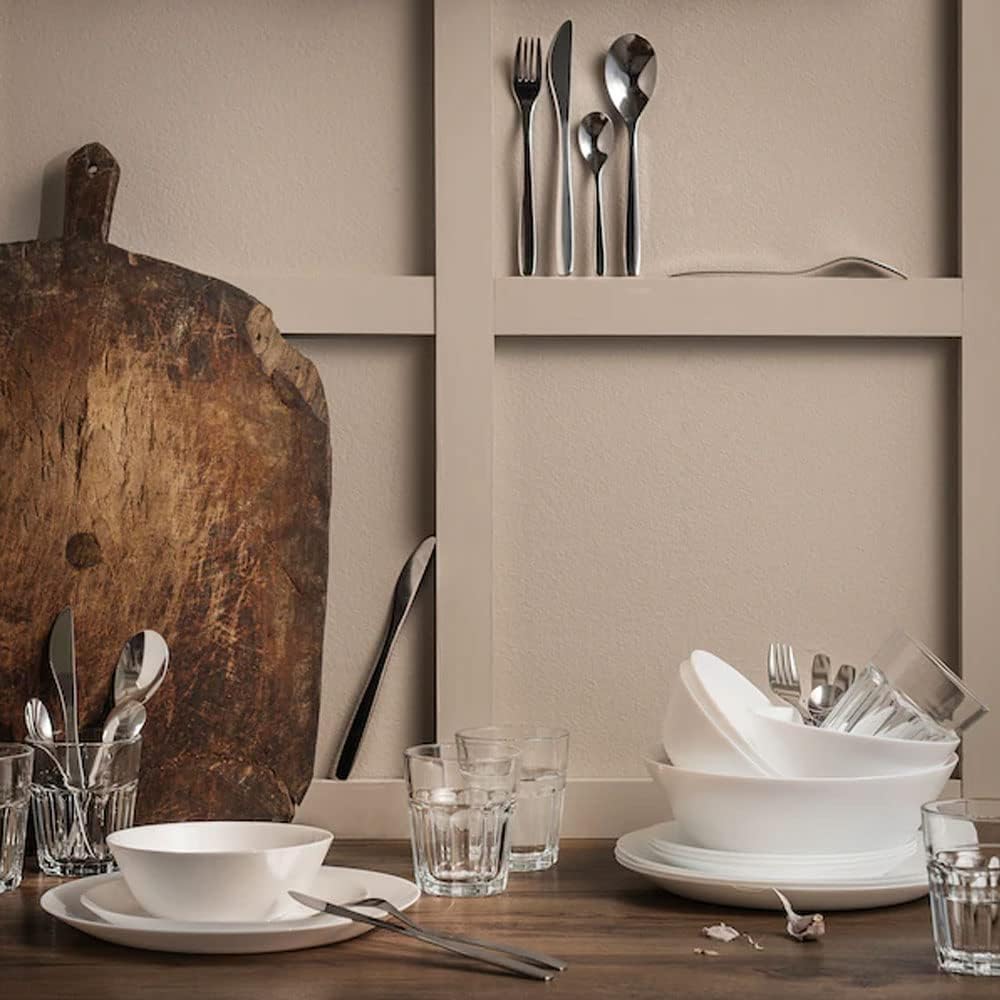
An independent tester who has evaluated multiple IKEA pieces over several years has stated a general comfort feeding children off current IKEA dishware, while noting that older or unverified pieces should still be checked individually.
Is Denby Dinnerware Lead Free?
Denby’s modern plain patterns, including pieces the brand has sent for third-party testing, have come back clean for heavy metals.
However, vintage Denby patterns from the 1970s through the 1990s have tested at levels as high as 24,500 ppm lead on the food surface, and Denby has been documented as making written statements about its historic lead use that an independent researcher characterized as inaccurate.
Denby states that its current glazes consistently test below the detection limits for lead and cadmium using ICP-OES analysis.
Is Dansk Dinnerware Lead Free?
Dansk states that its dinnerware is tested and compliant with applicable lead and cadmium regulations for food-contact ceramic surfaces.
Independent testing located for this article covered only a vintage “Bistro Cafe” pattern, which tested at 4,555 ppm lead, well above the level considered safe for children’s items.
No independent test data was found for Dansk’s current production lines, so the brand’s compliance claim remains unverified by third-party testing for present-day stock.
Is Fiestaware Lead Free?
Fiestaware manufactured after 1986 was reformulated to comply with FDA and California Prop 65 requirements, and manufacturer Homer Laughlin conducts its own leachability testing to confirm ongoing compliance.
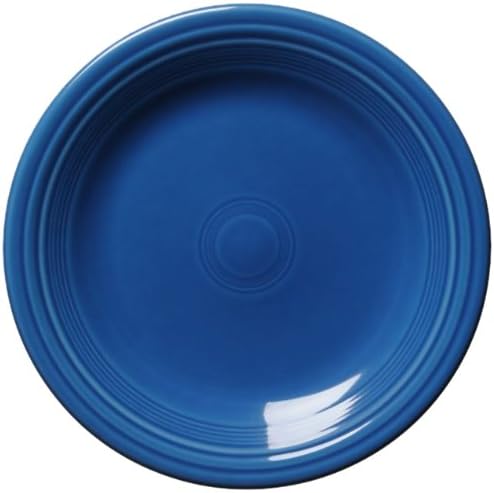
Some vibrant post-1986 colors still contain trace cadmium sufficient to trigger a Prop 65 warning label even while passing FDA leach limits.
Vintage “Radioactive Red” Fiestaware produced before 1943 used uranium oxide as a colorant and is a separate, well-documented vintage concern unrelated to current production.
Is Fable Dinnerware Lead Free?
Fable states its dinnerware is lead- and cadmium-free based on ASTM C738-94 leach testing, the industry-standard method for measuring migration into food.
Independent XRF testing has found detectable lead and cadmium in Fable pieces carrying that label, which prompted a public exchange in which Fable clarified it was using the leach-test definition of “lead-free” rather than a zero-total-content standard.
Both claims are technically accurate under their respective definitions, which is precisely why understanding the leachable-versus-total distinction from earlier in this guide matters here.
Is Franciscan Dinnerware Lead Free?
No. Franciscan dinnerware has consistently and repeatedly tested at extremely high lead levels across multiple patterns and manufacturing eras, including a Desert Rose plate at 122,200 ppm and other patterns as high as 108,300 ppm on the food surface.
This holds regardless of whether the piece is marked “Made in USA” or “Made in England.” Independent testers routinely flag Franciscan as one of the highest-lead dinnerware brands documented, and recommend against using it for food service in any era.
Is Fortessa Dinnerware Lead Free?
A Fortaluxe porcelain piece from Fortessa tested at 25 ppm lead under independent XRF analysis, which is safe by all current standards though not literally zero.
When asked about the reading, a company representative stated the trace level likely reflects naturally occurring lead in raw clay materials rather than an added ingredient, which is consistent with how low-level contamination typically appears in ceramic substrates.
Is Famiware Dinnerware Lead Free?
Famiware markets its glazes as “100% lead-free and cadmium-free” across its stoneware dinnerware lines.
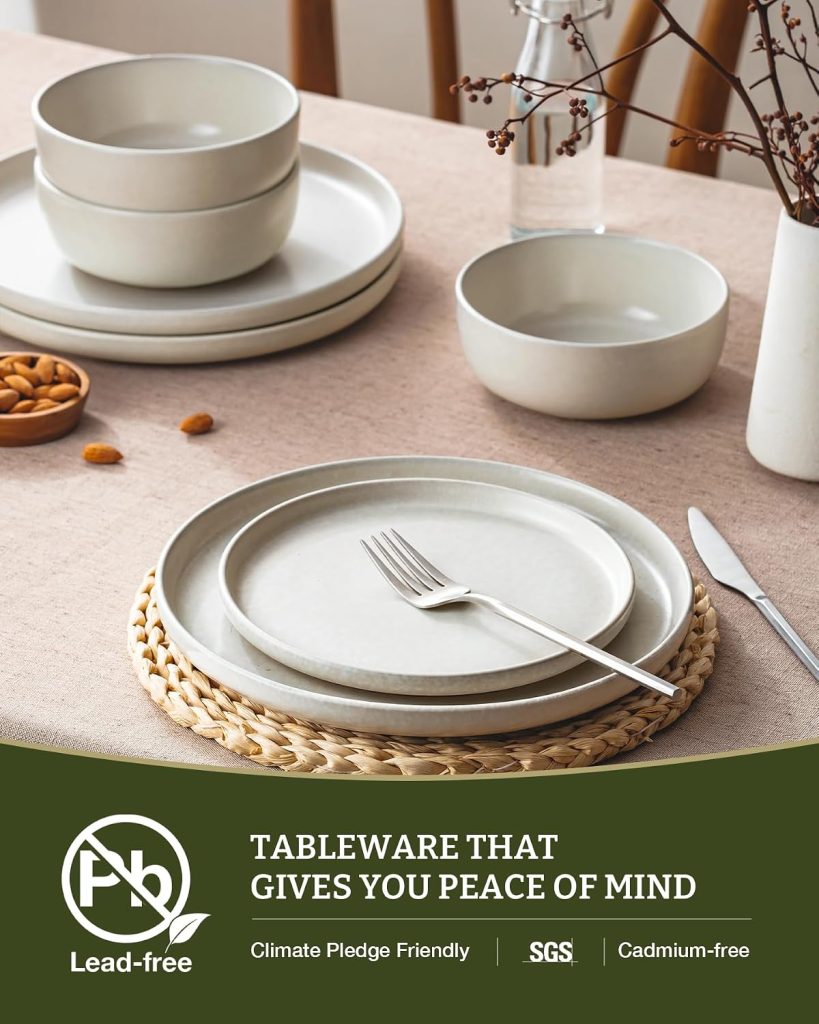
No independent third-party test results were located for this article, so this claim currently rests on the brand’s own statements rather than published lab data.
Shoppers who want independent confirmation should request the brand’s specific lab report before relying on the marketing claim alone.
Is Haven Dinnerware Lead Free?
Haven is marketed by retailers as lead-free stoneware, but no independent testing data or detailed brand-published testing documentation was found for this article.
As with other newer direct-to-consumer brands, the lead-free claim currently exists only as retailer and manufacturer marketing copy without third-party verification available to the public.
Is Lenox Dinnerware Lead Free?
Lenox is one of the most pattern-dependent brands in this guide.
Current Opal Innocence pieces have tested at 49–68 ppm lead, safely within accepted standards, while other Lenox patterns have tested dramatically higher: Butterfly Meadow at 63,700 ppm, Rutledge at roughly 88,300 ppm on the food surface, and Essex at over 426,000 ppm — more than 42% lead in the glaze.
Lenox states its products are government-tested annually and fall within FDA limits, which may be true for current patterns while historic and discontinued patterns remain high-risk.
Is Luminarc Lead Free?
Yes, based on available data. Independent testing and Luminarc’s own statements align: the brand’s dinnerware and glassware, including pieces manufactured in the USA, have tested lead-free, and the company states its newer collections are explicitly formulated without lead or cadmium.
Luminarc products are manufactured across multiple countries, including France, China, Russia, and the UAE, and no positive lead test was found for any of these facilities during this research, though consistency across that many production sites is worth periodic re-checking rather than assuming indefinitely.
Is Pottery Barn Dinnerware Lead Free?
Pottery Barn’s results are inconsistent enough that no blanket answer applies.
A plain white “PB Classic” mug tested at 2,528 ppm lead on its logo, while a “Great White” ceramic mug from the same retailer tested at only 130 ppm and a Studio dish tested at 230 ppm.
An independent tester who has evaluated multiple Pottery Barn products across categories, not just dinnerware, has stated a general reluctance to recommend the retailer broadly given this repeated pattern of inconsistent results.
Is Our Place Dinnerware Lead Free?
Our Place states its ceramic dinnerware is Prop 65–certified lead- and cadmium-free. No independent test of the dinnerware line itself was located for this article.
The closest available independent data point is the brand’s Always Pan cookware, which tested at 34 ppm lead — safe by all standards, though not literally non-detect, giving some indirect signal about the company’s general manufacturing tolerances.
Is Le Creuset Dishes Lead Free?
It depends heavily on color and product line, which makes Le Creuset a genuine exception to a simple yes-or-no answer.
The company has stated that only certain colors, including Dune and Palm, are lead- and cadmium-free, and independent testing of those specific colors found only trace cadmium on the exterior.
Other colors and the ceramic stoneware line have tested positive for lead and cadmium, including a 2023 test of a red “Cerise” stoneware espresso mug that came back positive for both metals.
Is Mikasa Dinnerware Lead Free?
No, not reliably. An independent tester has stated Mikasa will not be recommended at all given a consistent historic pattern of lead contamination across the brand.
Vintage Optima pattern pieces tested at 45,300–46,200 ppm lead, and the English Countryside pattern tested at 26,200 ppm.
A bone china Trellis pattern tested lower but still detectable, at 187 ppm on the food surface and 1,508 ppm on the logo, reinforcing that even Mikasa’s better-performing pieces don’t reach truly lead-free levels.
Is Noritake Dinnerware Brand Lead Free?
Results split clearly between older and current lines. Noritake’s modern Colorwave stoneware collection is generally treated as the brand’s safer current option, though retailers still display standard Prop 65 warning language on the product pages.
Older Noritake patterns test far higher — the Progression “Blue Haven” pattern tested at 15,600 ppm lead plus 1,907 ppm arsenic, a combination that puts vintage Noritake china in the same risk category as other pre-2000s fine china brands.
Is Oneida Dinnerware Lead Free?
It depends on the specific line. Oneida’s vitrified Culinaria stoneware bowl tested clean on the food surface, with only 33 ppm lead detected on the exterior logo, safe by all standards.
Other Oneida lines test much higher: the “Select Collection” Blue Lattice fine porcelain tested at 25,700 ppm lead plus 2,668 ppm arsenic, showing that Oneida’s stoneware and fine porcelain lines should be evaluated separately rather than as one brand-wide answer.
Is Pfaltzgraff Dinnerware Lead Free?
Pfaltzgraff states a company policy of using only lead-free glazes, pigments, and decals, and says its products are independently lab-tested to meet or exceed federal standards.
Independent testing shows a more mixed picture: a modern “Owl Love You Forever” mug tested at just 38 ppm lead, and a Linea pattern glass bowl tested fully non-detect, while a vintage floral pattern tested as high as 3,711 ppm and a Christmas Holly pattern tested at 17,400 ppm lead plus 780 ppm cadmium.
Current plain and glass pieces appear to test cleanly; vintage patterned stoneware does not.
Is Vancasso Dinnerware Lead Free?
Vancasso and its retail partners state the brand’s dinnerware is lead-free and tested to FDA and international food-contact safety standards.
No independent third-party test result, such as a published XRF reading, was located for this article.
As with other newer imported brands in this guide, the lead-free claim currently rests on manufacturer and retailer statements rather than externally verified lab data.
Is Mora Dinnerware Brand Lead Free?
Mora, a smaller direct-to-consumer ceramics brand, states that its proprietary “Paladin clay” and in-house glazes are lab-tested and free of lead, cadmium, heavy metals, and PFOAs.
No independent third-party verification of this “lab-tested” claim was located during this research.
Shoppers who want confirmation beyond the brand’s own marketing should ask Mora directly for a copy of the underlying lab report.
Is Williams Sonoma Lead Free?
Not reliably, despite the company’s own testing claims.
Williams Sonoma states that it tests all dinnerware to meet FDA and Prop 65 requirements, but independent testing has repeatedly found high lead levels in the retailer’s dinnerware over multiple years: a 2022 “Sicily” pattern dish tested at 15,800 ppm lead, a 2023 dish tested at 11,700 ppm lead, a “Made in Portugal” dinner plate tested at 151,800 ppm lead, and a German-made nesting bowl sold by the retailer tested at 107,500 ppm lead plus 20,600 ppm cadmium.
An independent tester has documented flagging the retailer repeatedly across several years, with the company’s response in at least one instance being an added warning sticker rather than a reformulated product.
How Much Lead Is Actually Dangerous in Dishware?
There is no federally mandated lead limit for dinnerware sold to the general public, which surprises most people who assume all consumer products fall under the same rule.
The 90 ppm figure referenced throughout this guide comes from a completely different category of product, and understanding that gap is essential to interpreting any test result correctly.
For a broader look at how different dinnerware materials compare on lead risk, the material a dish is made from often matters as much as the numbers below.
The 90 ppm Children’s-Item Standard, and Why Dishes Aren’t Covered by It
The 90 ppm standard comes from the Consumer Product Safety Improvement Act (CPSIA), which sets a legal limit of 90 ppm lead in the paint, glaze, or coating of items specifically manufactured and marketed for use by children under 12.
Dinnerware sold for general household use, including sets marketed as family-friendly, is not classified as a “children’s item” under this law, so it is not legally bound by the 90 ppm limit even though independent testers use that number as a practical benchmark for comparison.
This is why a brand-new adult dinner plate can legally test at tens of thousands of parts per million lead without violating any federal law, while the same glaze on a children’s plate would be illegal.
Reading an XRF Test Result Like Lead Safe Mama’s
XRF test results typically list each metal detected along with a parts-per-million reading and a margin of error, and knowing how to read one turns an intimidating number into a usable comparison point.
| Metal Detected | Example Reading | Compared to 90 ppm Benchmark |
|---|---|---|
| Lead (Pb) | 25 ppm (Fortessa Fortaluxe) | Well under — considered safe by all standards |
| Lead (Pb) | 4,555 ppm (Dansk Bistro Cafe, vintage) | Roughly 50 times the benchmark |
| Lead (Pb) | 47,800 ppm (Franciscan Desert Rose) | Roughly 530 times the benchmark |
| Lead (Pb) | 426,500 ppm (Lenox Essex) | Over 4,700 times the benchmark — more than 42% lead by weight |
| Cadmium (Cd) | Non-detect (Luminarc glass) | No cadmium found in the tested component |
A “non-detect” reading means the instrument found no measurable amount of that metal, which is the clearest possible result.
Anything reported with a plus-or-minus margin (for example, “25 +/- 4 ppm”) means the metal was detected at that approximate level, and the margin reflects normal measurement variation rather than uncertainty about whether the metal is present at all.
Should You Worry About Cadmium Too?
Yes, cadmium deserves the same attention as lead, and it shows up in a specific, predictable place: bright, saturated glaze colors.
Unlike lead, which can appear in almost any glaze color including plain white, cadmium is most often used specifically to produce vivid reds, oranges, and yellows, which makes it somewhat easier to visually flag as a potential risk category.
If you’re shopping specifically for children, lead-free dinnerware made specifically for kids and toddlers addresses both lead and cadmium exposure in more detail.
Where Cadmium Shows Up (Bright Reds, Oranges, Yellows)
- Vintage Fiestaware’s original “Radioactive Red” and later cadmium-based red glazes are among the most cited historical examples of cadmium use in dinnerware.
- Le Creuset’s bright red “Cerise” stoneware pieces have tested positive for cadmium in independent XRF testing, alongside detectable lead.
- Oneida’s high-lead “Select Collection” Blue Lattice pattern also tested positive for arsenic, showing that colored decorative glazes can carry multiple heavy metals simultaneously, not just cadmium alone.
- Pfaltzgraff’s Christmas Holly pattern tested positive for both lead and cadmium together, illustrating that seasonal and decorative patterns carry elevated risk across multiple metals at once.
How Cadmium Risk Differs from Lead Risk
Cadmium is classified as a known human carcinogen, which makes it a different kind of concern than lead’s primary risk of neurological and developmental harm.
There is currently no comprehensive federal regulatory standard limiting cadmium in general consumer dinnerware the way there is for lead in children’s items, though some individual states, including Washington, have set their own cadmium limits for children’s consumer goods.
Because cadmium concentrates disproportionately in bright, saturated colors rather than appearing evenly across a brand’s product line the way lead sometimes does, avoiding vivid red, orange, and yellow glazed pieces is a reasonable practical step even without a definitive lab result in hand.
If you’ve made it this far and want a shortlist rather than a brand-by-brand comparison, our full list of the best non-toxic, lead-free dinnerware brands narrows the field down to the options with the strongest independent testing track record across the board.
FAQ
Can you test your own dishes for lead at home?
Home lead test kits and swabs can detect surface lead in some cases, but they are not reliable enough to confirm a dish is safe based on a negative result.
These kits are generally designed for lead paint on surfaces like walls and trim, not for glazed ceramic, and they can miss lead that’s embedded in the glaze rather than sitting loosely on top of it.
A negative home test result means the kit didn’t detect surface lead under those specific conditions, not that the dish has been confirmed lead-free by laboratory standards.
If you want a reliable answer for a specific piece, sending it to a lab for XRF testing, or checking whether Lead Safe Mama has already published results for your exact pattern, gives a far more trustworthy answer than a home swab test alone.
Is it safe to use dishes with lead if they’re not chipped or cracked?
An intact glaze reduces risk but does not eliminate it, because lead can migrate out of an undamaged glaze surface when exposed to heat, acidic foods, or repeated dishwasher cycles over time.
Independent testers have noted that even glazes that passed leach testing when new can behave differently after years of scratching, thermal stress, and detergent exposure, since the glaze surface gradually breaks down at a microscopic level even without visible chips.
A dish with a documented high total lead reading, such as many vintage Franciscan or Mikasa patterns, is reasonably treated as unsafe for regular food use regardless of its visible condition, since the concern is the lead content itself rather than only visible damage.
For everyday use, especially with children or during pregnancy, a dish confirmed low or non-detect for lead is a meaningfully safer choice than an intact but untested decorative pattern.
Why do companies still sell dinnerware that contains lead?
Companies can legally sell dinnerware containing lead because, outside of items specifically marketed for children, there is no federal law setting a maximum total lead content for general dinnerware, only regulations governing how much lead is allowed to leach out under standardized test conditions.
A dish can pass every applicable leach test and still contain a substantial amount of total lead in the glaze, which is exactly the gap that allows brands like Williams Sonoma to state their products meet FDA and Prop 65 requirements while independent XRF testing simultaneously finds high total lead readings on the same products.
This isn’t necessarily deception on the part of every brand; in many cases, the company is accurately describing compliance with the specific regulatory test that applies, while the total-content number that concerns health-focused shoppers falls outside what that test measures.
What should I do if I find out my dishes contain lead?
If a dish tests positive for a meaningfully elevated lead reading, the most protective step is to stop using it for food service and set it aside as decorative only, since there is no way to seal or reverse lead content already present in a glaze.
For dishes with only trace-level readings under roughly 90 ppm, most independent testers consider continued occasional use reasonable, though switching to confirmed non-detect pieces for daily meals, and especially for children’s meals, reduces cumulative exposure over time.
If you’re unsure how a specific reading compares to safer alternatives, working through a brand’s individual entry in the guide above is a faster way to get oriented than starting from scratch, and confirmed-clean options are worth prioritizing for anything used every single day rather than occasionally.