Stainless steel doesn’t rely on a coating, so there’s nothing to break down at high heat, but it’s not risk-free either, and the honest answer depends on what you’re cooking and whether you have a known nickel sensitivity.
Both materials have a real, documented safety profile, and neither one is simply “the safe choice” across every situation.
What Non-Stick and Stainless Steel Cookware Actually Are
Non-stick and stainless steel solve the same problem, getting food off the pan cleanly, through completely different means. One relies on a coating engineered to repel food and oil.
The other relies on an alloy that resists corrosion on its own, with no coating involved at all.
What “Non-Stick” Means Today — PTFE vs. Ceramic Coatings
PTFE (polytetrafluoroethylene), sold under the brand name Teflon, is the original synthetic non-stick coating, developed by DuPont in 1938 and still used in most traditional non-stick pans today.
It’s a type of PFAS (per- and polyfluoroalkyl substances), a family of fluorinated chemicals that also includes PFOA, a manufacturing byproduct largely phased out of U.S. cookware production.
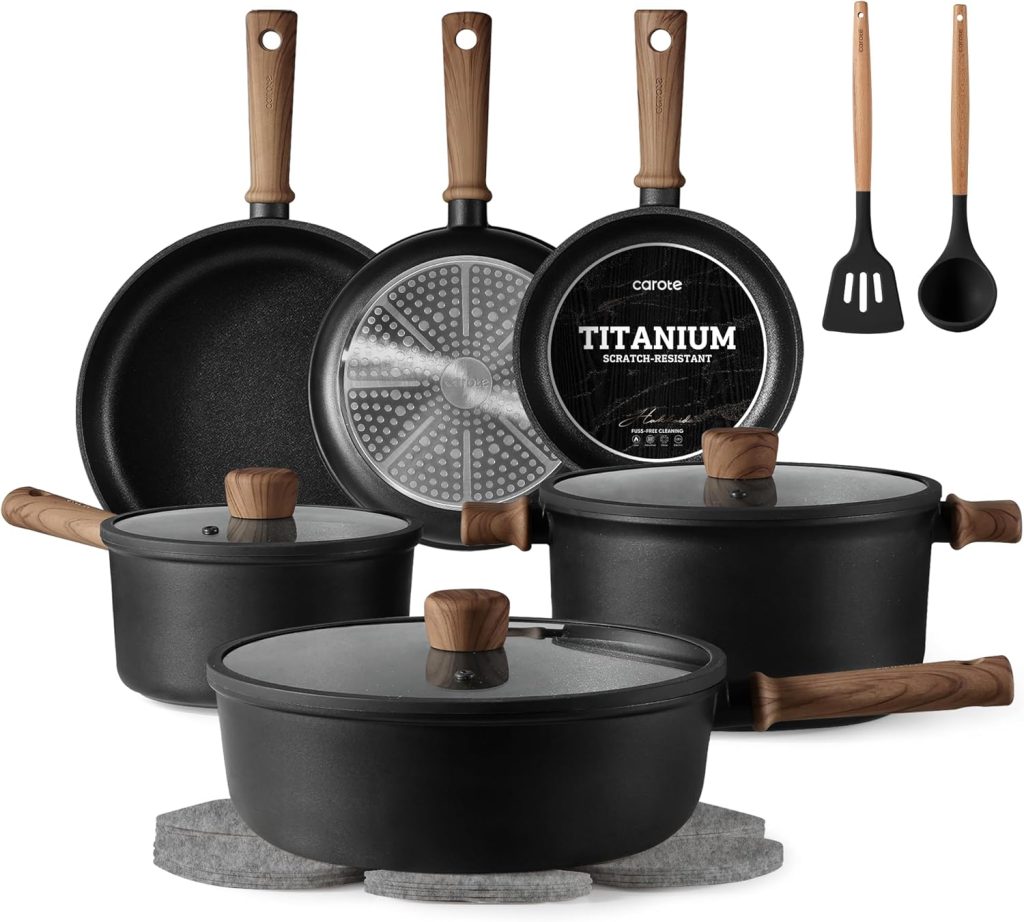
Ceramic non-stick coatings, by contrast, are derived from a sand-based sol-gel material and contain no PTFE, PFOA, or PFAS at all, though they tend to be more brittle and lose their slickness faster than PTFE.
If you’re trying to figure out whether a specific ceramic-coated pan is genuinely PFAS-free, ceramic cookware safety breaks down what to check before you buy.
What Makes Stainless Steel “Stainless”
Stainless steel is an alloy of iron, carbon, and chromium, with the chromium forming a thin oxide layer on the surface that resists rust and corrosion.
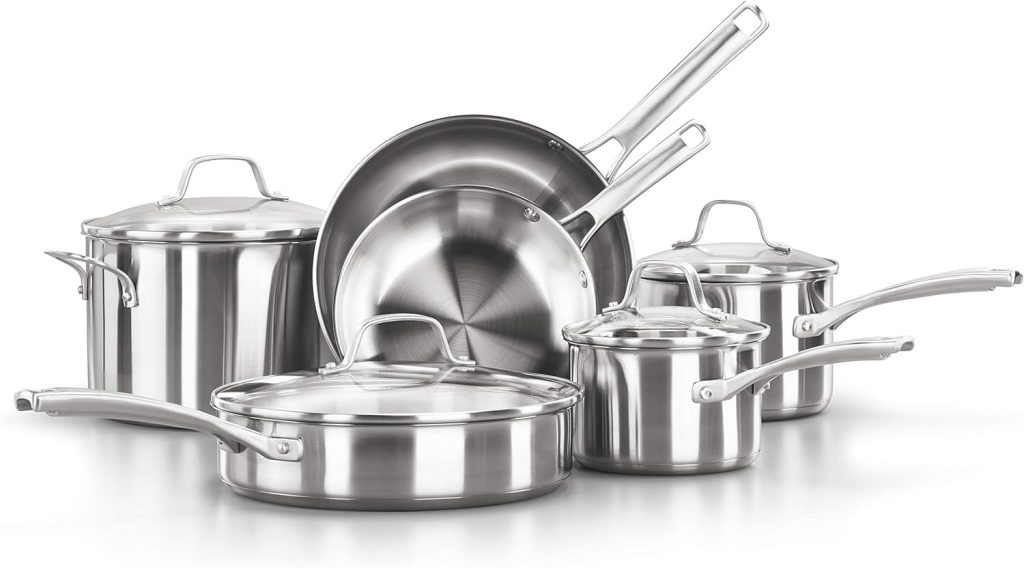
It has no synthetic coating of any kind, which is the main reason it’s often described as the safer default.
That said, “no coating” doesn’t mean “nothing can transfer into food.” The metal itself contains trace amounts of nickel and chromium, and under the right conditions, small amounts of both can leach into what you’re cooking.
Non-Stick vs Stainless Steel: Which Is Healthier?
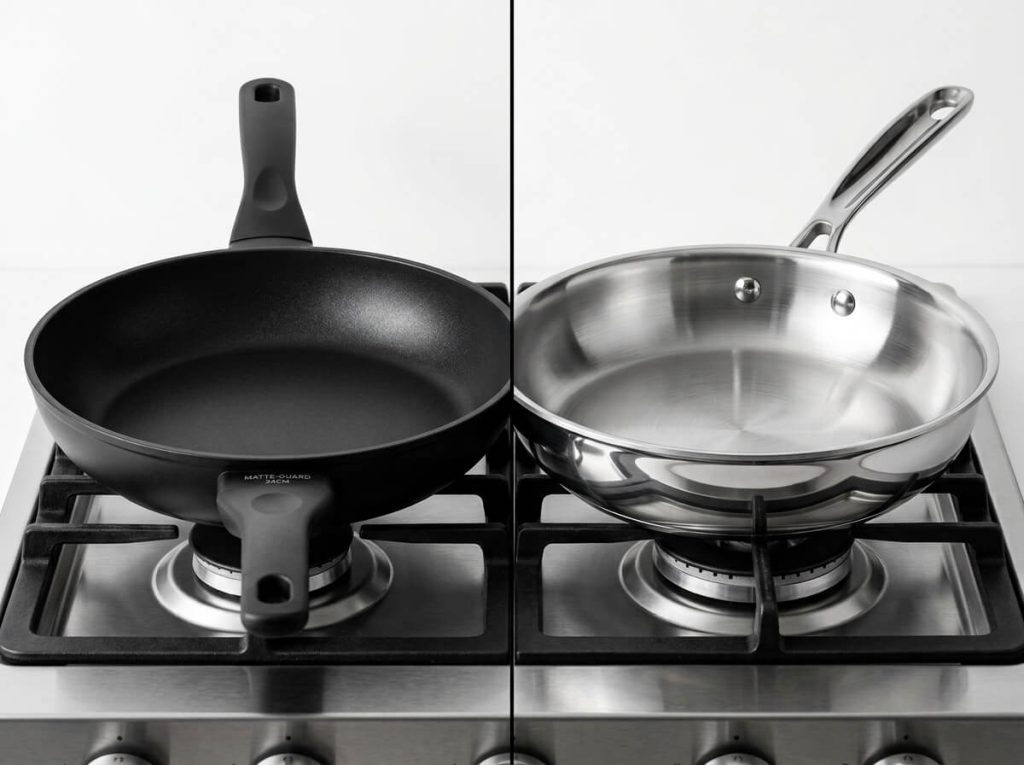
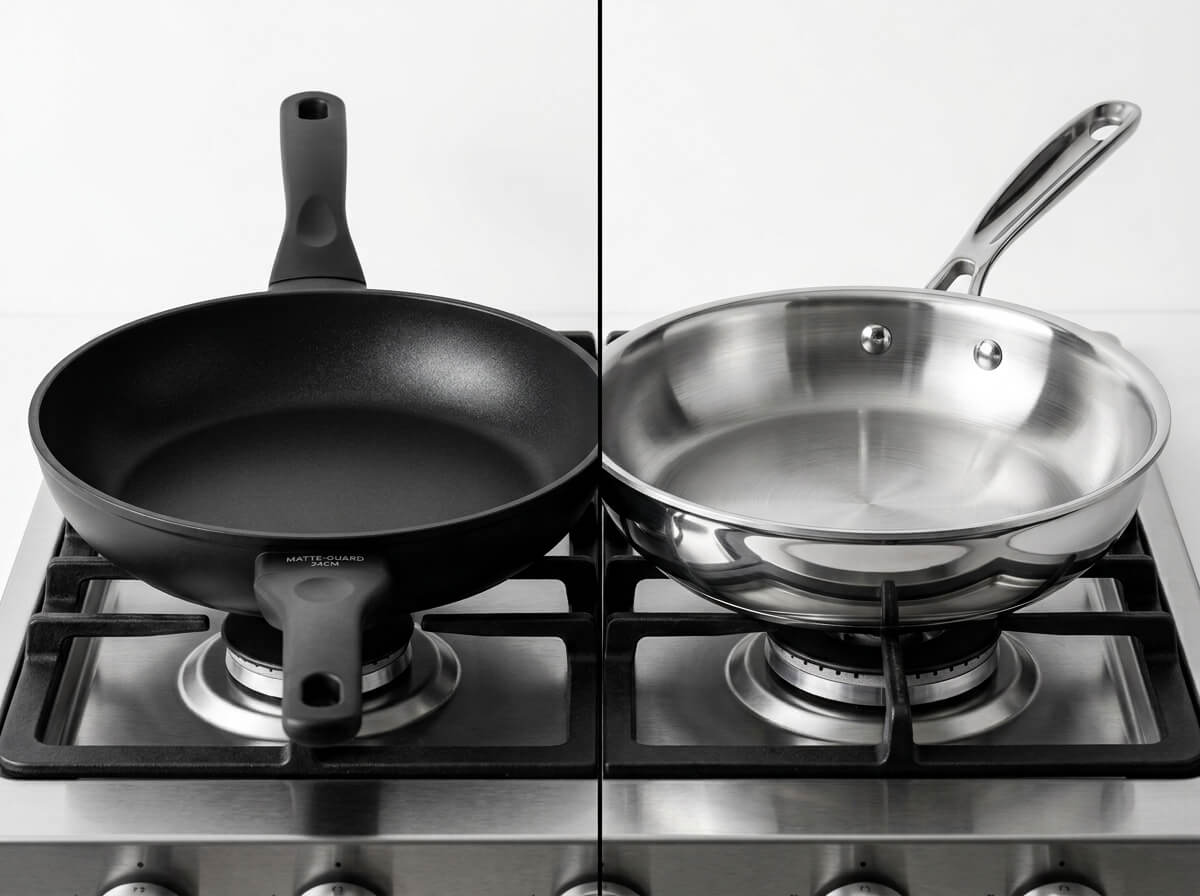
Neither material is risk-free, but the risks are different in kind and in scale.
Non-stick’s main concern is coating breakdown at high heat; stainless steel’s main concern is trace metal leaching into acidic foods over repeated use.
The Real Risk With Non-Stick — Teflon Flu and Coating Breakdown
PTFE coatings start to break down at roughly 570°F, releasing fumes that can cause polymer fume fever — often called “Teflon flu” — a short-term, flu-like reaction most associated with overheating an empty pan.
Under normal cooking temperatures, PTFE is considered chemically stable, but a scratched or damaged coating breaks down more easily, and metal utensils are the most common cause of that damage.
To check whether a pan you already own is at risk, how to know if your cookware has PFAS walks through the signs of a compromised coating.
The Real Risk With Stainless Steel — Nickel and Chromium Leaching
A 2013 peer‑reviewed study from Oregon State University tested stainless steel (including a stainless steel saucepan) while cooking acidic tomato sauces and found measurable transfer of nickel and chromium into the food, with leaching increasing as cooking time increased, highest in new cookware, and then decreasing and stabilizing over repeated cooking cycles.
For most people, the amounts involved are small enough that stainless steel is still considered safe for regular use.
The exception is people with a diagnosed nickel allergy or sensitivity, for whom even modest leaching can trigger a reaction like dermatitis, a detail worth knowing if you or someone in your household has that specific sensitivity, though it isn’t a reason for the general population to avoid stainless steel.
Performance Differences: Searing, Eggs, and High Heat
The two materials aren’t interchangeable in the kitchen, and that’s arguably the bigger reason to own both rather than pick just one.
| Task | Better Choice | Why |
|---|---|---|
| Eggs, pancakes, delicate fish | Non-stick | Low-fat release, no need to preheat aggressively |
| Searing steak, browning vegetables | Stainless steel | Handles higher heat, builds better fond for pan sauces |
| Deglazing for sauces | Stainless steel | Fond sticks to the pan surface, not a non-stick coating |
| Reheating or simmering sauces | Either | Both perform adequately at low-medium heat |
Best for Eggs, Fish, and Delicate Foods
Non-stick earns its place for foods that are prone to sticking and don’t need aggressive heat.
Eggs, pancakes, crepes, and delicate fish fillets release cleanly with little to no oil, and the low-to-medium heat these foods need keeps the coating well within its safe operating range.
If you’re weighing two specific brands in this category, Xtrema vs. Caraway compared looks at how 100% ceramic and ceramic-coated non-stick actually differ in daily use.
Best for Searing, Browning, and Sauces
Stainless steel wins whenever high, sustained heat matters. It can be preheated far past what a non-stick coating can safely tolerate, which is what makes a proper sear on a steak or a deep caramelization on onions possible.
It’s also the better choice for pan sauces, since the browned bits that stick to a stainless surface, the fond, are exactly what you deglaze to build flavor, something a non-stick surface is specifically designed to prevent.
Which Lasts Longer: Coating Lifespan vs. Stainless Durability?
Stainless steel typically outlasts non-stick cookware by a wide margin, since there’s no coating to wear down in the first place.
| Cookware Type | Typical Lifespan | What Ends It |
|---|---|---|
| PTFE non-stick | 2–5 years | Coating scratches, thins, and loses slickness |
| Ceramic non-stick | 1–3 years | Coating dulls and becomes brittle faster than PTFE |
| Stainless steel | 20+ years | Rarely fails outright; may dull cosmetically over decades |
Why Non-Stick Coatings Wear Out
Every non-stick coating, PTFE or ceramic, degrades with use.
Metal utensils, high heat, and abrasive cleaning all accelerate the process, and even a well-cared-for pan will eventually lose enough slickness that food starts sticking again.
This isn’t a manufacturing defect — it’s the tradeoff of a coating-based cooking surface, and it applies across price points, from budget ceramic sets to premium branded lines.
Why Stainless Steel Doesn’t Degrade the Same Way
Because stainless steel’s non-stick behavior is a matter of technique, not a coating, there’s nothing on the surface to wear off.
A stainless pan can develop cosmetic discoloration or a slightly rougher patina over years of use, but that doesn’t affect its safety or its cooking performance the way a degraded non-stick coating does.
That’s the core reason stainless steel cookware is routinely sold with lifetime warranties, while non-stick sets rarely are.
Cleaning, Maintenance, and Everyday Use
Non-stick and stainless steel ask for almost opposite cleaning habits, and using the wrong routine on either one shortens its useful life.
Caring for Non-Stick Without Damaging the Coating
- Use only silicone, wood, or other soft utensils, since metal tools are the single most common cause of scratched coatings.
- Hand-wash with a soft sponge and mild dish soap rather than running non-stick pans through the dishwasher.
- Avoid preheating a non-stick pan while it’s empty, since dry heat is what pushes PTFE coatings toward their breakdown point fastest.
- Let the pan cool before washing it, since a sudden temperature change can warp thinner non-stick cookware over time.
Getting Food to Release From Stainless Steel
- Preheat the empty pan on medium heat for two to three minutes before adding any oil.
- Test readiness by flicking a drop of water into the pan — it should skitter across the surface rather than evaporate instantly or sit still.
- Add oil to the hot pan and let it heat for about 30 seconds before adding food.
- Leave food undisturbed until it releases naturally, since forcing it off early is what causes most sticking complaints.
Induction Compatibility and Price
Material choice affects more than safety and performance; it also determines whether a pan will work on your stovetop at all, and how much you’ll pay for it.
Induction Compatibility by Material
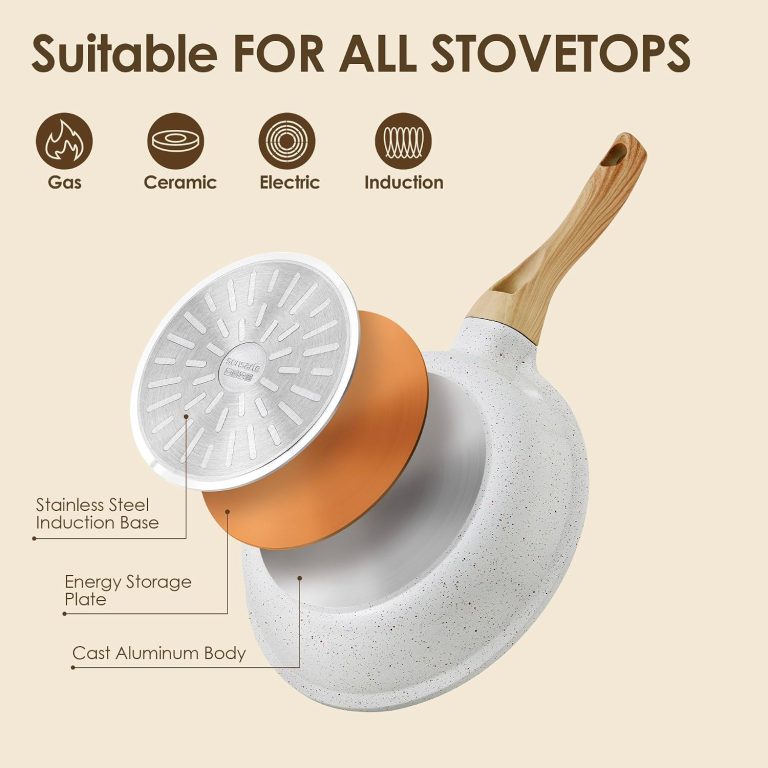
Stainless steel cookware is induction compatible as long as it has a magnetic stainless base, which most modern sets do.
Non-stick pans are frequently built on a non-magnetic aluminum core, so many traditional non-stick pans won’t work on induction cooktops at all.
Always check the base material specifically rather than assuming “non-stick” and “induction-safe” go together.
If induction compatibility is a deciding factor for your kitchen, the best non-toxic cookware for induction stoves covers which materials and brands are actually built for it.
Typical Price Ranges for Each
Non-stick pans are generally the more affordable entry point, with basic PFAS-free ceramic or PTFE pans widely available for $20 to $60.
Stainless steel spans a much wider range, from roughly $30 for a single basic pan to $150 or more per piece for fully clad, multi-ply construction from brands like All-Clad or Made In.
The higher end of stainless steel pricing buys better heat distribution and sturdier construction, not additional safety, since even entry-level stainless has no coating to begin with.
Do You Need Both, or Which Should You Buy First?
Most home cooks end up happier owning one of each rather than trying to make a single material do every job in the kitchen.
The One-Pan-Each Starter Approach
- Start with one quality non-stick pan (8- to 10-inch) for eggs, fish, and other foods prone to sticking.
- Add one stainless steel pan (10- to 12-inch) for searing, browning, and pan sauces.
- Skip buying a full matched set of either material until you know which one you reach for more often.
- Replace the non-stick piece every few years as the coating wears; expect the stainless piece to last considerably longer.
When One Alone Is Enough
If you’re outfitting a first kitchen on a tight budget or cooking for one, a single well-chosen pan can cover most needs.
A quality stainless steel pan is the more versatile single-pan choice, since it handles high heat and searing that non-stick can’t, and food release becomes manageable with proper preheating technique.
Non-stick alone works fine for someone who mostly cooks eggs, delicate fish, and low-to-medium-heat meals and rarely sears or deglazes.
Once you’ve settled on which pan makes sense for your own kitchen, the same decision often comes up again when you’re shopping for someone else.
Our guide to best non-toxic cookware for gifts covers which non-stick and stainless steel picks make sense for a housewarming, a wedding registry, or a first-apartment gift, based on the same safety and performance factors covered here.
Frequently Asked Questions
Is non-stick or stainless steel healthier?
Neither is universally healthier. Non-stick’s main risk is coating breakdown at high heat, while stainless steel’s main risk is trace nickel and chromium leaching into acidic foods over repeated use.
For most people, both are considered safe for regular cooking when used within their intended temperature range and replaced once a non-stick coating is visibly worn.
The one group that should lean toward stainless steel alternatives, like 100% ceramic or cast iron, is people with a diagnosed nickel allergy, since even modest leaching can trigger a reaction in that specific case.
Is Teflon safe to cook with?
Yes, under normal cooking conditions, but it becomes a concern once a pan is overheated or the coating is scratched.
Teflon (PTFE) is chemically stable at typical stovetop temperatures and only begins breaking down at around 570°F, a temperature reached mainly by leaving an empty pan on high heat.
A damaged or heavily scratched coating breaks down more easily and at lower temperatures, which is why avoiding metal utensils and replacing worn non-stick pans matters more than avoiding Teflon outright.
Does stainless steel leach chemicals into food?
Yes, in small amounts, primarily nickel and chromium, and a 2013 peer-reviewed Oregon State University study documented measurable transfer into acidic tomato sauce over repeated cooking cycles.
For the general population, the amounts involved are considered low enough that stainless steel remains a widely recommended safe cookware choice.
The leaching does increase with longer cooking times and more acidic ingredients, so people with a known nickel sensitivity are the main group who might want to choose a different material instead.
Do I need both non-stick and stainless steel pans?
Not strictly, but most home cooks end up better served owning one of each rather than one material alone.
Non-stick handles eggs, fish, and other foods prone to sticking with minimal oil, while stainless steel handles high-heat searing, browning, and pan sauces that non-stick coatings can’t safely tolerate.
If you can only buy one to start, a quality stainless steel pan is the more versatile single choice, since food release with stainless steel is a matter of technique rather than a hard material limitation.