Glass and ceramic are both safe when properly certified, but can be risky when they aren’t.
The material itself tells you less than most articles suggest. Certification, glaze quality, and manufacturing standards decide the outcome far more than whether the plate started as sand or clay.
This guide breaks down where each material actually wins, where the marketing gets ahead of the facts, and where a third option, melamine, quietly enters the picture for parents shopping for kids.
Glass vs Ceramic Dinnerware at a Glance
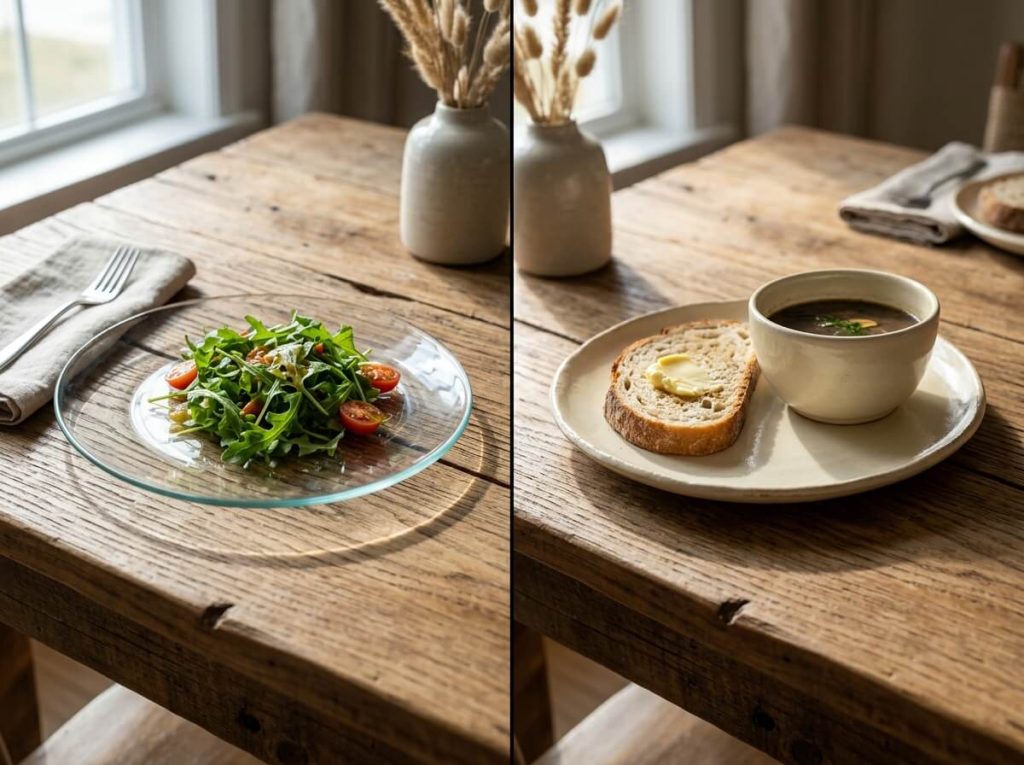
Before getting into the details, here’s how the two materials stack up across the factors that matter most for everyday use.
| Factor | Glass | Ceramic |
|---|---|---|
| Lead risk | Very low; standard glass contains no lead by default | Depends entirely on the glaze; can be high in low-fired or vintage pieces |
| Breakage pattern | Shatters into shards (untreated) or small pebbles (tempered) | Chips at the rim; rarely shatters |
| Heat retention | Cools quickly once off the heat | Holds warmth longer |
| Weight | Lighter | Heavier |
| Microwave safety | Safe in most cases; avoid pieces with metallic trim | Safe as long as the glaze is intact and undamaged |
| Typical cost | Usually lower | Higher, especially handmade or artisan pieces |
Which Material Is Actually Safer: Lead, Cadmium, and Certification
Is glass or ceramic dinnerware safer? Neither one wins automatically, because the deciding factor is certification, not the material category.
Kitchnfam’s full breakdown of lead-free dinnerware materials covers every category in depth, but for glass and ceramic specifically, here’s what the chemistry and the regulations actually say.
Does Glass Dinnerware Contain Lead?
Standard glass dinnerware, whether soda-lime, borosilicate, or tempered, is lead-free by default.
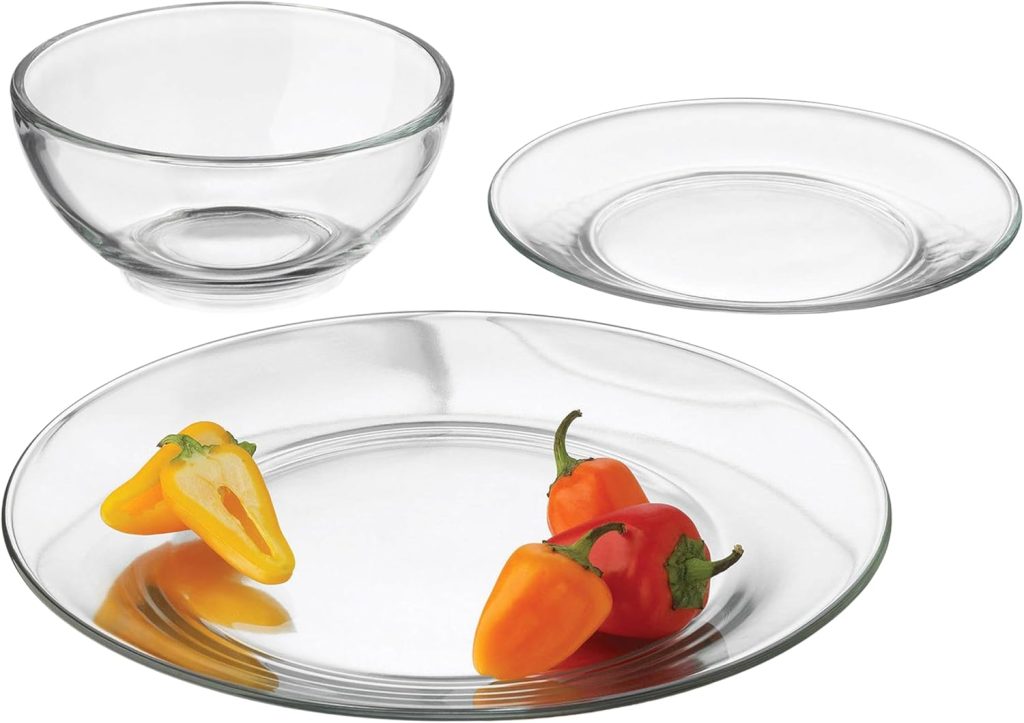
That’s a function of the raw ingredients (sand, soda ash, limestone), not a special safety process a manufacturer added.
Lead only becomes a real concern in leaded crystal, which uses lead oxide to increase brilliance and weight, and in older tinted or decorative glassware made before modern manufacturing standards.
Plain, clear, modern glass plates and bowls rarely need a Prop 65 warning for this reason.
Can Ceramic Dinnerware Leach Lead or Cadmium?
Yes, but the risk comes from the glaze, not the clay underneath it.
Traditional ceramic glazes, especially bright red, orange, and yellow ones, historically relied on lead and cadmium compounds to achieve their color.
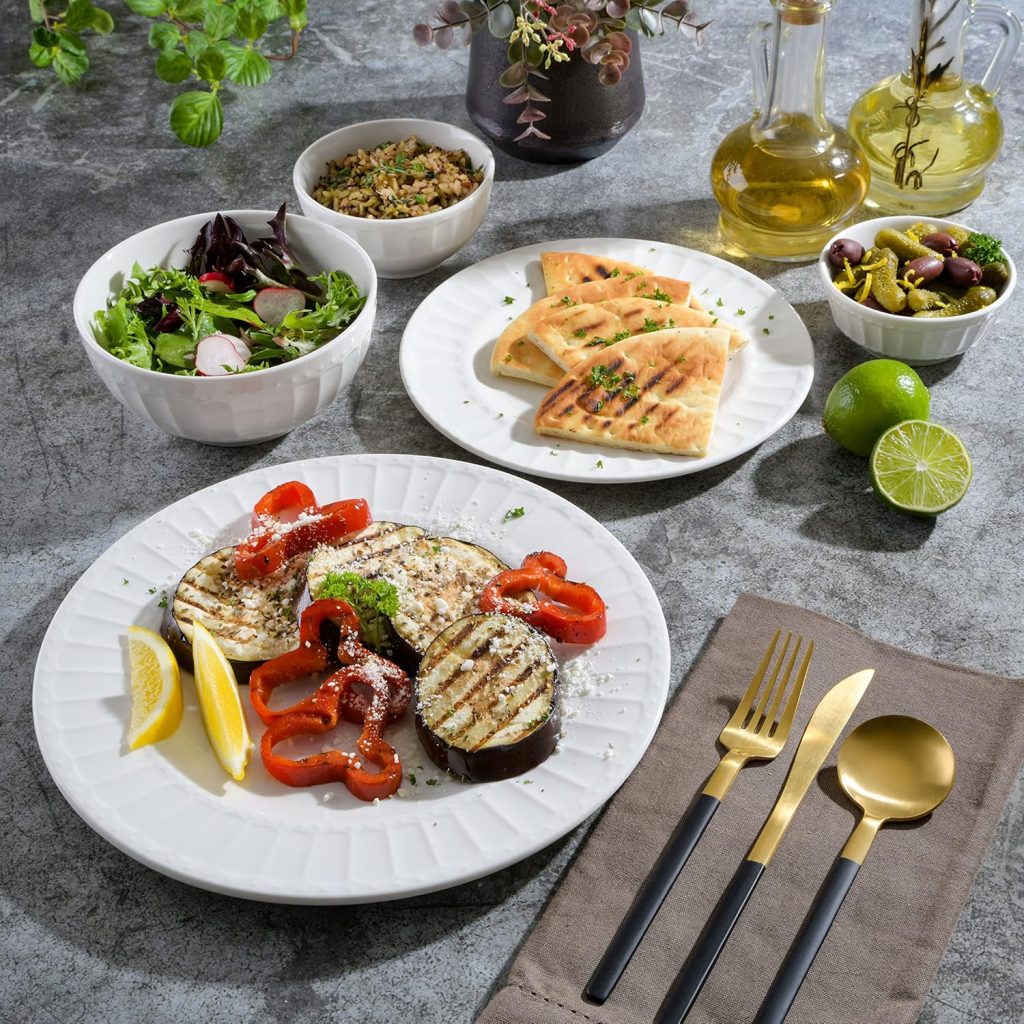
When ceramic is high-fired above roughly 1,200°C, the glaze and clay body fuse into a dense, glass-like surface that resists leaching.
Low-fired earthenware, hand-painted imports, and vintage pieces made before the 1970s carry the highest risk, since older regulations were far looser.
A well-made, certified lead-free ceramic dinnerware set carries essentially the same risk profile as glass.
What “FDA-Compliant” vs “Prop 65-Compliant” Actually Means
These two labels get used interchangeably in product listings, and they shouldn’t be.
- FDA-compliant means the product falls under the federal government’s allowable leaching limits: up to 3.0 mg/L of extractable lead for flat plates and up to 0.5 mg/L for cups, mugs, and pitchers. This is a low-lead standard, not a zero-lead one.
- Prop 65-compliant means the product meets California’s stricter warning threshold, which sets a meaningfully lower bar for lead exposure before a warning label is legally required.
A dish can technically meet FDA standards and still trigger a Prop 65 warning in California. When a listing only says “FDA compliant” without mentioning Prop 65, treat that as a signal to look further, not as proof of safety.
Durability: Which Breaks More Easily?
Glass breaks more often than ceramic overall, but the two materials fail in very different ways, and that difference matters more than the raw breakage rate.
How Each Material Fails: Shattering vs Chipping
Untempered glass tends to break into long, sharp shards when it hits a hard floor, which is the scenario most people picture when they worry about glass dinnerware.
Tempered glass changes that outcome almost entirely. The manufacturing process heats the glass and cools it rapidly, which builds internal stress that causes the glass to fracture into small, blunt pebbles instead of blades when it finally does break.
Ceramic behaves differently again: instead of shattering, it usually chips at the rim or a corner on impact, and the piece often stays usable.
Ceramic’s real weak point is thermal shock, not impact, since a sudden jump from cold to very hot (or the reverse) can crack a glaze that impact alone wouldn’t touch.
Tempered and Borosilicate Glass vs Stoneware and Porcelain
| Material | How it typically fails | Common trigger |
|---|---|---|
| Plain (annealed) glass | Long, sharp shards | Drop or impact |
| Tempered glass | Small, blunt pebbles | Drop, impact, or sudden temperature change |
| Borosilicate glass | Resists thermal shock well; breaks like plain glass on impact | Sharp impact rather than heat |
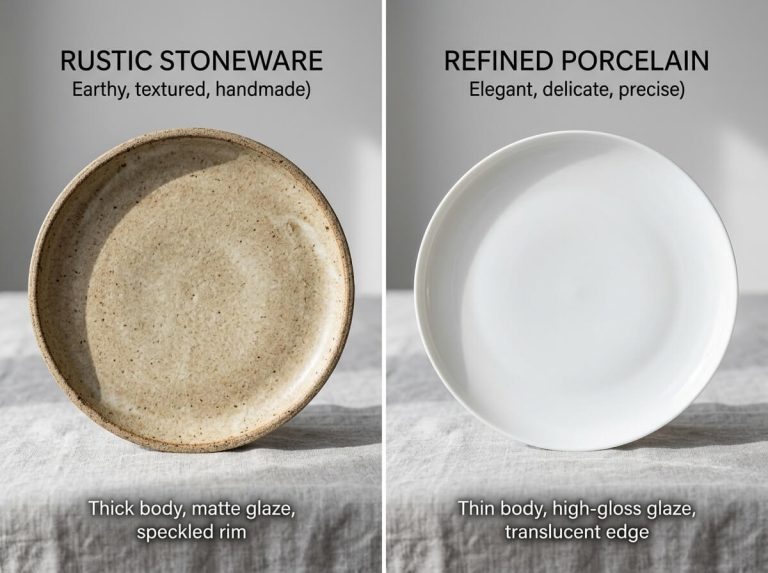
| Stoneware/porcelain (vitrified) | Chips at rims and corners; rarely shatters | Drop or impact |
| Low-fired earthenware | Cracks or chips; glaze can craze with age | Repeated use or thermal shock |
Corelle is a useful example of how blurry the glass-versus-ceramic line can get.
It looks like lightweight ceramic on the shelf, but it’s actually a laminated glass product, and Corelle’s lead-free glass dinnerware is a good case study in why reading the material label matters more than trusting appearance.
Everyday Performance: Heat, Microwave, and Cleaning
For daily use, glass and ceramic split fairly evenly, with each one winning on a different axis.
Heat Retention and Oven-to-Table Use
Ceramic holds heat noticeably longer than glass because of its lower thermal conductivity, which is why soups, stews, and casseroles stay warm longer in a ceramic bowl than in a glass one.
Glass heats up and cools down faster, so food sitting in a glass dish loses warmth sooner once it’s off the stove or out of the oven.
Both materials can move from oven to table safely, but tempered and borosilicate glass handle that transition with less risk of cracking than plain glass, which shouldn’t go straight from a hot oven to a cold counter.
Microwave, Dishwasher, and Stain Resistance
- Glass is non-porous, so it doesn’t absorb food odors or oils the way an unglazed or poorly glazed ceramic piece can over time.
- Most modern glass and properly glazed ceramic dinnerware is dishwasher-safe, though hand-washing extends the life of hand-painted or decorative glazes.
- Glass or ceramic pieces with metallic trim shouldn’t go in the microwave, since the metal can spark and damage both the dish and the appliance.
- Strong spices like turmeric can stain lighter ceramic glazes over time, while glass rinses clean because there’s no porous surface for pigment to sink into.
Choosing for Kids and Toddlers: Glass, Ceramic, or Melamine?
For kids’ dinnerware, most parents aren’t really choosing between glass and ceramic at all.
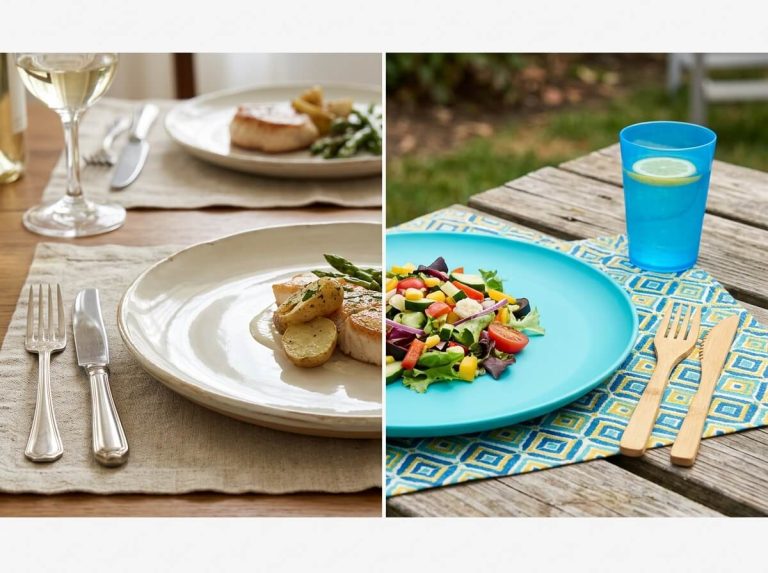
They’re weighing both against melamine, the hard plastic dinnerware sold in nearly every baby aisle, which is why a full ceramic vs melamine dishes comparison belongs in this conversation too.
Why Melamine Enters the Conversation for Kids
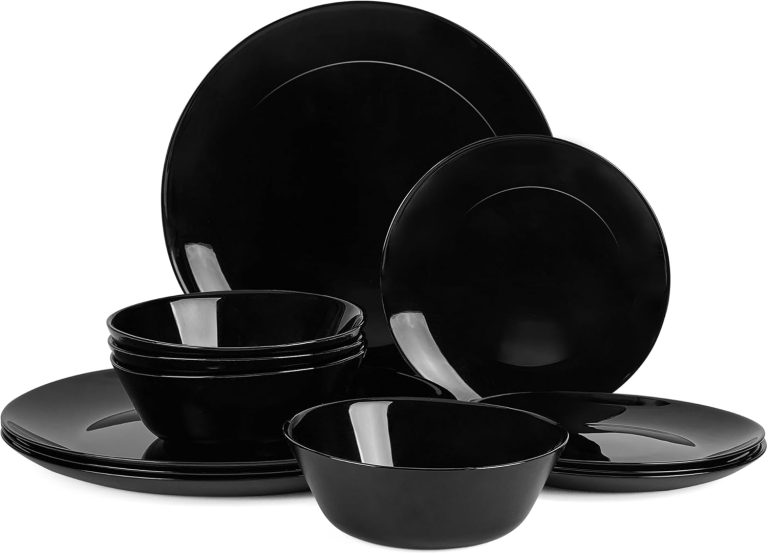
Melamine is a hard plastic resin molded to look like ceramic, not an actual ceramic or glass product.
It resists breaking almost completely, which is exactly why it shows up on so many toddler dinnerware sets.
But the safety question with melamine isn’t lead. It’s heat. Melamine dinnerware isn’t microwave-safe, because heating the resin can cause it to break down and release small amounts of formaldehyde, a concern that both the FDA and EU food safety authorities have flagged for melamine tableware specifically.
So the tradeoff runs in the opposite direction from glass and ceramic: melamine solves the breakage problem parents worry about most, but it introduces a heat-exposure issue that glass and ceramic don’t have.
Glass vs Ceramic vs Melamine for Toddlers, Side by Side
| Material | Breakage risk | Toxicity concern | Microwave-safe |
|---|---|---|---|
| Tempered glass | Low; breaks into blunt pieces if dropped | Very low when the glass is certified lead-free | Yes, if there’s no metallic trim |
| Ceramic | Chips rather than shatters | Depends on glaze certification | Yes, if the glaze is intact |
| Melamine | Very low; dents and scratches instead of breaking | Low at room temperature; rises with heat exposure | No |
For families who still want the breakage protection melamine offers without giving up on lead-free glass or ceramic, tempered glass is usually the closer match; for a deeper comparison built specifically around kids, see the full guide to lead-free plates and bowls for kids and toddlers.
Cost, Weight, and Design
Budget and everyday handling often decide this choice as much as safety does.
Price Range and Longevity
Glass dinnerware is usually the more affordable option, and quality tempered glass sets are widely available at accessible price points.
Ceramic tends to cost more, particularly handcrafted or small-batch pieces, and part of that price covers the labor and design work rather than the raw material itself.
Ceramic pieces are also more likely to become the ones a family keeps for years or passes down, while glass is typically treated as a practical, replaceable set.
Weight and Design Variety
- Glass sets are noticeably lighter, which makes them easier to carry, stack, and hand to kids without strain.
- Ceramic comes in far more colors, textures, and finishes, since glazes can be tinted and patterned in ways plain glass can’t match.
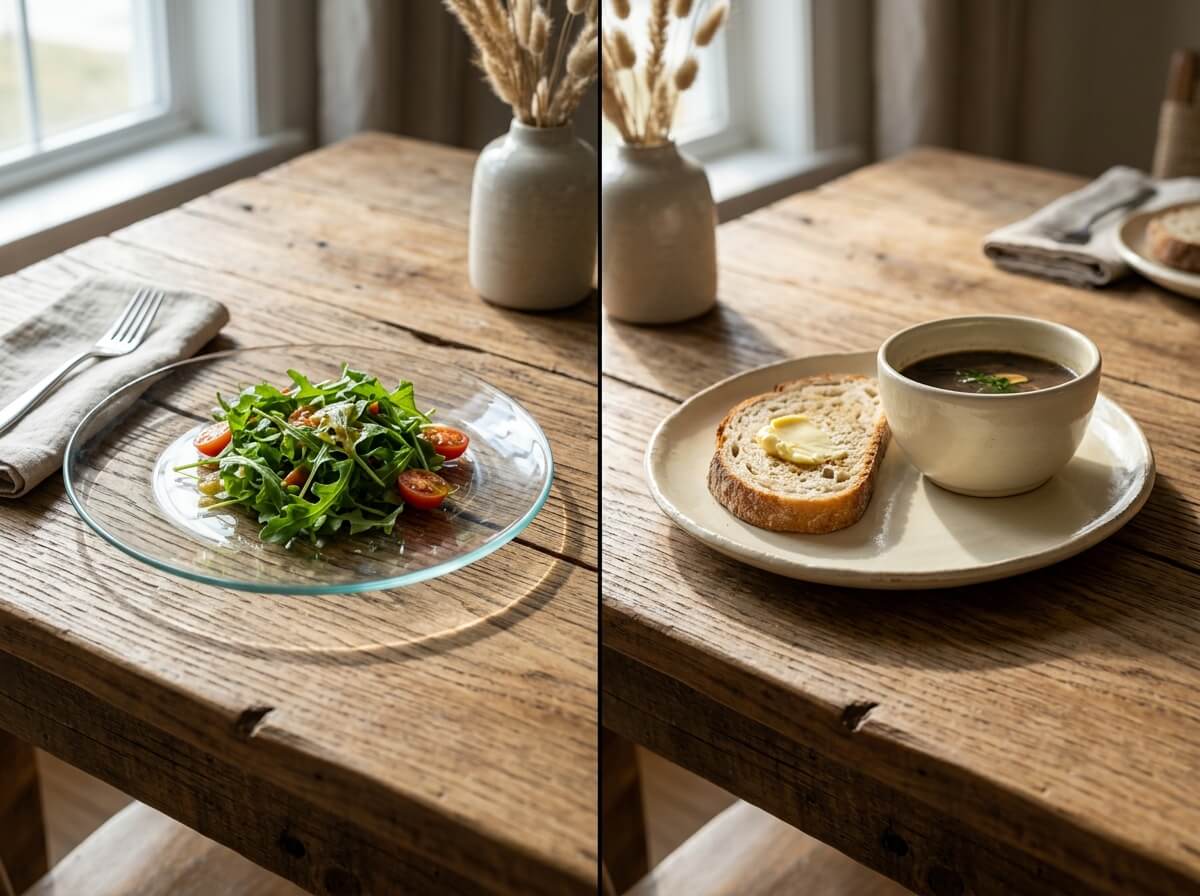
- Glass dinnerware tends to stay in the clear-or-lightly-tinted range, which suits a minimalist table but limits variety.
- Ceramic’s opacity hides stains slightly better on darker glazes, while glass shows every mark, which also makes it easier to spot when it actually needs a wash.
Weight and design aside, the manufacturing location is worth checking too, since country of origin affects both regulatory oversight and how easily a brand can prove its safety claims; Kitchnfam’s roundup of non-toxic dinnerware made in the USA covers glass and ceramic brands that manufacture domestically under U.S. regulatory oversight.
Whichever material fits your kitchen, buy from a brand willing to show an actual lead and cadmium test report, not just a “lead-free” label on the box.
A label alone confirms nothing; a published third-party test result does.
FAQ
Is glass or ceramic dinnerware safer overall?
Neither material is inherently safer than the other; certification is what actually determines the answer.
Modern, uncolored glass is lead-free by default because of its raw ingredients, while ceramic safety depends entirely on the glaze and how it was fired.
A certified lead-free ceramic set and a plain glass set carry roughly the same low risk, while an uncertified, brightly glazed imported ceramic or an old leaded crystal piece can both be genuinely risky.
Check for a Prop 65-compliant or third-party-tested label before assuming either material is automatically safe.
Does glass dinnerware break more easily than ceramic?
Glass does break more often than ceramic, but how it breaks matters as much as how often.
Untempered glass shatters into long, sharp shards, while tempered glass, the type used in most modern dinnerware, fractures into small, blunt pebbles that are far less dangerous to clean up.
Ceramic rarely shatters at all; it typically chips at the rim or a corner instead. If breakage safety is the main concern, tempered or borosilicate glass performs closer to ceramic than plain glass does.
Is melamine a safer choice than ceramic for kids?
Melamine solves the breakage problem better than either glass or ceramic, but it introduces a different risk: it isn’t microwave-safe.
Melamine is a hard plastic resin, not a ceramic material, and heating it can cause the resin to break down and release small amounts of formaldehyde, a concern flagged by both the FDA and EU food safety bodies.
For toddlers who need drop-proof dishes at the table but not in the microwave, melamine works well.
For anything that goes from fridge to microwave to table, a certified lead-free tempered glass set is the safer match.
Can I put glass dinnerware in the microwave?
Most modern glass dinnerware is microwave-safe, with one exception: any piece with metallic trim, rims, or decorative accents.
Metal in a microwave can spark and damage both the dish and the appliance, so plain, undecorated glass is the safest bet for regular microwave use.
Tempered and borosilicate glass handle the heat cycling of repeated microwave use better than plain glass, which is more prone to cracking under rapid temperature changes.