Corelle wins on weight and chip resistance. Arcopal wins on vintage pattern variety and price for opaque glass sets.
Both are non-toxic when new, but the details matter more than that one-line answer, especially if you’re shopping secondhand.
What Is Arcopal?
Arcopal is a French dinnerware brand made by Arc International, and it’s built from tempered opal glass rather than clay or porcelain.
The company started producing Arcopal in 1958, ten years after Arc International launched its better-known sister line, Luminarc.
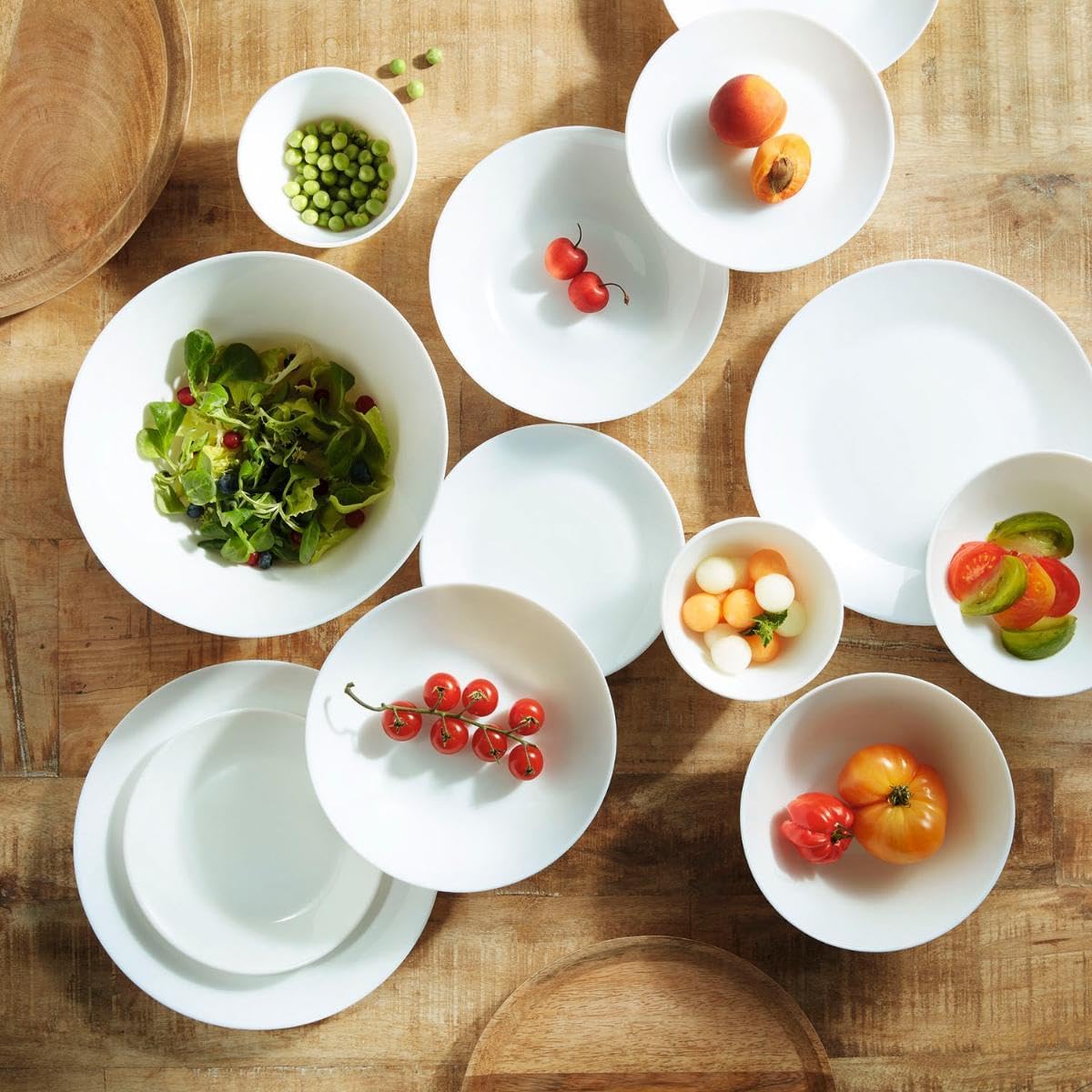
Opal glass gets its milky white, slightly translucent look from mineral additives worked into the glass before it’s heat-tempered into single-body pieces.
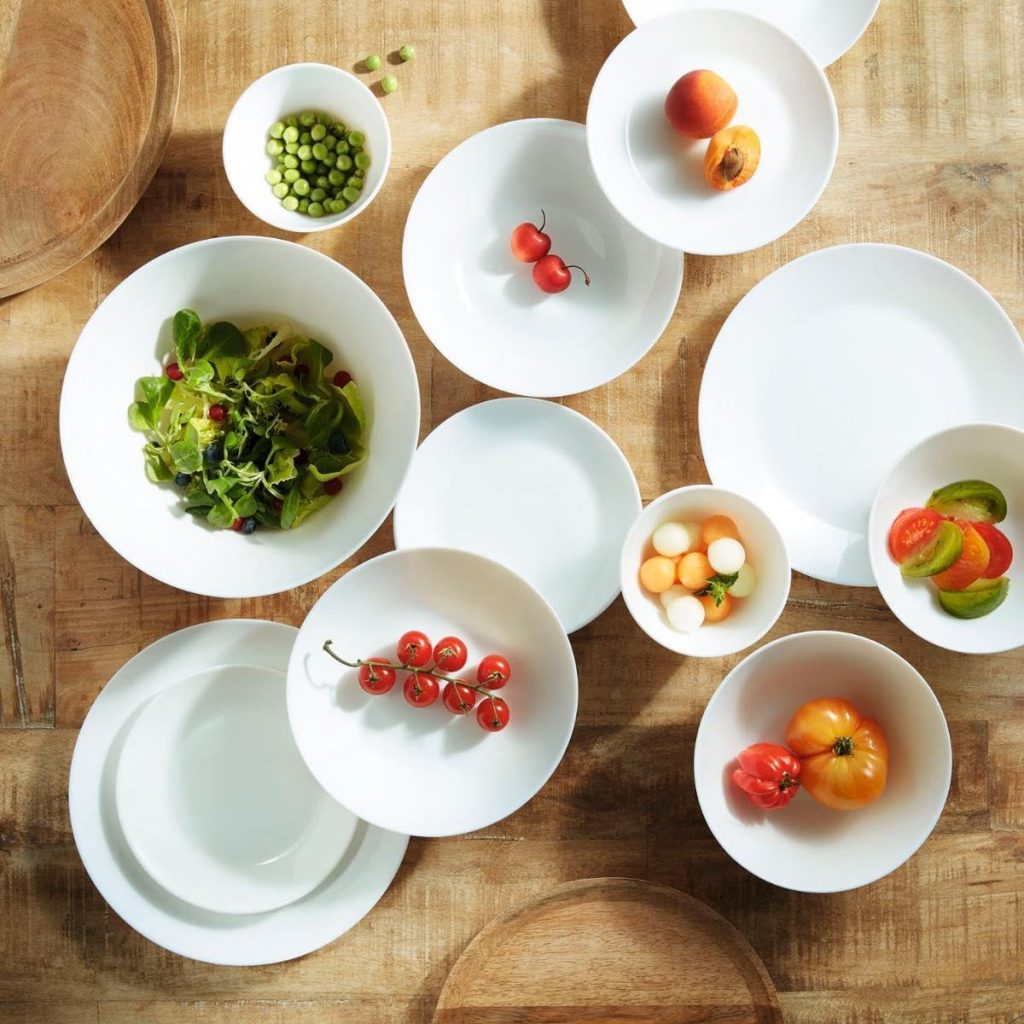
That tempering is also what gives Arcopal its strength: the glass resists chipping and everyday knocks far better than standard glassware, though it’s still not shatterproof.
Arcopal built its reputation on vintage-style patterns, floral borders, and the kind of plates you’d recognize from a grandparent’s cupboard.
Collectors still hunt for discontinued Arcopal sets specifically because of this look.
What Is Corelle?
Corelle is an American brand, first introduced in 1970 by Corning Glass Works and now produced under Corelle Brands.
It’s made from Vitrelle, a laminated glass with three thermally bonded layers rather than a single tempered piece.
That layered structure is why Corelle plates run noticeably thinner and lighter than most other dinnerware, glass or ceramic.
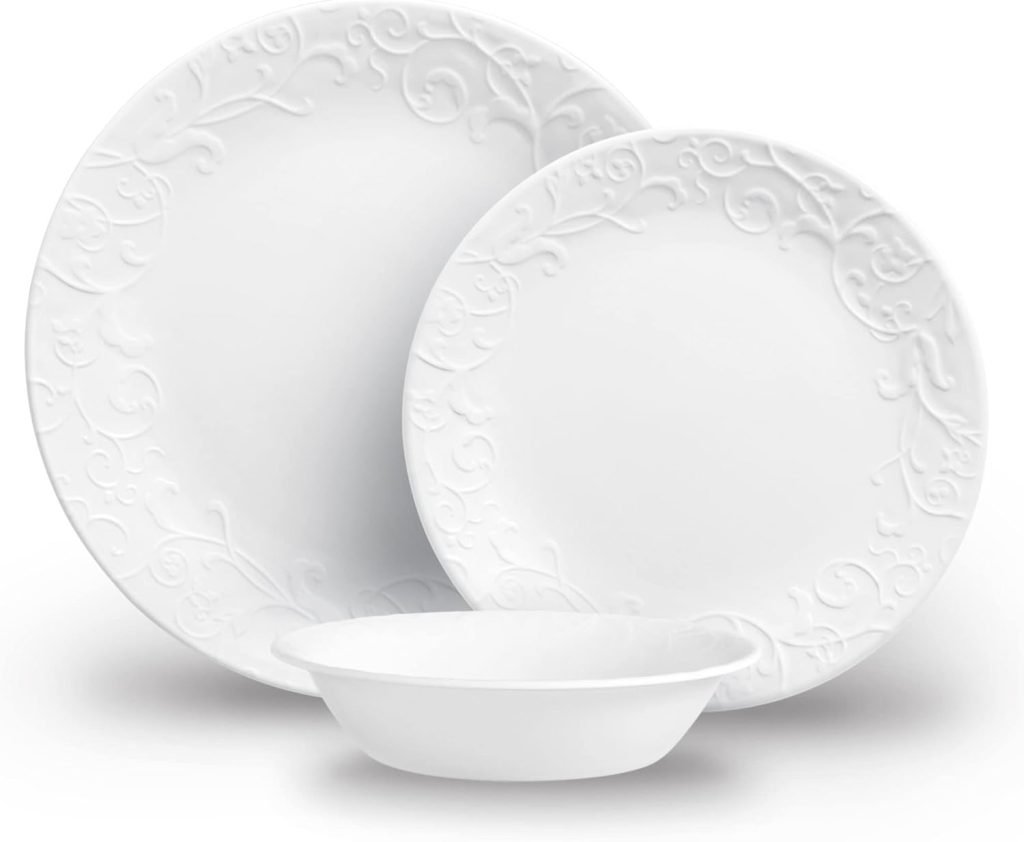
Corelle dinnerware itself is made in the USA, mostly at facilities tied to Corning, New York, though some Corelle-branded mugs are produced overseas from stoneware or porcelain instead of Vitrelle.
That distinction matters later when we get to the lead question, because it isn’t a blanket “all Corelle products are the same material” situation.
Arcopal vs Corelle: Key Differences at a Glance
The two brands solve the same problem (light, durable, everyday dishware) with different glass technology, and that one manufacturing choice explains most of what separates them.
Material & Glass Technology
| Feature | Arcopal | Corelle |
|---|---|---|
| Base material | Tempered opal glass (single layer) | Vitrelle glass (three bonded layers) |
| Country of origin | France (Arc International) | United States (Corning heritage) |
| Year introduced | 1958 | 1970 |
| Typical look | Milky white, opaque, often patterned | White or colored, opaque, thinner profile |
| Non-porous | Yes | Yes |
Weight & Handling
| Feature | Arcopal | Corelle |
|---|---|---|
| Relative weight | Moderate | Very light |
| Thickness | Thicker than Corelle | Extremely thin |
| Stacking | Stackable, some risk of surface scratching | Stackable, same scratching risk |
| Handling for kids/elderly | Manageable | Easier one-handed handling |
Corelle’s thinness comes directly from the Vitrelle lamination process, and it’s the main reason people switch to Corelle specifically for elderly relatives or young kids who struggle with heavier plates.
Design & Pattern Variety
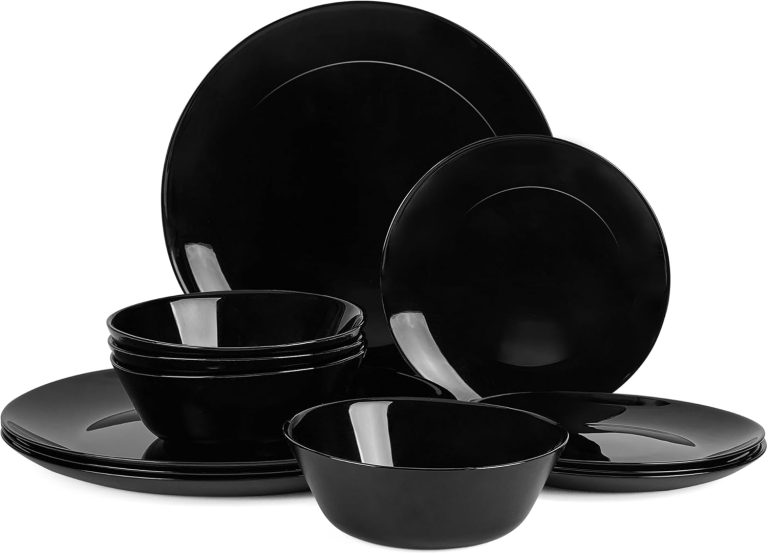
- Arcopal is known for vintage floral and border patterns that have become collector favorites, plus plain white and black sets.
- Corelle currently offers a much larger active catalog, with over 2,000 patterns released since the brand launched.
- Arcopal’s designs skew toward European, old-world aesthetics, while Corelle’s range spans minimalist white through busy floral prints.
- Both brands sell open stock, so a single broken piece doesn’t force you to replace an entire set.
Is Arcopal AND CORELLE Lead-Free?
Modern Arcopal and modern Corelle are both marketed as lead-free, and the material chemistry supports that: tempered opal glass and Vitrelle glass are not lead crystal, and neither relies on a lead-based glaze the way some painted ceramics do.
That said, “modern” is doing real work in that sentence, and it’s worth reading our full guide to the best non-toxic lead-free dinnerware if you’re building a full non-toxic kitchen rather than just comparing these two brands.
Vintage vs. Modern Arcopal Safety
Current Arcopal production, under Arc International, meets modern food-contact safety standards, and the opal glass itself doesn’t contain lead.
“In a 2004 case reported by the New York Daily News and summarized by the CDC, lead poisoning was linked to Arcopal dinnerware. The reporting suggested the source could have been an improperly fired batch or wear-related glaze breakdown on specific pieces, which means the case points to product-specific contamination rather than a blanket conclusion about all opal glass.”
Kitchnfam hasn’t tested any Arcopal pieces in a lab, and we’re not going to pretend otherwise.
What we can tell you is this: if you own decorated or painted vintage Arcopal, especially anything with heavy wear on the glaze, a low-cost at-home lead test swab is a reasonable five-minute precaution before you put it back into regular rotation.
Plain, undecorated modern Arcopal carries the lowest risk of the bunch.
Vintage vs. Modern Corelle Safety
Corelle’s Vitrelle glass itself has never contained lead, including in decades-old sets from the 1970s and 1980s.
Where lead and cadmium concerns show up in Corelle’s history is in decorative glazes and trims used on some patterns before 2005, which is a separate issue from the base glass.
Corelle mugs are a different animal entirely, since many are made from stoneware or porcelain rather than Vitrelle, and that changes which safety questions actually apply.
If you’re trying to figure out whether a specific set you own or are eyeing is affected, check whether your specific dinnerware brand is lead-free using pattern and production-year details, since blanket “Corelle is safe” or “Corelle is risky” statements both oversimplify a brand with decades of pattern changes.
We’ve also put together our dedicated deep-dive on whether Corelle is lead-free if you want the full pattern-by-pattern breakdown.
Durability & Everyday Use
Both brands are built to survive daily use better than standard ceramic or stoneware, but they get there through different tradeoffs.
Break & Chip Resistance
- Corelle’s laminated Vitrelle structure is engineered specifically for chip resistance, and it’s the more forgiving option if plates get stacked, jostled, or occasionally dropped.
- Arcopal’s tempered opal glass is roughly three times more shock-resistant than standard ceramic or stoneware, though it runs slightly behind Corelle on chip resistance specifically.
- Neither brand is unbreakable. Both can still crack or shatter if dropped directly on tile or another hard surface at the wrong angle.
- Corelle backs its dinnerware with a three-year limited warranty against manufacturing defects; Arcopal does not offer an equivalent consumer warranty in the US market.
Thermal Shock Resistance
Corelle is built to handle sudden temperature swings, like moving a dish straight from the refrigerator to a warm table, without cracking.
Arcopal’s tempered glass also resists thermal shock reasonably well and can handle roughly a 135°C temperature differential, but it’s more sensitive to extreme swings than Corelle.
Neither brand is rated as standard oven-safe dinnerware, so don’t plan on baking directly in either one unless the specific product line states otherwise.
Arcopal vs Corelle: Which Is Better?
Corelle is the better everyday choice for most US households, mainly because of its weight, chip resistance, and active pattern catalog.
Arcopal earns its keep with buyers who specifically want vintage European styling or who already own a set and want to know if it’s worth keeping.
Best for Families With Kids
Corelle is the more forgiving option for busy households with children, largely because its lighter weight makes it easier for kids to carry without dropping, and its chip resistance holds up better under daily bumps.
If lead-free kids’ dinnerware is the priority rather than brand loyalty, our lead-free dinnerware picks for kids and toddlers covers plastic-free options beyond just these two brands.
Arcopal is still family-friendly, but its heavier build and slightly higher break risk make it a secondary pick behind Corelle for households with young children in the mix.
Best for Vintage & Aesthetic Lovers
If you’re drawn to floral borders, milky opal white, or a table setting that looks like it came from a French countryside kitchen, Arcopal is the stronger pick.
Vintage Arcopal patterns are actively collected, and the brand’s identity is built around that old-world look in a way Corelle’s more contemporary catalog doesn’t try to replicate.
Just apply the lead-testing precaution above if you’re buying decorated vintage pieces secondhand rather than new.
How Arcopal and Corelle Compare to Other Glass Dinnerware Brands
Arcopal and Corelle aren’t the only lightweight glass dinnerware brands on the market, and shoppers comparing them almost always end up cross-checking Luminarc and IKEA’s Oftast line too.
Is Luminarc the Same as Arcopal?
No. Luminarc and Arcopal are sister brands under the same parent company, Arc International, but they use different glass.
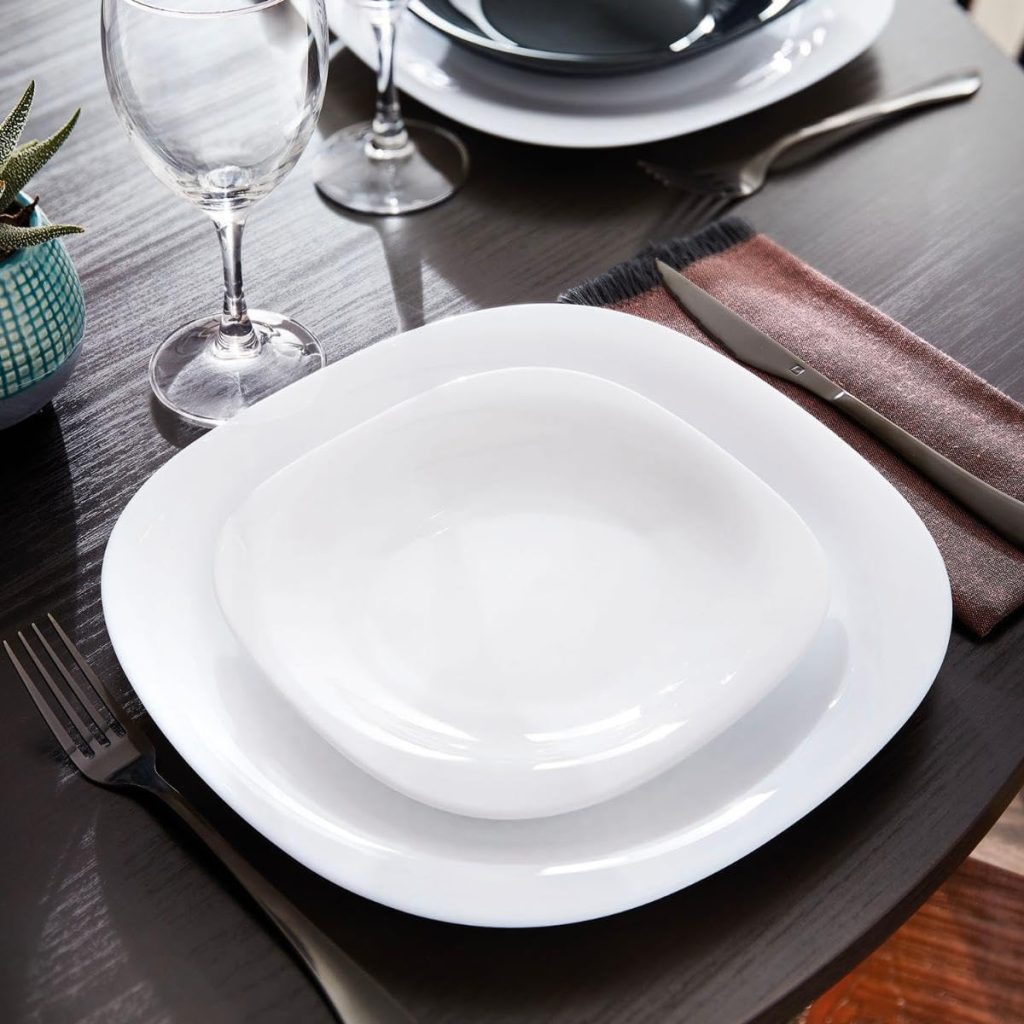
Luminarc launched in 1948 as the flagship line and produces clear, transparent tempered glass, while Arcopal launched a decade later specifically to offer an opaque, milky-white opal glass alternative.
If you want a see-through glass plate, that’s Luminarc. If you want the opaque, porcelain-like look, that’s Arcopal.
Luminarc vs Corelle
| Feature | Luminarc | Corelle |
|---|---|---|
| Base material | Tempered opal/clear glass (single layer) | Vitrelle glass (three bonded layers) |
| Country of origin | France (Arc International) | United States |
| Weight | Heavier than Corelle | Lighter |
| Design range | Wide color and pattern variety, including clear glass | Wide pattern variety, opaque only |
| Long-term chip resistance | Good | Better |
| Price point | Generally more affordable | Mid-range to premium depending on pattern |
IKEA Oftast vs Corelle
| Feature | IKEA Oftast | Corelle |
|---|---|---|
| Base material | Tempered soda-lime glass | Vitrelle glass (three bonded layers) |
| Manufacturer | Duralex (France) | Corelle Brands (USA) |
| Price per plate | Roughly $0.79 to $1.79 | Roughly $4 to $6 |
| Color options | White only | Dozens of active patterns |
| Warranty | None | Three-year limited warranty |
| Weight | Slightly heavier | About 1 oz lighter per plate |
Here’s the part most Oftast-vs-Corelle comparisons miss entirely: IKEA’s Oftast line isn’t a generic in-house product.
It’s manufactured in France by Duralex, the same company behind the well-known Picardie tumbler glasses.
That means the “Corelle knockoff” framing you’ll see elsewhere is a little misleading.
You’re not buying an anonymous private-label glass; you’re buying Duralex glass technology at IKEA pricing, without the Duralex branding or price tag attached.
If that connection interests you more than the Oftast comparison itself, our full Duralex vs Corelle comparison covers Duralex’s own dinnerware and drinkware lines directly.
Corelle vs Non-Glass Dinnerware Materials
Glass dinnerware isn’t the only category Corelle gets compared against.
Porcelain and ceramic show up constantly in the same shopping searches, and the material differences change the calculation.
For other similar material comparison, see our guide on Opalware vs Bone china dinnerware.
Corelle vs Porcelain
| Feature | Corelle | Porcelain |
|---|---|---|
| Base material | Vitrelle glass | Fired kaolin clay |
| Weight | Very light (roughly 8 oz per dinner plate) | Heavier (roughly 18-22 oz per dinner plate) |
| Heat resistance | Not oven-safe as standard; sensitive above 350°F | More heat-tolerant, better suited to formal or oven-to-table use |
| Aesthetic | Casual, modern, budget-friendly | Refined, translucent, formal |
| Chip resistance | Very high | Lower; more prone to chipping on edges |
| Typical use case | Daily household meals | Formal dinners, gifting, display |
Is Corelle Better Than Ceramics?
Corelle is the better choice for daily use, and ceramic is the better choice for formal dining or oven-to-table cooking.
That’s the real answer, not a dodge: Corelle’s Vitrelle glass wins on weight and chip resistance, so it survives years of dishwasher cycles and toddler hands better than most ceramic dinnerware.
Ceramic wins on heat retention, keeping food warmer at the table, and on aesthetic range, since glazed ceramic and stoneware can achieve textures and colors that glass simply can’t replicate.
If you’re deciding based on lead safety specifically rather than durability, our roundup of lead-free ceramic dinnerware options walks through which glazes and brands to look for.
Bottom Line: Which Should You Buy?
If you’re stocking a household that needs dishes to survive kids, a full dishwasher rotation, and years of daily use, Corelle is the safer default purchase.
If you already have Arcopal, love the vintage look, or specifically want French opal glass, there’s no safety reason to switch, just apply the lead-test precaution on decorated vintage pieces before regular use.
Here’s how the full field stacks up when you put every option from this guide side by side:
| Brand/Material | Relative Weight | Lead Status (Modern) | Best For |
|---|---|---|---|
| Arcopal | Moderate | Lead-free; test decorated vintage pieces | Vintage/European aesthetic |
| Corelle | Very light | Lead-free (base glass) | Daily family use |
| Luminarc | Heavier | Lead-free | Clear glass, budget variety |
| IKEA Oftast | Slightly heavier than Corelle | Lead-free | Budget-conscious buyers |
| Porcelain | Heavy | Generally lead-free when vitrified | Formal dining |
| Ceramic | Heavy | Varies by glaze; check specific brand | Everyday warmth and color range |
None of these safety notes came from Kitchnfam running our own lab tests.
They’re drawn from published reporting, brand documentation, and material science on how each glass and clay type is made, so if a specific pattern or production year matters to your decision, cross-check it against the brand’s own documentation before you rely on any single article, including this one.
FAQ
Is Arcopal the same as Corelle?
No, they’re separate brands from different companies. Arcopal is made by France’s Arc International using tempered opal glass, while Corelle is made by Corelle Brands in the US using laminated Vitrelle glass.
Both are lightweight, chip-resistant, and non-porous, which is why shoppers frequently confuse them, but the manufacturing process and country of origin are entirely different.
Is vintage Arcopal safe to use every day?
Plain, undecorated vintage Arcopal is generally considered low-risk, since the opal glass itself doesn’t contain lead.
Decorated or heavily worn pieces carry more uncertainty, partly because of a documented 2004 case linking lead exposure to a specific Arcopal piece.
If you own painted vintage Arcopal you plan to use regularly rather than display, a home lead-test swab takes only a few minutes and removes the guesswork.
Which is more durable, Arcopal or Corelle?
Corelle generally wins on chip resistance thanks to its three-layer Vitrelle construction, while Arcopal holds its own on impact resistance from tempering but runs slightly behind on long-term chip and scratch resistance.
Both outperform standard ceramic or stoneware by a wide margin. Corelle also comes with a three-year manufacturer warranty against defects, which Arcopal doesn’t offer in the US market.
Is Corelle better than ceramic dinnerware?
For daily household use, yes, mainly because of Corelle’s lighter weight and stronger chip resistance under repeated dishwasher and handling cycles.
Ceramic pulls ahead for formal dining and oven-to-table cooking, since it retains heat better and offers a wider range of textures and glazes.
Which one is “better” really comes down to whether you’re prioritizing everyday durability or table presentation.