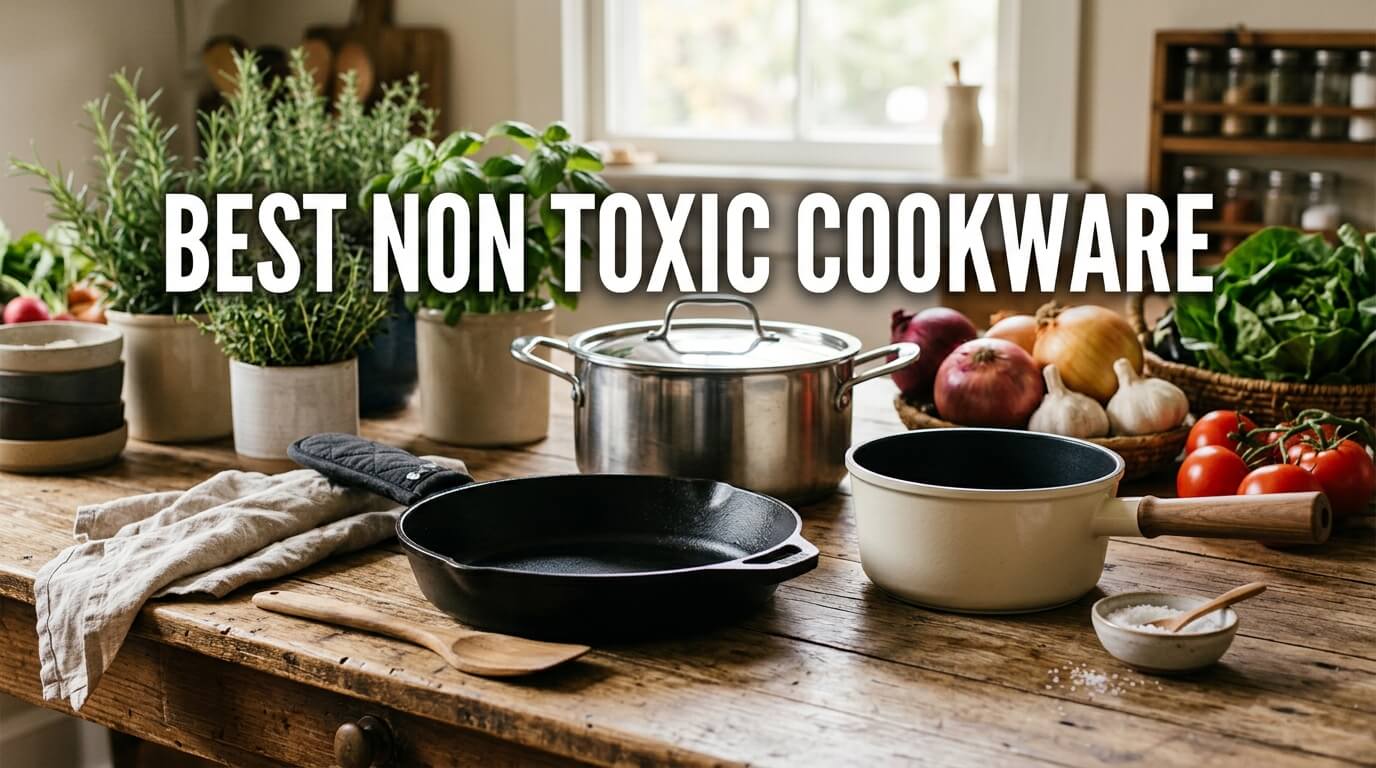
The best non toxic cookware isn’t a single brand or material; it’s whichever option matches the trade-off you’re willing to accept, since no cookware material wins on convenience, durability, and cost all at once.
Ceramic-coated pans give you the easiest food release, but need replacing every couple of years.
Stainless steel, cast iron, and carbon steel last decades but ask more of your technique and cleanup routine.
This guide breaks down the real differences between materials, what certifications actually mean, and how to match a choice to the way you actually cook, rather than handing you one ranked list and calling it done.
What Does “Non-Toxic Cookware” Actually Mean?
“Non-toxic cookware” has no single legal definition, which is exactly why the term shows up on wildly different products.
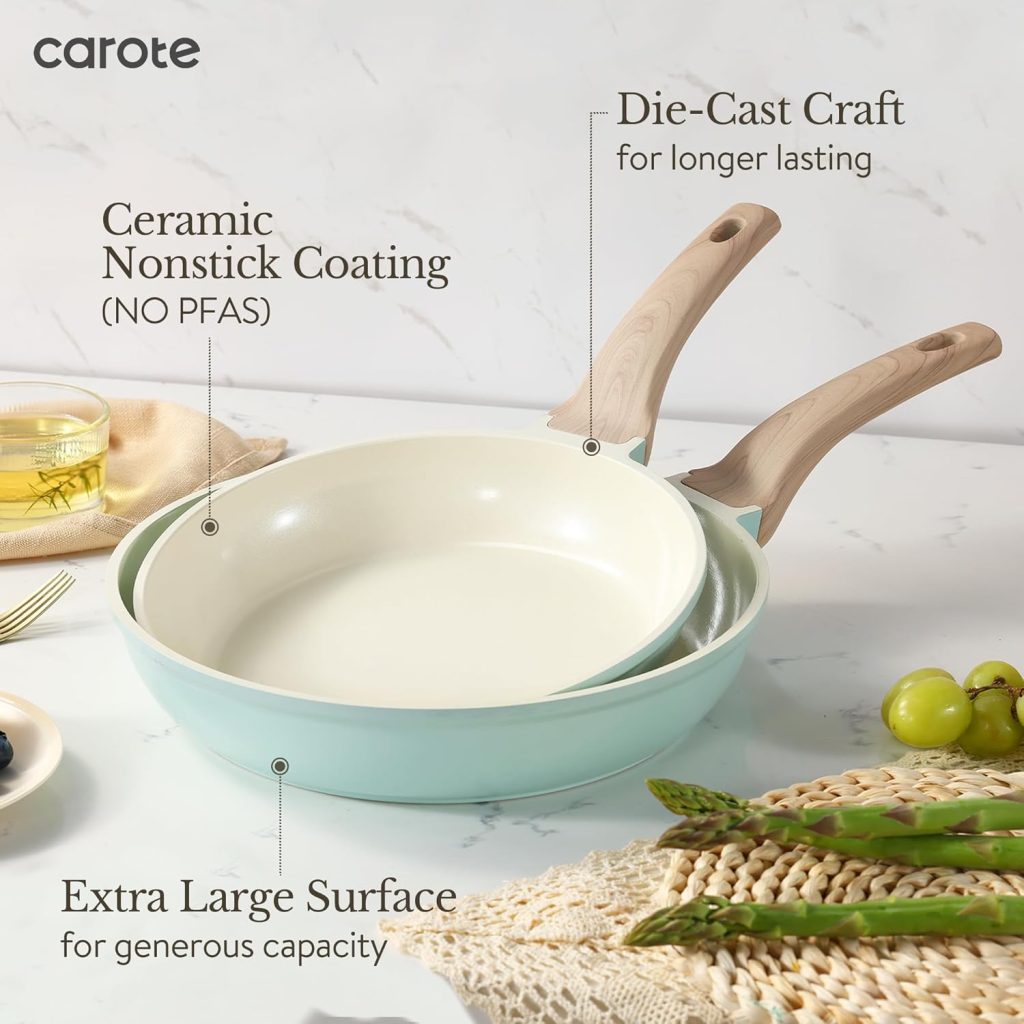
It generally refers to cookware made without PFAS-based nonstick coatings, the chemical family that includes Teflon, but beyond that baseline, the term gets applied to ceramic, stainless steel, cast iron, carbon steel, and glass alike, each with a very different safety profile and a different reason for being called “non-toxic” in the first place.
Why “Non-Toxic” Isn’t an Official FDA Category
The FDA does not maintain an official definition of “non-toxic” for cookware.
Paul Honigfort, Ph.D., The Director of the FDA’s Division of Food Contact Substances has described the FDA’s current and planned review framework in terms of reassessing food‑contact substances based on new toxicological information and updated cumulative exposure, reinforcing that decisions are driven by use‑specific exposure rather than blanket material labels.
That means “non-toxic” on a package is a marketing description, not a certification, and two products can both use the term while resting on very different levels of actual testing and disclosure.
PFAS and PTFE, in Plain Terms
PFAS stands for per- and polyfluoroalkyl substances — a large family of synthetic chemicals that resist breaking down in the environment or the body, sometimes called “forever chemicals.”
PTFE, the polymer behind Teflon, is one specific member of that family, and older cookware made before 2013 may also have used PFOA, a related compound that’s since been phased out of most consumer cookware manufacturing.
Most nonstick cookware sold today is PFOA-free, but a “PFOA-free” label doesn’t guarantee a product is free of every PFAS compound, since thousands of other variants exist in the same chemical family.
If you already own nonstick cookware and want to check its specific status rather than relying on packaging language, this guide on how to tell if your cookware has PFAS walks through what to look for.
The Non-Toxic Cookware Materials, Compared
Cookware that doesn’t leach chemicals into food generally falls into five categories:
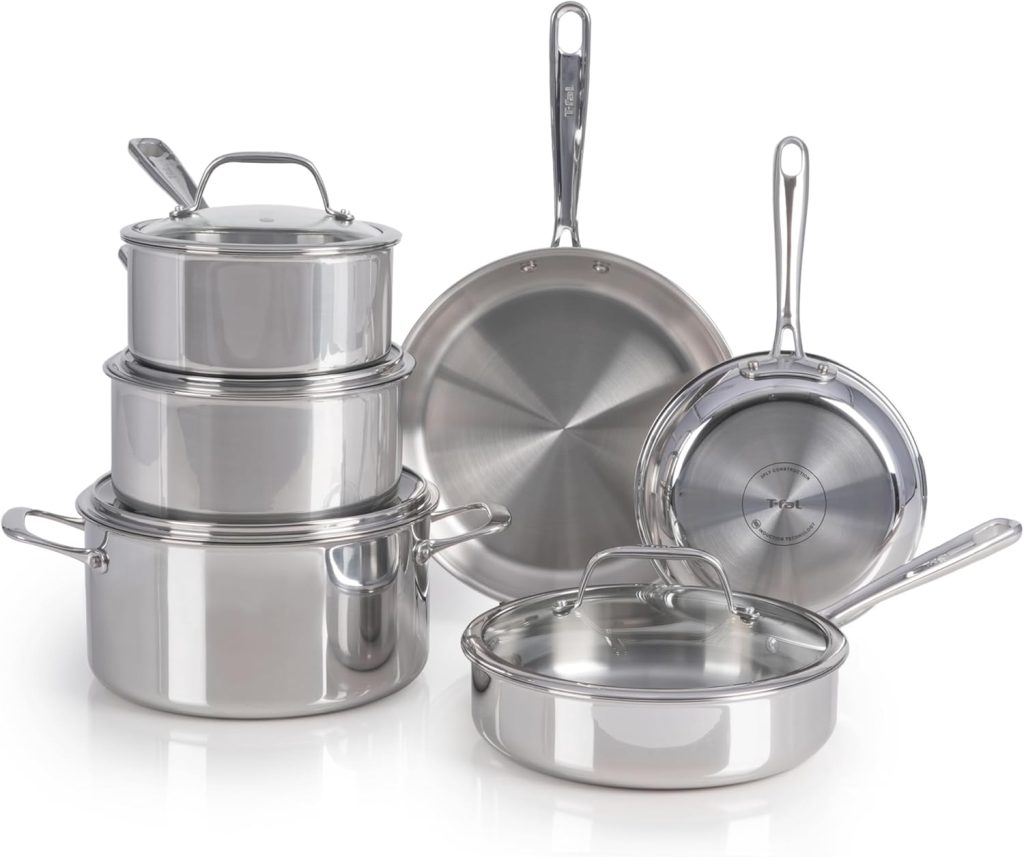
Stainless steel, cast iron, carbon steel, ceramic (both coated and 100% solid), and glass — and the meaningful differences between them are less about whether they’re “safe” and more about how they perform, what they require from you, and how long they last.
Stainless Steel, Cast Iron, Carbon Steel, and Ceramic Side by Side
| Material | Coating? | Nonstick Performance | Typical Lifespan | Care Requirements |
|---|---|---|---|---|
| Stainless steel | None | Low without technique (needs oil/preheating) | 20+ years | Low-maintenance, dishwasher-safe on most pieces |
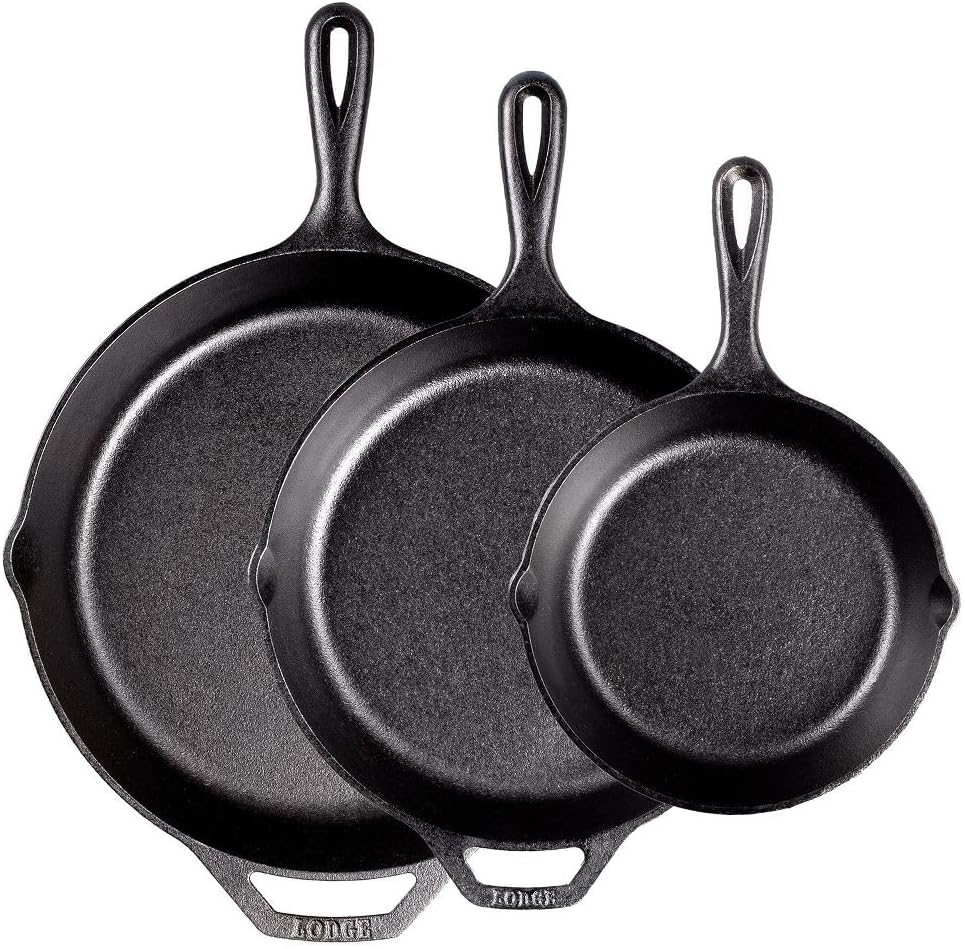
| Cast iron | None (seasoned surface) | Good once seasoned | Decades, often generational | Requires seasoning; avoid soap-heavy cleaning; can react with acidic foods |
| Carbon steel | None (seasoned surface) | Good once seasoned | Decades | Similar to cast iron, lighter weight, and also reactive with acidic foods |
| Ceramic-coated | Sol-gel ceramic layer over metal | Excellent when new | 1–3 years before coating degrades | Low to medium heat, non-metal utensils, hand wash recommended |
| 100% ceramic | None (solid clay body) | Moderate | Long, if not chipped or cracked | Heavier, fragile to impact, but nothing to coat or wear through |
Where Each Material Falls Short
- Stainless steel is non-reactive and durable, but lower-quality versions can leach trace amounts of nickel or chromium, so look for 18/8 or 18/10 grading, which indicates better-controlled alloy composition.
- Cast iron and carbon steel both release small amounts of ferric iron into food, particularly with acidic ingredients like tomato sauce, which is generally not a health concern but is worth rotating with other cookware if you cook acidic dishes often.
- Ceramic-coated cookware is genuinely PFAS-free when made correctly, but the coating itself has a limited functional lifespan and loses its nonstick performance well before most people think to replace the pan — a topic this guide’s dedicated page on is ceramic cookware safe covers in more depth, including what happens once that coating wears through.
- 100% ceramic cookware has nothing to coat or delaminate, but it’s heavier, more expensive, and can chip or crack if dropped, which is its own form of durability risk.
- Glass is chemically inert when it has no coatings or decorative elements, but coated or decorated glass bakeware reintroduces the same coating-related questions as ceramic-coated cookware.
Best Non Toxic Cookware by Category
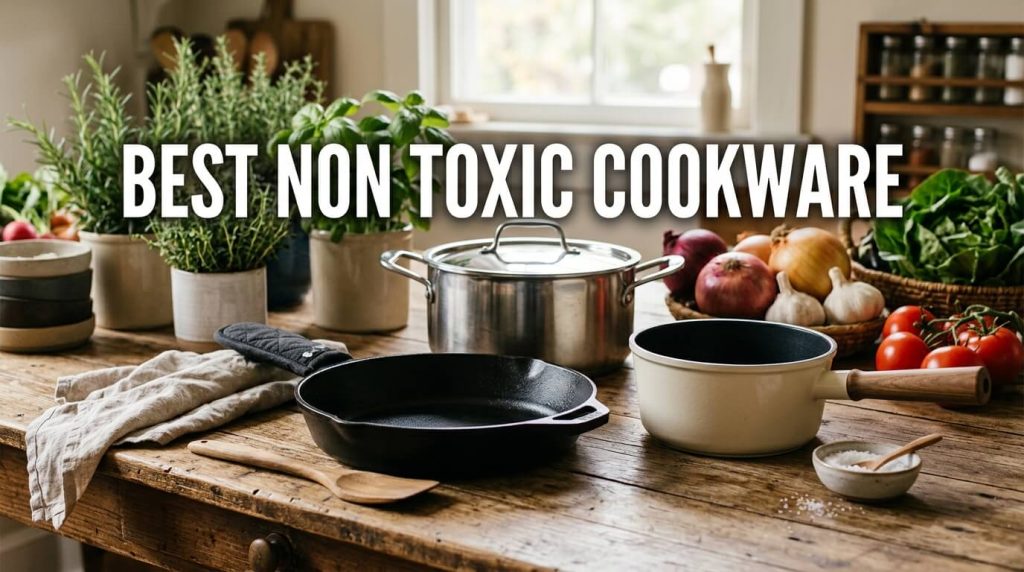
There isn’t one best non toxic cookware product; there’s a best category fit depending on what you’re cooking and how much maintenance you’re willing to do, which is why this section is organized by category rather than as a single ranked list.
By Material Type — What to Look For in Each Category
| Category | What’s Best For | What to Verify Before Buying |
|---|---|---|
| Ceramic-coated nonstick | Eggs, delicate fish, low-fat cooking | PFAS-free confirmation, coating composition disclosure, and realistic lifespan expectations |
| 100% ceramic | Slow, even cooking without any metal contact | Glaze testing on the full product, not just the base body |
| Stainless steel | Searing, sauces, high-heat cooking, dishwasher convenience | 18/8 or 18/10 grade labeling, multi-ply construction quality |
| Cast iron | Searing, baking, oven-to-stovetop dishes, long-term ownership | Pre-seasoned surface quality, weight tolerance for your stovetop and wrists |
| Carbon steel | Woks, high-heat stir-fry, quick-reacting cookware | Seasoning maintenance commitment, avoiding prolonged acidic cooking |
For readers specifically comparing two of the most-searched ceramic brands rather than categories broadly, the Caraway vs. GreenPan comparison breaks down how they differ on coating composition, testing disclosure, and price.
By Budget — What Changes at Each Price Point
| Price Tier | What’s Typically Included | Trade-Off |
|---|---|---|
| Under $50 per piece | Entry-level ceramic-coated pans, basic stainless steel | Shorter coating lifespan on ceramic; thinner-gauge stainless can heat unevenly |
| $50–150 per piece | Mid-range ceramic sets, tri-ply stainless steel | Better coating durability and more even heat distribution than entry-level products |
| $150–300+ per piece | Premium ceramic lines, multi-ply stainless, quality cast iron | Longer expected lifespan and better heat performance, though ceramic coatings still wear regardless of price |
Certifications and Testing: What Actually Means Something
Not every certification or standard mentioned on cookware packaging means the same thing, and understanding the difference is the fastest way to tell a genuinely tested product from a marketing claim.
Some organizations physically test finished cookware for chemical migration and durability; others set standards or require disclosures without testing the specific product in front of you.
NSF vs. Self-Declared Claims — What’s Actually Tested
| Label or Standard | What It Actually Does |
|---|---|
| NSF International | Independently tests finished cookware for chemical migration, durability, and structural integrity against its own published standards; certification requires the product to pass. |
| SGS, Intertek, TÜV Rheinland | Independent labs that perform direct testing for heavy metal leaching, PFAS and chemical residues, and heat/durability performance are typically commissioned by the brand. |
| California Prop 65 compliance | A legal disclosure requirement — the absence of a warning label indicates a brand’s own assessment that it stays under state thresholds for listed chemicals, not an independent lab result. |
| ISO standards | Published technical standards for materials and food-contact safety; ISO itself does not test individual products against these standards. |
| LFGB (Germany) | A regulatory framework for food-contact material safety, primarily enforced through the EU market rather than direct third-party product testing by LFGB itself. |
| Aluminum Stewardship Initiative (ASI) | A sourcing and production standard focused on responsible aluminum supply chains, not a chemical-safety test of the finished cooking surface. |
Questions to Ask Before Trusting a “Non-Toxic” Label
- Is the certification or test result specific to this product line, or is it a general brand-level claim without a named report?
- Was the testing performed by an independent, named lab such as NSF, SGS, Intertek, or TÜV Rheinland, rather than only self-reported by the manufacturer?
- Does the brand publish or make available the actual test report, including a date and reference number?
- Does the claim cover the entire product — including any decorative elements, handles, or lids — or only the base cooking surface?
- Is the standard being cited (ISO, LFGB, Prop 65) one that involves independent product testing, or is it a disclosure or sourcing framework instead?
Is Expensive Cookware Actually Worth It? The Real Cost Over Time
Expensive non-toxic cookware is worth it, specifically when the material lasts decades rather than years, because the real comparison isn’t sticker price.
It’s the cost per year of actual use, and that number often favors the pricier option once the ceramic’s replacement cycle is factored in.
Cost-Per-Year: Budget Ceramic vs. Investment Stainless or Cast Iron
| Option | Typical Price | Expected Lifespan | Approximate Cost Per Year |
|---|---|---|---|
| Budget ceramic-coated pan | $30–45 | 1–3 years | $15–35/year |
| Mid-range ceramic-coated pan | $80–100 | 2–3 years | $30–45/year |
| Quality stainless steel pan | $100–180 | 20+ years | Under $10/year |
| Quality cast-iron skillet | $50–100 | Decades (often generational) | Under $5/year |
These figures are estimates built from commonly cited retail prices and the documented functional lifespan of ceramic coatings, not the result of Kitchnfam’s own product testing, and actual costs will vary by brand, usage frequency, and care habits.
The pattern still holds directionally: a $35 ceramic pan replaced every two years costs more over a decade than a $150 stainless pan bought once, even though the ceramic pan looks cheaper at checkout.
When Cheap Is Actually the Smarter Choice
Buying budget ceramic-coated cookware makes sense when you only need one or two pans for a specific job, like eggs or delicate fish, rather than a full set for everyday heavy-duty cooking.
In that narrow use case, a $35 pan that lasts two years and gets replaced is a perfectly reasonable trade, since you’re not asking it to survive decades of daily use the way a primary stainless or cast iron piece would need to.
The math shifts back toward investment pieces once ceramic becomes your everyday, all-purpose pan rather than a specialty tool.
How to Choose Based on How You Actually Cook
The right non-toxic cookware for you depends on which trade-off you’re actually willing to live with, convenience versus permanence, since choosing based on brand reputation alone skips the part of the decision that determines whether you’ll be happy with the pan in daily use.
Match Your Cooking Style to a Material
- If you cook eggs, fish, or delicate foods most days and want the least effort, prioritize a PFAS-free ceramic-coated pan and plan to replace it every 1–3 years.
- If you sear meat, make pan sauces, or need dishwasher convenience, prioritize a multi-ply stainless steel set with 18/8 or 18/10 grading.
- If you want a single pan that lasts a lifetime and don’t mind seasoning maintenance, choose cast iron or carbon steel.
- If you want zero metal contact with food and don’t mind extra weight and fragility, choose 100% ceramic rather than ceramic-coated.
- If your budget only allows one purchase this year and you cook a wide variety of dishes, a quality stainless steel set covers the most ground with the least ongoing replacement cost.
Convenience vs. Permanence — Pick Your Trade-Off
- Choose convenience (ceramic-coated) if effortless food release matters more to you than long-term cost, and you’re comfortable replacing the pan every couple of years as part of normal upkeep.
- Choose permanence (stainless, cast iron, carbon steel) if you’d rather learn a bit more technique upfront than think about replacing cookware again for decades.
- Consider a hybrid kitchen — one or two ceramic pans for delicate foods, stainless or cast iron for everything else — since most cooks don’t actually need every pan to solve the same problem.
- Avoid choosing a material based on price alone, since the cheapest option in either category (ceramic or uncoated) isn’t necessarily the cheapest over the years you’ll actually own it.
Caring for Non-Toxic Cookware So It Actually Lasts
Non-toxic cookware lasts as long as its care routine supports it, and the single biggest lifespan factor across every material is heat management.
Cooking on a lower heat than you think you need extends the useful life of coated and uncoated cookware alike.
Universal Rules That Extend Any Cookware’s Life
- Preheat gradually on low to medium heat rather than starting on high, since sudden thermal stress shortens the life of coatings and can warp thinner metal.
- Let pans cool before washing them, since plunging a hot pan into cold water can cause warping or cracking, particularly in cast iron and glass.
- Use wood, silicone, or nylon utensils on any coated surface, since metal utensils are the most common cause of visible scratching.
- Store pans with a protective layer between them if stacking, since surface-to-surface contact causes avoidable wear over time.
- Dry cookware fully before storing it, since trapped moisture contributes to rust on cast iron and carbon steel and can dull ceramic coatings over time.
Material-Specific Care Notes
- Cast iron and carbon steel should be seasoned regularly and cleaned with minimal soap, since their nonstick quality comes from a baked-on oil layer rather than a manufactured coating.
- Both cast iron and carbon steel release more iron into food when cooking acidic dishes like tomato sauce, so rotating to stainless steel for those meals is a reasonable habit rather than a strict rule.
- Ceramic-coated pans should be hand-washed rather than run through the dishwasher, since dishwasher detergent is abrasive and measurably shortens coating life.
- Stainless steel tolerates the dishwasher and high heat well, making it the lowest-maintenance option of the group for someone who wants to skip most of these extra steps.
Once you’ve matched a material to how you actually cook, the next practical question is usually which specific brand or product to trust, and that’s exactly where certification literacy and the questions above earn their keep.
Compare any specific set you’re considering against the verification questions in this guide before you check out.
Frequently Asked Questions
Is ceramic cookware better than stainless steel?
Neither material is universally better; ceramic wins on effortless food release, while stainless steel wins on durability and heat versatility, so the better choice depends on which of those two things matters more in your kitchen.
Ceramic-coated pans make eggs and delicate foods easier with less oil, but the coating typically wears down within 1 to 3 years of regular use.
Stainless steel requires more technique to prevent sticking, but it can last 20 or more years without any coating to replace.
For a deeper side-by-side on durability, heat handling, and safety trade-offs, see our ceramic vs. cast iron cookware comparison.
Can non-toxic cookware be used on induction stoves?
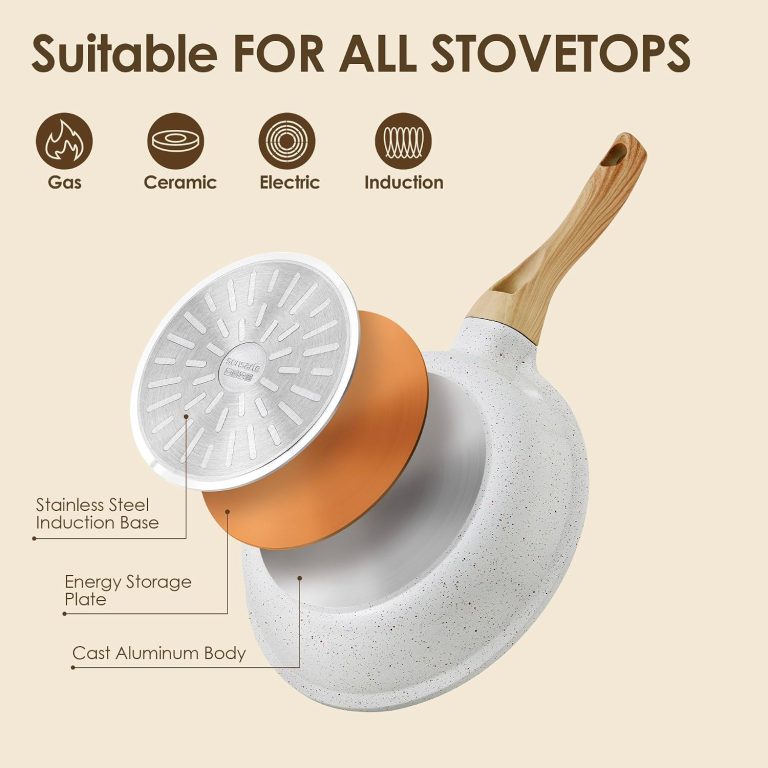
Non-toxic cookware can be used on induction stoves, but only if the cookware has a magnetic base, since induction cooktops generate heat directly in ferromagnetic metal rather than heating from below like gas or electric.
Stainless steel with a magnetic stainless layer and cast iron are naturally induction-compatible, while many ceramic-coated pans built on an aluminum core are not unless they specifically include an induction-compatible base plate.
Check for an induction label or test with a magnet before buying if this is your cooktop type.
Our dedicated guide on non-toxic cookware for induction stoves covers models built specifically for induction compatibility.
Is non-toxic cookware safe for babies and toddlers?
Non-toxic cookware that’s properly tested and PFAS-free is generally considered a safe choice for preparing food for babies and toddlers, and avoiding fluoropolymer coatings entirely is often seen as an added layer of caution for this age group.
The bigger consideration for young children specifically is heavy metal testing, since infants and toddlers are more vulnerable to lead and cadmium exposure at lower thresholds than adults.
Choose cookware with named third-party testing that explicitly covers heavy metals, and avoid decorative or vintage ceramic pieces for food prep.
See our guide to the best non-toxic cookware for babies for options evaluated against that stricter standard.
How do I know if my current cookware already has PFAS?
The most reliable way to know if your current cookware has PFAS is to check the manufacturer’s specific product documentation rather than relying on the age or appearance of the pan, since PFAS-containing coatings aren’t always visually distinguishable from PFAS-free ones.
Nonstick cookware made before 2013 is more likely to contain PFOA specifically, and any nonstick pan with visible scratches or flaking should be replaced regardless of its original chemical makeup, since damaged coatings are more likely to release particles into food.
If you’re ready to shop with a category and budget in mind, start by checking whether the specific product you’re considering has a named, independent test report behind its non-toxic claim.
It’s the fastest way to separate real verification from marketing language.