In most cookware sold today, a diamond coating is a ceramic coating with diamond particles mixed in before it’s cured.
That single fact undercuts a lot of the marketing language built around “diamond” pans, and it’s the piece most comparison articles skip on their way to picking a winner.
What “Diamond Coating” Actually Means
“Diamond coating” isn’t one consistent product. It covers two genuinely different constructions, and only one of them shows up on most kitchen shelves.
Diamond-Infused Ceramic vs. Plain Ceramic
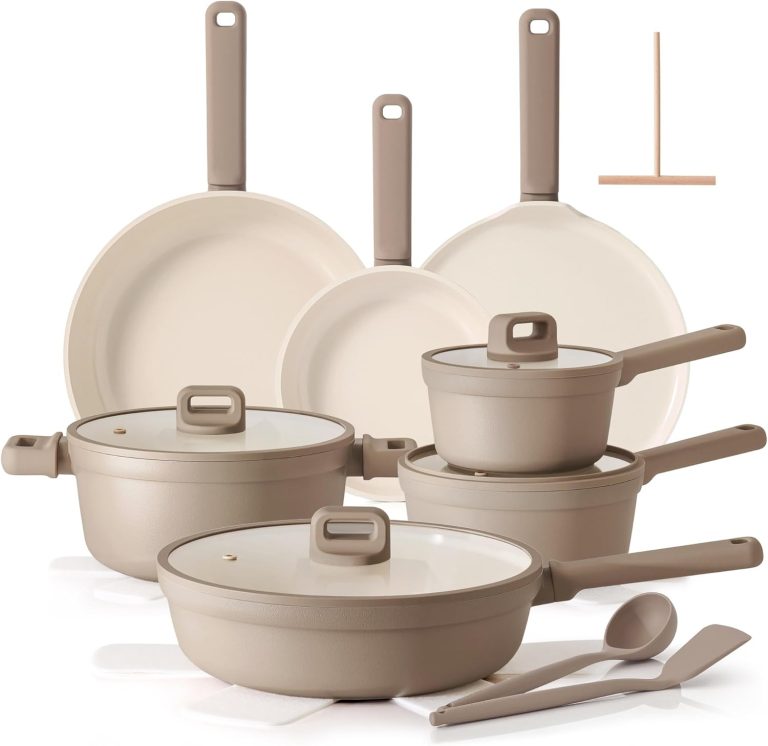
Diamond-infused ceramic starts as a standard sol-gel ceramic coating, made from silicon dioxide derived from sand, with tiny diamond particles blended into the slurry before it’s sprayed onto an aluminum or stainless base and cured.
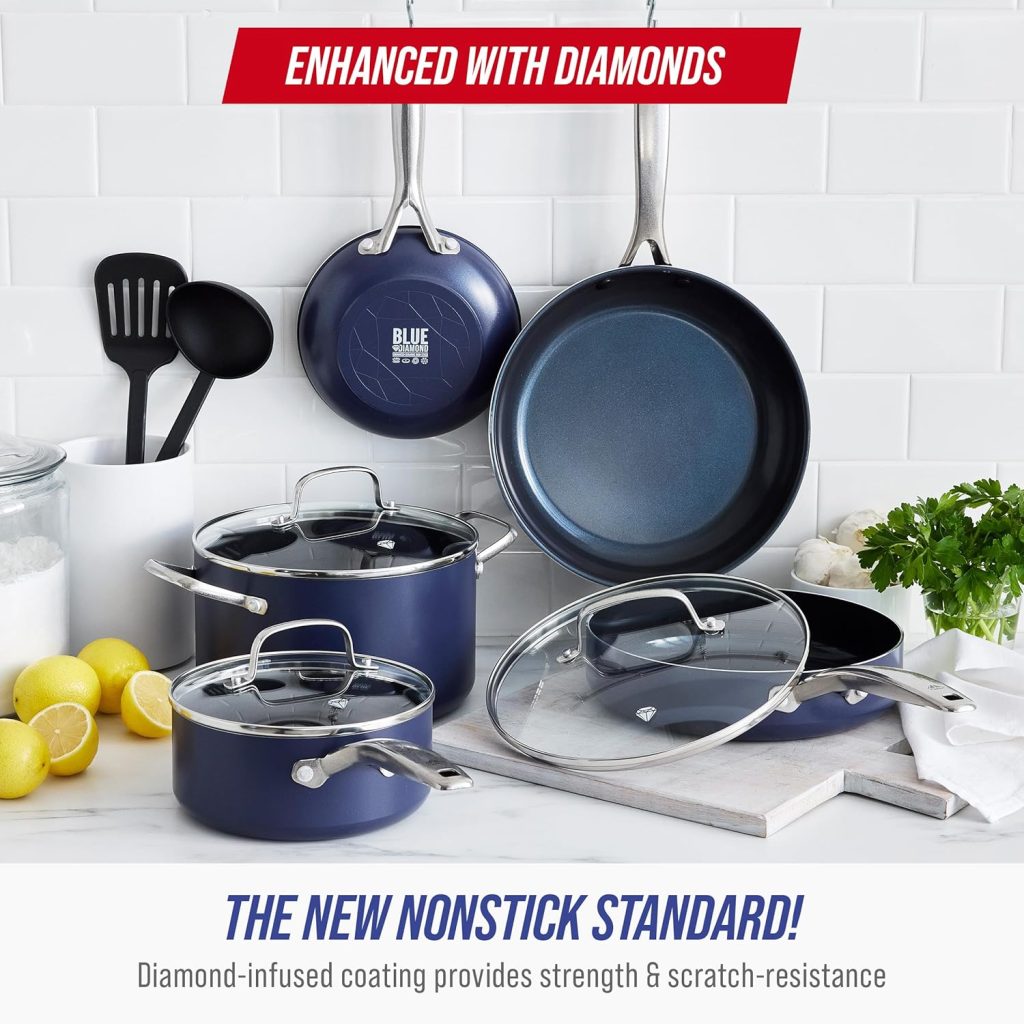
The diamond particles improve heat transfer through the coating layer and add some scratch resistance, but the base chemistry underneath is the same inorganic ceramic used in plain ceramic pans.
Plain ceramic coating skips the diamond additive entirely and relies on the sol-gel layer alone for its nonstick surface. Both are cured the same way, both sit on the same kinds of metal bases, and both share the same fundamental strengths and weaknesses as coatings.
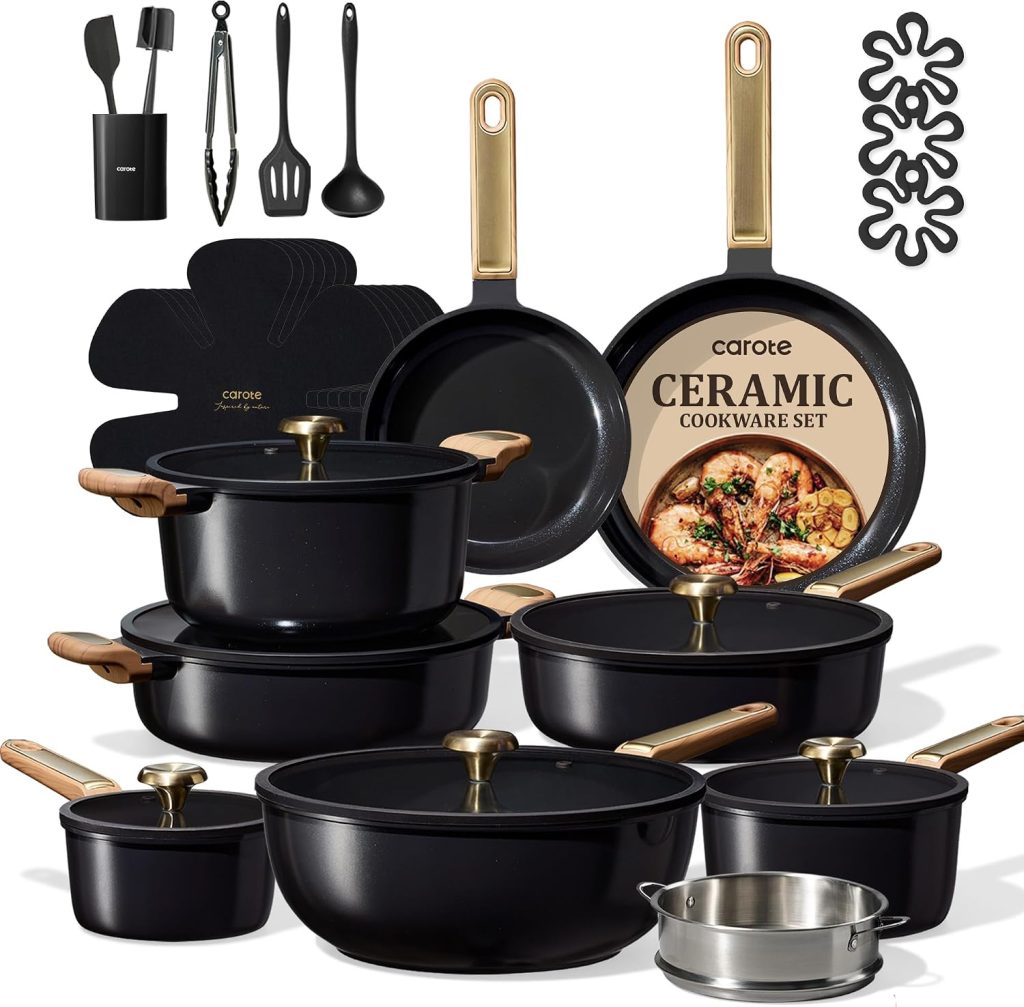
If you’re weighing whether ceramic coatings in general hold up to daily use, our guide on whether ceramic cookware is safe covers that question in more depth.
True Vacuum-Brazed Diamond Cookware
Vacuum-brazed diamond cookware is a different product altogether. Instead of mixing diamond particles into a ceramic slurry, manufacturers fuse actual diamond crystals directly onto a bare metal surface inside a vacuum furnace, with no ceramic layer at all.
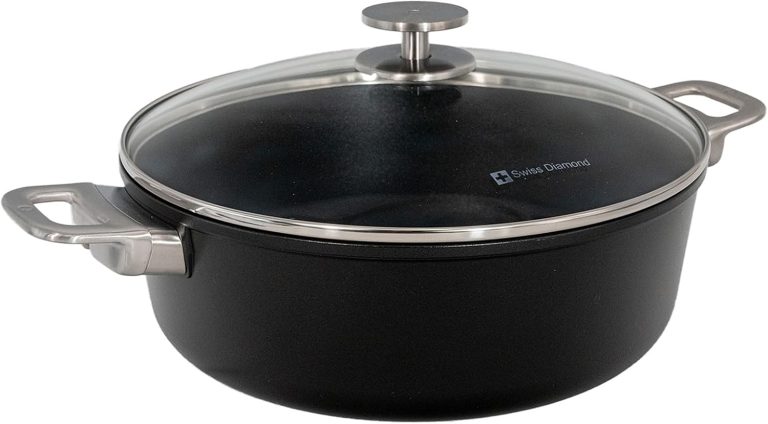
This process creates a permanent bond that’s far more resistant to wear than any sprayed coating, which is why it’s used in select high-end lines like Swiss Diamond rather than in budget cookware sets. It’s also expensive to produce, which is why it shows up far less often than the diamond-infused ceramic pans that dominate the “diamond cookware” search results.
Swiss Diamond in particular markets pans built this way, and one practical question that comes up with this brand specifically is: Can you put the Swiss Diamond pan in the oven?
Is Diamond Coating PFAS-Free?
Yes, both diamond-infused ceramic and vacuum-brazed diamond cookware are PFAS-free, but for slightly different reasons tied to how each is built.
Why Both Diamond-Infused and Plain Ceramic Avoid PTFE and PFAS
Ceramic sol-gel coatings are made from inorganic compounds, primarily silicon and oxygen, not from fluoropolymers.
PFAS (per- and polyfluoroalkyl substances) is the chemical family behind PTFE, the compound in classic Teflon-style coatings, and ceramic chemistry simply doesn’t include those compounds in the first place.
Adding diamond particles to the ceramic slurry doesn’t change that underlying chemistry.
Vacuum-brazed diamond cookware has an even simpler answer: there’s no coating chemistry to evaluate at all, since diamonds are fused directly to metal with nothing else in between.
If you want to double-check any specific product’s claims yourself rather than relying on the “diamond” label alone, this guide on how to check if cookware has PFAS walks through what to look for.
Is Diamond Coating the Same as Teflon?
No, diamond coating and Teflon are built from entirely different materials.
Teflon is a brand name associated with PTFE, a synthetic fluoropolymer that can release fumes if a pan is overheated empty, which is the source of most nonstick health concerns.
Diamond coatings, whether diamond-infused ceramic or vacuum-brazed, contain no fluorinated polymers of any kind, so they don’t carry that same overheating risk.
The confusion usually comes from both being marketed as “nonstick,” a functional description that says nothing about what the surface is actually made from.
Diamond Coating vs. Ceramic Coating: Durability Compared
Diamond-infused ceramic tends to hold its nonstick performance a bit longer than plain ceramic, but the gap is smaller than marketing copy suggests, and neither lasts as long as advertised.
What the Marketing Claims Say
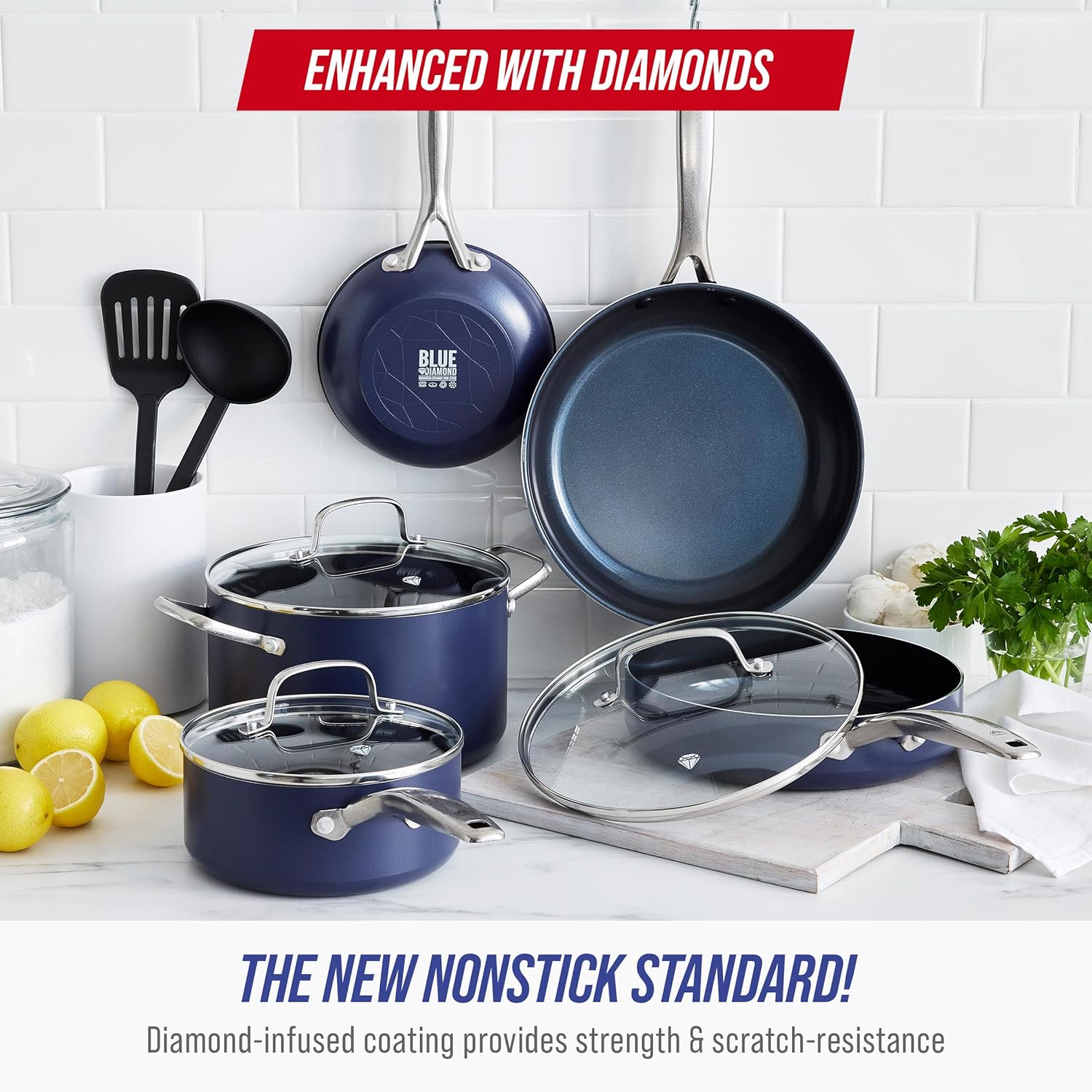
Brands selling diamond-infused ceramic pans have made bold claims about longevity, including statements that their coating lasts ten times longer than a traditional nonstick pan.
These claims are usually framed as a comparison against old-style PTFE coatings, not against plain ceramic, which is an important distinction that gets lost in casual comparison articles.
The diamond particles genuinely do improve scratch resistance and heat transfer within the coating layer itself. What they don’t do, despite the framing, is make the coating dramatically harder or more durable than a quality plain ceramic coating.
What Independent Testing and Owner Reports Actually Show
| Source | Finding |
|---|---|
| Prudent Reviews (Blue Diamond pan test) | Found the “lasts 10x longer” claim to be false based on hands-on testing; food began sticking after a few months of use |
| The Cookware Critic (aggregated owner reports) | Documented that Blue Diamond pans typically maintain strong nonstick performance for 6 to 14 months of regular use before food starts sticking |
| The Cookware Critic (coating analysis) | Noted that diamond particles improve heat transfer through the coating but do not make it significantly harder or longer-lasting than other quality ceramic coatings |
The pattern across these sources is consistent: the aluminum or stainless base of a diamond-infused pan tends to outlast the coating itself by years, but the coating’s functional nonstick lifespan is closer to what you’d expect from a good plain ceramic pan than to the multiples implied by marketing language.
Heat Conduction and Cooking Performance
Diamond does conduct heat faster than copper as a raw material property, but that fact doesn’t translate directly into a dramatically different cooking experience once it’s a thin layer mixed into a coating.
The “5x Faster Than Copper” Claim, Fact-Checked
Diamond as a material can conduct heat roughly five times faster than copper, and that figure isn’t disputed.
The catch is that diamond-infused ceramic pans don’t contain a slab of diamond; they contain a coating layer with diamond particles distributed through it, applied over an aluminum or stainless base that’s doing most of the actual heat-carrying work.
The diamond particles improve heat transfer through that thin coating layer specifically, which owners often notice as pans that heat up and respond to temperature changes a bit faster than plain ceramic.
That’s a real, measurable effect. It’s just a much smaller effect than the “5x copper” framing implies when it’s applied to the whole pan.
Real-World Cooking Differences You’ll Actually Notice
In practice, both diamond-infused ceramic and plain ceramic pans heat evenly enough for everyday cooking like eggs, pancakes, and sautéing vegetables.
Diamond-infused pans tend to respond a little faster to heat changes, which some manufacturers note as a reason to cook on a slightly lower setting than you would with a standard coating, to avoid scorching food before you adjust.
Vacuum-brazed diamond cookware behaves differently again, since it’s diamonds fused to solid metal rather than a coating, and it heats more like a high-performance metal pan with an unusually hard, low-friction surface.
For most home cooks choosing between diamond-infused ceramic and plain ceramic, the heat conduction difference is noticeable but modest, not the dramatic gap the marketing language suggests.
How to Tell Which Type of Pan You’re Actually Buying
The word “diamond” on a product listing doesn’t tell you which of the two constructions you’re getting, so the label needs a closer read.
Label Language That Signals Diamond-Infused vs. Vacuum-Brazed
- Look for phrases like “diamond-infused,” “diamond dust,” or “diamond particles,” which describe an additive mixed into a ceramic coating rather than a bonded metal surface.
- Look for “vacuum-brazed” or “fused diamond” language, which describes diamonds bonded directly to bare metal with no ceramic layer.
- Check the listed price point as a rough signal, since vacuum-brazed diamond cookware is manufactured through a specialized, costly process and priced well above typical diamond-infused ceramic sets.
- Check whether the description mentions a separate coating at all. If a coating is mentioned, the product is diamond-infused ceramic, not vacuum-brazed.
- Look for carat weight specifications, since some diamond-infused products disclose the amount of diamond material used, which can hint at how much the additive is actually doing versus how much is marketing language.
Questions to Check Before You Buy
- Is the diamond a particle mixed into a ceramic coating, or is it bonded directly to the metal with no coating layer?
- What is the manufacturer’s stated or independently reported nonstick lifespan under normal use, not just under laboratory conditions?
- Does the product disclose the base metal underneath the coating, such as aluminum or stainless steel?
- Is the pan rated for metal utensils, and does that rating apply to the whole surface or just the diamond-reinforced areas?
- What temperature range is the coating rated for, and is that rating based on the coating itself or the base metal’s separate oven-safe rating?
Choosing Between Diamond and Ceramic for Your Kitchen
Beyond safety and durability, the practical choice between diamond and ceramic often comes down to whether the pan works on your stovetop and whether the extra cost of diamond-infused construction fits your budget.
Induction Compatibility
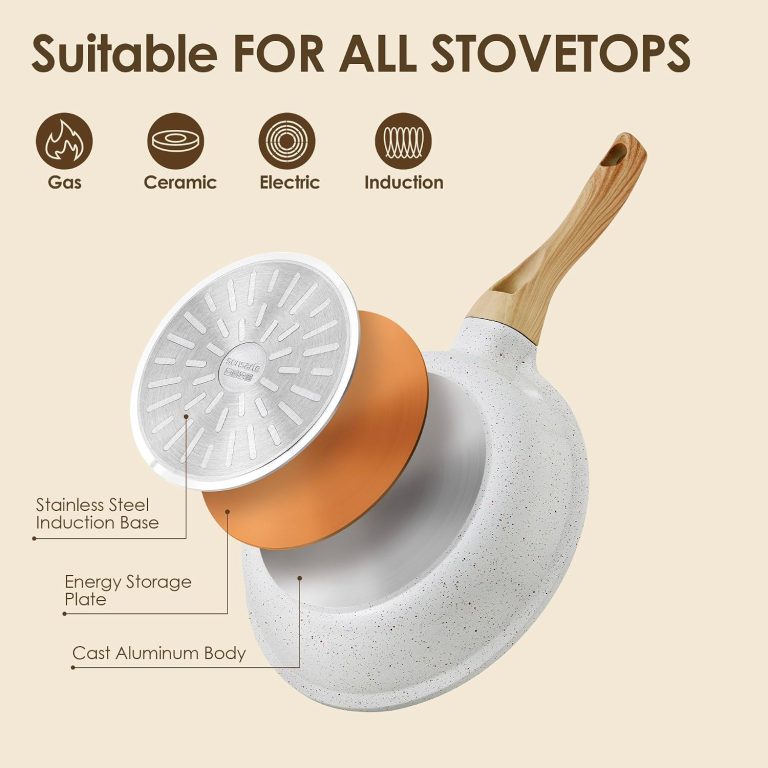
Most diamond-infused ceramic and plain ceramic cookware is not induction-compatible on its own, since both rely on aluminum bases that aren’t magnetic.
A handful of specific product lines add a magnetic stainless steel layer to the base specifically to work on induction cooktops, but this isn’t a given across either category, and it needs to be confirmed on a per-product basis rather than assumed from the word “diamond” or “ceramic” alone.
If induction compatibility is a priority for your kitchen, our guide to non-toxic cookware for induction stoves covers which materials and constructions reliably work.
Price Versus Expected Lifespan
| Factor | Plain Ceramic | Diamond-Infused Ceramic | Vacuum-Brazed Diamond |
|---|---|---|---|
| Typical price tier | Budget to mid-range | Mid-range to slightly above | Premium |
| Typical nonstick lifespan | Roughly 1 to 2 years of regular use | Roughly 6 months to a bit over a year, based on independent owner reports | Years longer, due to the fused metal surface rather than a coating |
| What wears out first | The ceramic coating layer | The ceramic coating layer | Rarely the surface itself; more likely handle or base wear |
| Best fit | Budget-conscious cooks replacing pans periodically | Cooks who want slightly faster heat response and don’t mind a similar coating lifespan to plain ceramic | Cooks willing to pay more upfront for a coating-free surface that lasts much longer |
For a closer look at how two specific ceramic-coated brands stack up against each other in practice, our Caraway vs. GreenPan comparison is a useful next read if you’re narrowing down plain ceramic options specifically.
Whichever category you land on, checking the specific construction before buying matters more than trusting the word “diamond” or “ceramic” on the box.
If you’re still building out your full kitchen and want the bigger picture across every non-toxic material, not just coatings, our complete guide to best non-toxic cookware breaks down how diamond, ceramic, titanium, and stainless steel compare side by side.
Frequently Asked Questions
Is diamond coating safe to cook with?
Yes, diamond coating is safe to cook with, whether it’s diamond-infused ceramic or vacuum-brazed diamond.
Both avoid PTFE and PFAS entirely, since ceramic sol-gel chemistry doesn’t include fluorinated polymers and vacuum-brazed construction has no coating chemistry at all.
The diamond particles themselves are chemically inert and add scratch resistance and heat conduction rather than introducing any new safety concern.
The main caution with any nonstick surface, diamond-branded or not, is avoiding extremely high heat with an empty pan, which can degrade any coating over time even if it doesn’t release the same fumes as PTFE.
How long does diamond coating last on a pan?
It depends on which type of diamond coating you have, and the two types last very differently.
Diamond-infused ceramic pans, based on independent testing and aggregated owner reports, typically maintain strong nonstick performance for about 6 to 14 months of regular use before food starts sticking, despite marketing claims of much longer lifespans.
Vacuum-brazed diamond cookware, where diamonds are fused directly to bare metal with no coating to wear away, lasts considerably longer because there’s no separate layer to degrade in the first place.
Can diamond-coated cookware go in the dishwasher?
Most diamond-infused ceramic cookware is dishwasher safe, though many manufacturers recommend hand washing to extend the coating’s nonstick lifespan, since harsh detergents and high heat cycles can accelerate wear on any ceramic-based coating.
Vacuum-brazed diamond cookware tends to tolerate dishwasher cycles better, since there’s no coating layer to break down, but individual manufacturer care instructions should always take priority over a general rule.
Checking the specific product’s care label matters more here than assuming based on the word “diamond” alone.
Is ceramic coating better than diamond for everyday cooking?
For most everyday cooking, plain ceramic coating performs similarly to diamond-infused ceramic, since both share the same underlying sol-gel chemistry and comparable real-world nonstick lifespans.
Diamond-infused ceramic offers a modest edge in heat responsiveness and scratch resistance, which some cooks notice and value, but it typically costs more for a difference that isn’t dramatic in daily use.
Plain ceramic is a reasonable choice if you’re prioritizing cost over the incremental heat conduction benefit, while diamond-infused ceramic makes more sense if that faster heat response is something you’ll actually use and are willing to pay for.