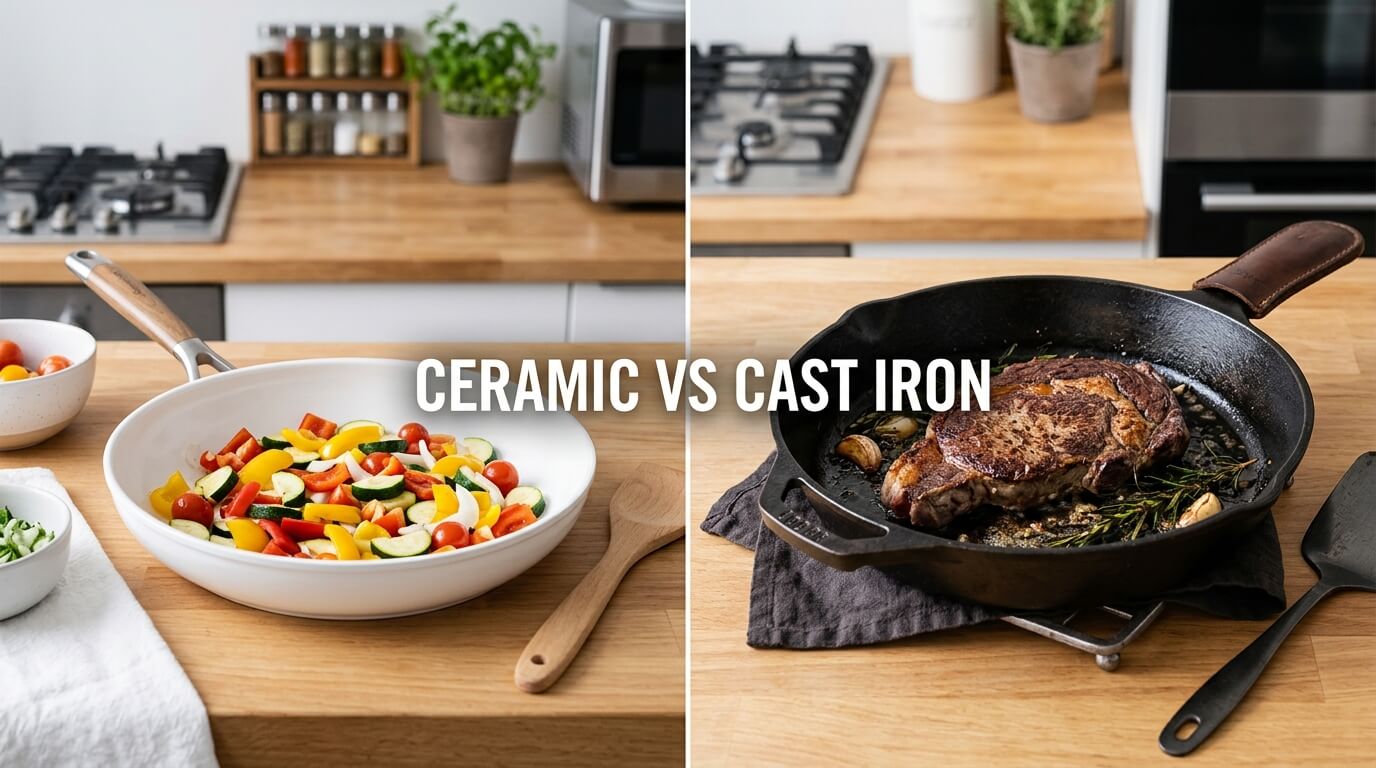
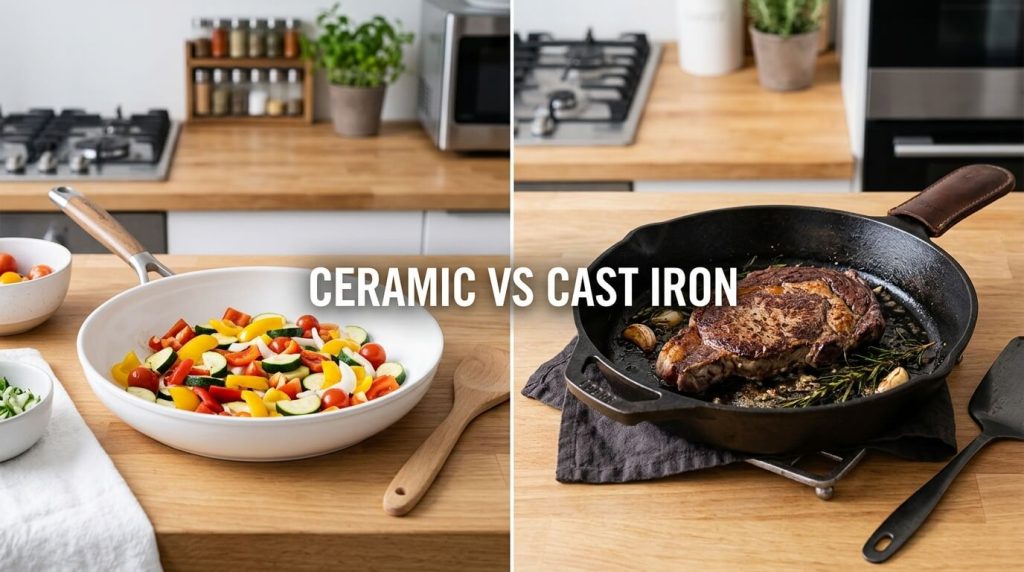
Ceramic vs cast iron cookware isn’t really a two-way comparison; it’s a three-way one, because “ceramic” covers two very different products, and which one you’re picturing changes the answer to almost every question below.
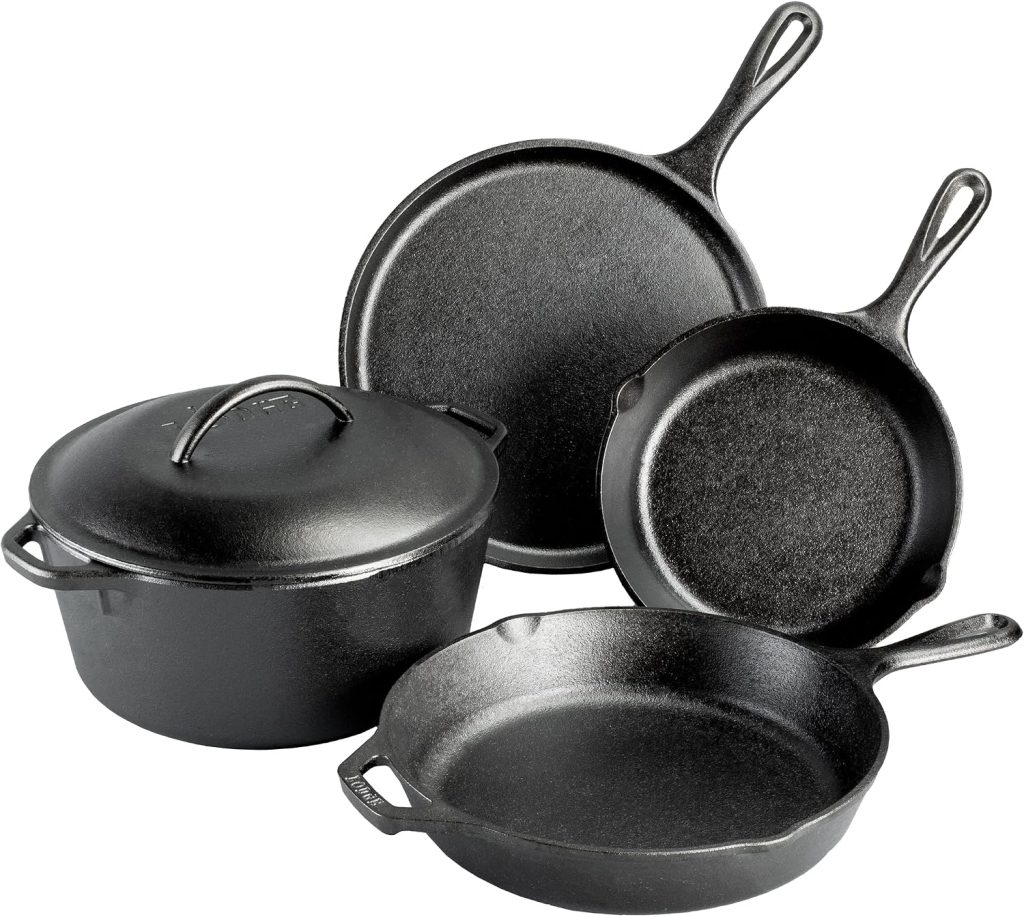
Cast iron is a single, consistent material: heavy, seasoned, built to outlast you.
Ceramic splits into ceramic-coated (a metal pan with a thin nonstick layer) and 100% ceramic (a solid clay body with no metal at all), and they perform closer to opposite ends of the spectrum from each other than either does to cast iron.
This guide keeps that distinction explicit at every step, so the comparison actually holds up.
Ceramic and Cast Iron Aren’t What Most Comparisons Assume
Most “ceramic vs cast iron cookware” articles default to comparing cast iron against ceramic-coated cookware without saying so, which is why you’ll find contradictory claims about ceramic’s heat tolerance, lifespan, and durability across different sources; they’re often quietly describing two different products under the same word.
Three Materials, Not Two — Cast Iron, Ceramic-Coated, and 100% Ceramic
| Feature | Cast Iron | Ceramic-Coated | 100% Ceramic |
|---|---|---|---|
| Construction | Solid cast iron, seasoned surface | Metal pan (usually aluminum) with a thin sol-gel coating | Solid clay/mineral body, no metal core |
| Coating to fail? | No (seasoning is baked-on oil, renewable) | Yes — the coating is the entire nonstick surface | No |
| Typical lifespan | Decades, often generational | 1–3 years before coating degrades | Long, if not chipped or cracked |
| Weight | Heavy | Light | Heavy |
| High-heat tolerance | Excellent | Limited — coating degrades above a specific threshold | Good |
| PFAS-free | Yes (no coating at all) | Yes, when made correctly | Yes |
Which “Ceramic” Does This Guide Mean at Each Point
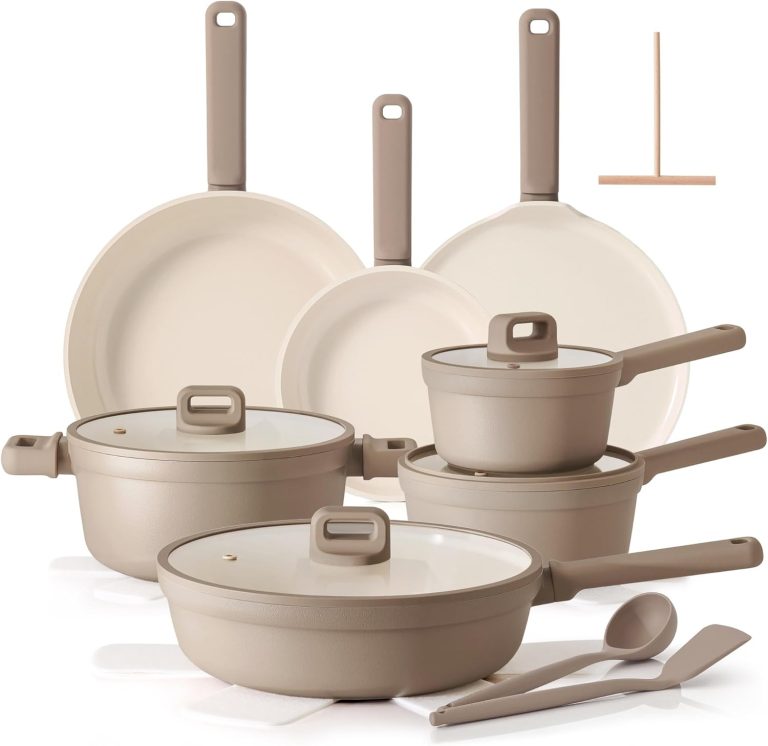
Ceramic-coated cookware is a metal pan, almost always aluminum, with a thin ceramic-derived nonstick layer applied over it.
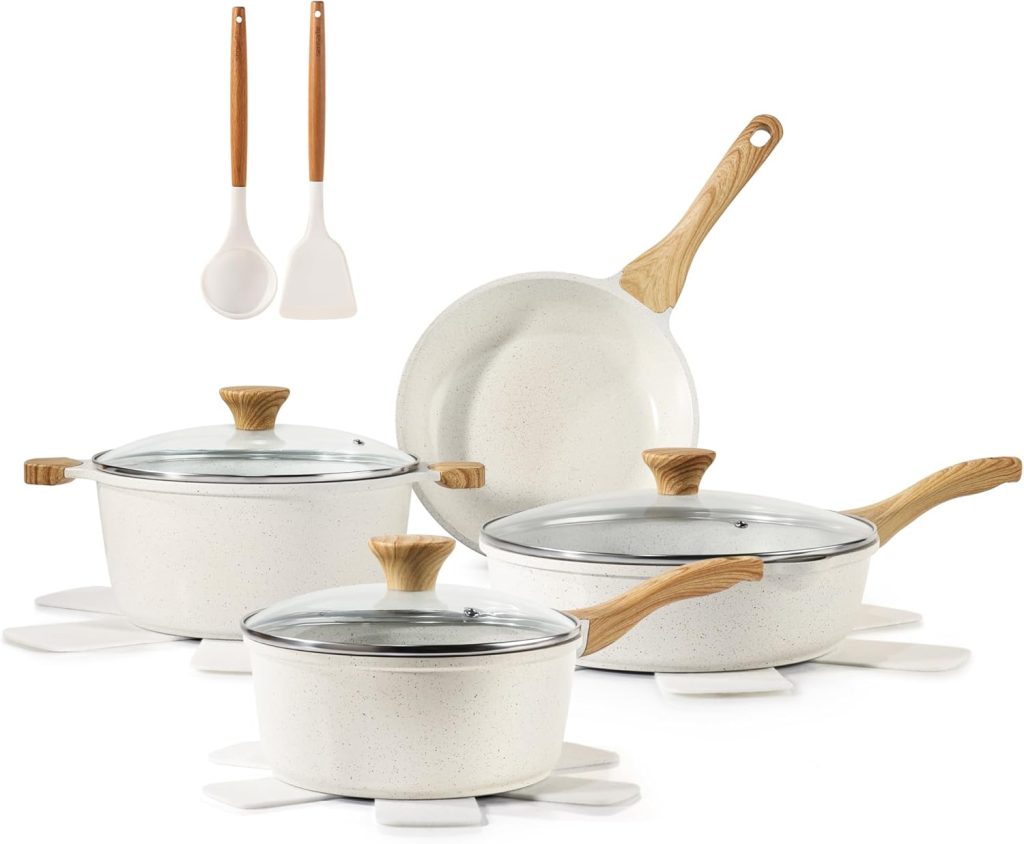
This is the type most people mean when they say “ceramic cookware,” and it’s the type most competing comparisons are actually describing, even when they don’t say so.
100% ceramic cookware is a solid piece made from clay and minerals and fired at high temperatures, with no metal core and no coating.
Each section below specifies which type applies, because treating them as a single material is the biggest source of confusion in this comparison.
Heat Retention and Searing: Which Actually Performs Better?
Cast iron retains and holds heat better than either type of ceramic, which is exactly why it’s the standard recommendation for searing, while ceramic-coated cookware is built for fast, even heating rather than sustained high heat.
Heat Retention Compared
| Material | Heat-Up Speed | Heat Retention Once Hot | Best Suited For |
|---|---|---|---|
| Cast iron | Slow | Excellent — stays hot for a long time | Searing, sustained high heat, slow cooking |
| Ceramic-coated | Fast (thin aluminum core) | Poor — cools quickly once removed from heat | Quick-cooking, delicate foods, eggs |
| 100% ceramic | Moderate | Good — dense body holds heat well | Even gentle cooking, slow-simmered dishes |
Why Ceramic Struggles With a Hard Sear
Ceramic-coated cookware isn’t built to get hot enough, or stay hot enough, for a proper sear.
Its slick surface doesn’t grip the meat the way cast iron’s textured, well-seasoned surface does, and its thin aluminum core sheds heat too quickly once a cold piece of meat hits the pan, dropping the surface temperature before a real crust can form.
Cast iron’s mass works the opposite way: it absorbs the temperature drop from adding cold food without losing much heat, which is exactly the condition a good sear requires.
If searing is a regular part of your cooking, cast iron or stainless steel is the better tool for that job specifically, even if ceramic-coated remains your everyday pan for other dishes.
What Temperature Can Each One Actually Handle?
Ceramic-coated cookware has a specific heat threshold where its coating starts to break down, and that threshold is lower than most people assume.
Published testing puts the onset of coating degradation at around 300°C (roughly 570°F), a range that a home broiler or an unattended high burner can reach.
The Coating Failure Point, By the Numbers
| Material | Approximate Safe Threshold | What Happens Above It |
|---|---|---|
| Cast iron | Well above the typical stovetop and oven range | No coating to fail; safe at searing and broiling temperatures |
| Ceramic-coated | Around 300°C (570°F) | Coating degradation begins; testing has found visible damage in a majority of samples at typical broiler temperatures |
| 100% ceramic | Higher than ceramic-coated, closer to cast iron’s range | No coating to break down; the solid body tolerates sustained high heat well |
Why 100% Ceramic Doesn’t Have This Problem
100% ceramic cookware doesn’t have a coating-failure temperature in the way ceramic-coated cookware does, because there’s no separate coating layer to break down in the first place.
The cooking surface and the pan body are the same fired material all the way through.
This is the clearest practical difference between the two ceramic types: a 100% ceramic pan can generally handle sustained high heat the way cast iron can, while a ceramic-coated pan cannot, regardless of what the word “ceramic” on the box might suggest.
If you’re deciding between the two ceramic types specifically, rather than between ceramic and cast iron, our guide on ” Is ceramic cookware safe breaks down this distinction and its safety implications in more depth.
Durability and Lifespan: Which Lasts Longer?
Cast iron lasts significantly longer than ceramic-coated cookware, often for decades or generations with basic care, while ceramic-coated pans typically need replacing within one to three years, even when cared for properly.
Expected Lifespan Side by Side
| Material | Typical Lifespan | What Limits It |
|---|---|---|
| Cast iron | Decades to generations | Rust from poor drying/storage; damage is usually reversible with re-seasoning |
| Ceramic-coated | 1–3 years | Coating wear from heat, metal utensils, and dishwasher detergent; damage is not reversible |
| 100% ceramic | Long, often many years | Chipping or cracking from impact; no coating wear to worry about |
What Actually Ends Each Material’s Life
- Cast iron’s biggest threat is rust from moisture left on the surface, and it’s almost always recoverable by scrubbing back to bare metal and re-seasoning.
- Ceramic-coated cookware’s biggest threat is scratching from metal utensils and abrasive cleaning, which thins the coating permanently and cannot be repaired or reversed.
- Dishwasher use accelerates ceramic-coated wear specifically, since the detergent is more abrasive than hand washing with a soft sponge.
- 100% ceramic cookware’s biggest threat is a hard impact — dropping it or a sudden temperature shock can chip or crack the body, which is a structural failure rather than a gradual wear pattern.
- Cast iron actually improves with age and use, since repeated seasoning builds up a better, more nonstick surface over time — the opposite pattern from ceramic-coated cookware’s one-way decline.
Maintenance: Seasoning vs. Simply Washing
Cast iron requires ongoing seasoning to maintain its nonstick surface and prevent rust, while ceramic cookware needs no seasoning at all but is more particular about heat, utensils, and cleaning method to protect its coating or finish.
Cast Iron Care Routine
- Wash with hot water and a stiff brush, using little or no soap, right after cooking while the pan is still warm.
- Dry the pan completely and immediately, since any leftover moisture is the primary cause of rust.
- Apply a thin layer of oil to the cooking surface while the pan is still warm, working it in with a cloth or paper towel.
- Heat the oiled pan briefly on the stovetop or in the oven to help the oil bond to the surface.
- Store in a dry place, ideally with a paper towel between it and a lid to absorb any residual moisture.
Ceramic Care Routine
- Let the pan cool before washing it, since sudden temperature changes can stress the coating.
- Hand wash with a soft sponge and mild dish soap rather than using the dishwasher.
- Use wood, silicone, or nylon utensils only, since metal utensils scratch the coating.
- Cook on low to medium heat rather than high, since ceramic-coated surfaces are more heat-sensitive than cast iron.
- Store with a protective layer between stacked pans to prevent surface-to-surface scratching. If you’re comparing specific ceramic-coated brands and how their care instructions and coatings differ, the Caraway vs GreenPan comparison covers that in detail.
Cooking Acidic Foods: Which One Reacts?
Cast iron is the material that actually reacts with acidic foods, leaching small amounts of iron into dishes like tomato sauce or wine reductions, while both types of ceramic are non-reactive, though for different underlying reasons that matter to know.
Acid Reactivity Compared — Cast Iron, Ceramic-Coated, and 100% Ceramic
| Material | Reactive With Acid? | Why |
|---|---|---|
| Cast iron | Yes | Bare iron beneath the seasoning layer can leach small amounts of iron into acidic dishes, which can also affect flavor |
| Ceramic-coated | No, as long as the coating is intact | The sol-gel coating creates a non-reactive barrier between the food and the metal core underneath |
| 100% ceramic | No | The fired clay body is inherently non-reactive all the way through, with no metal barrier required |
What This Means for Tomato Sauce, Wine, and Citrus Dishes
The practical takeaway is that cast iron’s non-reactivity claim and ceramic-coated cookware’s non-reactivity claim rest on different foundations, and only one of them can fail.
A well-seasoned cast-iron pan can usually handle a quick acidic deglaze without much issue, but a long-simmered tomato sauce is a reasonable case to move to a non-reactive pan instead, since extended acid contact is exactly when iron leaching becomes more noticeable.
Ceramic-coated cookware’s non-reactivity depends entirely on the coating staying intact — a scratched or worn ceramic-coated pan loses that protective barrier and exposes the same underlying metal issue cast iron has, just for a different reason.
100% ceramic is the only option in this comparison where non-reactivity isn’t a maintenance-dependent claim, since there’s no coating that can wear through in the first place.
Induction, Weight, and Everyday Handling
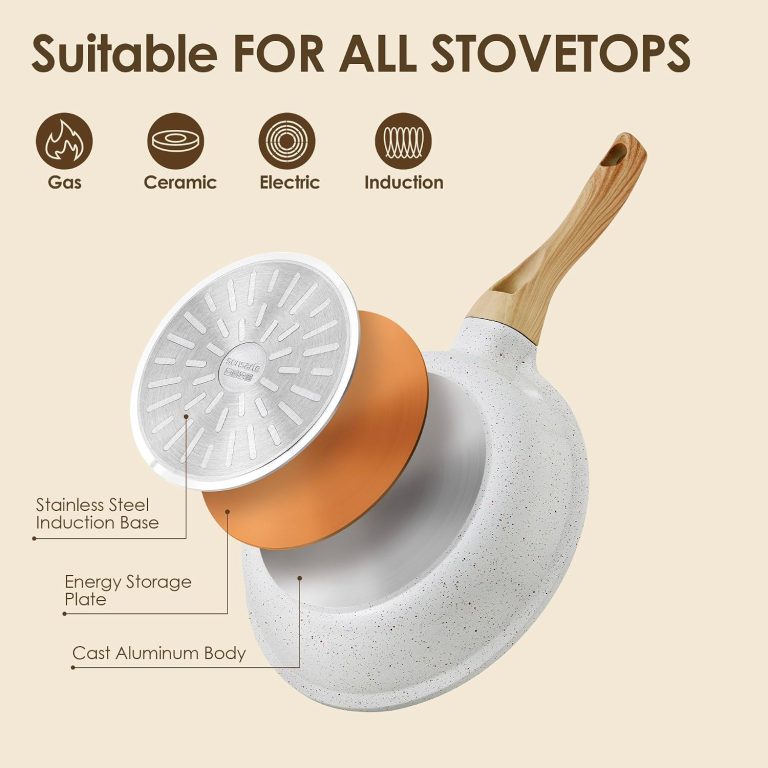
Cast iron works on induction stoves without any modification, while ceramic cookware’s induction compatibility depends entirely on what’s underneath the coating or, for 100% ceramic, whether the manufacturer has built in an induction-compatible base.
Induction Compatibility by Material
| Material | Induction-Compatible? | Why |
|---|---|---|
| Cast iron | Yes | Naturally ferromagnetic, it works on induction without any special design |
| Ceramic-coated | Depends | Compatible only if the metal core includes a magnetic stainless steel layer or induction-specific base plate; aluminum alone is not magnetic |
| 100% ceramic | Depends | Compatible only if the manufacturer has embedded an induction-compatible base, since fired clay itself is not magnetic |
For a full list of models built specifically for this cooktop type, see our guide to non-toxic cookware for induction stoves.
Weight and Ease of Use
- Cast iron is significantly heavier than either ceramic type, which can make lifting, flipping, and pouring more physically demanding, especially in larger sizes.
- Ceramic-coated cookware is the lightest option of the three, making it the easiest to maneuver for daily tasks like flipping eggs or tossing vegetables.
- 100% ceramic is heavier than ceramic-coated cookware, closer to cast iron’s weight range, though it varies by piece thickness and size.
- If wrist or shoulder strain is a concern, ceramic-coated cookware is the most forgiving daily option of the three materials compared here.
Which Should You Actually Buy? A Decision Framework
The better choice between ceramic and cast iron depends on what you’re actually cooking most often, not on a general reputation either material has, so the answer changes dish by dish rather than staying fixed across your whole kitchen.
Choose by What You Cook Most
- For searing steak or getting a hard crust on meat, choose cast iron — its heat retention and surface texture are built for this specifically.
- For scrambling eggs or cooking delicate fish, choose ceramic-coated — its slick surface and gentle heat handling minimize sticking with little oil.
- For simmering tomato sauce or other long-cooked acidic dishes, choose either type of ceramic over cast iron to avoid iron leaching and flavor changes.
- For baking cornbread or other oven-to-stovetop dishes, choose cast iron for its high-heat tolerance and even heat distribution.
- For stir-frying at high heat, choose cast iron or carbon steel over ceramic-coated, since sustained high heat is exactly where ceramic-coated coatings are most at risk.
Why Many Kitchens Use Both
Most cooks who use both materials aren’t hedging; they’re matching each pan to the job it does best, keeping cast iron for high-heat, long-cooking, and searing tasks while reaching for ceramic-coated cookware for quick, delicate, everyday meals.
This isn’t an either/or decision, the way most comparisons frame it; a two-pan kitchen with one of each covers a wider range of cooking than either material alone.
If you’re building out a full non-toxic kitchen rather than choosing a single pan, our full guide to the best non-toxic cookware covers how these materials fit alongside stainless steel and carbon steel as well.
Once you’ve matched a material to your most common dishes, the remaining questions usually come down to day-to-day details like cleaning and oven safety, which is exactly what the FAQ below addresses.
Frequently Asked Questions
Is cast iron healthier than ceramic cookware?
Neither material is definitively healthier — cast iron adds trace amounts of dietary iron to food, particularly with acidic dishes, while ceramic cookware avoids that entirely but depends on coating integrity (for ceramic-coated) to stay non-reactive.
Cast iron’s iron leaching is generally considered a minor and even sometimes beneficial trace mineral contribution for most people, not a safety concern.
Ceramic, especially 100% ceramic, appeals to those who want zero metal contact with food under any condition.
The better fit depends on whether trace dietary iron matters to you specifically, more than either being objectively “healthier.”
Can ceramic cookware go in the oven?
Most ceramic cookware can go in the oven, but the safe maximum temperature varies significantly between ceramic-coated and 100% ceramic pieces, so checking the specific product’s oven-safe rating matters more than assuming based on the material name.
Ceramic-coated cookware typically has a lower oven-safe ceiling than cast iron because of its coating’s heat sensitivity, while 100% ceramic generally tolerates higher oven temperatures similar to cast iron.
Always confirm the manufacturer’s specific oven-safe temperature rather than assuming one figure applies to all products labeled “ceramic.”
Which is easier to clean, ceramic or cast iron?
Ceramic cookware is generally easier to clean day-to-day, since its smooth, nonstick surface releases food with just a wipe or a quick hand wash, while cast iron requires a specific cleaning method to protect its seasoning.
Cast iron can’t be scrubbed with soap or left to soak, and it needs to be dried and re-oiled after each wash, adding a few extra steps every time you use it.
Ceramic-coated cookware simply needs a soft sponge and mild soap, with no seasoning step required at all. For someone who wants minimal cleanup effort, ceramic is the lower-maintenance option of the two.
Is cast iron non-toxic?
Yes, cast iron is considered non-toxic, since it has no synthetic coating of any kind and is made from a single material with a long history of safe food-contact use.
Its only notable interaction with food is releasing small amounts of dietary iron, particularly with acidic dishes, which isn’t a toxicity concern for most people.
Cast iron also contains no PFAS, PFOA, or PTFE, since there’s no nonstick coating to begin with.
For a broader look at checking whether any specific pan in your kitchen contains PFAS, see our guide on how to tell if your cookware has PFAS.
Whichever material fits your cooking style, the same underlying question applies: understand what you’re actually buying, coated or solid, and rated for what temperature, before you decide it’s the wrong material for the job.